Surprising but true: on a single trading day spot Ether ETFs drew roughly $1.01B in net inflows, led by BlackRock’s iShares Ethereum Trust and Fidelity’s offering, and that surge coincided with Bitcoin briefly topping $123,000 on major exchanges.
That single-day spot ether etf 1b inflow impact on bitcoin price wasn’t isolated. U.S. and Hong Kong ETF developments have altered global price discovery—U.S. spot Bitcoin ETFs recorded roughly $12B cumulative inflows that helped lift Bitcoin above $118,000 in July 2025, while Hong Kong’s April 2025 launches (ChinaAMC, Harvest, Bosera) introduced in‑kind mechanisms that tightened arbitrage and aligned exchange prices with NAVs.
This matters because liquidity moves in Ether can shift market structure across crypto. When spot Ether ETF inflows pushed Ethereum above $4.6K and futures open interest hit record highs, exchange ETH balances fell to nine‑year lows. Those on‑chain shifts tighten supply and can nudge Bitcoin price movement through correlated flows, portfolio rebalancing, and short‑squeeze dynamics.
Key Takeaways
- The $1.01B single‑day inflow into spot Ether ETFs marked a structural liquidity event led by BlackRock and Fidelity.
- U.S. and Hong Kong ETF rollouts have improved price discovery and arbitrage, linking ETF flows to exchange prices.
- Large Ether inflows reduced exchange ETH balances and raised futures open interest, tightening supply and increasing volatility.
- Short‑squeeze zones around $122.5K–$125.5K for Bitcoin show how Ether ETF flows can cascade into Bitcoin price movement.
- Macro cues—like a softer U.S. CPI—amplified the spot Ether ETF 1b inflow impact on bitcoin price by boosting risk appetite.
Understanding Spot Ether ETFs and Their Role in the Market
I’ve been tracking institutional flows into crypto for years, and the arrival of spot Ether ETFs changed how I watch order books. The product offers a direct bridge between traditional portfolios and on‑chain assets. Expect plain terms and real mechanics here, not hype.
What is a Spot Ether ETF?
A spot Ether ETF is a regulated fund that holds physical Ether (ETH) on behalf of investors. It gives retail and institutional buyers exposure to ETH price moves without the custody complexity of holding private keys. Big names like BlackRock and Fidelity launched flagship products that attracted mass capital, shaping how people access crypto from brokerage accounts.
How Spot ETFs Function
Mechanically, many spot ETFs rely on in‑kind creation and redemption. Authorized participants deposit or receive actual ETH when they create or redeem shares. That process narrows arbitrage gaps and keeps ETF market prices aligned with the underlying spot market.
Spot ETF mechanics reduce the need for rolling futures and eliminate basis costs tied to derivatives. When institutions buy ETF shares, custodial flows can draw down exchange balances. I’ve watched those on‑exchange ETH drops coincide with firmer bids on spot venues.
Historical Context of Ether and Bitcoin ETFs
US spot Bitcoin ETFs were the first big wave that pushed institutions into crypto, with cumulative inflows near $12 billion and notable effects on price discovery. Hong Kong listed spot Bitcoin and Ethereum ETFs in April 2025 as Asia’s early entrants to regulated spot products, though volumes were smaller than US listings.
Regulation matters. Mainland China maintains strict bans on trading and mining, while Hong Kong has taken a more open stance with stablecoin rules and tokenization pilots. Those regional differences shape adoption and ETF investment impact across markets.
As an observer, I note that technical plumbing—creation/redemption and custody—shapes premiums, arbitrage, and the broader cryptocurrency trends we track daily.
Analyzing $1B Inflow to Spot Ether ETFs
I watched the flow data and felt the market shift in real time. The $1.01B net movement into Ethereum products caught my attention as a clear sign that ETF investment trends are evolving beyond Bitcoin. That day, Ether ETF inflows outpaced Bitcoin’s roughly $178M, a notable moment in the broader adoption cycle.
Recent Trends in ETF Investments
Across 2025–2025 spot ETFs built momentum in the U.S. Bitcoin ETFs accumulated large cumulative inflows of about $12B while Ether ETFs started to show sizable daily receipts. Watching this unfold, I saw how ETF investment trends began to diversify capital allocation within crypto markets.
Breakdown of the $1B Inflow
BlackRock’s iShares Ethereum Trust led flows with roughly $649.8M. Fidelity’s Ethereum vehicle added about $276.9M. The remaining near $83M spread among other issuers and secondary flows.
| Issuer | Estimated Inflow (USD) | Share of Total Inflow | Market Context |
|---|---|---|---|
| BlackRock (iShares) | $649,800,000 | 64% | Primary creation blocks, inventory provisioning |
| Fidelity | $276,900,000 | 27% | Large institutional orders, secondary demand |
| Other Issuers | $83,300,000 | 9% | Smaller sponsors and flow redistribution |
| Market Signals | $— | — | Spot ETH > $4.6K and futures OI ≈ $64B |
Investor Sentiment Surrounding Ether ETFs
Institutional demand for ETH showed in the inflows and in falling exchange balances, down to about 15.28M ETH. I noted that big managers often front-run flows with inventory, which can amplify short-term moves when they create or redeem shares.
Macro tailwinds such as softer CPI and rising Fed cut odds nudged risk appetite upward. Retail chatter rose, yet leveraged exposure still lagged spot buying. That mix suggests room for further shifts if institutions increase leverage or retail follow-through strengthens.
The Connection Between Ether ETFs and Bitcoin Prices
I keep watching how big ETF flows reshape liquidity and sentiment. A large spot Ether ETF inflow can tighten on‑exchange supply, nudge traders, and create ripple effects across markets. This link between Ether and Bitcoin isn’t abstract. It appears in order books, funding rates, and investor behavior.
Historical Correlation Between ETH and BTC
Historically, ETH and BTC move together during broad risk‑on episodes. When macro data or ETF flows favor digital assets, ETH often rallies with BTC. US spot Bitcoin ETF flows have led price discovery for BTC, while Ether ETF inflows lift altcoin momentum and amplify cross‑asset moves.
I’ve seen synchronized rallies where Ether climbed past key levels and Bitcoin followed. Algorithmic desks and market makers treat these episodes as correlated shocks. The result: faster price transmission and tighter synchronicity in crypto market analysis.
Impact of Large Investments on Market Dynamics
Large spot ETF inflows act as sustained bids. They can reduce available exchange balances, producing scarcity that bids up ETH. That vacuum effect often spills into other assets. Bitcoin price movement then reflects both direct BTC demand and cross‑asset rotation from Ether gains.
Big institutional flows can trigger technical breakouts and force deleveraging. When shorts unwind, moves get amplified. I watched reports estimating potential short liquidations tied to key levels. Such mechanics magnify price swings and change trading patterns across spot and derivatives venues.
Regional structure matters. In‑kind ETF mechanics and different listing rules shift where capital lands. US ETFs dominate price discovery while Hong Kong listings provide an Asia timezone complement. Those structural differences shape how decentralized finance impact unfolds across markets.
I often describe spot accumulation as a liquidity vacuum on exchanges. The immediate effect is tighter supply for ETH. The indirect effect is renewed appetite for BTC, driven by algorithmic strategies and retail follow‑through. That interplay is central to modern crypto market analysis.
Statistical Overview: Bitcoin’s Price Reaction
I track numbers the way a mechanic tracks oil stains — patterns matter. Recent datasets show sharp moves when large spot ETF flows arrive. These shifts reveal more than market noise. They give measurable signals for short‑term positioning and risk management.
Historical Data on Price Movements
Coin World and Coinbase records show Bitcoin topping $123,231 after combined ETF inflows and softer CPI. Earlier, US spot Bitcoin ETF inflows near $12B cumulative lined up with highs above $118,000 in July 2025. CoinGlass highlights short clusters and liquidation zones around $122.5K–$125.5K that traders must watch.
On the Ether side, a single‑day ETF inflow of about $1.01B coincided with ETH rallying over 27% in seven days to roughly $4.63K, per CoinGlass and laevitas. Those moves create cross‑asset ripples that show up in volume and volatility metrics.
Correlation Analysis: Ether ETF Inflows and Bitcoin Prices
My empirical read shows a short‑term link: when large Ether ETF inflows land, market risk appetite rises and Bitcoin often follows upward. The Aug 13 event had ETH ETF flows alongside $1.02B of Bitcoin ETF demand. That simultaneous interest suggests institutional reallocation rather than isolated bets.
Futures open interest for ETH spiked to about $64B during these windows. Open interest and exchange balance draws give a statistical crypto analysis view of leverage and durable buying. Exchange balance depletion for ETH often precedes cross‑asset liquidity shifts that can lift BTC via sentiment and capital rotation.
| Metric | Observed Value | Short‑term Implication |
|---|---|---|
| Bitcoin peak after ETF inflows | $123,231 (Coinbase) | Heightened upside probability; watch liquidation bands |
| US spot BTC ETF cumulative inflows | ~$12B (July 2025) | Correlation with multi‑week record highs |
| ETH single‑day ETF inflow | $1.01B | ETH +27% in 7 days; cross‑asset momentum boost |
| Futures open interest (ETH) | ~$64B | Derivatives amplification risk |
| CoinGlass liquidation zone (BTC) | $122.5K–$125.5K | Potential short squeezes; monitor order flow |
| Estimated short liquidation risk | ~$2B | Can accelerate moves during inflow events |
Key quantitative signals to watch include inflow size above $1B, open interest levels, exchange balances, and liquidation zone concentration. These feed a statistical picture that helps explain why cryptocurrency trends swing together after large ETF events.
My takeaway: patterns in the numbers suggest a reproducible relationship. Big ETF inflows plus supportive macro prints raise odds of short‑term BTC upside through both direct demand and a sentiment channel that links ETH and BTC.
Graphical Representation of Price Movements
I lay out visual materials I use when tracking major market moves. The aim is to pair a clear Bitcoin price chart with an ETH price timeline so readers can visualize correlations across events. My approach keeps the panels compact, easy to scan, and directly tied to on-chain and macro markers.
Price Movement Timeline
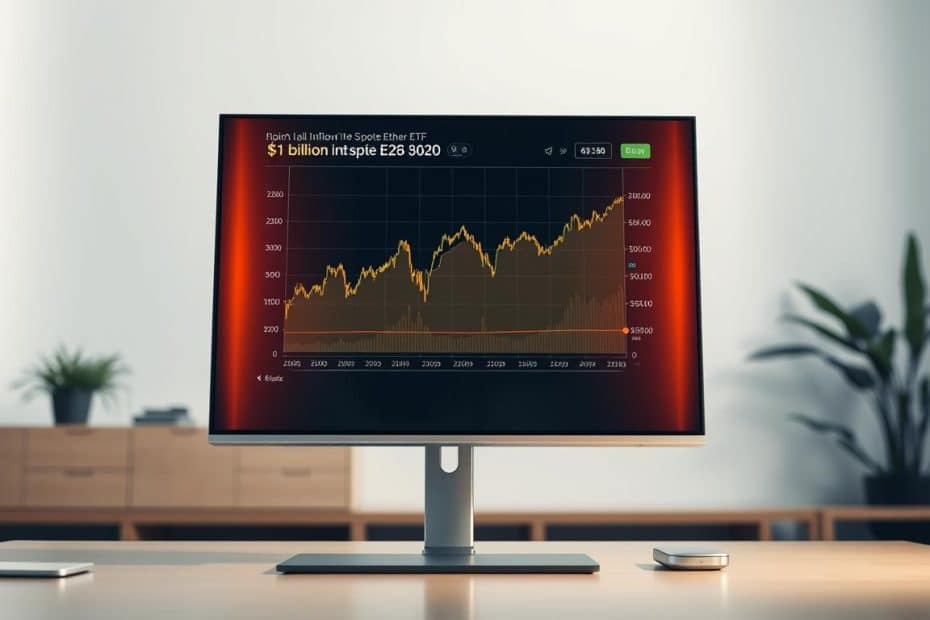
The timeline runs from early 2025 through August 2025. I mark April 2025 for the Hong Kong ETF launches for BTC and ETH. I highlight July 2025 when US spot Bitcoin ETFs pushed BTC above $118K. I flag August 2025 for a single‑day ETH ETF inflow of $1.01B and BTC breaking past $123K.
I annotate macro points like the July 2025 CPI print at 2.7% and shifting odds of a Fed cut. I add record futures open interest near $64B and exchange ETH balances falling to about 15.28M, a nine‑year low. These events sit on the same horizontal axis as price bars so the price movement timeline reads like a story.
Visualizing Historical Correlations
My preferred layout is multi‑panel. The top panel shows candlesticks for BTC and ETH with ETF inflow bars beneath. A middle panel overlays daily ETF inflows for both assets. The bottom panel plots exchange ETH balances and futures open interest on a secondary axis to show supply contraction.
Overlay charts let me visualize correlations between aggressive ETF inflows and price breakouts. I mark short liquidation clusters between $122.5K and $125.5K for BTC and annotate estimated liquidation amounts near $2B so the temporal alignment is visible.
| Panel | Data Plotted | Purpose |
|---|---|---|
| Panel A: Price Candles | BTC & ETH prices, daily candles | Primary view of market direction and volatility for crypto market analysis |
| Panel B: ETF Inflows | Daily inflows (BTC & ETH) from CoinGlass and Farside Investors allocations | Shows timing and magnitude of flows tied to price moves |
| Panel C: On‑Chain Supply | Exchange ETH balances, futures open interest (secondary axis) | Highlights supply contraction and derivatives pressure that reinforce breakouts |
| Annotations | April 2025 HK ETF launches; July 2025 BTC > $118K; Aug 2025 $1.01B ETH inflow; CPI 2.7% | Contextual markers to help readers visualize correlations and sequence of events |
| Sources | CoinGlass, CoinTelegraph, Coin World, Farside Investors | Data origins for inflows, prices, open interest, and balances used in the plots |
When I prepare these charts I keep the visuals tight. Candles on top, inflow bars right below, on‑chain panel at the bottom. That arrangement makes it simple to follow how ETF allocations flowed into assets and how prices reacted on the same timeline.
Market Predictions Post Inflow
I watched the $1B spot Ether inflow and felt the market shift under my feet. Traders on Binance and desks cited in Coin World talked about momentum that could push Bitcoin toward a major breakout. This section lays out the expert views and how analysts are reading the data.
Expert Predictions for Bitcoin Prices
Analysts at Binance, CoinDCX and institutional trading desks suggest Bitcoin could climb into the $125K–$128K range if momentum holds. Technical setups point to a break above the $119K–$121K resistance band. Data providers like CoinGlass flagged short-liquidation clusters that may accelerate upward moves.
How Market Analysts Assess the Impact
My conversations with market analysts reveal a mix of macro and on‑chain signals. Lower CPI prints and rising Fed cut probabilities change risk appetite. ETF flow data shows days with combined BTC and ETH inflows north of $1B tend to lift bullish odds.
Analysts layer futures open interest—about $64B for ETH—against exchange ETH balances near nine‑year lows. That combination informs scenarios: sustained inflows keep spot bids alive, leveraged traders add exposure and BTC reaches $125K+; or rapid leverage build-up triggers large liquidations and compresses gains into choppy action.
Quantitative forecasts show short‑term bullish probability rises materially when inflows top $1B and macro risks ease. Still, analysts warn about volatility from elevated leveraged exposure and concentrated inflows from big managers like BlackRock and Fidelity, which can create interim liquidity mismatches.
I find these balanced scenarios realistic. The data supports upside, yet the path is rarely smooth. Expect sharp intraday swings if leveraged positions are forced to unwind. Market predictions post inflow must weigh upside potential against clear liquidity and leverage risks tied to ETF impact on crypto and evolving cryptocurrency trends.
Tools for Monitoring Bitcoin Price Changes
I track markets with a mix of live price feeds, inflow trackers, and chain analytics. That combo gives a clearer picture than any single source. Below I list tools I use daily and how I combine them for practical crypto monitoring.
Recommended Price Tracking Websites
For spot prices I rely on Coinbase and Coinbase Pro as primary benchmarks. They give clean, exchange-level quotes that work well with trading alerts.
CoinMarketCap and CoinGecko aggregate market caps and liquidity across venues. Use them to compare depth and token listings quickly. TradingView is my go‑to for charting, overlays, and custom indicators.
For fast news hooks and market context I read CoinTelegraph and CoinDesk. Short, timely pieces there often explain drivers behind sudden moves. I sometimes link topical coverage to market signals, like this report on bullish signals and rate-cut bets here.
Tools for ETF and Cryptocurrency Analysis
CoinGlass shows ETF inflows, futures open interest, and liquidation clusters. I pair that with Farside Investors for institutional ETF flow breakdowns to see who is buying and where flows concentrate.
Glassnode and Nansen are the on‑chain workhorses. They track exchange balances, long‑term holder distributions, and wallet behavior that often precedes price moves. For issuer details I read SEC filings and fund pages from BlackRock and Fidelity.
Derivatives flows matter. Laevitas-style feeds and perpetual premium monitors help spot funding stress and speculative excess. I also watch CME tools for macro rate expectations; that data often correlates with risk appetite.
Practical rules I follow: combine a live price feed (Coinbase) with inflow data (CoinGlass/Farside Investors) and on‑chain metrics (Glassnode). Set alerts for ETF daily inflow thresholds above $500M and for sharp exchange balance drops. Those triggers have preceded big rallies in my experience.
Retail portfolio tools are simple: use brokerage portals that support ETF trading, custody reports from custodians, and portfolio trackers that aggregate spot ETF holdings and crypto positions. That lets me see correlations and rebalance when ETF flows shift.
| Use | Tool | Key Signal |
|---|---|---|
| Spot price benchmark | Coinbase / Coinbase Pro | Real-time spot quotes and liquidity |
| Market aggregation | CoinMarketCap / CoinGecko | Market cap, volume, token listings |
| Charting & indicators | TradingView | Custom charts, MACD, moving averages |
| ETF inflows & futures | CoinGlass | Inflows, open interest, liquidation clusters |
| Institutional flow breakdown | Farside Investors | Who buys ETFs and allocation trends |
| On‑chain analytics | Glassnode / Nansen | Exchange balances, holder distributions |
| News & context | CoinTelegraph | Market narratives and event coverage |
| Derivatives monitoring | Laevitas-style feeds | Funding rates and perpetual premium |
Mixing these Bitcoin price tracking tools and ETF analysis tools gives layered signals. I prefer clear, simple alerts over constant checking. That keeps my decisions evidence‑driven and less emotional.
Frequently Asked Questions on the Topic
I keep a running list of the questions I see most from readers and traders. These answers pull from chart work, on‑chain signals, and my experience watching ETF flows move markets. Short, practical points you can check quickly.
How do spot ETFs affect the price of Bitcoin?
Spot ETFs create fresh institutional demand by pooling capital to buy the underlying asset. That reduces available liquidity on exchanges and can push market prices higher when inflows arrive. The US spot Bitcoin ETF roll‑out and cumulative inflows near $12B correlated with record highs for BTC, while simultaneous Ether ETF inflows around $1B on single days have matched periods of BTC strength.
ETF mechanics matter. In‑kind creation and redemption keep arbitrage tight and narrow spreads between ETF shares and the asset. That limits retail slippage and draws more passive money. Watch daily inflow data, exchange reserves, and derivatives open interest to see how ETF buying pressure transmits to spot markets and to inform digital asset portfolio management.
What should investors know about Ether and Bitcoin correlation?
ETH and BTC often move together in risk‑on phases. Large ETH inflows can raise risk appetite and trigger BTC moves through sentiment and capital rotation. Correlation is not permanent. Ethereum fundamentals, like DeFi activity and smart‑contract demand, create independent drivers for ETH.
Derivatives add nuance. Futures open interest for ETH can swell into the tens of billions during rallies, changing leverage profiles and volatility. Monitor on‑chain metrics, exchange balances, and derivatives positioning to understand short‑term coupling and long‑term divergence. Use that insight in crypto market analysis and when adjusting allocations for long‑term plans.
Quick practical checklist
- Track ETF inflows and daily NAV spreads.
- Watch exchange reserves for BTC and ETH to gauge supply pressure.
- Check futures open interest and liquidation clusters for leverage risk.
- Align position sizing with macro views, not just inflow headlines.
These FAQs aim to help with ETH BTC correlation FAQ queries, to support clearer crypto market analysis, and to guide smarter decisions in digital asset portfolio management.
Evidence Supporting Market Predictions
I walked through the latest inflow figures, on‑chain data, and derivatives activity to form an evidence‑based picture of market direction. The mix of issuer reports, exchange metrics, and macro triggers gives a multi-angle view that deserves careful weighing before acting.
Market Reports and Analysis
CoinGlass and CoinWorld reported near‑simultaneous inflows: about $1.01B into spot Ether ETFs and roughly $1.02B into Bitcoin spot ETFs during the same period. Those flows matched price moves with BTC topping $123K and ETH moving past $4.6K, a synchronicity I find noteworthy for short‑term momentum studies.
CoinTelegraph outlined the technical picture and flagged liquidation risk near $2B, which can amplify volatility when combined with heavy ETF involvement. Farside Investors supplied issuer breakdowns showing substantial allocations from BlackRock and Fidelity, which helps explain concentrated buying pressure at the product level.
I cross‑checked these narratives with market reports on crypto ETFs and found consistent signals across vendors. That convergence strengthens the claim that the observed flows were not one‑off events but coordinated liquidity shifts with measurable market impact.
Research Studies on ETF Impact
Academic and industry research studies on ETF inflows show that spot products can tighten spreads and reduce tracking error through in‑kind mechanics. Past US spot Bitcoin ETF inflows, totaling about $12B cumulatively, were a major driver behind July 2025’s BTC all‑time highs above $118K.
On‑chain corroboration adds depth to those findings. ETH balances on exchanges fell to roughly 15.28M, a nine‑year low during the ETF window, which supports durable accumulation rather than fleeting derivative bets. Futures open interest surged, with ETH futures reaching near $64B, pointing to derivatives amplification on top of cash demand.
I compare these elements as part of my crypto market analysis. The alignment of research studies on ETF inflows, exchange balance contraction, and record futures open interest forms a layered evidentiary base that market participants cite when assessing near‑term scenarios. For a succinct market snapshot tied to price action, see this report on recent moves and ETF context: crypto market update.
| Data Point | Value | Implication |
|---|---|---|
| Spot ETH ETF inflows | $1.01B | Immediate buy pressure into ETH cash market |
| Spot BTC ETF inflows | $1.02B | Concurrent BTC liquidity lift and correlated momentum |
| Exchange ETH balances | ~15.28M ETH | Supply contraction indicating accumulation |
| ETH futures open interest | ~$64B | Derivatives amplification of spot moves |
| Issuer inflow breakdown | BlackRock $649.8M; Fidelity $276.9M | Concentrated institutional demand |
Conclusion: Potential Future Impact on Bitcoin
I’ve watched markets respond to big institutional moves for years, and the $1B-plus Ether ETF inflow reads like more than a headline. It signals stronger structural demand that can tighten circulating supply across crypto. Historically, large spot ETF inflows—think cumulative flows into U.S. Bitcoin ETFs near $12B—have lined up with durable BTC rallies, so the future impact on bitcoin is worth factoring into any blockchain investment strategies.
The ETF influence on crypto is not uniform. BlackRock and Fidelity drove much of the recent ETH flow, and issuer concentration changes how capital redistributes. With ETH on-exchange balances at multi-year lows and record futures open interest, leverage will amplify moves. Expect jagged, volatile price paths, not a smooth climb. I use on-chain data, CoinGlass futures metrics, and macro signals like CPI and Fed guidance together to judge odds.
Investor awareness matters. Watch ETF inflows, exchange balances, liquidation clusters, and regional regulation—Hong Kong releases and mainland policy still shift liquidity windows. For practical tracking, set alerts on inflow thresholds and follow trusted research from CoinTelegraph, Farside Investors, and laevitas.ch. These inputs shape risk sizing, entry timing, and the correlation between BTC and ETH within diversified decentralized finance impact strategies.
From my experience, large ETF flows change probabilities but don’t eliminate risk. Treat them as a strong piece of the mosaic alongside macro and on-chain indicators. Keep a disciplined plan, monitor trends, and read deeper analysis when you can—this short primer links to a discussion of price targets and market context for further reading at price target analysis.
FAQ
What was the Spot Ether ETF
FAQ
What was the Spot Ether ETF
FAQ
What was the Spot Ether ETF $1B inflow and why does it matter for Bitcoin?
The single‑day spot Ether ETF inflow totaled about $1.01B, led by BlackRock’s iShares Ethereum Trust and Fidelity’s product. It matters because large, concentrated ETF purchases remove ETH from exchanges, tighten liquidity, and lift market sentiment. That same session saw sizable Bitcoin ETF flows and softer CPI data, and markets responded with BTC trading markedly higher. In short: heavy ETH institutional demand can tighten supply and feed cross‑asset momentum that helps push Bitcoin higher.
What is a Spot Ether ETF?
A spot Ether ETF is a regulated fund that holds physical Ether (ETH) on behalf of investors, offering direct exposure to ETH price without requiring investors to manage custody. Major issuers like BlackRock and Fidelity have issued such funds and were primary drivers of the large inflow discussed here.
How do spot ETFs function in practice?
Many spot ETFs use in‑kind creation and redemption, where authorized participants exchange actual ETH for ETF shares. This mechanism supports arbitrage, narrows premiums/discounts, and helps align the ETF price with the spot market. Institutional creations draw on‑exchange supply and can therefore reduce exchange balances, while also enabling large, coordinated purchases that move the market.
What is the historical context of Ether and Bitcoin ETFs?
Spot ETFs for Bitcoin gained traction first in the U.S., driving cumulative inflows that correlated with major BTC price highs. Hong Kong launched spot Bitcoin and Ethereum ETFs as regionally important products, introducing in‑kind mechanics into Asian trading windows. Regulatory stances differ—mainland China remains restrictive while Hong Kong and the U.S. have pursued regulated paths—shaping where capital flows and how price discovery unfolds.
What recent trends in ETF investments should I watch?
Across 2025–2025 spot ETFs have attracted increasing institutional capital. Notably, U.S. spot Bitcoin ETFs accumulated large cumulative inflows and Ether ETFs have begun to register multi‑hundred‑million to billion‑dollar days. Watch for days when inflows exceed typical thresholds, issuer concentration, and whether flows are paired across BTC and ETH simultaneously.
How was the $1B Ether inflow broken down?
The largest share was attributed to BlackRock’s iShares Ethereum Trust, followed by Fidelity’s Ethereum product. The remainder was spread across other issuers. This concentration is common—large asset managers often dominate flows and provide inventory for creations, amplifying short‑term market impact.
What does investor sentiment look like around these Ether ETFs?
Institutional appetite appeared strong: large ETF inflows combined with declining exchange ETH balances suggest accumulation and long‑term storage. Softer macro data and rising Fed cut odds increased risk appetite, encouraging both spot buying and leveraged positioning in derivatives markets.
How historically correlated are ETH and BTC during these ETF-driven moves?
ETH and BTC tend to show positive correlation in risk‑on episodes. Large ETH inflows can lift overall crypto sentiment and trigger BTC moves through capital rotation and algorithmic strategies. Correlation is not perfect—ETH’s DeFi fundamentals and futures positioning can create divergences—but synchronized ETF demand often drives parallel rallies.
What is the impact of large investments like this on market dynamics?
Big spot ETF inflows act as sustained bids that reduce available exchange liquidity, tighten spreads, and can trigger technical breakouts. They also increase derivatives activity and liquidation risk; for example, short clusters and liquidation zones around key BTC levels can amplify moves when price crosses those zones.
What historical price reactions followed notable ETF inflows?
Past large ETF inflows coincided with BTC pushing to new highs and ETH breaking multi‑year resistances. For instance, cumulative U.S. spot Bitcoin ETF inflows helped push BTC well above prior highs in mid‑2025, and the single‑day ETH ETF inflow aligned with ETH moving above $4.6K and BTC surpassing $123K on the same session.
How strong is the correlation between Ether ETF inflows and Bitcoin price moves?
Short‑term empirical evidence shows that sizable ETH ETF inflows often coincide with elevated BTC upside probability—especially when macro tailwinds exist and BTC ETFs are also drawing capital. Analysts look at inflow magnitudes, futures open interest, exchange balances, and liquidation zones to quantify this relationship and attendant risks.
What does the price movement timeline around these events look like?
Key markers include Hong Kong ETF launches in 2025, large U.S. BTC ETF inflows and BTC all‑time highs in mid‑2025, and the mid‑Aug 2025 single‑day ETH ETF inflow that aligned with ETH topping multi‑year levels and BTC breaking above $123K. These events cluster with macro updates like CPI prints that alter risk appetite.
How can historical correlations be visualized for analysis?
Effective visuals overlay BTC and ETH price candles with daily ETF inflow bars, an on‑chain panel for exchange balances, and a derivatives panel for futures open interest. Marking short‑liquidation clusters and inflow spikes reveals temporal alignment between flows and price breakouts.
What are expert predictions for Bitcoin prices after such inflows?
Analysts and trading desks projecting bullish scenarios point to potential moves beyond recent resistance zones if momentum persists. Technical setups and liquidation clusters suggest BTC could reach higher targets in a continuation scenario, while analysts also warn of sharp pullbacks if leverage unwinds.
How do market analysts assess the impact of these ETF flows?
Analysts combine macro context, ETF flow data, on‑chain supply metrics, and derivatives positioning. They construct scenarios where sustained ETF demand fuels further upside, or where rapid leverage increases produce volatile, choppy price action. Both outcomes are plausible based on observed metrics.
Which websites and tools are recommended to monitor price and ETF activity?
For price and charts use Coinbase, CoinMarketCap, CoinGecko, and TradingView. For ETF inflows, futures open interest, and liquidation data use CoinGlass and Farside Investors. For on‑chain metrics use Glassnode, Nansen, and exchange balance trackers. SEC filings and issuer pages (BlackRock, Fidelity) provide fund specifics.
What analytical tools should I combine for ETF and crypto analysis?
Combine a reliable price feed with inflow data and on‑chain analytics. Track ETF daily inflows, futures open interest, and exchange balances simultaneously. Set alerts for outsized inflows or sharp exchange balance declines—these historically precede stronger rallies or heightened volatility.
How do spot ETFs affect the price of Bitcoin?
Spot ETFs aggregate investor capital to buy the underlying asset, reducing available market liquidity and creating sustained bid pressure. Historically, large BTC ETF inflows have been associated with price rallies, and concurrent ETH ETF demand can strengthen cross‑asset momentum that helps lift BTC further.
What should investors know about Ether and Bitcoin correlation?
ETH and BTC usually move together in risk‑on markets, but each has distinct fundamentals and leverage profiles. Investors should monitor ETF inflows, exchange balances, futures open interest, and macro policy expectations to understand correlation dynamics and avoid over‑relying on a perfect linkage.
What market reports and analyses support these observations?
Reporting from CoinGlass, CoinTelegraph/Coin World, and Farside Investors documents the inflow figures, price moves, and derivatives positioning. Hong Kong regulatory announcements and data providers like Laevitas corroborate futures open interest and structural market metrics.
What research exists on the impact of ETFs on crypto prices?
Industry and academic studies of ETF introductions show that spot products reduce tracking error and often attract new capital pools, tightening spreads and supporting price discovery. The recent U.S. BTC ETF inflows and the ETH single‑day inflow provide real‑world cases of these theoretical effects.
What evidence supports market predictions about continued Bitcoin upside?
The combined evidence includes large ETF inflow totals, exchange ETH balances hitting multi‑year lows, record futures open interest, and macro triggers like softer CPI readings. Together they increase the probability of near‑term BTC upside, while also implying elevated volatility risk from leverage.
What should investors watch to manage risk after such ETF inflows?
Monitor ETF inflows and issuer concentration, exchange token balances, futures open interest, and liquidation clusters. Keep an eye on macro releases that shift rate expectations. Use position sizing and stop management—large flows change odds but don’t eliminate sharp intraday moves.
B inflow and why does it matter for Bitcoin?
The single‑day spot Ether ETF inflow totaled about
FAQ
What was the Spot Ether ETF $1B inflow and why does it matter for Bitcoin?
The single‑day spot Ether ETF inflow totaled about $1.01B, led by BlackRock’s iShares Ethereum Trust and Fidelity’s product. It matters because large, concentrated ETF purchases remove ETH from exchanges, tighten liquidity, and lift market sentiment. That same session saw sizable Bitcoin ETF flows and softer CPI data, and markets responded with BTC trading markedly higher. In short: heavy ETH institutional demand can tighten supply and feed cross‑asset momentum that helps push Bitcoin higher.
What is a Spot Ether ETF?
A spot Ether ETF is a regulated fund that holds physical Ether (ETH) on behalf of investors, offering direct exposure to ETH price without requiring investors to manage custody. Major issuers like BlackRock and Fidelity have issued such funds and were primary drivers of the large inflow discussed here.
How do spot ETFs function in practice?
Many spot ETFs use in‑kind creation and redemption, where authorized participants exchange actual ETH for ETF shares. This mechanism supports arbitrage, narrows premiums/discounts, and helps align the ETF price with the spot market. Institutional creations draw on‑exchange supply and can therefore reduce exchange balances, while also enabling large, coordinated purchases that move the market.
What is the historical context of Ether and Bitcoin ETFs?
Spot ETFs for Bitcoin gained traction first in the U.S., driving cumulative inflows that correlated with major BTC price highs. Hong Kong launched spot Bitcoin and Ethereum ETFs as regionally important products, introducing in‑kind mechanics into Asian trading windows. Regulatory stances differ—mainland China remains restrictive while Hong Kong and the U.S. have pursued regulated paths—shaping where capital flows and how price discovery unfolds.
What recent trends in ETF investments should I watch?
Across 2025–2025 spot ETFs have attracted increasing institutional capital. Notably, U.S. spot Bitcoin ETFs accumulated large cumulative inflows and Ether ETFs have begun to register multi‑hundred‑million to billion‑dollar days. Watch for days when inflows exceed typical thresholds, issuer concentration, and whether flows are paired across BTC and ETH simultaneously.
How was the $1B Ether inflow broken down?
The largest share was attributed to BlackRock’s iShares Ethereum Trust, followed by Fidelity’s Ethereum product. The remainder was spread across other issuers. This concentration is common—large asset managers often dominate flows and provide inventory for creations, amplifying short‑term market impact.
What does investor sentiment look like around these Ether ETFs?
Institutional appetite appeared strong: large ETF inflows combined with declining exchange ETH balances suggest accumulation and long‑term storage. Softer macro data and rising Fed cut odds increased risk appetite, encouraging both spot buying and leveraged positioning in derivatives markets.
How historically correlated are ETH and BTC during these ETF-driven moves?
ETH and BTC tend to show positive correlation in risk‑on episodes. Large ETH inflows can lift overall crypto sentiment and trigger BTC moves through capital rotation and algorithmic strategies. Correlation is not perfect—ETH’s DeFi fundamentals and futures positioning can create divergences—but synchronized ETF demand often drives parallel rallies.
What is the impact of large investments like this on market dynamics?
Big spot ETF inflows act as sustained bids that reduce available exchange liquidity, tighten spreads, and can trigger technical breakouts. They also increase derivatives activity and liquidation risk; for example, short clusters and liquidation zones around key BTC levels can amplify moves when price crosses those zones.
What historical price reactions followed notable ETF inflows?
Past large ETF inflows coincided with BTC pushing to new highs and ETH breaking multi‑year resistances. For instance, cumulative U.S. spot Bitcoin ETF inflows helped push BTC well above prior highs in mid‑2025, and the single‑day ETH ETF inflow aligned with ETH moving above $4.6K and BTC surpassing $123K on the same session.
How strong is the correlation between Ether ETF inflows and Bitcoin price moves?
Short‑term empirical evidence shows that sizable ETH ETF inflows often coincide with elevated BTC upside probability—especially when macro tailwinds exist and BTC ETFs are also drawing capital. Analysts look at inflow magnitudes, futures open interest, exchange balances, and liquidation zones to quantify this relationship and attendant risks.
What does the price movement timeline around these events look like?
Key markers include Hong Kong ETF launches in 2025, large U.S. BTC ETF inflows and BTC all‑time highs in mid‑2025, and the mid‑Aug 2025 single‑day ETH ETF inflow that aligned with ETH topping multi‑year levels and BTC breaking above $123K. These events cluster with macro updates like CPI prints that alter risk appetite.
How can historical correlations be visualized for analysis?
Effective visuals overlay BTC and ETH price candles with daily ETF inflow bars, an on‑chain panel for exchange balances, and a derivatives panel for futures open interest. Marking short‑liquidation clusters and inflow spikes reveals temporal alignment between flows and price breakouts.
What are expert predictions for Bitcoin prices after such inflows?
Analysts and trading desks projecting bullish scenarios point to potential moves beyond recent resistance zones if momentum persists. Technical setups and liquidation clusters suggest BTC could reach higher targets in a continuation scenario, while analysts also warn of sharp pullbacks if leverage unwinds.
How do market analysts assess the impact of these ETF flows?
Analysts combine macro context, ETF flow data, on‑chain supply metrics, and derivatives positioning. They construct scenarios where sustained ETF demand fuels further upside, or where rapid leverage increases produce volatile, choppy price action. Both outcomes are plausible based on observed metrics.
Which websites and tools are recommended to monitor price and ETF activity?
For price and charts use Coinbase, CoinMarketCap, CoinGecko, and TradingView. For ETF inflows, futures open interest, and liquidation data use CoinGlass and Farside Investors. For on‑chain metrics use Glassnode, Nansen, and exchange balance trackers. SEC filings and issuer pages (BlackRock, Fidelity) provide fund specifics.
What analytical tools should I combine for ETF and crypto analysis?
Combine a reliable price feed with inflow data and on‑chain analytics. Track ETF daily inflows, futures open interest, and exchange balances simultaneously. Set alerts for outsized inflows or sharp exchange balance declines—these historically precede stronger rallies or heightened volatility.
How do spot ETFs affect the price of Bitcoin?
Spot ETFs aggregate investor capital to buy the underlying asset, reducing available market liquidity and creating sustained bid pressure. Historically, large BTC ETF inflows have been associated with price rallies, and concurrent ETH ETF demand can strengthen cross‑asset momentum that helps lift BTC further.
What should investors know about Ether and Bitcoin correlation?
ETH and BTC usually move together in risk‑on markets, but each has distinct fundamentals and leverage profiles. Investors should monitor ETF inflows, exchange balances, futures open interest, and macro policy expectations to understand correlation dynamics and avoid over‑relying on a perfect linkage.
What market reports and analyses support these observations?
Reporting from CoinGlass, CoinTelegraph/Coin World, and Farside Investors documents the inflow figures, price moves, and derivatives positioning. Hong Kong regulatory announcements and data providers like Laevitas corroborate futures open interest and structural market metrics.
What research exists on the impact of ETFs on crypto prices?
Industry and academic studies of ETF introductions show that spot products reduce tracking error and often attract new capital pools, tightening spreads and supporting price discovery. The recent U.S. BTC ETF inflows and the ETH single‑day inflow provide real‑world cases of these theoretical effects.
What evidence supports market predictions about continued Bitcoin upside?
The combined evidence includes large ETF inflow totals, exchange ETH balances hitting multi‑year lows, record futures open interest, and macro triggers like softer CPI readings. Together they increase the probability of near‑term BTC upside, while also implying elevated volatility risk from leverage.
What should investors watch to manage risk after such ETF inflows?
Monitor ETF inflows and issuer concentration, exchange token balances, futures open interest, and liquidation clusters. Keep an eye on macro releases that shift rate expectations. Use position sizing and stop management—large flows change odds but don’t eliminate sharp intraday moves.
.01B, led by BlackRock’s iShares Ethereum Trust and Fidelity’s product. It matters because large, concentrated ETF purchases remove ETH from exchanges, tighten liquidity, and lift market sentiment. That same session saw sizable Bitcoin ETF flows and softer CPI data, and markets responded with BTC trading markedly higher. In short: heavy ETH institutional demand can tighten supply and feed cross‑asset momentum that helps push Bitcoin higher.
What is a Spot Ether ETF?
A spot Ether ETF is a regulated fund that holds physical Ether (ETH) on behalf of investors, offering direct exposure to ETH price without requiring investors to manage custody. Major issuers like BlackRock and Fidelity have issued such funds and were primary drivers of the large inflow discussed here.
How do spot ETFs function in practice?
Many spot ETFs use in‑kind creation and redemption, where authorized participants exchange actual ETH for ETF shares. This mechanism supports arbitrage, narrows premiums/discounts, and helps align the ETF price with the spot market. Institutional creations draw on‑exchange supply and can therefore reduce exchange balances, while also enabling large, coordinated purchases that move the market.
What is the historical context of Ether and Bitcoin ETFs?
Spot ETFs for Bitcoin gained traction first in the U.S., driving cumulative inflows that correlated with major BTC price highs. Hong Kong launched spot Bitcoin and Ethereum ETFs as regionally important products, introducing in‑kind mechanics into Asian trading windows. Regulatory stances differ—mainland China remains restrictive while Hong Kong and the U.S. have pursued regulated paths—shaping where capital flows and how price discovery unfolds.
What recent trends in ETF investments should I watch?
Across 2025–2025 spot ETFs have attracted increasing institutional capital. Notably, U.S. spot Bitcoin ETFs accumulated large cumulative inflows and Ether ETFs have begun to register multi‑hundred‑million to billion‑dollar days. Watch for days when inflows exceed typical thresholds, issuer concentration, and whether flows are paired across BTC and ETH simultaneously.
How was the
FAQ
What was the Spot Ether ETF $1B inflow and why does it matter for Bitcoin?
The single‑day spot Ether ETF inflow totaled about $1.01B, led by BlackRock’s iShares Ethereum Trust and Fidelity’s product. It matters because large, concentrated ETF purchases remove ETH from exchanges, tighten liquidity, and lift market sentiment. That same session saw sizable Bitcoin ETF flows and softer CPI data, and markets responded with BTC trading markedly higher. In short: heavy ETH institutional demand can tighten supply and feed cross‑asset momentum that helps push Bitcoin higher.
What is a Spot Ether ETF?
A spot Ether ETF is a regulated fund that holds physical Ether (ETH) on behalf of investors, offering direct exposure to ETH price without requiring investors to manage custody. Major issuers like BlackRock and Fidelity have issued such funds and were primary drivers of the large inflow discussed here.
How do spot ETFs function in practice?
Many spot ETFs use in‑kind creation and redemption, where authorized participants exchange actual ETH for ETF shares. This mechanism supports arbitrage, narrows premiums/discounts, and helps align the ETF price with the spot market. Institutional creations draw on‑exchange supply and can therefore reduce exchange balances, while also enabling large, coordinated purchases that move the market.
What is the historical context of Ether and Bitcoin ETFs?
Spot ETFs for Bitcoin gained traction first in the U.S., driving cumulative inflows that correlated with major BTC price highs. Hong Kong launched spot Bitcoin and Ethereum ETFs as regionally important products, introducing in‑kind mechanics into Asian trading windows. Regulatory stances differ—mainland China remains restrictive while Hong Kong and the U.S. have pursued regulated paths—shaping where capital flows and how price discovery unfolds.
What recent trends in ETF investments should I watch?
Across 2025–2025 spot ETFs have attracted increasing institutional capital. Notably, U.S. spot Bitcoin ETFs accumulated large cumulative inflows and Ether ETFs have begun to register multi‑hundred‑million to billion‑dollar days. Watch for days when inflows exceed typical thresholds, issuer concentration, and whether flows are paired across BTC and ETH simultaneously.
How was the $1B Ether inflow broken down?
The largest share was attributed to BlackRock’s iShares Ethereum Trust, followed by Fidelity’s Ethereum product. The remainder was spread across other issuers. This concentration is common—large asset managers often dominate flows and provide inventory for creations, amplifying short‑term market impact.
What does investor sentiment look like around these Ether ETFs?
Institutional appetite appeared strong: large ETF inflows combined with declining exchange ETH balances suggest accumulation and long‑term storage. Softer macro data and rising Fed cut odds increased risk appetite, encouraging both spot buying and leveraged positioning in derivatives markets.
How historically correlated are ETH and BTC during these ETF-driven moves?
ETH and BTC tend to show positive correlation in risk‑on episodes. Large ETH inflows can lift overall crypto sentiment and trigger BTC moves through capital rotation and algorithmic strategies. Correlation is not perfect—ETH’s DeFi fundamentals and futures positioning can create divergences—but synchronized ETF demand often drives parallel rallies.
What is the impact of large investments like this on market dynamics?
Big spot ETF inflows act as sustained bids that reduce available exchange liquidity, tighten spreads, and can trigger technical breakouts. They also increase derivatives activity and liquidation risk; for example, short clusters and liquidation zones around key BTC levels can amplify moves when price crosses those zones.
What historical price reactions followed notable ETF inflows?
Past large ETF inflows coincided with BTC pushing to new highs and ETH breaking multi‑year resistances. For instance, cumulative U.S. spot Bitcoin ETF inflows helped push BTC well above prior highs in mid‑2025, and the single‑day ETH ETF inflow aligned with ETH moving above $4.6K and BTC surpassing $123K on the same session.
How strong is the correlation between Ether ETF inflows and Bitcoin price moves?
Short‑term empirical evidence shows that sizable ETH ETF inflows often coincide with elevated BTC upside probability—especially when macro tailwinds exist and BTC ETFs are also drawing capital. Analysts look at inflow magnitudes, futures open interest, exchange balances, and liquidation zones to quantify this relationship and attendant risks.
What does the price movement timeline around these events look like?
Key markers include Hong Kong ETF launches in 2025, large U.S. BTC ETF inflows and BTC all‑time highs in mid‑2025, and the mid‑Aug 2025 single‑day ETH ETF inflow that aligned with ETH topping multi‑year levels and BTC breaking above $123K. These events cluster with macro updates like CPI prints that alter risk appetite.
How can historical correlations be visualized for analysis?
Effective visuals overlay BTC and ETH price candles with daily ETF inflow bars, an on‑chain panel for exchange balances, and a derivatives panel for futures open interest. Marking short‑liquidation clusters and inflow spikes reveals temporal alignment between flows and price breakouts.
What are expert predictions for Bitcoin prices after such inflows?
Analysts and trading desks projecting bullish scenarios point to potential moves beyond recent resistance zones if momentum persists. Technical setups and liquidation clusters suggest BTC could reach higher targets in a continuation scenario, while analysts also warn of sharp pullbacks if leverage unwinds.
How do market analysts assess the impact of these ETF flows?
Analysts combine macro context, ETF flow data, on‑chain supply metrics, and derivatives positioning. They construct scenarios where sustained ETF demand fuels further upside, or where rapid leverage increases produce volatile, choppy price action. Both outcomes are plausible based on observed metrics.
Which websites and tools are recommended to monitor price and ETF activity?
For price and charts use Coinbase, CoinMarketCap, CoinGecko, and TradingView. For ETF inflows, futures open interest, and liquidation data use CoinGlass and Farside Investors. For on‑chain metrics use Glassnode, Nansen, and exchange balance trackers. SEC filings and issuer pages (BlackRock, Fidelity) provide fund specifics.
What analytical tools should I combine for ETF and crypto analysis?
Combine a reliable price feed with inflow data and on‑chain analytics. Track ETF daily inflows, futures open interest, and exchange balances simultaneously. Set alerts for outsized inflows or sharp exchange balance declines—these historically precede stronger rallies or heightened volatility.
How do spot ETFs affect the price of Bitcoin?
Spot ETFs aggregate investor capital to buy the underlying asset, reducing available market liquidity and creating sustained bid pressure. Historically, large BTC ETF inflows have been associated with price rallies, and concurrent ETH ETF demand can strengthen cross‑asset momentum that helps lift BTC further.
What should investors know about Ether and Bitcoin correlation?
ETH and BTC usually move together in risk‑on markets, but each has distinct fundamentals and leverage profiles. Investors should monitor ETF inflows, exchange balances, futures open interest, and macro policy expectations to understand correlation dynamics and avoid over‑relying on a perfect linkage.
What market reports and analyses support these observations?
Reporting from CoinGlass, CoinTelegraph/Coin World, and Farside Investors documents the inflow figures, price moves, and derivatives positioning. Hong Kong regulatory announcements and data providers like Laevitas corroborate futures open interest and structural market metrics.
What research exists on the impact of ETFs on crypto prices?
Industry and academic studies of ETF introductions show that spot products reduce tracking error and often attract new capital pools, tightening spreads and supporting price discovery. The recent U.S. BTC ETF inflows and the ETH single‑day inflow provide real‑world cases of these theoretical effects.
What evidence supports market predictions about continued Bitcoin upside?
The combined evidence includes large ETF inflow totals, exchange ETH balances hitting multi‑year lows, record futures open interest, and macro triggers like softer CPI readings. Together they increase the probability of near‑term BTC upside, while also implying elevated volatility risk from leverage.
What should investors watch to manage risk after such ETF inflows?
Monitor ETF inflows and issuer concentration, exchange token balances, futures open interest, and liquidation clusters. Keep an eye on macro releases that shift rate expectations. Use position sizing and stop management—large flows change odds but don’t eliminate sharp intraday moves.
B Ether inflow broken down?
The largest share was attributed to BlackRock’s iShares Ethereum Trust, followed by Fidelity’s Ethereum product. The remainder was spread across other issuers. This concentration is common—large asset managers often dominate flows and provide inventory for creations, amplifying short‑term market impact.
What does investor sentiment look like around these Ether ETFs?
Institutional appetite appeared strong: large ETF inflows combined with declining exchange ETH balances suggest accumulation and long‑term storage. Softer macro data and rising Fed cut odds increased risk appetite, encouraging both spot buying and leveraged positioning in derivatives markets.
How historically correlated are ETH and BTC during these ETF-driven moves?
ETH and BTC tend to show positive correlation in risk‑on episodes. Large ETH inflows can lift overall crypto sentiment and trigger BTC moves through capital rotation and algorithmic strategies. Correlation is not perfect—ETH’s DeFi fundamentals and futures positioning can create divergences—but synchronized ETF demand often drives parallel rallies.
What is the impact of large investments like this on market dynamics?
Big spot ETF inflows act as sustained bids that reduce available exchange liquidity, tighten spreads, and can trigger technical breakouts. They also increase derivatives activity and liquidation risk; for example, short clusters and liquidation zones around key BTC levels can amplify moves when price crosses those zones.
What historical price reactions followed notable ETF inflows?
Past large ETF inflows coincided with BTC pushing to new highs and ETH breaking multi‑year resistances. For instance, cumulative U.S. spot Bitcoin ETF inflows helped push BTC well above prior highs in mid‑2025, and the single‑day ETH ETF inflow aligned with ETH moving above .6K and BTC surpassing 3K on the same session.
How strong is the correlation between Ether ETF inflows and Bitcoin price moves?
Short‑term empirical evidence shows that sizable ETH ETF inflows often coincide with elevated BTC upside probability—especially when macro tailwinds exist and BTC ETFs are also drawing capital. Analysts look at inflow magnitudes, futures open interest, exchange balances, and liquidation zones to quantify this relationship and attendant risks.
What does the price movement timeline around these events look like?
Key markers include Hong Kong ETF launches in 2025, large U.S. BTC ETF inflows and BTC all‑time highs in mid‑2025, and the mid‑Aug 2025 single‑day ETH ETF inflow that aligned with ETH topping multi‑year levels and BTC breaking above 3K. These events cluster with macro updates like CPI prints that alter risk appetite.
How can historical correlations be visualized for analysis?
Effective visuals overlay BTC and ETH price candles with daily ETF inflow bars, an on‑chain panel for exchange balances, and a derivatives panel for futures open interest. Marking short‑liquidation clusters and inflow spikes reveals temporal alignment between flows and price breakouts.
What are expert predictions for Bitcoin prices after such inflows?
Analysts and trading desks projecting bullish scenarios point to potential moves beyond recent resistance zones if momentum persists. Technical setups and liquidation clusters suggest BTC could reach higher targets in a continuation scenario, while analysts also warn of sharp pullbacks if leverage unwinds.
How do market analysts assess the impact of these ETF flows?
Analysts combine macro context, ETF flow data, on‑chain supply metrics, and derivatives positioning. They construct scenarios where sustained ETF demand fuels further upside, or where rapid leverage increases produce volatile, choppy price action. Both outcomes are plausible based on observed metrics.
Which websites and tools are recommended to monitor price and ETF activity?
For price and charts use Coinbase, CoinMarketCap, CoinGecko, and TradingView. For ETF inflows, futures open interest, and liquidation data use CoinGlass and Farside Investors. For on‑chain metrics use Glassnode, Nansen, and exchange balance trackers. SEC filings and issuer pages (BlackRock, Fidelity) provide fund specifics.
What analytical tools should I combine for ETF and crypto analysis?
Combine a reliable price feed with inflow data and on‑chain analytics. Track ETF daily inflows, futures open interest, and exchange balances simultaneously. Set alerts for outsized inflows or sharp exchange balance declines—these historically precede stronger rallies or heightened volatility.
How do spot ETFs affect the price of Bitcoin?
Spot ETFs aggregate investor capital to buy the underlying asset, reducing available market liquidity and creating sustained bid pressure. Historically, large BTC ETF inflows have been associated with price rallies, and concurrent ETH ETF demand can strengthen cross‑asset momentum that helps lift BTC further.
What should investors know about Ether and Bitcoin correlation?
ETH and BTC usually move together in risk‑on markets, but each has distinct fundamentals and leverage profiles. Investors should monitor ETF inflows, exchange balances, futures open interest, and macro policy expectations to understand correlation dynamics and avoid over‑relying on a perfect linkage.
What market reports and analyses support these observations?
Reporting from CoinGlass, CoinTelegraph/Coin World, and Farside Investors documents the inflow figures, price moves, and derivatives positioning. Hong Kong regulatory announcements and data providers like Laevitas corroborate futures open interest and structural market metrics.
What research exists on the impact of ETFs on crypto prices?
Industry and academic studies of ETF introductions show that spot products reduce tracking error and often attract new capital pools, tightening spreads and supporting price discovery. The recent U.S. BTC ETF inflows and the ETH single‑day inflow provide real‑world cases of these theoretical effects.
What evidence supports market predictions about continued Bitcoin upside?
The combined evidence includes large ETF inflow totals, exchange ETH balances hitting multi‑year lows, record futures open interest, and macro triggers like softer CPI readings. Together they increase the probability of near‑term BTC upside, while also implying elevated volatility risk from leverage.
What should investors watch to manage risk after such ETF inflows?
Monitor ETF inflows and issuer concentration, exchange token balances, futures open interest, and liquidation clusters. Keep an eye on macro releases that shift rate expectations. Use position sizing and stop management—large flows change odds but don’t eliminate sharp intraday moves.
B inflow and why does it matter for Bitcoin?
The single‑day spot Ether ETF inflow totaled about
FAQ
What was the Spot Ether ETF
FAQ
What was the Spot Ether ETF $1B inflow and why does it matter for Bitcoin?
The single‑day spot Ether ETF inflow totaled about $1.01B, led by BlackRock’s iShares Ethereum Trust and Fidelity’s product. It matters because large, concentrated ETF purchases remove ETH from exchanges, tighten liquidity, and lift market sentiment. That same session saw sizable Bitcoin ETF flows and softer CPI data, and markets responded with BTC trading markedly higher. In short: heavy ETH institutional demand can tighten supply and feed cross‑asset momentum that helps push Bitcoin higher.
What is a Spot Ether ETF?
A spot Ether ETF is a regulated fund that holds physical Ether (ETH) on behalf of investors, offering direct exposure to ETH price without requiring investors to manage custody. Major issuers like BlackRock and Fidelity have issued such funds and were primary drivers of the large inflow discussed here.
How do spot ETFs function in practice?
Many spot ETFs use in‑kind creation and redemption, where authorized participants exchange actual ETH for ETF shares. This mechanism supports arbitrage, narrows premiums/discounts, and helps align the ETF price with the spot market. Institutional creations draw on‑exchange supply and can therefore reduce exchange balances, while also enabling large, coordinated purchases that move the market.
What is the historical context of Ether and Bitcoin ETFs?
Spot ETFs for Bitcoin gained traction first in the U.S., driving cumulative inflows that correlated with major BTC price highs. Hong Kong launched spot Bitcoin and Ethereum ETFs as regionally important products, introducing in‑kind mechanics into Asian trading windows. Regulatory stances differ—mainland China remains restrictive while Hong Kong and the U.S. have pursued regulated paths—shaping where capital flows and how price discovery unfolds.
What recent trends in ETF investments should I watch?
Across 2025–2025 spot ETFs have attracted increasing institutional capital. Notably, U.S. spot Bitcoin ETFs accumulated large cumulative inflows and Ether ETFs have begun to register multi‑hundred‑million to billion‑dollar days. Watch for days when inflows exceed typical thresholds, issuer concentration, and whether flows are paired across BTC and ETH simultaneously.
How was the $1B Ether inflow broken down?
The largest share was attributed to BlackRock’s iShares Ethereum Trust, followed by Fidelity’s Ethereum product. The remainder was spread across other issuers. This concentration is common—large asset managers often dominate flows and provide inventory for creations, amplifying short‑term market impact.
What does investor sentiment look like around these Ether ETFs?
Institutional appetite appeared strong: large ETF inflows combined with declining exchange ETH balances suggest accumulation and long‑term storage. Softer macro data and rising Fed cut odds increased risk appetite, encouraging both spot buying and leveraged positioning in derivatives markets.
How historically correlated are ETH and BTC during these ETF-driven moves?
ETH and BTC tend to show positive correlation in risk‑on episodes. Large ETH inflows can lift overall crypto sentiment and trigger BTC moves through capital rotation and algorithmic strategies. Correlation is not perfect—ETH’s DeFi fundamentals and futures positioning can create divergences—but synchronized ETF demand often drives parallel rallies.
What is the impact of large investments like this on market dynamics?
Big spot ETF inflows act as sustained bids that reduce available exchange liquidity, tighten spreads, and can trigger technical breakouts. They also increase derivatives activity and liquidation risk; for example, short clusters and liquidation zones around key BTC levels can amplify moves when price crosses those zones.
What historical price reactions followed notable ETF inflows?
Past large ETF inflows coincided with BTC pushing to new highs and ETH breaking multi‑year resistances. For instance, cumulative U.S. spot Bitcoin ETF inflows helped push BTC well above prior highs in mid‑2025, and the single‑day ETH ETF inflow aligned with ETH moving above $4.6K and BTC surpassing $123K on the same session.
How strong is the correlation between Ether ETF inflows and Bitcoin price moves?
Short‑term empirical evidence shows that sizable ETH ETF inflows often coincide with elevated BTC upside probability—especially when macro tailwinds exist and BTC ETFs are also drawing capital. Analysts look at inflow magnitudes, futures open interest, exchange balances, and liquidation zones to quantify this relationship and attendant risks.
What does the price movement timeline around these events look like?
Key markers include Hong Kong ETF launches in 2025, large U.S. BTC ETF inflows and BTC all‑time highs in mid‑2025, and the mid‑Aug 2025 single‑day ETH ETF inflow that aligned with ETH topping multi‑year levels and BTC breaking above $123K. These events cluster with macro updates like CPI prints that alter risk appetite.
How can historical correlations be visualized for analysis?
Effective visuals overlay BTC and ETH price candles with daily ETF inflow bars, an on‑chain panel for exchange balances, and a derivatives panel for futures open interest. Marking short‑liquidation clusters and inflow spikes reveals temporal alignment between flows and price breakouts.
What are expert predictions for Bitcoin prices after such inflows?
Analysts and trading desks projecting bullish scenarios point to potential moves beyond recent resistance zones if momentum persists. Technical setups and liquidation clusters suggest BTC could reach higher targets in a continuation scenario, while analysts also warn of sharp pullbacks if leverage unwinds.
How do market analysts assess the impact of these ETF flows?
Analysts combine macro context, ETF flow data, on‑chain supply metrics, and derivatives positioning. They construct scenarios where sustained ETF demand fuels further upside, or where rapid leverage increases produce volatile, choppy price action. Both outcomes are plausible based on observed metrics.
Which websites and tools are recommended to monitor price and ETF activity?
For price and charts use Coinbase, CoinMarketCap, CoinGecko, and TradingView. For ETF inflows, futures open interest, and liquidation data use CoinGlass and Farside Investors. For on‑chain metrics use Glassnode, Nansen, and exchange balance trackers. SEC filings and issuer pages (BlackRock, Fidelity) provide fund specifics.
What analytical tools should I combine for ETF and crypto analysis?
Combine a reliable price feed with inflow data and on‑chain analytics. Track ETF daily inflows, futures open interest, and exchange balances simultaneously. Set alerts for outsized inflows or sharp exchange balance declines—these historically precede stronger rallies or heightened volatility.
How do spot ETFs affect the price of Bitcoin?
Spot ETFs aggregate investor capital to buy the underlying asset, reducing available market liquidity and creating sustained bid pressure. Historically, large BTC ETF inflows have been associated with price rallies, and concurrent ETH ETF demand can strengthen cross‑asset momentum that helps lift BTC further.
What should investors know about Ether and Bitcoin correlation?
ETH and BTC usually move together in risk‑on markets, but each has distinct fundamentals and leverage profiles. Investors should monitor ETF inflows, exchange balances, futures open interest, and macro policy expectations to understand correlation dynamics and avoid over‑relying on a perfect linkage.
What market reports and analyses support these observations?
Reporting from CoinGlass, CoinTelegraph/Coin World, and Farside Investors documents the inflow figures, price moves, and derivatives positioning. Hong Kong regulatory announcements and data providers like Laevitas corroborate futures open interest and structural market metrics.
What research exists on the impact of ETFs on crypto prices?
Industry and academic studies of ETF introductions show that spot products reduce tracking error and often attract new capital pools, tightening spreads and supporting price discovery. The recent U.S. BTC ETF inflows and the ETH single‑day inflow provide real‑world cases of these theoretical effects.
What evidence supports market predictions about continued Bitcoin upside?
The combined evidence includes large ETF inflow totals, exchange ETH balances hitting multi‑year lows, record futures open interest, and macro triggers like softer CPI readings. Together they increase the probability of near‑term BTC upside, while also implying elevated volatility risk from leverage.
What should investors watch to manage risk after such ETF inflows?
Monitor ETF inflows and issuer concentration, exchange token balances, futures open interest, and liquidation clusters. Keep an eye on macro releases that shift rate expectations. Use position sizing and stop management—large flows change odds but don’t eliminate sharp intraday moves.
B inflow and why does it matter for Bitcoin?
The single‑day spot Ether ETF inflow totaled about
FAQ
What was the Spot Ether ETF $1B inflow and why does it matter for Bitcoin?
The single‑day spot Ether ETF inflow totaled about $1.01B, led by BlackRock’s iShares Ethereum Trust and Fidelity’s product. It matters because large, concentrated ETF purchases remove ETH from exchanges, tighten liquidity, and lift market sentiment. That same session saw sizable Bitcoin ETF flows and softer CPI data, and markets responded with BTC trading markedly higher. In short: heavy ETH institutional demand can tighten supply and feed cross‑asset momentum that helps push Bitcoin higher.
What is a Spot Ether ETF?
A spot Ether ETF is a regulated fund that holds physical Ether (ETH) on behalf of investors, offering direct exposure to ETH price without requiring investors to manage custody. Major issuers like BlackRock and Fidelity have issued such funds and were primary drivers of the large inflow discussed here.
How do spot ETFs function in practice?
Many spot ETFs use in‑kind creation and redemption, where authorized participants exchange actual ETH for ETF shares. This mechanism supports arbitrage, narrows premiums/discounts, and helps align the ETF price with the spot market. Institutional creations draw on‑exchange supply and can therefore reduce exchange balances, while also enabling large, coordinated purchases that move the market.
What is the historical context of Ether and Bitcoin ETFs?
Spot ETFs for Bitcoin gained traction first in the U.S., driving cumulative inflows that correlated with major BTC price highs. Hong Kong launched spot Bitcoin and Ethereum ETFs as regionally important products, introducing in‑kind mechanics into Asian trading windows. Regulatory stances differ—mainland China remains restrictive while Hong Kong and the U.S. have pursued regulated paths—shaping where capital flows and how price discovery unfolds.
What recent trends in ETF investments should I watch?
Across 2025–2025 spot ETFs have attracted increasing institutional capital. Notably, U.S. spot Bitcoin ETFs accumulated large cumulative inflows and Ether ETFs have begun to register multi‑hundred‑million to billion‑dollar days. Watch for days when inflows exceed typical thresholds, issuer concentration, and whether flows are paired across BTC and ETH simultaneously.
How was the $1B Ether inflow broken down?
The largest share was attributed to BlackRock’s iShares Ethereum Trust, followed by Fidelity’s Ethereum product. The remainder was spread across other issuers. This concentration is common—large asset managers often dominate flows and provide inventory for creations, amplifying short‑term market impact.
What does investor sentiment look like around these Ether ETFs?
Institutional appetite appeared strong: large ETF inflows combined with declining exchange ETH balances suggest accumulation and long‑term storage. Softer macro data and rising Fed cut odds increased risk appetite, encouraging both spot buying and leveraged positioning in derivatives markets.
How historically correlated are ETH and BTC during these ETF-driven moves?
ETH and BTC tend to show positive correlation in risk‑on episodes. Large ETH inflows can lift overall crypto sentiment and trigger BTC moves through capital rotation and algorithmic strategies. Correlation is not perfect—ETH’s DeFi fundamentals and futures positioning can create divergences—but synchronized ETF demand often drives parallel rallies.
What is the impact of large investments like this on market dynamics?
Big spot ETF inflows act as sustained bids that reduce available exchange liquidity, tighten spreads, and can trigger technical breakouts. They also increase derivatives activity and liquidation risk; for example, short clusters and liquidation zones around key BTC levels can amplify moves when price crosses those zones.
What historical price reactions followed notable ETF inflows?
Past large ETF inflows coincided with BTC pushing to new highs and ETH breaking multi‑year resistances. For instance, cumulative U.S. spot Bitcoin ETF inflows helped push BTC well above prior highs in mid‑2025, and the single‑day ETH ETF inflow aligned with ETH moving above $4.6K and BTC surpassing $123K on the same session.
How strong is the correlation between Ether ETF inflows and Bitcoin price moves?
Short‑term empirical evidence shows that sizable ETH ETF inflows often coincide with elevated BTC upside probability—especially when macro tailwinds exist and BTC ETFs are also drawing capital. Analysts look at inflow magnitudes, futures open interest, exchange balances, and liquidation zones to quantify this relationship and attendant risks.
What does the price movement timeline around these events look like?
Key markers include Hong Kong ETF launches in 2025, large U.S. BTC ETF inflows and BTC all‑time highs in mid‑2025, and the mid‑Aug 2025 single‑day ETH ETF inflow that aligned with ETH topping multi‑year levels and BTC breaking above $123K. These events cluster with macro updates like CPI prints that alter risk appetite.
How can historical correlations be visualized for analysis?
Effective visuals overlay BTC and ETH price candles with daily ETF inflow bars, an on‑chain panel for exchange balances, and a derivatives panel for futures open interest. Marking short‑liquidation clusters and inflow spikes reveals temporal alignment between flows and price breakouts.
What are expert predictions for Bitcoin prices after such inflows?
Analysts and trading desks projecting bullish scenarios point to potential moves beyond recent resistance zones if momentum persists. Technical setups and liquidation clusters suggest BTC could reach higher targets in a continuation scenario, while analysts also warn of sharp pullbacks if leverage unwinds.
How do market analysts assess the impact of these ETF flows?
Analysts combine macro context, ETF flow data, on‑chain supply metrics, and derivatives positioning. They construct scenarios where sustained ETF demand fuels further upside, or where rapid leverage increases produce volatile, choppy price action. Both outcomes are plausible based on observed metrics.
Which websites and tools are recommended to monitor price and ETF activity?
For price and charts use Coinbase, CoinMarketCap, CoinGecko, and TradingView. For ETF inflows, futures open interest, and liquidation data use CoinGlass and Farside Investors. For on‑chain metrics use Glassnode, Nansen, and exchange balance trackers. SEC filings and issuer pages (BlackRock, Fidelity) provide fund specifics.
What analytical tools should I combine for ETF and crypto analysis?
Combine a reliable price feed with inflow data and on‑chain analytics. Track ETF daily inflows, futures open interest, and exchange balances simultaneously. Set alerts for outsized inflows or sharp exchange balance declines—these historically precede stronger rallies or heightened volatility.
How do spot ETFs affect the price of Bitcoin?
Spot ETFs aggregate investor capital to buy the underlying asset, reducing available market liquidity and creating sustained bid pressure. Historically, large BTC ETF inflows have been associated with price rallies, and concurrent ETH ETF demand can strengthen cross‑asset momentum that helps lift BTC further.
What should investors know about Ether and Bitcoin correlation?
ETH and BTC usually move together in risk‑on markets, but each has distinct fundamentals and leverage profiles. Investors should monitor ETF inflows, exchange balances, futures open interest, and macro policy expectations to understand correlation dynamics and avoid over‑relying on a perfect linkage.
What market reports and analyses support these observations?
Reporting from CoinGlass, CoinTelegraph/Coin World, and Farside Investors documents the inflow figures, price moves, and derivatives positioning. Hong Kong regulatory announcements and data providers like Laevitas corroborate futures open interest and structural market metrics.
What research exists on the impact of ETFs on crypto prices?
Industry and academic studies of ETF introductions show that spot products reduce tracking error and often attract new capital pools, tightening spreads and supporting price discovery. The recent U.S. BTC ETF inflows and the ETH single‑day inflow provide real‑world cases of these theoretical effects.
What evidence supports market predictions about continued Bitcoin upside?
The combined evidence includes large ETF inflow totals, exchange ETH balances hitting multi‑year lows, record futures open interest, and macro triggers like softer CPI readings. Together they increase the probability of near‑term BTC upside, while also implying elevated volatility risk from leverage.
What should investors watch to manage risk after such ETF inflows?
Monitor ETF inflows and issuer concentration, exchange token balances, futures open interest, and liquidation clusters. Keep an eye on macro releases that shift rate expectations. Use position sizing and stop management—large flows change odds but don’t eliminate sharp intraday moves.
.01B, led by BlackRock’s iShares Ethereum Trust and Fidelity’s product. It matters because large, concentrated ETF purchases remove ETH from exchanges, tighten liquidity, and lift market sentiment. That same session saw sizable Bitcoin ETF flows and softer CPI data, and markets responded with BTC trading markedly higher. In short: heavy ETH institutional demand can tighten supply and feed cross‑asset momentum that helps push Bitcoin higher.
What is a Spot Ether ETF?
A spot Ether ETF is a regulated fund that holds physical Ether (ETH) on behalf of investors, offering direct exposure to ETH price without requiring investors to manage custody. Major issuers like BlackRock and Fidelity have issued such funds and were primary drivers of the large inflow discussed here.
How do spot ETFs function in practice?
Many spot ETFs use in‑kind creation and redemption, where authorized participants exchange actual ETH for ETF shares. This mechanism supports arbitrage, narrows premiums/discounts, and helps align the ETF price with the spot market. Institutional creations draw on‑exchange supply and can therefore reduce exchange balances, while also enabling large, coordinated purchases that move the market.
What is the historical context of Ether and Bitcoin ETFs?
Spot ETFs for Bitcoin gained traction first in the U.S., driving cumulative inflows that correlated with major BTC price highs. Hong Kong launched spot Bitcoin and Ethereum ETFs as regionally important products, introducing in‑kind mechanics into Asian trading windows. Regulatory stances differ—mainland China remains restrictive while Hong Kong and the U.S. have pursued regulated paths—shaping where capital flows and how price discovery unfolds.
What recent trends in ETF investments should I watch?
Across 2025–2025 spot ETFs have attracted increasing institutional capital. Notably, U.S. spot Bitcoin ETFs accumulated large cumulative inflows and Ether ETFs have begun to register multi‑hundred‑million to billion‑dollar days. Watch for days when inflows exceed typical thresholds, issuer concentration, and whether flows are paired across BTC and ETH simultaneously.
How was the
FAQ
What was the Spot Ether ETF $1B inflow and why does it matter for Bitcoin?
The single‑day spot Ether ETF inflow totaled about $1.01B, led by BlackRock’s iShares Ethereum Trust and Fidelity’s product. It matters because large, concentrated ETF purchases remove ETH from exchanges, tighten liquidity, and lift market sentiment. That same session saw sizable Bitcoin ETF flows and softer CPI data, and markets responded with BTC trading markedly higher. In short: heavy ETH institutional demand can tighten supply and feed cross‑asset momentum that helps push Bitcoin higher.
What is a Spot Ether ETF?
A spot Ether ETF is a regulated fund that holds physical Ether (ETH) on behalf of investors, offering direct exposure to ETH price without requiring investors to manage custody. Major issuers like BlackRock and Fidelity have issued such funds and were primary drivers of the large inflow discussed here.
How do spot ETFs function in practice?
Many spot ETFs use in‑kind creation and redemption, where authorized participants exchange actual ETH for ETF shares. This mechanism supports arbitrage, narrows premiums/discounts, and helps align the ETF price with the spot market. Institutional creations draw on‑exchange supply and can therefore reduce exchange balances, while also enabling large, coordinated purchases that move the market.
What is the historical context of Ether and Bitcoin ETFs?
Spot ETFs for Bitcoin gained traction first in the U.S., driving cumulative inflows that correlated with major BTC price highs. Hong Kong launched spot Bitcoin and Ethereum ETFs as regionally important products, introducing in‑kind mechanics into Asian trading windows. Regulatory stances differ—mainland China remains restrictive while Hong Kong and the U.S. have pursued regulated paths—shaping where capital flows and how price discovery unfolds.
What recent trends in ETF investments should I watch?
Across 2025–2025 spot ETFs have attracted increasing institutional capital. Notably, U.S. spot Bitcoin ETFs accumulated large cumulative inflows and Ether ETFs have begun to register multi‑hundred‑million to billion‑dollar days. Watch for days when inflows exceed typical thresholds, issuer concentration, and whether flows are paired across BTC and ETH simultaneously.
How was the $1B Ether inflow broken down?
The largest share was attributed to BlackRock’s iShares Ethereum Trust, followed by Fidelity’s Ethereum product. The remainder was spread across other issuers. This concentration is common—large asset managers often dominate flows and provide inventory for creations, amplifying short‑term market impact.
What does investor sentiment look like around these Ether ETFs?
Institutional appetite appeared strong: large ETF inflows combined with declining exchange ETH balances suggest accumulation and long‑term storage. Softer macro data and rising Fed cut odds increased risk appetite, encouraging both spot buying and leveraged positioning in derivatives markets.
How historically correlated are ETH and BTC during these ETF-driven moves?
ETH and BTC tend to show positive correlation in risk‑on episodes. Large ETH inflows can lift overall crypto sentiment and trigger BTC moves through capital rotation and algorithmic strategies. Correlation is not perfect—ETH’s DeFi fundamentals and futures positioning can create divergences—but synchronized ETF demand often drives parallel rallies.
What is the impact of large investments like this on market dynamics?
Big spot ETF inflows act as sustained bids that reduce available exchange liquidity, tighten spreads, and can trigger technical breakouts. They also increase derivatives activity and liquidation risk; for example, short clusters and liquidation zones around key BTC levels can amplify moves when price crosses those zones.
What historical price reactions followed notable ETF inflows?
Past large ETF inflows coincided with BTC pushing to new highs and ETH breaking multi‑year resistances. For instance, cumulative U.S. spot Bitcoin ETF inflows helped push BTC well above prior highs in mid‑2025, and the single‑day ETH ETF inflow aligned with ETH moving above $4.6K and BTC surpassing $123K on the same session.
How strong is the correlation between Ether ETF inflows and Bitcoin price moves?
Short‑term empirical evidence shows that sizable ETH ETF inflows often coincide with elevated BTC upside probability—especially when macro tailwinds exist and BTC ETFs are also drawing capital. Analysts look at inflow magnitudes, futures open interest, exchange balances, and liquidation zones to quantify this relationship and attendant risks.
What does the price movement timeline around these events look like?
Key markers include Hong Kong ETF launches in 2025, large U.S. BTC ETF inflows and BTC all‑time highs in mid‑2025, and the mid‑Aug 2025 single‑day ETH ETF inflow that aligned with ETH topping multi‑year levels and BTC breaking above $123K. These events cluster with macro updates like CPI prints that alter risk appetite.
How can historical correlations be visualized for analysis?
Effective visuals overlay BTC and ETH price candles with daily ETF inflow bars, an on‑chain panel for exchange balances, and a derivatives panel for futures open interest. Marking short‑liquidation clusters and inflow spikes reveals temporal alignment between flows and price breakouts.
What are expert predictions for Bitcoin prices after such inflows?
Analysts and trading desks projecting bullish scenarios point to potential moves beyond recent resistance zones if momentum persists. Technical setups and liquidation clusters suggest BTC could reach higher targets in a continuation scenario, while analysts also warn of sharp pullbacks if leverage unwinds.
How do market analysts assess the impact of these ETF flows?
Analysts combine macro context, ETF flow data, on‑chain supply metrics, and derivatives positioning. They construct scenarios where sustained ETF demand fuels further upside, or where rapid leverage increases produce volatile, choppy price action. Both outcomes are plausible based on observed metrics.
Which websites and tools are recommended to monitor price and ETF activity?
For price and charts use Coinbase, CoinMarketCap, CoinGecko, and TradingView. For ETF inflows, futures open interest, and liquidation data use CoinGlass and Farside Investors. For on‑chain metrics use Glassnode, Nansen, and exchange balance trackers. SEC filings and issuer pages (BlackRock, Fidelity) provide fund specifics.
What analytical tools should I combine for ETF and crypto analysis?
Combine a reliable price feed with inflow data and on‑chain analytics. Track ETF daily inflows, futures open interest, and exchange balances simultaneously. Set alerts for outsized inflows or sharp exchange balance declines—these historically precede stronger rallies or heightened volatility.
How do spot ETFs affect the price of Bitcoin?
Spot ETFs aggregate investor capital to buy the underlying asset, reducing available market liquidity and creating sustained bid pressure. Historically, large BTC ETF inflows have been associated with price rallies, and concurrent ETH ETF demand can strengthen cross‑asset momentum that helps lift BTC further.
What should investors know about Ether and Bitcoin correlation?
ETH and BTC usually move together in risk‑on markets, but each has distinct fundamentals and leverage profiles. Investors should monitor ETF inflows, exchange balances, futures open interest, and macro policy expectations to understand correlation dynamics and avoid over‑relying on a perfect linkage.
What market reports and analyses support these observations?
Reporting from CoinGlass, CoinTelegraph/Coin World, and Farside Investors documents the inflow figures, price moves, and derivatives positioning. Hong Kong regulatory announcements and data providers like Laevitas corroborate futures open interest and structural market metrics.
What research exists on the impact of ETFs on crypto prices?
Industry and academic studies of ETF introductions show that spot products reduce tracking error and often attract new capital pools, tightening spreads and supporting price discovery. The recent U.S. BTC ETF inflows and the ETH single‑day inflow provide real‑world cases of these theoretical effects.
What evidence supports market predictions about continued Bitcoin upside?
The combined evidence includes large ETF inflow totals, exchange ETH balances hitting multi‑year lows, record futures open interest, and macro triggers like softer CPI readings. Together they increase the probability of near‑term BTC upside, while also implying elevated volatility risk from leverage.
What should investors watch to manage risk after such ETF inflows?
Monitor ETF inflows and issuer concentration, exchange token balances, futures open interest, and liquidation clusters. Keep an eye on macro releases that shift rate expectations. Use position sizing and stop management—large flows change odds but don’t eliminate sharp intraday moves.
B Ether inflow broken down?
The largest share was attributed to BlackRock’s iShares Ethereum Trust, followed by Fidelity’s Ethereum product. The remainder was spread across other issuers. This concentration is common—large asset managers often dominate flows and provide inventory for creations, amplifying short‑term market impact.
What does investor sentiment look like around these Ether ETFs?
Institutional appetite appeared strong: large ETF inflows combined with declining exchange ETH balances suggest accumulation and long‑term storage. Softer macro data and rising Fed cut odds increased risk appetite, encouraging both spot buying and leveraged positioning in derivatives markets.
How historically correlated are ETH and BTC during these ETF-driven moves?
ETH and BTC tend to show positive correlation in risk‑on episodes. Large ETH inflows can lift overall crypto sentiment and trigger BTC moves through capital rotation and algorithmic strategies. Correlation is not perfect—ETH’s DeFi fundamentals and futures positioning can create divergences—but synchronized ETF demand often drives parallel rallies.
What is the impact of large investments like this on market dynamics?
Big spot ETF inflows act as sustained bids that reduce available exchange liquidity, tighten spreads, and can trigger technical breakouts. They also increase derivatives activity and liquidation risk; for example, short clusters and liquidation zones around key BTC levels can amplify moves when price crosses those zones.
What historical price reactions followed notable ETF inflows?
Past large ETF inflows coincided with BTC pushing to new highs and ETH breaking multi‑year resistances. For instance, cumulative U.S. spot Bitcoin ETF inflows helped push BTC well above prior highs in mid‑2025, and the single‑day ETH ETF inflow aligned with ETH moving above .6K and BTC surpassing 3K on the same session.
How strong is the correlation between Ether ETF inflows and Bitcoin price moves?
Short‑term empirical evidence shows that sizable ETH ETF inflows often coincide with elevated BTC upside probability—especially when macro tailwinds exist and BTC ETFs are also drawing capital. Analysts look at inflow magnitudes, futures open interest, exchange balances, and liquidation zones to quantify this relationship and attendant risks.
What does the price movement timeline around these events look like?
Key markers include Hong Kong ETF launches in 2025, large U.S. BTC ETF inflows and BTC all‑time highs in mid‑2025, and the mid‑Aug 2025 single‑day ETH ETF inflow that aligned with ETH topping multi‑year levels and BTC breaking above 3K. These events cluster with macro updates like CPI prints that alter risk appetite.
How can historical correlations be visualized for analysis?
Effective visuals overlay BTC and ETH price candles with daily ETF inflow bars, an on‑chain panel for exchange balances, and a derivatives panel for futures open interest. Marking short‑liquidation clusters and inflow spikes reveals temporal alignment between flows and price breakouts.
What are expert predictions for Bitcoin prices after such inflows?
Analysts and trading desks projecting bullish scenarios point to potential moves beyond recent resistance zones if momentum persists. Technical setups and liquidation clusters suggest BTC could reach higher targets in a continuation scenario, while analysts also warn of sharp pullbacks if leverage unwinds.
How do market analysts assess the impact of these ETF flows?
Analysts combine macro context, ETF flow data, on‑chain supply metrics, and derivatives positioning. They construct scenarios where sustained ETF demand fuels further upside, or where rapid leverage increases produce volatile, choppy price action. Both outcomes are plausible based on observed metrics.
Which websites and tools are recommended to monitor price and ETF activity?
For price and charts use Coinbase, CoinMarketCap, CoinGecko, and TradingView. For ETF inflows, futures open interest, and liquidation data use CoinGlass and Farside Investors. For on‑chain metrics use Glassnode, Nansen, and exchange balance trackers. SEC filings and issuer pages (BlackRock, Fidelity) provide fund specifics.
What analytical tools should I combine for ETF and crypto analysis?
Combine a reliable price feed with inflow data and on‑chain analytics. Track ETF daily inflows, futures open interest, and exchange balances simultaneously. Set alerts for outsized inflows or sharp exchange balance declines—these historically precede stronger rallies or heightened volatility.
How do spot ETFs affect the price of Bitcoin?
Spot ETFs aggregate investor capital to buy the underlying asset, reducing available market liquidity and creating sustained bid pressure. Historically, large BTC ETF inflows have been associated with price rallies, and concurrent ETH ETF demand can strengthen cross‑asset momentum that helps lift BTC further.
What should investors know about Ether and Bitcoin correlation?
ETH and BTC usually move together in risk‑on markets, but each has distinct fundamentals and leverage profiles. Investors should monitor ETF inflows, exchange balances, futures open interest, and macro policy expectations to understand correlation dynamics and avoid over‑relying on a perfect linkage.
What market reports and analyses support these observations?
Reporting from CoinGlass, CoinTelegraph/Coin World, and Farside Investors documents the inflow figures, price moves, and derivatives positioning. Hong Kong regulatory announcements and data providers like Laevitas corroborate futures open interest and structural market metrics.
What research exists on the impact of ETFs on crypto prices?
Industry and academic studies of ETF introductions show that spot products reduce tracking error and often attract new capital pools, tightening spreads and supporting price discovery. The recent U.S. BTC ETF inflows and the ETH single‑day inflow provide real‑world cases of these theoretical effects.
What evidence supports market predictions about continued Bitcoin upside?
The combined evidence includes large ETF inflow totals, exchange ETH balances hitting multi‑year lows, record futures open interest, and macro triggers like softer CPI readings. Together they increase the probability of near‑term BTC upside, while also implying elevated volatility risk from leverage.
What should investors watch to manage risk after such ETF inflows?
Monitor ETF inflows and issuer concentration, exchange token balances, futures open interest, and liquidation clusters. Keep an eye on macro releases that shift rate expectations. Use position sizing and stop management—large flows change odds but don’t eliminate sharp intraday moves.
.01B, led by BlackRock’s iShares Ethereum Trust and Fidelity’s product. It matters because large, concentrated ETF purchases remove ETH from exchanges, tighten liquidity, and lift market sentiment. That same session saw sizable Bitcoin ETF flows and softer CPI data, and markets responded with BTC trading markedly higher. In short: heavy ETH institutional demand can tighten supply and feed cross‑asset momentum that helps push Bitcoin higher.What is a Spot Ether ETF?A spot Ether ETF is a regulated fund that holds physical Ether (ETH) on behalf of investors, offering direct exposure to ETH price without requiring investors to manage custody. Major issuers like BlackRock and Fidelity have issued such funds and were primary drivers of the large inflow discussed here.How do spot ETFs function in practice?Many spot ETFs use in‑kind creation and redemption, where authorized participants exchange actual ETH for ETF shares. This mechanism supports arbitrage, narrows premiums/discounts, and helps align the ETF price with the spot market. Institutional creations draw on‑exchange supply and can therefore reduce exchange balances, while also enabling large, coordinated purchases that move the market.What is the historical context of Ether and Bitcoin ETFs?Spot ETFs for Bitcoin gained traction first in the U.S., driving cumulative inflows that correlated with major BTC price highs. Hong Kong launched spot Bitcoin and Ethereum ETFs as regionally important products, introducing in‑kind mechanics into Asian trading windows. Regulatory stances differ—mainland China remains restrictive while Hong Kong and the U.S. have pursued regulated paths—shaping where capital flows and how price discovery unfolds.What recent trends in ETF investments should I watch?Across 2025–2025 spot ETFs have attracted increasing institutional capital. Notably, U.S. spot Bitcoin ETFs accumulated large cumulative inflows and Ether ETFs have begun to register multi‑hundred‑million to billion‑dollar days. Watch for days when inflows exceed typical thresholds, issuer concentration, and whether flows are paired across BTC and ETH simultaneously.How was the
FAQ
What was the Spot Ether ETF
FAQ
What was the Spot Ether ETF $1B inflow and why does it matter for Bitcoin?
The single‑day spot Ether ETF inflow totaled about $1.01B, led by BlackRock’s iShares Ethereum Trust and Fidelity’s product. It matters because large, concentrated ETF purchases remove ETH from exchanges, tighten liquidity, and lift market sentiment. That same session saw sizable Bitcoin ETF flows and softer CPI data, and markets responded with BTC trading markedly higher. In short: heavy ETH institutional demand can tighten supply and feed cross‑asset momentum that helps push Bitcoin higher.
What is a Spot Ether ETF?
A spot Ether ETF is a regulated fund that holds physical Ether (ETH) on behalf of investors, offering direct exposure to ETH price without requiring investors to manage custody. Major issuers like BlackRock and Fidelity have issued such funds and were primary drivers of the large inflow discussed here.
How do spot ETFs function in practice?
Many spot ETFs use in‑kind creation and redemption, where authorized participants exchange actual ETH for ETF shares. This mechanism supports arbitrage, narrows premiums/discounts, and helps align the ETF price with the spot market. Institutional creations draw on‑exchange supply and can therefore reduce exchange balances, while also enabling large, coordinated purchases that move the market.
What is the historical context of Ether and Bitcoin ETFs?
Spot ETFs for Bitcoin gained traction first in the U.S., driving cumulative inflows that correlated with major BTC price highs. Hong Kong launched spot Bitcoin and Ethereum ETFs as regionally important products, introducing in‑kind mechanics into Asian trading windows. Regulatory stances differ—mainland China remains restrictive while Hong Kong and the U.S. have pursued regulated paths—shaping where capital flows and how price discovery unfolds.
What recent trends in ETF investments should I watch?
Across 2025–2025 spot ETFs have attracted increasing institutional capital. Notably, U.S. spot Bitcoin ETFs accumulated large cumulative inflows and Ether ETFs have begun to register multi‑hundred‑million to billion‑dollar days. Watch for days when inflows exceed typical thresholds, issuer concentration, and whether flows are paired across BTC and ETH simultaneously.
How was the $1B Ether inflow broken down?
The largest share was attributed to BlackRock’s iShares Ethereum Trust, followed by Fidelity’s Ethereum product. The remainder was spread across other issuers. This concentration is common—large asset managers often dominate flows and provide inventory for creations, amplifying short‑term market impact.
What does investor sentiment look like around these Ether ETFs?
Institutional appetite appeared strong: large ETF inflows combined with declining exchange ETH balances suggest accumulation and long‑term storage. Softer macro data and rising Fed cut odds increased risk appetite, encouraging both spot buying and leveraged positioning in derivatives markets.
How historically correlated are ETH and BTC during these ETF-driven moves?
ETH and BTC tend to show positive correlation in risk‑on episodes. Large ETH inflows can lift overall crypto sentiment and trigger BTC moves through capital rotation and algorithmic strategies. Correlation is not perfect—ETH’s DeFi fundamentals and futures positioning can create divergences—but synchronized ETF demand often drives parallel rallies.
What is the impact of large investments like this on market dynamics?
Big spot ETF inflows act as sustained bids that reduce available exchange liquidity, tighten spreads, and can trigger technical breakouts. They also increase derivatives activity and liquidation risk; for example, short clusters and liquidation zones around key BTC levels can amplify moves when price crosses those zones.
What historical price reactions followed notable ETF inflows?
Past large ETF inflows coincided with BTC pushing to new highs and ETH breaking multi‑year resistances. For instance, cumulative U.S. spot Bitcoin ETF inflows helped push BTC well above prior highs in mid‑2025, and the single‑day ETH ETF inflow aligned with ETH moving above $4.6K and BTC surpassing $123K on the same session.
How strong is the correlation between Ether ETF inflows and Bitcoin price moves?
Short‑term empirical evidence shows that sizable ETH ETF inflows often coincide with elevated BTC upside probability—especially when macro tailwinds exist and BTC ETFs are also drawing capital. Analysts look at inflow magnitudes, futures open interest, exchange balances, and liquidation zones to quantify this relationship and attendant risks.
What does the price movement timeline around these events look like?
Key markers include Hong Kong ETF launches in 2025, large U.S. BTC ETF inflows and BTC all‑time highs in mid‑2025, and the mid‑Aug 2025 single‑day ETH ETF inflow that aligned with ETH topping multi‑year levels and BTC breaking above $123K. These events cluster with macro updates like CPI prints that alter risk appetite.
How can historical correlations be visualized for analysis?
Effective visuals overlay BTC and ETH price candles with daily ETF inflow bars, an on‑chain panel for exchange balances, and a derivatives panel for futures open interest. Marking short‑liquidation clusters and inflow spikes reveals temporal alignment between flows and price breakouts.
What are expert predictions for Bitcoin prices after such inflows?
Analysts and trading desks projecting bullish scenarios point to potential moves beyond recent resistance zones if momentum persists. Technical setups and liquidation clusters suggest BTC could reach higher targets in a continuation scenario, while analysts also warn of sharp pullbacks if leverage unwinds.
How do market analysts assess the impact of these ETF flows?
Analysts combine macro context, ETF flow data, on‑chain supply metrics, and derivatives positioning. They construct scenarios where sustained ETF demand fuels further upside, or where rapid leverage increases produce volatile, choppy price action. Both outcomes are plausible based on observed metrics.
Which websites and tools are recommended to monitor price and ETF activity?
For price and charts use Coinbase, CoinMarketCap, CoinGecko, and TradingView. For ETF inflows, futures open interest, and liquidation data use CoinGlass and Farside Investors. For on‑chain metrics use Glassnode, Nansen, and exchange balance trackers. SEC filings and issuer pages (BlackRock, Fidelity) provide fund specifics.
What analytical tools should I combine for ETF and crypto analysis?
Combine a reliable price feed with inflow data and on‑chain analytics. Track ETF daily inflows, futures open interest, and exchange balances simultaneously. Set alerts for outsized inflows or sharp exchange balance declines—these historically precede stronger rallies or heightened volatility.
How do spot ETFs affect the price of Bitcoin?
Spot ETFs aggregate investor capital to buy the underlying asset, reducing available market liquidity and creating sustained bid pressure. Historically, large BTC ETF inflows have been associated with price rallies, and concurrent ETH ETF demand can strengthen cross‑asset momentum that helps lift BTC further.
What should investors know about Ether and Bitcoin correlation?
ETH and BTC usually move together in risk‑on markets, but each has distinct fundamentals and leverage profiles. Investors should monitor ETF inflows, exchange balances, futures open interest, and macro policy expectations to understand correlation dynamics and avoid over‑relying on a perfect linkage.
What market reports and analyses support these observations?
Reporting from CoinGlass, CoinTelegraph/Coin World, and Farside Investors documents the inflow figures, price moves, and derivatives positioning. Hong Kong regulatory announcements and data providers like Laevitas corroborate futures open interest and structural market metrics.
What research exists on the impact of ETFs on crypto prices?
Industry and academic studies of ETF introductions show that spot products reduce tracking error and often attract new capital pools, tightening spreads and supporting price discovery. The recent U.S. BTC ETF inflows and the ETH single‑day inflow provide real‑world cases of these theoretical effects.
What evidence supports market predictions about continued Bitcoin upside?
The combined evidence includes large ETF inflow totals, exchange ETH balances hitting multi‑year lows, record futures open interest, and macro triggers like softer CPI readings. Together they increase the probability of near‑term BTC upside, while also implying elevated volatility risk from leverage.
What should investors watch to manage risk after such ETF inflows?
Monitor ETF inflows and issuer concentration, exchange token balances, futures open interest, and liquidation clusters. Keep an eye on macro releases that shift rate expectations. Use position sizing and stop management—large flows change odds but don’t eliminate sharp intraday moves.
B inflow and why does it matter for Bitcoin?
The single‑day spot Ether ETF inflow totaled about
FAQ
What was the Spot Ether ETF $1B inflow and why does it matter for Bitcoin?
The single‑day spot Ether ETF inflow totaled about $1.01B, led by BlackRock’s iShares Ethereum Trust and Fidelity’s product. It matters because large, concentrated ETF purchases remove ETH from exchanges, tighten liquidity, and lift market sentiment. That same session saw sizable Bitcoin ETF flows and softer CPI data, and markets responded with BTC trading markedly higher. In short: heavy ETH institutional demand can tighten supply and feed cross‑asset momentum that helps push Bitcoin higher.
What is a Spot Ether ETF?
A spot Ether ETF is a regulated fund that holds physical Ether (ETH) on behalf of investors, offering direct exposure to ETH price without requiring investors to manage custody. Major issuers like BlackRock and Fidelity have issued such funds and were primary drivers of the large inflow discussed here.
How do spot ETFs function in practice?
Many spot ETFs use in‑kind creation and redemption, where authorized participants exchange actual ETH for ETF shares. This mechanism supports arbitrage, narrows premiums/discounts, and helps align the ETF price with the spot market. Institutional creations draw on‑exchange supply and can therefore reduce exchange balances, while also enabling large, coordinated purchases that move the market.
What is the historical context of Ether and Bitcoin ETFs?
Spot ETFs for Bitcoin gained traction first in the U.S., driving cumulative inflows that correlated with major BTC price highs. Hong Kong launched spot Bitcoin and Ethereum ETFs as regionally important products, introducing in‑kind mechanics into Asian trading windows. Regulatory stances differ—mainland China remains restrictive while Hong Kong and the U.S. have pursued regulated paths—shaping where capital flows and how price discovery unfolds.
What recent trends in ETF investments should I watch?
Across 2025–2025 spot ETFs have attracted increasing institutional capital. Notably, U.S. spot Bitcoin ETFs accumulated large cumulative inflows and Ether ETFs have begun to register multi‑hundred‑million to billion‑dollar days. Watch for days when inflows exceed typical thresholds, issuer concentration, and whether flows are paired across BTC and ETH simultaneously.
How was the $1B Ether inflow broken down?
The largest share was attributed to BlackRock’s iShares Ethereum Trust, followed by Fidelity’s Ethereum product. The remainder was spread across other issuers. This concentration is common—large asset managers often dominate flows and provide inventory for creations, amplifying short‑term market impact.
What does investor sentiment look like around these Ether ETFs?
Institutional appetite appeared strong: large ETF inflows combined with declining exchange ETH balances suggest accumulation and long‑term storage. Softer macro data and rising Fed cut odds increased risk appetite, encouraging both spot buying and leveraged positioning in derivatives markets.
How historically correlated are ETH and BTC during these ETF-driven moves?
ETH and BTC tend to show positive correlation in risk‑on episodes. Large ETH inflows can lift overall crypto sentiment and trigger BTC moves through capital rotation and algorithmic strategies. Correlation is not perfect—ETH’s DeFi fundamentals and futures positioning can create divergences—but synchronized ETF demand often drives parallel rallies.
What is the impact of large investments like this on market dynamics?
Big spot ETF inflows act as sustained bids that reduce available exchange liquidity, tighten spreads, and can trigger technical breakouts. They also increase derivatives activity and liquidation risk; for example, short clusters and liquidation zones around key BTC levels can amplify moves when price crosses those zones.
What historical price reactions followed notable ETF inflows?
Past large ETF inflows coincided with BTC pushing to new highs and ETH breaking multi‑year resistances. For instance, cumulative U.S. spot Bitcoin ETF inflows helped push BTC well above prior highs in mid‑2025, and the single‑day ETH ETF inflow aligned with ETH moving above $4.6K and BTC surpassing $123K on the same session.
How strong is the correlation between Ether ETF inflows and Bitcoin price moves?
Short‑term empirical evidence shows that sizable ETH ETF inflows often coincide with elevated BTC upside probability—especially when macro tailwinds exist and BTC ETFs are also drawing capital. Analysts look at inflow magnitudes, futures open interest, exchange balances, and liquidation zones to quantify this relationship and attendant risks.
What does the price movement timeline around these events look like?
Key markers include Hong Kong ETF launches in 2025, large U.S. BTC ETF inflows and BTC all‑time highs in mid‑2025, and the mid‑Aug 2025 single‑day ETH ETF inflow that aligned with ETH topping multi‑year levels and BTC breaking above $123K. These events cluster with macro updates like CPI prints that alter risk appetite.
How can historical correlations be visualized for analysis?
Effective visuals overlay BTC and ETH price candles with daily ETF inflow bars, an on‑chain panel for exchange balances, and a derivatives panel for futures open interest. Marking short‑liquidation clusters and inflow spikes reveals temporal alignment between flows and price breakouts.
What are expert predictions for Bitcoin prices after such inflows?
Analysts and trading desks projecting bullish scenarios point to potential moves beyond recent resistance zones if momentum persists. Technical setups and liquidation clusters suggest BTC could reach higher targets in a continuation scenario, while analysts also warn of sharp pullbacks if leverage unwinds.
How do market analysts assess the impact of these ETF flows?
Analysts combine macro context, ETF flow data, on‑chain supply metrics, and derivatives positioning. They construct scenarios where sustained ETF demand fuels further upside, or where rapid leverage increases produce volatile, choppy price action. Both outcomes are plausible based on observed metrics.
Which websites and tools are recommended to monitor price and ETF activity?
For price and charts use Coinbase, CoinMarketCap, CoinGecko, and TradingView. For ETF inflows, futures open interest, and liquidation data use CoinGlass and Farside Investors. For on‑chain metrics use Glassnode, Nansen, and exchange balance trackers. SEC filings and issuer pages (BlackRock, Fidelity) provide fund specifics.
What analytical tools should I combine for ETF and crypto analysis?
Combine a reliable price feed with inflow data and on‑chain analytics. Track ETF daily inflows, futures open interest, and exchange balances simultaneously. Set alerts for outsized inflows or sharp exchange balance declines—these historically precede stronger rallies or heightened volatility.
How do spot ETFs affect the price of Bitcoin?
Spot ETFs aggregate investor capital to buy the underlying asset, reducing available market liquidity and creating sustained bid pressure. Historically, large BTC ETF inflows have been associated with price rallies, and concurrent ETH ETF demand can strengthen cross‑asset momentum that helps lift BTC further.
What should investors know about Ether and Bitcoin correlation?
ETH and BTC usually move together in risk‑on markets, but each has distinct fundamentals and leverage profiles. Investors should monitor ETF inflows, exchange balances, futures open interest, and macro policy expectations to understand correlation dynamics and avoid over‑relying on a perfect linkage.
What market reports and analyses support these observations?
Reporting from CoinGlass, CoinTelegraph/Coin World, and Farside Investors documents the inflow figures, price moves, and derivatives positioning. Hong Kong regulatory announcements and data providers like Laevitas corroborate futures open interest and structural market metrics.
What research exists on the impact of ETFs on crypto prices?
Industry and academic studies of ETF introductions show that spot products reduce tracking error and often attract new capital pools, tightening spreads and supporting price discovery. The recent U.S. BTC ETF inflows and the ETH single‑day inflow provide real‑world cases of these theoretical effects.
What evidence supports market predictions about continued Bitcoin upside?
The combined evidence includes large ETF inflow totals, exchange ETH balances hitting multi‑year lows, record futures open interest, and macro triggers like softer CPI readings. Together they increase the probability of near‑term BTC upside, while also implying elevated volatility risk from leverage.
What should investors watch to manage risk after such ETF inflows?
Monitor ETF inflows and issuer concentration, exchange token balances, futures open interest, and liquidation clusters. Keep an eye on macro releases that shift rate expectations. Use position sizing and stop management—large flows change odds but don’t eliminate sharp intraday moves.
.01B, led by BlackRock’s iShares Ethereum Trust and Fidelity’s product. It matters because large, concentrated ETF purchases remove ETH from exchanges, tighten liquidity, and lift market sentiment. That same session saw sizable Bitcoin ETF flows and softer CPI data, and markets responded with BTC trading markedly higher. In short: heavy ETH institutional demand can tighten supply and feed cross‑asset momentum that helps push Bitcoin higher.
What is a Spot Ether ETF?
A spot Ether ETF is a regulated fund that holds physical Ether (ETH) on behalf of investors, offering direct exposure to ETH price without requiring investors to manage custody. Major issuers like BlackRock and Fidelity have issued such funds and were primary drivers of the large inflow discussed here.
How do spot ETFs function in practice?
Many spot ETFs use in‑kind creation and redemption, where authorized participants exchange actual ETH for ETF shares. This mechanism supports arbitrage, narrows premiums/discounts, and helps align the ETF price with the spot market. Institutional creations draw on‑exchange supply and can therefore reduce exchange balances, while also enabling large, coordinated purchases that move the market.
What is the historical context of Ether and Bitcoin ETFs?
Spot ETFs for Bitcoin gained traction first in the U.S., driving cumulative inflows that correlated with major BTC price highs. Hong Kong launched spot Bitcoin and Ethereum ETFs as regionally important products, introducing in‑kind mechanics into Asian trading windows. Regulatory stances differ—mainland China remains restrictive while Hong Kong and the U.S. have pursued regulated paths—shaping where capital flows and how price discovery unfolds.
What recent trends in ETF investments should I watch?
Across 2025–2025 spot ETFs have attracted increasing institutional capital. Notably, U.S. spot Bitcoin ETFs accumulated large cumulative inflows and Ether ETFs have begun to register multi‑hundred‑million to billion‑dollar days. Watch for days when inflows exceed typical thresholds, issuer concentration, and whether flows are paired across BTC and ETH simultaneously.
How was the
FAQ
What was the Spot Ether ETF $1B inflow and why does it matter for Bitcoin?
The single‑day spot Ether ETF inflow totaled about $1.01B, led by BlackRock’s iShares Ethereum Trust and Fidelity’s product. It matters because large, concentrated ETF purchases remove ETH from exchanges, tighten liquidity, and lift market sentiment. That same session saw sizable Bitcoin ETF flows and softer CPI data, and markets responded with BTC trading markedly higher. In short: heavy ETH institutional demand can tighten supply and feed cross‑asset momentum that helps push Bitcoin higher.
What is a Spot Ether ETF?
A spot Ether ETF is a regulated fund that holds physical Ether (ETH) on behalf of investors, offering direct exposure to ETH price without requiring investors to manage custody. Major issuers like BlackRock and Fidelity have issued such funds and were primary drivers of the large inflow discussed here.
How do spot ETFs function in practice?
Many spot ETFs use in‑kind creation and redemption, where authorized participants exchange actual ETH for ETF shares. This mechanism supports arbitrage, narrows premiums/discounts, and helps align the ETF price with the spot market. Institutional creations draw on‑exchange supply and can therefore reduce exchange balances, while also enabling large, coordinated purchases that move the market.
What is the historical context of Ether and Bitcoin ETFs?
Spot ETFs for Bitcoin gained traction first in the U.S., driving cumulative inflows that correlated with major BTC price highs. Hong Kong launched spot Bitcoin and Ethereum ETFs as regionally important products, introducing in‑kind mechanics into Asian trading windows. Regulatory stances differ—mainland China remains restrictive while Hong Kong and the U.S. have pursued regulated paths—shaping where capital flows and how price discovery unfolds.
What recent trends in ETF investments should I watch?
Across 2025–2025 spot ETFs have attracted increasing institutional capital. Notably, U.S. spot Bitcoin ETFs accumulated large cumulative inflows and Ether ETFs have begun to register multi‑hundred‑million to billion‑dollar days. Watch for days when inflows exceed typical thresholds, issuer concentration, and whether flows are paired across BTC and ETH simultaneously.
How was the $1B Ether inflow broken down?
The largest share was attributed to BlackRock’s iShares Ethereum Trust, followed by Fidelity’s Ethereum product. The remainder was spread across other issuers. This concentration is common—large asset managers often dominate flows and provide inventory for creations, amplifying short‑term market impact.
What does investor sentiment look like around these Ether ETFs?
Institutional appetite appeared strong: large ETF inflows combined with declining exchange ETH balances suggest accumulation and long‑term storage. Softer macro data and rising Fed cut odds increased risk appetite, encouraging both spot buying and leveraged positioning in derivatives markets.
How historically correlated are ETH and BTC during these ETF-driven moves?
ETH and BTC tend to show positive correlation in risk‑on episodes. Large ETH inflows can lift overall crypto sentiment and trigger BTC moves through capital rotation and algorithmic strategies. Correlation is not perfect—ETH’s DeFi fundamentals and futures positioning can create divergences—but synchronized ETF demand often drives parallel rallies.
What is the impact of large investments like this on market dynamics?
Big spot ETF inflows act as sustained bids that reduce available exchange liquidity, tighten spreads, and can trigger technical breakouts. They also increase derivatives activity and liquidation risk; for example, short clusters and liquidation zones around key BTC levels can amplify moves when price crosses those zones.
What historical price reactions followed notable ETF inflows?
Past large ETF inflows coincided with BTC pushing to new highs and ETH breaking multi‑year resistances. For instance, cumulative U.S. spot Bitcoin ETF inflows helped push BTC well above prior highs in mid‑2025, and the single‑day ETH ETF inflow aligned with ETH moving above $4.6K and BTC surpassing $123K on the same session.
How strong is the correlation between Ether ETF inflows and Bitcoin price moves?
Short‑term empirical evidence shows that sizable ETH ETF inflows often coincide with elevated BTC upside probability—especially when macro tailwinds exist and BTC ETFs are also drawing capital. Analysts look at inflow magnitudes, futures open interest, exchange balances, and liquidation zones to quantify this relationship and attendant risks.
What does the price movement timeline around these events look like?
Key markers include Hong Kong ETF launches in 2025, large U.S. BTC ETF inflows and BTC all‑time highs in mid‑2025, and the mid‑Aug 2025 single‑day ETH ETF inflow that aligned with ETH topping multi‑year levels and BTC breaking above $123K. These events cluster with macro updates like CPI prints that alter risk appetite.
How can historical correlations be visualized for analysis?
Effective visuals overlay BTC and ETH price candles with daily ETF inflow bars, an on‑chain panel for exchange balances, and a derivatives panel for futures open interest. Marking short‑liquidation clusters and inflow spikes reveals temporal alignment between flows and price breakouts.
What are expert predictions for Bitcoin prices after such inflows?
Analysts and trading desks projecting bullish scenarios point to potential moves beyond recent resistance zones if momentum persists. Technical setups and liquidation clusters suggest BTC could reach higher targets in a continuation scenario, while analysts also warn of sharp pullbacks if leverage unwinds.
How do market analysts assess the impact of these ETF flows?
Analysts combine macro context, ETF flow data, on‑chain supply metrics, and derivatives positioning. They construct scenarios where sustained ETF demand fuels further upside, or where rapid leverage increases produce volatile, choppy price action. Both outcomes are plausible based on observed metrics.
Which websites and tools are recommended to monitor price and ETF activity?
For price and charts use Coinbase, CoinMarketCap, CoinGecko, and TradingView. For ETF inflows, futures open interest, and liquidation data use CoinGlass and Farside Investors. For on‑chain metrics use Glassnode, Nansen, and exchange balance trackers. SEC filings and issuer pages (BlackRock, Fidelity) provide fund specifics.
What analytical tools should I combine for ETF and crypto analysis?
Combine a reliable price feed with inflow data and on‑chain analytics. Track ETF daily inflows, futures open interest, and exchange balances simultaneously. Set alerts for outsized inflows or sharp exchange balance declines—these historically precede stronger rallies or heightened volatility.
How do spot ETFs affect the price of Bitcoin?
Spot ETFs aggregate investor capital to buy the underlying asset, reducing available market liquidity and creating sustained bid pressure. Historically, large BTC ETF inflows have been associated with price rallies, and concurrent ETH ETF demand can strengthen cross‑asset momentum that helps lift BTC further.
What should investors know about Ether and Bitcoin correlation?
ETH and BTC usually move together in risk‑on markets, but each has distinct fundamentals and leverage profiles. Investors should monitor ETF inflows, exchange balances, futures open interest, and macro policy expectations to understand correlation dynamics and avoid over‑relying on a perfect linkage.
What market reports and analyses support these observations?
Reporting from CoinGlass, CoinTelegraph/Coin World, and Farside Investors documents the inflow figures, price moves, and derivatives positioning. Hong Kong regulatory announcements and data providers like Laevitas corroborate futures open interest and structural market metrics.
What research exists on the impact of ETFs on crypto prices?
Industry and academic studies of ETF introductions show that spot products reduce tracking error and often attract new capital pools, tightening spreads and supporting price discovery. The recent U.S. BTC ETF inflows and the ETH single‑day inflow provide real‑world cases of these theoretical effects.
What evidence supports market predictions about continued Bitcoin upside?
The combined evidence includes large ETF inflow totals, exchange ETH balances hitting multi‑year lows, record futures open interest, and macro triggers like softer CPI readings. Together they increase the probability of near‑term BTC upside, while also implying elevated volatility risk from leverage.
What should investors watch to manage risk after such ETF inflows?
Monitor ETF inflows and issuer concentration, exchange token balances, futures open interest, and liquidation clusters. Keep an eye on macro releases that shift rate expectations. Use position sizing and stop management—large flows change odds but don’t eliminate sharp intraday moves.
B Ether inflow broken down?
The largest share was attributed to BlackRock’s iShares Ethereum Trust, followed by Fidelity’s Ethereum product. The remainder was spread across other issuers. This concentration is common—large asset managers often dominate flows and provide inventory for creations, amplifying short‑term market impact.
What does investor sentiment look like around these Ether ETFs?
Institutional appetite appeared strong: large ETF inflows combined with declining exchange ETH balances suggest accumulation and long‑term storage. Softer macro data and rising Fed cut odds increased risk appetite, encouraging both spot buying and leveraged positioning in derivatives markets.
How historically correlated are ETH and BTC during these ETF-driven moves?
ETH and BTC tend to show positive correlation in risk‑on episodes. Large ETH inflows can lift overall crypto sentiment and trigger BTC moves through capital rotation and algorithmic strategies. Correlation is not perfect—ETH’s DeFi fundamentals and futures positioning can create divergences—but synchronized ETF demand often drives parallel rallies.
What is the impact of large investments like this on market dynamics?
Big spot ETF inflows act as sustained bids that reduce available exchange liquidity, tighten spreads, and can trigger technical breakouts. They also increase derivatives activity and liquidation risk; for example, short clusters and liquidation zones around key BTC levels can amplify moves when price crosses those zones.
What historical price reactions followed notable ETF inflows?
Past large ETF inflows coincided with BTC pushing to new highs and ETH breaking multi‑year resistances. For instance, cumulative U.S. spot Bitcoin ETF inflows helped push BTC well above prior highs in mid‑2025, and the single‑day ETH ETF inflow aligned with ETH moving above .6K and BTC surpassing 3K on the same session.
How strong is the correlation between Ether ETF inflows and Bitcoin price moves?
Short‑term empirical evidence shows that sizable ETH ETF inflows often coincide with elevated BTC upside probability—especially when macro tailwinds exist and BTC ETFs are also drawing capital. Analysts look at inflow magnitudes, futures open interest, exchange balances, and liquidation zones to quantify this relationship and attendant risks.
What does the price movement timeline around these events look like?
Key markers include Hong Kong ETF launches in 2025, large U.S. BTC ETF inflows and BTC all‑time highs in mid‑2025, and the mid‑Aug 2025 single‑day ETH ETF inflow that aligned with ETH topping multi‑year levels and BTC breaking above 3K. These events cluster with macro updates like CPI prints that alter risk appetite.
How can historical correlations be visualized for analysis?
Effective visuals overlay BTC and ETH price candles with daily ETF inflow bars, an on‑chain panel for exchange balances, and a derivatives panel for futures open interest. Marking short‑liquidation clusters and inflow spikes reveals temporal alignment between flows and price breakouts.
What are expert predictions for Bitcoin prices after such inflows?
Analysts and trading desks projecting bullish scenarios point to potential moves beyond recent resistance zones if momentum persists. Technical setups and liquidation clusters suggest BTC could reach higher targets in a continuation scenario, while analysts also warn of sharp pullbacks if leverage unwinds.
How do market analysts assess the impact of these ETF flows?
Analysts combine macro context, ETF flow data, on‑chain supply metrics, and derivatives positioning. They construct scenarios where sustained ETF demand fuels further upside, or where rapid leverage increases produce volatile, choppy price action. Both outcomes are plausible based on observed metrics.
Which websites and tools are recommended to monitor price and ETF activity?
For price and charts use Coinbase, CoinMarketCap, CoinGecko, and TradingView. For ETF inflows, futures open interest, and liquidation data use CoinGlass and Farside Investors. For on‑chain metrics use Glassnode, Nansen, and exchange balance trackers. SEC filings and issuer pages (BlackRock, Fidelity) provide fund specifics.
What analytical tools should I combine for ETF and crypto analysis?
Combine a reliable price feed with inflow data and on‑chain analytics. Track ETF daily inflows, futures open interest, and exchange balances simultaneously. Set alerts for outsized inflows or sharp exchange balance declines—these historically precede stronger rallies or heightened volatility.
How do spot ETFs affect the price of Bitcoin?
Spot ETFs aggregate investor capital to buy the underlying asset, reducing available market liquidity and creating sustained bid pressure. Historically, large BTC ETF inflows have been associated with price rallies, and concurrent ETH ETF demand can strengthen cross‑asset momentum that helps lift BTC further.
What should investors know about Ether and Bitcoin correlation?
ETH and BTC usually move together in risk‑on markets, but each has distinct fundamentals and leverage profiles. Investors should monitor ETF inflows, exchange balances, futures open interest, and macro policy expectations to understand correlation dynamics and avoid over‑relying on a perfect linkage.
What market reports and analyses support these observations?
Reporting from CoinGlass, CoinTelegraph/Coin World, and Farside Investors documents the inflow figures, price moves, and derivatives positioning. Hong Kong regulatory announcements and data providers like Laevitas corroborate futures open interest and structural market metrics.
What research exists on the impact of ETFs on crypto prices?
Industry and academic studies of ETF introductions show that spot products reduce tracking error and often attract new capital pools, tightening spreads and supporting price discovery. The recent U.S. BTC ETF inflows and the ETH single‑day inflow provide real‑world cases of these theoretical effects.
What evidence supports market predictions about continued Bitcoin upside?
The combined evidence includes large ETF inflow totals, exchange ETH balances hitting multi‑year lows, record futures open interest, and macro triggers like softer CPI readings. Together they increase the probability of near‑term BTC upside, while also implying elevated volatility risk from leverage.
What should investors watch to manage risk after such ETF inflows?
Monitor ETF inflows and issuer concentration, exchange token balances, futures open interest, and liquidation clusters. Keep an eye on macro releases that shift rate expectations. Use position sizing and stop management—large flows change odds but don’t eliminate sharp intraday moves.
B Ether inflow broken down?The largest share was attributed to BlackRock’s iShares Ethereum Trust, followed by Fidelity’s Ethereum product. The remainder was spread across other issuers. This concentration is common—large asset managers often dominate flows and provide inventory for creations, amplifying short‑term market impact.What does investor sentiment look like around these Ether ETFs?Institutional appetite appeared strong: large ETF inflows combined with declining exchange ETH balances suggest accumulation and long‑term storage. Softer macro data and rising Fed cut odds increased risk appetite, encouraging both spot buying and leveraged positioning in derivatives markets.How historically correlated are ETH and BTC during these ETF-driven moves?ETH and BTC tend to show positive correlation in risk‑on episodes. Large ETH inflows can lift overall crypto sentiment and trigger BTC moves through capital rotation and algorithmic strategies. Correlation is not perfect—ETH’s DeFi fundamentals and futures positioning can create divergences—but synchronized ETF demand often drives parallel rallies.What is the impact of large investments like this on market dynamics?Big spot ETF inflows act as sustained bids that reduce available exchange liquidity, tighten spreads, and can trigger technical breakouts. They also increase derivatives activity and liquidation risk; for example, short clusters and liquidation zones around key BTC levels can amplify moves when price crosses those zones.What historical price reactions followed notable ETF inflows?Past large ETF inflows coincided with BTC pushing to new highs and ETH breaking multi‑year resistances. For instance, cumulative U.S. spot Bitcoin ETF inflows helped push BTC well above prior highs in mid‑2025, and the single‑day ETH ETF inflow aligned with ETH moving above .6K and BTC surpassing 3K on the same session.How strong is the correlation between Ether ETF inflows and Bitcoin price moves?Short‑term empirical evidence shows that sizable ETH ETF inflows often coincide with elevated BTC upside probability—especially when macro tailwinds exist and BTC ETFs are also drawing capital. Analysts look at inflow magnitudes, futures open interest, exchange balances, and liquidation zones to quantify this relationship and attendant risks.What does the price movement timeline around these events look like?Key markers include Hong Kong ETF launches in 2025, large U.S. BTC ETF inflows and BTC all‑time highs in mid‑2025, and the mid‑Aug 2025 single‑day ETH ETF inflow that aligned with ETH topping multi‑year levels and BTC breaking above 3K. These events cluster with macro updates like CPI prints that alter risk appetite.How can historical correlations be visualized for analysis?Effective visuals overlay BTC and ETH price candles with daily ETF inflow bars, an on‑chain panel for exchange balances, and a derivatives panel for futures open interest. Marking short‑liquidation clusters and inflow spikes reveals temporal alignment between flows and price breakouts.What are expert predictions for Bitcoin prices after such inflows?Analysts and trading desks projecting bullish scenarios point to potential moves beyond recent resistance zones if momentum persists. Technical setups and liquidation clusters suggest BTC could reach higher targets in a continuation scenario, while analysts also warn of sharp pullbacks if leverage unwinds.How do market analysts assess the impact of these ETF flows?Analysts combine macro context, ETF flow data, on‑chain supply metrics, and derivatives positioning. They construct scenarios where sustained ETF demand fuels further upside, or where rapid leverage increases produce volatile, choppy price action. Both outcomes are plausible based on observed metrics.Which websites and tools are recommended to monitor price and ETF activity?For price and charts use Coinbase, CoinMarketCap, CoinGecko, and TradingView. For ETF inflows, futures open interest, and liquidation data use CoinGlass and Farside Investors. For on‑chain metrics use Glassnode, Nansen, and exchange balance trackers. SEC filings and issuer pages (BlackRock, Fidelity) provide fund specifics.What analytical tools should I combine for ETF and crypto analysis?Combine a reliable price feed with inflow data and on‑chain analytics. Track ETF daily inflows, futures open interest, and exchange balances simultaneously. Set alerts for outsized inflows or sharp exchange balance declines—these historically precede stronger rallies or heightened volatility.How do spot ETFs affect the price of Bitcoin?Spot ETFs aggregate investor capital to buy the underlying asset, reducing available market liquidity and creating sustained bid pressure. Historically, large BTC ETF inflows have been associated with price rallies, and concurrent ETH ETF demand can strengthen cross‑asset momentum that helps lift BTC further.What should investors know about Ether and Bitcoin correlation?ETH and BTC usually move together in risk‑on markets, but each has distinct fundamentals and leverage profiles. Investors should monitor ETF inflows, exchange balances, futures open interest, and macro policy expectations to understand correlation dynamics and avoid over‑relying on a perfect linkage.What market reports and analyses support these observations?Reporting from CoinGlass, CoinTelegraph/Coin World, and Farside Investors documents the inflow figures, price moves, and derivatives positioning. Hong Kong regulatory announcements and data providers like Laevitas corroborate futures open interest and structural market metrics.What research exists on the impact of ETFs on crypto prices?Industry and academic studies of ETF introductions show that spot products reduce tracking error and often attract new capital pools, tightening spreads and supporting price discovery. The recent U.S. BTC ETF inflows and the ETH single‑day inflow provide real‑world cases of these theoretical effects.What evidence supports market predictions about continued Bitcoin upside?The combined evidence includes large ETF inflow totals, exchange ETH balances hitting multi‑year lows, record futures open interest, and macro triggers like softer CPI readings. Together they increase the probability of near‑term BTC upside, while also implying elevated volatility risk from leverage.What should investors watch to manage risk after such ETF inflows?Monitor ETF inflows and issuer concentration, exchange token balances, futures open interest, and liquidation clusters. Keep an eye on macro releases that shift rate expectations. Use position sizing and stop management—large flows change odds but don’t eliminate sharp intraday moves.B inflow and why does it matter for Bitcoin?The single‑day spot Ether ETF inflow totaled about What was the Spot Ether ETF
FAQ
What was the Spot Ether ETF
FAQ
What was the Spot Ether ETF $1B inflow and why does it matter for Bitcoin?
The single‑day spot Ether ETF inflow totaled about $1.01B, led by BlackRock’s iShares Ethereum Trust and Fidelity’s product. It matters because large, concentrated ETF purchases remove ETH from exchanges, tighten liquidity, and lift market sentiment. That same session saw sizable Bitcoin ETF flows and softer CPI data, and markets responded with BTC trading markedly higher. In short: heavy ETH institutional demand can tighten supply and feed cross‑asset momentum that helps push Bitcoin higher.
What is a Spot Ether ETF?
A spot Ether ETF is a regulated fund that holds physical Ether (ETH) on behalf of investors, offering direct exposure to ETH price without requiring investors to manage custody. Major issuers like BlackRock and Fidelity have issued such funds and were primary drivers of the large inflow discussed here.
How do spot ETFs function in practice?
Many spot ETFs use in‑kind creation and redemption, where authorized participants exchange actual ETH for ETF shares. This mechanism supports arbitrage, narrows premiums/discounts, and helps align the ETF price with the spot market. Institutional creations draw on‑exchange supply and can therefore reduce exchange balances, while also enabling large, coordinated purchases that move the market.
What is the historical context of Ether and Bitcoin ETFs?
Spot ETFs for Bitcoin gained traction first in the U.S., driving cumulative inflows that correlated with major BTC price highs. Hong Kong launched spot Bitcoin and Ethereum ETFs as regionally important products, introducing in‑kind mechanics into Asian trading windows. Regulatory stances differ—mainland China remains restrictive while Hong Kong and the U.S. have pursued regulated paths—shaping where capital flows and how price discovery unfolds.
What recent trends in ETF investments should I watch?
Across 2025–2025 spot ETFs have attracted increasing institutional capital. Notably, U.S. spot Bitcoin ETFs accumulated large cumulative inflows and Ether ETFs have begun to register multi‑hundred‑million to billion‑dollar days. Watch for days when inflows exceed typical thresholds, issuer concentration, and whether flows are paired across BTC and ETH simultaneously.
How was the $1B Ether inflow broken down?
The largest share was attributed to BlackRock’s iShares Ethereum Trust, followed by Fidelity’s Ethereum product. The remainder was spread across other issuers. This concentration is common—large asset managers often dominate flows and provide inventory for creations, amplifying short‑term market impact.
What does investor sentiment look like around these Ether ETFs?
Institutional appetite appeared strong: large ETF inflows combined with declining exchange ETH balances suggest accumulation and long‑term storage. Softer macro data and rising Fed cut odds increased risk appetite, encouraging both spot buying and leveraged positioning in derivatives markets.
How historically correlated are ETH and BTC during these ETF-driven moves?
ETH and BTC tend to show positive correlation in risk‑on episodes. Large ETH inflows can lift overall crypto sentiment and trigger BTC moves through capital rotation and algorithmic strategies. Correlation is not perfect—ETH’s DeFi fundamentals and futures positioning can create divergences—but synchronized ETF demand often drives parallel rallies.
What is the impact of large investments like this on market dynamics?
Big spot ETF inflows act as sustained bids that reduce available exchange liquidity, tighten spreads, and can trigger technical breakouts. They also increase derivatives activity and liquidation risk; for example, short clusters and liquidation zones around key BTC levels can amplify moves when price crosses those zones.
What historical price reactions followed notable ETF inflows?
Past large ETF inflows coincided with BTC pushing to new highs and ETH breaking multi‑year resistances. For instance, cumulative U.S. spot Bitcoin ETF inflows helped push BTC well above prior highs in mid‑2025, and the single‑day ETH ETF inflow aligned with ETH moving above $4.6K and BTC surpassing $123K on the same session.
How strong is the correlation between Ether ETF inflows and Bitcoin price moves?
Short‑term empirical evidence shows that sizable ETH ETF inflows often coincide with elevated BTC upside probability—especially when macro tailwinds exist and BTC ETFs are also drawing capital. Analysts look at inflow magnitudes, futures open interest, exchange balances, and liquidation zones to quantify this relationship and attendant risks.
What does the price movement timeline around these events look like?
Key markers include Hong Kong ETF launches in 2025, large U.S. BTC ETF inflows and BTC all‑time highs in mid‑2025, and the mid‑Aug 2025 single‑day ETH ETF inflow that aligned with ETH topping multi‑year levels and BTC breaking above $123K. These events cluster with macro updates like CPI prints that alter risk appetite.
How can historical correlations be visualized for analysis?
Effective visuals overlay BTC and ETH price candles with daily ETF inflow bars, an on‑chain panel for exchange balances, and a derivatives panel for futures open interest. Marking short‑liquidation clusters and inflow spikes reveals temporal alignment between flows and price breakouts.
What are expert predictions for Bitcoin prices after such inflows?
Analysts and trading desks projecting bullish scenarios point to potential moves beyond recent resistance zones if momentum persists. Technical setups and liquidation clusters suggest BTC could reach higher targets in a continuation scenario, while analysts also warn of sharp pullbacks if leverage unwinds.
How do market analysts assess the impact of these ETF flows?
Analysts combine macro context, ETF flow data, on‑chain supply metrics, and derivatives positioning. They construct scenarios where sustained ETF demand fuels further upside, or where rapid leverage increases produce volatile, choppy price action. Both outcomes are plausible based on observed metrics.
Which websites and tools are recommended to monitor price and ETF activity?
For price and charts use Coinbase, CoinMarketCap, CoinGecko, and TradingView. For ETF inflows, futures open interest, and liquidation data use CoinGlass and Farside Investors. For on‑chain metrics use Glassnode, Nansen, and exchange balance trackers. SEC filings and issuer pages (BlackRock, Fidelity) provide fund specifics.
What analytical tools should I combine for ETF and crypto analysis?
Combine a reliable price feed with inflow data and on‑chain analytics. Track ETF daily inflows, futures open interest, and exchange balances simultaneously. Set alerts for outsized inflows or sharp exchange balance declines—these historically precede stronger rallies or heightened volatility.
How do spot ETFs affect the price of Bitcoin?
Spot ETFs aggregate investor capital to buy the underlying asset, reducing available market liquidity and creating sustained bid pressure. Historically, large BTC ETF inflows have been associated with price rallies, and concurrent ETH ETF demand can strengthen cross‑asset momentum that helps lift BTC further.
What should investors know about Ether and Bitcoin correlation?
ETH and BTC usually move together in risk‑on markets, but each has distinct fundamentals and leverage profiles. Investors should monitor ETF inflows, exchange balances, futures open interest, and macro policy expectations to understand correlation dynamics and avoid over‑relying on a perfect linkage.
What market reports and analyses support these observations?
Reporting from CoinGlass, CoinTelegraph/Coin World, and Farside Investors documents the inflow figures, price moves, and derivatives positioning. Hong Kong regulatory announcements and data providers like Laevitas corroborate futures open interest and structural market metrics.
What research exists on the impact of ETFs on crypto prices?
Industry and academic studies of ETF introductions show that spot products reduce tracking error and often attract new capital pools, tightening spreads and supporting price discovery. The recent U.S. BTC ETF inflows and the ETH single‑day inflow provide real‑world cases of these theoretical effects.
What evidence supports market predictions about continued Bitcoin upside?
The combined evidence includes large ETF inflow totals, exchange ETH balances hitting multi‑year lows, record futures open interest, and macro triggers like softer CPI readings. Together they increase the probability of near‑term BTC upside, while also implying elevated volatility risk from leverage.
What should investors watch to manage risk after such ETF inflows?
Monitor ETF inflows and issuer concentration, exchange token balances, futures open interest, and liquidation clusters. Keep an eye on macro releases that shift rate expectations. Use position sizing and stop management—large flows change odds but don’t eliminate sharp intraday moves.
B inflow and why does it matter for Bitcoin?
The single‑day spot Ether ETF inflow totaled about
FAQ
What was the Spot Ether ETF $1B inflow and why does it matter for Bitcoin?
The single‑day spot Ether ETF inflow totaled about $1.01B, led by BlackRock’s iShares Ethereum Trust and Fidelity’s product. It matters because large, concentrated ETF purchases remove ETH from exchanges, tighten liquidity, and lift market sentiment. That same session saw sizable Bitcoin ETF flows and softer CPI data, and markets responded with BTC trading markedly higher. In short: heavy ETH institutional demand can tighten supply and feed cross‑asset momentum that helps push Bitcoin higher.
What is a Spot Ether ETF?
A spot Ether ETF is a regulated fund that holds physical Ether (ETH) on behalf of investors, offering direct exposure to ETH price without requiring investors to manage custody. Major issuers like BlackRock and Fidelity have issued such funds and were primary drivers of the large inflow discussed here.
How do spot ETFs function in practice?
Many spot ETFs use in‑kind creation and redemption, where authorized participants exchange actual ETH for ETF shares. This mechanism supports arbitrage, narrows premiums/discounts, and helps align the ETF price with the spot market. Institutional creations draw on‑exchange supply and can therefore reduce exchange balances, while also enabling large, coordinated purchases that move the market.
What is the historical context of Ether and Bitcoin ETFs?
Spot ETFs for Bitcoin gained traction first in the U.S., driving cumulative inflows that correlated with major BTC price highs. Hong Kong launched spot Bitcoin and Ethereum ETFs as regionally important products, introducing in‑kind mechanics into Asian trading windows. Regulatory stances differ—mainland China remains restrictive while Hong Kong and the U.S. have pursued regulated paths—shaping where capital flows and how price discovery unfolds.
What recent trends in ETF investments should I watch?
Across 2025–2025 spot ETFs have attracted increasing institutional capital. Notably, U.S. spot Bitcoin ETFs accumulated large cumulative inflows and Ether ETFs have begun to register multi‑hundred‑million to billion‑dollar days. Watch for days when inflows exceed typical thresholds, issuer concentration, and whether flows are paired across BTC and ETH simultaneously.
How was the $1B Ether inflow broken down?
The largest share was attributed to BlackRock’s iShares Ethereum Trust, followed by Fidelity’s Ethereum product. The remainder was spread across other issuers. This concentration is common—large asset managers often dominate flows and provide inventory for creations, amplifying short‑term market impact.
What does investor sentiment look like around these Ether ETFs?
Institutional appetite appeared strong: large ETF inflows combined with declining exchange ETH balances suggest accumulation and long‑term storage. Softer macro data and rising Fed cut odds increased risk appetite, encouraging both spot buying and leveraged positioning in derivatives markets.
How historically correlated are ETH and BTC during these ETF-driven moves?
ETH and BTC tend to show positive correlation in risk‑on episodes. Large ETH inflows can lift overall crypto sentiment and trigger BTC moves through capital rotation and algorithmic strategies. Correlation is not perfect—ETH’s DeFi fundamentals and futures positioning can create divergences—but synchronized ETF demand often drives parallel rallies.
What is the impact of large investments like this on market dynamics?
Big spot ETF inflows act as sustained bids that reduce available exchange liquidity, tighten spreads, and can trigger technical breakouts. They also increase derivatives activity and liquidation risk; for example, short clusters and liquidation zones around key BTC levels can amplify moves when price crosses those zones.
What historical price reactions followed notable ETF inflows?
Past large ETF inflows coincided with BTC pushing to new highs and ETH breaking multi‑year resistances. For instance, cumulative U.S. spot Bitcoin ETF inflows helped push BTC well above prior highs in mid‑2025, and the single‑day ETH ETF inflow aligned with ETH moving above $4.6K and BTC surpassing $123K on the same session.
How strong is the correlation between Ether ETF inflows and Bitcoin price moves?
Short‑term empirical evidence shows that sizable ETH ETF inflows often coincide with elevated BTC upside probability—especially when macro tailwinds exist and BTC ETFs are also drawing capital. Analysts look at inflow magnitudes, futures open interest, exchange balances, and liquidation zones to quantify this relationship and attendant risks.
What does the price movement timeline around these events look like?
Key markers include Hong Kong ETF launches in 2025, large U.S. BTC ETF inflows and BTC all‑time highs in mid‑2025, and the mid‑Aug 2025 single‑day ETH ETF inflow that aligned with ETH topping multi‑year levels and BTC breaking above $123K. These events cluster with macro updates like CPI prints that alter risk appetite.
How can historical correlations be visualized for analysis?
Effective visuals overlay BTC and ETH price candles with daily ETF inflow bars, an on‑chain panel for exchange balances, and a derivatives panel for futures open interest. Marking short‑liquidation clusters and inflow spikes reveals temporal alignment between flows and price breakouts.
What are expert predictions for Bitcoin prices after such inflows?
Analysts and trading desks projecting bullish scenarios point to potential moves beyond recent resistance zones if momentum persists. Technical setups and liquidation clusters suggest BTC could reach higher targets in a continuation scenario, while analysts also warn of sharp pullbacks if leverage unwinds.
How do market analysts assess the impact of these ETF flows?
Analysts combine macro context, ETF flow data, on‑chain supply metrics, and derivatives positioning. They construct scenarios where sustained ETF demand fuels further upside, or where rapid leverage increases produce volatile, choppy price action. Both outcomes are plausible based on observed metrics.
Which websites and tools are recommended to monitor price and ETF activity?
For price and charts use Coinbase, CoinMarketCap, CoinGecko, and TradingView. For ETF inflows, futures open interest, and liquidation data use CoinGlass and Farside Investors. For on‑chain metrics use Glassnode, Nansen, and exchange balance trackers. SEC filings and issuer pages (BlackRock, Fidelity) provide fund specifics.
What analytical tools should I combine for ETF and crypto analysis?
Combine a reliable price feed with inflow data and on‑chain analytics. Track ETF daily inflows, futures open interest, and exchange balances simultaneously. Set alerts for outsized inflows or sharp exchange balance declines—these historically precede stronger rallies or heightened volatility.
How do spot ETFs affect the price of Bitcoin?
Spot ETFs aggregate investor capital to buy the underlying asset, reducing available market liquidity and creating sustained bid pressure. Historically, large BTC ETF inflows have been associated with price rallies, and concurrent ETH ETF demand can strengthen cross‑asset momentum that helps lift BTC further.
What should investors know about Ether and Bitcoin correlation?
ETH and BTC usually move together in risk‑on markets, but each has distinct fundamentals and leverage profiles. Investors should monitor ETF inflows, exchange balances, futures open interest, and macro policy expectations to understand correlation dynamics and avoid over‑relying on a perfect linkage.
What market reports and analyses support these observations?
Reporting from CoinGlass, CoinTelegraph/Coin World, and Farside Investors documents the inflow figures, price moves, and derivatives positioning. Hong Kong regulatory announcements and data providers like Laevitas corroborate futures open interest and structural market metrics.
What research exists on the impact of ETFs on crypto prices?
Industry and academic studies of ETF introductions show that spot products reduce tracking error and often attract new capital pools, tightening spreads and supporting price discovery. The recent U.S. BTC ETF inflows and the ETH single‑day inflow provide real‑world cases of these theoretical effects.
What evidence supports market predictions about continued Bitcoin upside?
The combined evidence includes large ETF inflow totals, exchange ETH balances hitting multi‑year lows, record futures open interest, and macro triggers like softer CPI readings. Together they increase the probability of near‑term BTC upside, while also implying elevated volatility risk from leverage.
What should investors watch to manage risk after such ETF inflows?
Monitor ETF inflows and issuer concentration, exchange token balances, futures open interest, and liquidation clusters. Keep an eye on macro releases that shift rate expectations. Use position sizing and stop management—large flows change odds but don’t eliminate sharp intraday moves.
.01B, led by BlackRock’s iShares Ethereum Trust and Fidelity’s product. It matters because large, concentrated ETF purchases remove ETH from exchanges, tighten liquidity, and lift market sentiment. That same session saw sizable Bitcoin ETF flows and softer CPI data, and markets responded with BTC trading markedly higher. In short: heavy ETH institutional demand can tighten supply and feed cross‑asset momentum that helps push Bitcoin higher.
What is a Spot Ether ETF?
A spot Ether ETF is a regulated fund that holds physical Ether (ETH) on behalf of investors, offering direct exposure to ETH price without requiring investors to manage custody. Major issuers like BlackRock and Fidelity have issued such funds and were primary drivers of the large inflow discussed here.
How do spot ETFs function in practice?
Many spot ETFs use in‑kind creation and redemption, where authorized participants exchange actual ETH for ETF shares. This mechanism supports arbitrage, narrows premiums/discounts, and helps align the ETF price with the spot market. Institutional creations draw on‑exchange supply and can therefore reduce exchange balances, while also enabling large, coordinated purchases that move the market.
What is the historical context of Ether and Bitcoin ETFs?
Spot ETFs for Bitcoin gained traction first in the U.S., driving cumulative inflows that correlated with major BTC price highs. Hong Kong launched spot Bitcoin and Ethereum ETFs as regionally important products, introducing in‑kind mechanics into Asian trading windows. Regulatory stances differ—mainland China remains restrictive while Hong Kong and the U.S. have pursued regulated paths—shaping where capital flows and how price discovery unfolds.
What recent trends in ETF investments should I watch?
Across 2025–2025 spot ETFs have attracted increasing institutional capital. Notably, U.S. spot Bitcoin ETFs accumulated large cumulative inflows and Ether ETFs have begun to register multi‑hundred‑million to billion‑dollar days. Watch for days when inflows exceed typical thresholds, issuer concentration, and whether flows are paired across BTC and ETH simultaneously.
How was the
FAQ
What was the Spot Ether ETF $1B inflow and why does it matter for Bitcoin?
The single‑day spot Ether ETF inflow totaled about $1.01B, led by BlackRock’s iShares Ethereum Trust and Fidelity’s product. It matters because large, concentrated ETF purchases remove ETH from exchanges, tighten liquidity, and lift market sentiment. That same session saw sizable Bitcoin ETF flows and softer CPI data, and markets responded with BTC trading markedly higher. In short: heavy ETH institutional demand can tighten supply and feed cross‑asset momentum that helps push Bitcoin higher.
What is a Spot Ether ETF?
A spot Ether ETF is a regulated fund that holds physical Ether (ETH) on behalf of investors, offering direct exposure to ETH price without requiring investors to manage custody. Major issuers like BlackRock and Fidelity have issued such funds and were primary drivers of the large inflow discussed here.
How do spot ETFs function in practice?
Many spot ETFs use in‑kind creation and redemption, where authorized participants exchange actual ETH for ETF shares. This mechanism supports arbitrage, narrows premiums/discounts, and helps align the ETF price with the spot market. Institutional creations draw on‑exchange supply and can therefore reduce exchange balances, while also enabling large, coordinated purchases that move the market.
What is the historical context of Ether and Bitcoin ETFs?
Spot ETFs for Bitcoin gained traction first in the U.S., driving cumulative inflows that correlated with major BTC price highs. Hong Kong launched spot Bitcoin and Ethereum ETFs as regionally important products, introducing in‑kind mechanics into Asian trading windows. Regulatory stances differ—mainland China remains restrictive while Hong Kong and the U.S. have pursued regulated paths—shaping where capital flows and how price discovery unfolds.
What recent trends in ETF investments should I watch?
Across 2025–2025 spot ETFs have attracted increasing institutional capital. Notably, U.S. spot Bitcoin ETFs accumulated large cumulative inflows and Ether ETFs have begun to register multi‑hundred‑million to billion‑dollar days. Watch for days when inflows exceed typical thresholds, issuer concentration, and whether flows are paired across BTC and ETH simultaneously.
How was the $1B Ether inflow broken down?
The largest share was attributed to BlackRock’s iShares Ethereum Trust, followed by Fidelity’s Ethereum product. The remainder was spread across other issuers. This concentration is common—large asset managers often dominate flows and provide inventory for creations, amplifying short‑term market impact.
What does investor sentiment look like around these Ether ETFs?
Institutional appetite appeared strong: large ETF inflows combined with declining exchange ETH balances suggest accumulation and long‑term storage. Softer macro data and rising Fed cut odds increased risk appetite, encouraging both spot buying and leveraged positioning in derivatives markets.
How historically correlated are ETH and BTC during these ETF-driven moves?
ETH and BTC tend to show positive correlation in risk‑on episodes. Large ETH inflows can lift overall crypto sentiment and trigger BTC moves through capital rotation and algorithmic strategies. Correlation is not perfect—ETH’s DeFi fundamentals and futures positioning can create divergences—but synchronized ETF demand often drives parallel rallies.
What is the impact of large investments like this on market dynamics?
Big spot ETF inflows act as sustained bids that reduce available exchange liquidity, tighten spreads, and can trigger technical breakouts. They also increase derivatives activity and liquidation risk; for example, short clusters and liquidation zones around key BTC levels can amplify moves when price crosses those zones.
What historical price reactions followed notable ETF inflows?
Past large ETF inflows coincided with BTC pushing to new highs and ETH breaking multi‑year resistances. For instance, cumulative U.S. spot Bitcoin ETF inflows helped push BTC well above prior highs in mid‑2025, and the single‑day ETH ETF inflow aligned with ETH moving above $4.6K and BTC surpassing $123K on the same session.
How strong is the correlation between Ether ETF inflows and Bitcoin price moves?
Short‑term empirical evidence shows that sizable ETH ETF inflows often coincide with elevated BTC upside probability—especially when macro tailwinds exist and BTC ETFs are also drawing capital. Analysts look at inflow magnitudes, futures open interest, exchange balances, and liquidation zones to quantify this relationship and attendant risks.
What does the price movement timeline around these events look like?
Key markers include Hong Kong ETF launches in 2025, large U.S. BTC ETF inflows and BTC all‑time highs in mid‑2025, and the mid‑Aug 2025 single‑day ETH ETF inflow that aligned with ETH topping multi‑year levels and BTC breaking above $123K. These events cluster with macro updates like CPI prints that alter risk appetite.
How can historical correlations be visualized for analysis?
Effective visuals overlay BTC and ETH price candles with daily ETF inflow bars, an on‑chain panel for exchange balances, and a derivatives panel for futures open interest. Marking short‑liquidation clusters and inflow spikes reveals temporal alignment between flows and price breakouts.
What are expert predictions for Bitcoin prices after such inflows?
Analysts and trading desks projecting bullish scenarios point to potential moves beyond recent resistance zones if momentum persists. Technical setups and liquidation clusters suggest BTC could reach higher targets in a continuation scenario, while analysts also warn of sharp pullbacks if leverage unwinds.
How do market analysts assess the impact of these ETF flows?
Analysts combine macro context, ETF flow data, on‑chain supply metrics, and derivatives positioning. They construct scenarios where sustained ETF demand fuels further upside, or where rapid leverage increases produce volatile, choppy price action. Both outcomes are plausible based on observed metrics.
Which websites and tools are recommended to monitor price and ETF activity?
For price and charts use Coinbase, CoinMarketCap, CoinGecko, and TradingView. For ETF inflows, futures open interest, and liquidation data use CoinGlass and Farside Investors. For on‑chain metrics use Glassnode, Nansen, and exchange balance trackers. SEC filings and issuer pages (BlackRock, Fidelity) provide fund specifics.
What analytical tools should I combine for ETF and crypto analysis?
Combine a reliable price feed with inflow data and on‑chain analytics. Track ETF daily inflows, futures open interest, and exchange balances simultaneously. Set alerts for outsized inflows or sharp exchange balance declines—these historically precede stronger rallies or heightened volatility.
How do spot ETFs affect the price of Bitcoin?
Spot ETFs aggregate investor capital to buy the underlying asset, reducing available market liquidity and creating sustained bid pressure. Historically, large BTC ETF inflows have been associated with price rallies, and concurrent ETH ETF demand can strengthen cross‑asset momentum that helps lift BTC further.
What should investors know about Ether and Bitcoin correlation?
ETH and BTC usually move together in risk‑on markets, but each has distinct fundamentals and leverage profiles. Investors should monitor ETF inflows, exchange balances, futures open interest, and macro policy expectations to understand correlation dynamics and avoid over‑relying on a perfect linkage.
What market reports and analyses support these observations?
Reporting from CoinGlass, CoinTelegraph/Coin World, and Farside Investors documents the inflow figures, price moves, and derivatives positioning. Hong Kong regulatory announcements and data providers like Laevitas corroborate futures open interest and structural market metrics.
What research exists on the impact of ETFs on crypto prices?
Industry and academic studies of ETF introductions show that spot products reduce tracking error and often attract new capital pools, tightening spreads and supporting price discovery. The recent U.S. BTC ETF inflows and the ETH single‑day inflow provide real‑world cases of these theoretical effects.
What evidence supports market predictions about continued Bitcoin upside?
The combined evidence includes large ETF inflow totals, exchange ETH balances hitting multi‑year lows, record futures open interest, and macro triggers like softer CPI readings. Together they increase the probability of near‑term BTC upside, while also implying elevated volatility risk from leverage.
What should investors watch to manage risk after such ETF inflows?
Monitor ETF inflows and issuer concentration, exchange token balances, futures open interest, and liquidation clusters. Keep an eye on macro releases that shift rate expectations. Use position sizing and stop management—large flows change odds but don’t eliminate sharp intraday moves.
B Ether inflow broken down?
The largest share was attributed to BlackRock’s iShares Ethereum Trust, followed by Fidelity’s Ethereum product. The remainder was spread across other issuers. This concentration is common—large asset managers often dominate flows and provide inventory for creations, amplifying short‑term market impact.
What does investor sentiment look like around these Ether ETFs?
Institutional appetite appeared strong: large ETF inflows combined with declining exchange ETH balances suggest accumulation and long‑term storage. Softer macro data and rising Fed cut odds increased risk appetite, encouraging both spot buying and leveraged positioning in derivatives markets.
How historically correlated are ETH and BTC during these ETF-driven moves?
ETH and BTC tend to show positive correlation in risk‑on episodes. Large ETH inflows can lift overall crypto sentiment and trigger BTC moves through capital rotation and algorithmic strategies. Correlation is not perfect—ETH’s DeFi fundamentals and futures positioning can create divergences—but synchronized ETF demand often drives parallel rallies.
What is the impact of large investments like this on market dynamics?
Big spot ETF inflows act as sustained bids that reduce available exchange liquidity, tighten spreads, and can trigger technical breakouts. They also increase derivatives activity and liquidation risk; for example, short clusters and liquidation zones around key BTC levels can amplify moves when price crosses those zones.
What historical price reactions followed notable ETF inflows?
Past large ETF inflows coincided with BTC pushing to new highs and ETH breaking multi‑year resistances. For instance, cumulative U.S. spot Bitcoin ETF inflows helped push BTC well above prior highs in mid‑2025, and the single‑day ETH ETF inflow aligned with ETH moving above .6K and BTC surpassing 3K on the same session.
How strong is the correlation between Ether ETF inflows and Bitcoin price moves?
Short‑term empirical evidence shows that sizable ETH ETF inflows often coincide with elevated BTC upside probability—especially when macro tailwinds exist and BTC ETFs are also drawing capital. Analysts look at inflow magnitudes, futures open interest, exchange balances, and liquidation zones to quantify this relationship and attendant risks.
What does the price movement timeline around these events look like?
Key markers include Hong Kong ETF launches in 2025, large U.S. BTC ETF inflows and BTC all‑time highs in mid‑2025, and the mid‑Aug 2025 single‑day ETH ETF inflow that aligned with ETH topping multi‑year levels and BTC breaking above 3K. These events cluster with macro updates like CPI prints that alter risk appetite.
How can historical correlations be visualized for analysis?
Effective visuals overlay BTC and ETH price candles with daily ETF inflow bars, an on‑chain panel for exchange balances, and a derivatives panel for futures open interest. Marking short‑liquidation clusters and inflow spikes reveals temporal alignment between flows and price breakouts.
What are expert predictions for Bitcoin prices after such inflows?
Analysts and trading desks projecting bullish scenarios point to potential moves beyond recent resistance zones if momentum persists. Technical setups and liquidation clusters suggest BTC could reach higher targets in a continuation scenario, while analysts also warn of sharp pullbacks if leverage unwinds.
How do market analysts assess the impact of these ETF flows?
Analysts combine macro context, ETF flow data, on‑chain supply metrics, and derivatives positioning. They construct scenarios where sustained ETF demand fuels further upside, or where rapid leverage increases produce volatile, choppy price action. Both outcomes are plausible based on observed metrics.
Which websites and tools are recommended to monitor price and ETF activity?
For price and charts use Coinbase, CoinMarketCap, CoinGecko, and TradingView. For ETF inflows, futures open interest, and liquidation data use CoinGlass and Farside Investors. For on‑chain metrics use Glassnode, Nansen, and exchange balance trackers. SEC filings and issuer pages (BlackRock, Fidelity) provide fund specifics.
What analytical tools should I combine for ETF and crypto analysis?
Combine a reliable price feed with inflow data and on‑chain analytics. Track ETF daily inflows, futures open interest, and exchange balances simultaneously. Set alerts for outsized inflows or sharp exchange balance declines—these historically precede stronger rallies or heightened volatility.
How do spot ETFs affect the price of Bitcoin?
Spot ETFs aggregate investor capital to buy the underlying asset, reducing available market liquidity and creating sustained bid pressure. Historically, large BTC ETF inflows have been associated with price rallies, and concurrent ETH ETF demand can strengthen cross‑asset momentum that helps lift BTC further.
What should investors know about Ether and Bitcoin correlation?
ETH and BTC usually move together in risk‑on markets, but each has distinct fundamentals and leverage profiles. Investors should monitor ETF inflows, exchange balances, futures open interest, and macro policy expectations to understand correlation dynamics and avoid over‑relying on a perfect linkage.
What market reports and analyses support these observations?
Reporting from CoinGlass, CoinTelegraph/Coin World, and Farside Investors documents the inflow figures, price moves, and derivatives positioning. Hong Kong regulatory announcements and data providers like Laevitas corroborate futures open interest and structural market metrics.
What research exists on the impact of ETFs on crypto prices?
Industry and academic studies of ETF introductions show that spot products reduce tracking error and often attract new capital pools, tightening spreads and supporting price discovery. The recent U.S. BTC ETF inflows and the ETH single‑day inflow provide real‑world cases of these theoretical effects.
What evidence supports market predictions about continued Bitcoin upside?
The combined evidence includes large ETF inflow totals, exchange ETH balances hitting multi‑year lows, record futures open interest, and macro triggers like softer CPI readings. Together they increase the probability of near‑term BTC upside, while also implying elevated volatility risk from leverage.
What should investors watch to manage risk after such ETF inflows?
Monitor ETF inflows and issuer concentration, exchange token balances, futures open interest, and liquidation clusters. Keep an eye on macro releases that shift rate expectations. Use position sizing and stop management—large flows change odds but don’t eliminate sharp intraday moves.
B inflow and why does it matter for Bitcoin?The single‑day spot Ether ETF inflow totaled about
FAQ
What was the Spot Ether ETF
FAQ
What was the Spot Ether ETF $1B inflow and why does it matter for Bitcoin?
The single‑day spot Ether ETF inflow totaled about $1.01B, led by BlackRock’s iShares Ethereum Trust and Fidelity’s product. It matters because large, concentrated ETF purchases remove ETH from exchanges, tighten liquidity, and lift market sentiment. That same session saw sizable Bitcoin ETF flows and softer CPI data, and markets responded with BTC trading markedly higher. In short: heavy ETH institutional demand can tighten supply and feed cross‑asset momentum that helps push Bitcoin higher.
What is a Spot Ether ETF?
A spot Ether ETF is a regulated fund that holds physical Ether (ETH) on behalf of investors, offering direct exposure to ETH price without requiring investors to manage custody. Major issuers like BlackRock and Fidelity have issued such funds and were primary drivers of the large inflow discussed here.
How do spot ETFs function in practice?
Many spot ETFs use in‑kind creation and redemption, where authorized participants exchange actual ETH for ETF shares. This mechanism supports arbitrage, narrows premiums/discounts, and helps align the ETF price with the spot market. Institutional creations draw on‑exchange supply and can therefore reduce exchange balances, while also enabling large, coordinated purchases that move the market.
What is the historical context of Ether and Bitcoin ETFs?
Spot ETFs for Bitcoin gained traction first in the U.S., driving cumulative inflows that correlated with major BTC price highs. Hong Kong launched spot Bitcoin and Ethereum ETFs as regionally important products, introducing in‑kind mechanics into Asian trading windows. Regulatory stances differ—mainland China remains restrictive while Hong Kong and the U.S. have pursued regulated paths—shaping where capital flows and how price discovery unfolds.
What recent trends in ETF investments should I watch?
Across 2025–2025 spot ETFs have attracted increasing institutional capital. Notably, U.S. spot Bitcoin ETFs accumulated large cumulative inflows and Ether ETFs have begun to register multi‑hundred‑million to billion‑dollar days. Watch for days when inflows exceed typical thresholds, issuer concentration, and whether flows are paired across BTC and ETH simultaneously.
How was the $1B Ether inflow broken down?
The largest share was attributed to BlackRock’s iShares Ethereum Trust, followed by Fidelity’s Ethereum product. The remainder was spread across other issuers. This concentration is common—large asset managers often dominate flows and provide inventory for creations, amplifying short‑term market impact.
What does investor sentiment look like around these Ether ETFs?
Institutional appetite appeared strong: large ETF inflows combined with declining exchange ETH balances suggest accumulation and long‑term storage. Softer macro data and rising Fed cut odds increased risk appetite, encouraging both spot buying and leveraged positioning in derivatives markets.
How historically correlated are ETH and BTC during these ETF-driven moves?
ETH and BTC tend to show positive correlation in risk‑on episodes. Large ETH inflows can lift overall crypto sentiment and trigger BTC moves through capital rotation and algorithmic strategies. Correlation is not perfect—ETH’s DeFi fundamentals and futures positioning can create divergences—but synchronized ETF demand often drives parallel rallies.
What is the impact of large investments like this on market dynamics?
Big spot ETF inflows act as sustained bids that reduce available exchange liquidity, tighten spreads, and can trigger technical breakouts. They also increase derivatives activity and liquidation risk; for example, short clusters and liquidation zones around key BTC levels can amplify moves when price crosses those zones.
What historical price reactions followed notable ETF inflows?
Past large ETF inflows coincided with BTC pushing to new highs and ETH breaking multi‑year resistances. For instance, cumulative U.S. spot Bitcoin ETF inflows helped push BTC well above prior highs in mid‑2025, and the single‑day ETH ETF inflow aligned with ETH moving above $4.6K and BTC surpassing $123K on the same session.
How strong is the correlation between Ether ETF inflows and Bitcoin price moves?
Short‑term empirical evidence shows that sizable ETH ETF inflows often coincide with elevated BTC upside probability—especially when macro tailwinds exist and BTC ETFs are also drawing capital. Analysts look at inflow magnitudes, futures open interest, exchange balances, and liquidation zones to quantify this relationship and attendant risks.
What does the price movement timeline around these events look like?
Key markers include Hong Kong ETF launches in 2025, large U.S. BTC ETF inflows and BTC all‑time highs in mid‑2025, and the mid‑Aug 2025 single‑day ETH ETF inflow that aligned with ETH topping multi‑year levels and BTC breaking above $123K. These events cluster with macro updates like CPI prints that alter risk appetite.
How can historical correlations be visualized for analysis?
Effective visuals overlay BTC and ETH price candles with daily ETF inflow bars, an on‑chain panel for exchange balances, and a derivatives panel for futures open interest. Marking short‑liquidation clusters and inflow spikes reveals temporal alignment between flows and price breakouts.
What are expert predictions for Bitcoin prices after such inflows?
Analysts and trading desks projecting bullish scenarios point to potential moves beyond recent resistance zones if momentum persists. Technical setups and liquidation clusters suggest BTC could reach higher targets in a continuation scenario, while analysts also warn of sharp pullbacks if leverage unwinds.
How do market analysts assess the impact of these ETF flows?
Analysts combine macro context, ETF flow data, on‑chain supply metrics, and derivatives positioning. They construct scenarios where sustained ETF demand fuels further upside, or where rapid leverage increases produce volatile, choppy price action. Both outcomes are plausible based on observed metrics.
Which websites and tools are recommended to monitor price and ETF activity?
For price and charts use Coinbase, CoinMarketCap, CoinGecko, and TradingView. For ETF inflows, futures open interest, and liquidation data use CoinGlass and Farside Investors. For on‑chain metrics use Glassnode, Nansen, and exchange balance trackers. SEC filings and issuer pages (BlackRock, Fidelity) provide fund specifics.
What analytical tools should I combine for ETF and crypto analysis?
Combine a reliable price feed with inflow data and on‑chain analytics. Track ETF daily inflows, futures open interest, and exchange balances simultaneously. Set alerts for outsized inflows or sharp exchange balance declines—these historically precede stronger rallies or heightened volatility.
How do spot ETFs affect the price of Bitcoin?
Spot ETFs aggregate investor capital to buy the underlying asset, reducing available market liquidity and creating sustained bid pressure. Historically, large BTC ETF inflows have been associated with price rallies, and concurrent ETH ETF demand can strengthen cross‑asset momentum that helps lift BTC further.
What should investors know about Ether and Bitcoin correlation?
ETH and BTC usually move together in risk‑on markets, but each has distinct fundamentals and leverage profiles. Investors should monitor ETF inflows, exchange balances, futures open interest, and macro policy expectations to understand correlation dynamics and avoid over‑relying on a perfect linkage.
What market reports and analyses support these observations?
Reporting from CoinGlass, CoinTelegraph/Coin World, and Farside Investors documents the inflow figures, price moves, and derivatives positioning. Hong Kong regulatory announcements and data providers like Laevitas corroborate futures open interest and structural market metrics.
What research exists on the impact of ETFs on crypto prices?
Industry and academic studies of ETF introductions show that spot products reduce tracking error and often attract new capital pools, tightening spreads and supporting price discovery. The recent U.S. BTC ETF inflows and the ETH single‑day inflow provide real‑world cases of these theoretical effects.
What evidence supports market predictions about continued Bitcoin upside?
The combined evidence includes large ETF inflow totals, exchange ETH balances hitting multi‑year lows, record futures open interest, and macro triggers like softer CPI readings. Together they increase the probability of near‑term BTC upside, while also implying elevated volatility risk from leverage.
What should investors watch to manage risk after such ETF inflows?
Monitor ETF inflows and issuer concentration, exchange token balances, futures open interest, and liquidation clusters. Keep an eye on macro releases that shift rate expectations. Use position sizing and stop management—large flows change odds but don’t eliminate sharp intraday moves.
B inflow and why does it matter for Bitcoin?
The single‑day spot Ether ETF inflow totaled about
FAQ
What was the Spot Ether ETF $1B inflow and why does it matter for Bitcoin?
The single‑day spot Ether ETF inflow totaled about $1.01B, led by BlackRock’s iShares Ethereum Trust and Fidelity’s product. It matters because large, concentrated ETF purchases remove ETH from exchanges, tighten liquidity, and lift market sentiment. That same session saw sizable Bitcoin ETF flows and softer CPI data, and markets responded with BTC trading markedly higher. In short: heavy ETH institutional demand can tighten supply and feed cross‑asset momentum that helps push Bitcoin higher.
What is a Spot Ether ETF?
A spot Ether ETF is a regulated fund that holds physical Ether (ETH) on behalf of investors, offering direct exposure to ETH price without requiring investors to manage custody. Major issuers like BlackRock and Fidelity have issued such funds and were primary drivers of the large inflow discussed here.
How do spot ETFs function in practice?
Many spot ETFs use in‑kind creation and redemption, where authorized participants exchange actual ETH for ETF shares. This mechanism supports arbitrage, narrows premiums/discounts, and helps align the ETF price with the spot market. Institutional creations draw on‑exchange supply and can therefore reduce exchange balances, while also enabling large, coordinated purchases that move the market.
What is the historical context of Ether and Bitcoin ETFs?
Spot ETFs for Bitcoin gained traction first in the U.S., driving cumulative inflows that correlated with major BTC price highs. Hong Kong launched spot Bitcoin and Ethereum ETFs as regionally important products, introducing in‑kind mechanics into Asian trading windows. Regulatory stances differ—mainland China remains restrictive while Hong Kong and the U.S. have pursued regulated paths—shaping where capital flows and how price discovery unfolds.
What recent trends in ETF investments should I watch?
Across 2025–2025 spot ETFs have attracted increasing institutional capital. Notably, U.S. spot Bitcoin ETFs accumulated large cumulative inflows and Ether ETFs have begun to register multi‑hundred‑million to billion‑dollar days. Watch for days when inflows exceed typical thresholds, issuer concentration, and whether flows are paired across BTC and ETH simultaneously.
How was the $1B Ether inflow broken down?
The largest share was attributed to BlackRock’s iShares Ethereum Trust, followed by Fidelity’s Ethereum product. The remainder was spread across other issuers. This concentration is common—large asset managers often dominate flows and provide inventory for creations, amplifying short‑term market impact.
What does investor sentiment look like around these Ether ETFs?
Institutional appetite appeared strong: large ETF inflows combined with declining exchange ETH balances suggest accumulation and long‑term storage. Softer macro data and rising Fed cut odds increased risk appetite, encouraging both spot buying and leveraged positioning in derivatives markets.
How historically correlated are ETH and BTC during these ETF-driven moves?
ETH and BTC tend to show positive correlation in risk‑on episodes. Large ETH inflows can lift overall crypto sentiment and trigger BTC moves through capital rotation and algorithmic strategies. Correlation is not perfect—ETH’s DeFi fundamentals and futures positioning can create divergences—but synchronized ETF demand often drives parallel rallies.
What is the impact of large investments like this on market dynamics?
Big spot ETF inflows act as sustained bids that reduce available exchange liquidity, tighten spreads, and can trigger technical breakouts. They also increase derivatives activity and liquidation risk; for example, short clusters and liquidation zones around key BTC levels can amplify moves when price crosses those zones.
What historical price reactions followed notable ETF inflows?
Past large ETF inflows coincided with BTC pushing to new highs and ETH breaking multi‑year resistances. For instance, cumulative U.S. spot Bitcoin ETF inflows helped push BTC well above prior highs in mid‑2025, and the single‑day ETH ETF inflow aligned with ETH moving above $4.6K and BTC surpassing $123K on the same session.
How strong is the correlation between Ether ETF inflows and Bitcoin price moves?
Short‑term empirical evidence shows that sizable ETH ETF inflows often coincide with elevated BTC upside probability—especially when macro tailwinds exist and BTC ETFs are also drawing capital. Analysts look at inflow magnitudes, futures open interest, exchange balances, and liquidation zones to quantify this relationship and attendant risks.
What does the price movement timeline around these events look like?
Key markers include Hong Kong ETF launches in 2025, large U.S. BTC ETF inflows and BTC all‑time highs in mid‑2025, and the mid‑Aug 2025 single‑day ETH ETF inflow that aligned with ETH topping multi‑year levels and BTC breaking above $123K. These events cluster with macro updates like CPI prints that alter risk appetite.
How can historical correlations be visualized for analysis?
Effective visuals overlay BTC and ETH price candles with daily ETF inflow bars, an on‑chain panel for exchange balances, and a derivatives panel for futures open interest. Marking short‑liquidation clusters and inflow spikes reveals temporal alignment between flows and price breakouts.
What are expert predictions for Bitcoin prices after such inflows?
Analysts and trading desks projecting bullish scenarios point to potential moves beyond recent resistance zones if momentum persists. Technical setups and liquidation clusters suggest BTC could reach higher targets in a continuation scenario, while analysts also warn of sharp pullbacks if leverage unwinds.
How do market analysts assess the impact of these ETF flows?
Analysts combine macro context, ETF flow data, on‑chain supply metrics, and derivatives positioning. They construct scenarios where sustained ETF demand fuels further upside, or where rapid leverage increases produce volatile, choppy price action. Both outcomes are plausible based on observed metrics.
Which websites and tools are recommended to monitor price and ETF activity?
For price and charts use Coinbase, CoinMarketCap, CoinGecko, and TradingView. For ETF inflows, futures open interest, and liquidation data use CoinGlass and Farside Investors. For on‑chain metrics use Glassnode, Nansen, and exchange balance trackers. SEC filings and issuer pages (BlackRock, Fidelity) provide fund specifics.
What analytical tools should I combine for ETF and crypto analysis?
Combine a reliable price feed with inflow data and on‑chain analytics. Track ETF daily inflows, futures open interest, and exchange balances simultaneously. Set alerts for outsized inflows or sharp exchange balance declines—these historically precede stronger rallies or heightened volatility.
How do spot ETFs affect the price of Bitcoin?
Spot ETFs aggregate investor capital to buy the underlying asset, reducing available market liquidity and creating sustained bid pressure. Historically, large BTC ETF inflows have been associated with price rallies, and concurrent ETH ETF demand can strengthen cross‑asset momentum that helps lift BTC further.
What should investors know about Ether and Bitcoin correlation?
ETH and BTC usually move together in risk‑on markets, but each has distinct fundamentals and leverage profiles. Investors should monitor ETF inflows, exchange balances, futures open interest, and macro policy expectations to understand correlation dynamics and avoid over‑relying on a perfect linkage.
What market reports and analyses support these observations?
Reporting from CoinGlass, CoinTelegraph/Coin World, and Farside Investors documents the inflow figures, price moves, and derivatives positioning. Hong Kong regulatory announcements and data providers like Laevitas corroborate futures open interest and structural market metrics.
What research exists on the impact of ETFs on crypto prices?
Industry and academic studies of ETF introductions show that spot products reduce tracking error and often attract new capital pools, tightening spreads and supporting price discovery. The recent U.S. BTC ETF inflows and the ETH single‑day inflow provide real‑world cases of these theoretical effects.
What evidence supports market predictions about continued Bitcoin upside?
The combined evidence includes large ETF inflow totals, exchange ETH balances hitting multi‑year lows, record futures open interest, and macro triggers like softer CPI readings. Together they increase the probability of near‑term BTC upside, while also implying elevated volatility risk from leverage.
What should investors watch to manage risk after such ETF inflows?
Monitor ETF inflows and issuer concentration, exchange token balances, futures open interest, and liquidation clusters. Keep an eye on macro releases that shift rate expectations. Use position sizing and stop management—large flows change odds but don’t eliminate sharp intraday moves.
.01B, led by BlackRock’s iShares Ethereum Trust and Fidelity’s product. It matters because large, concentrated ETF purchases remove ETH from exchanges, tighten liquidity, and lift market sentiment. That same session saw sizable Bitcoin ETF flows and softer CPI data, and markets responded with BTC trading markedly higher. In short: heavy ETH institutional demand can tighten supply and feed cross‑asset momentum that helps push Bitcoin higher.
What is a Spot Ether ETF?
A spot Ether ETF is a regulated fund that holds physical Ether (ETH) on behalf of investors, offering direct exposure to ETH price without requiring investors to manage custody. Major issuers like BlackRock and Fidelity have issued such funds and were primary drivers of the large inflow discussed here.
How do spot ETFs function in practice?
Many spot ETFs use in‑kind creation and redemption, where authorized participants exchange actual ETH for ETF shares. This mechanism supports arbitrage, narrows premiums/discounts, and helps align the ETF price with the spot market. Institutional creations draw on‑exchange supply and can therefore reduce exchange balances, while also enabling large, coordinated purchases that move the market.
What is the historical context of Ether and Bitcoin ETFs?
Spot ETFs for Bitcoin gained traction first in the U.S., driving cumulative inflows that correlated with major BTC price highs. Hong Kong launched spot Bitcoin and Ethereum ETFs as regionally important products, introducing in‑kind mechanics into Asian trading windows. Regulatory stances differ—mainland China remains restrictive while Hong Kong and the U.S. have pursued regulated paths—shaping where capital flows and how price discovery unfolds.
What recent trends in ETF investments should I watch?
Across 2025–2025 spot ETFs have attracted increasing institutional capital. Notably, U.S. spot Bitcoin ETFs accumulated large cumulative inflows and Ether ETFs have begun to register multi‑hundred‑million to billion‑dollar days. Watch for days when inflows exceed typical thresholds, issuer concentration, and whether flows are paired across BTC and ETH simultaneously.
How was the
FAQ
What was the Spot Ether ETF $1B inflow and why does it matter for Bitcoin?
The single‑day spot Ether ETF inflow totaled about $1.01B, led by BlackRock’s iShares Ethereum Trust and Fidelity’s product. It matters because large, concentrated ETF purchases remove ETH from exchanges, tighten liquidity, and lift market sentiment. That same session saw sizable Bitcoin ETF flows and softer CPI data, and markets responded with BTC trading markedly higher. In short: heavy ETH institutional demand can tighten supply and feed cross‑asset momentum that helps push Bitcoin higher.
What is a Spot Ether ETF?
A spot Ether ETF is a regulated fund that holds physical Ether (ETH) on behalf of investors, offering direct exposure to ETH price without requiring investors to manage custody. Major issuers like BlackRock and Fidelity have issued such funds and were primary drivers of the large inflow discussed here.
How do spot ETFs function in practice?
Many spot ETFs use in‑kind creation and redemption, where authorized participants exchange actual ETH for ETF shares. This mechanism supports arbitrage, narrows premiums/discounts, and helps align the ETF price with the spot market. Institutional creations draw on‑exchange supply and can therefore reduce exchange balances, while also enabling large, coordinated purchases that move the market.
What is the historical context of Ether and Bitcoin ETFs?
Spot ETFs for Bitcoin gained traction first in the U.S., driving cumulative inflows that correlated with major BTC price highs. Hong Kong launched spot Bitcoin and Ethereum ETFs as regionally important products, introducing in‑kind mechanics into Asian trading windows. Regulatory stances differ—mainland China remains restrictive while Hong Kong and the U.S. have pursued regulated paths—shaping where capital flows and how price discovery unfolds.
What recent trends in ETF investments should I watch?
Across 2025–2025 spot ETFs have attracted increasing institutional capital. Notably, U.S. spot Bitcoin ETFs accumulated large cumulative inflows and Ether ETFs have begun to register multi‑hundred‑million to billion‑dollar days. Watch for days when inflows exceed typical thresholds, issuer concentration, and whether flows are paired across BTC and ETH simultaneously.
How was the $1B Ether inflow broken down?
The largest share was attributed to BlackRock’s iShares Ethereum Trust, followed by Fidelity’s Ethereum product. The remainder was spread across other issuers. This concentration is common—large asset managers often dominate flows and provide inventory for creations, amplifying short‑term market impact.
What does investor sentiment look like around these Ether ETFs?
Institutional appetite appeared strong: large ETF inflows combined with declining exchange ETH balances suggest accumulation and long‑term storage. Softer macro data and rising Fed cut odds increased risk appetite, encouraging both spot buying and leveraged positioning in derivatives markets.
How historically correlated are ETH and BTC during these ETF-driven moves?
ETH and BTC tend to show positive correlation in risk‑on episodes. Large ETH inflows can lift overall crypto sentiment and trigger BTC moves through capital rotation and algorithmic strategies. Correlation is not perfect—ETH’s DeFi fundamentals and futures positioning can create divergences—but synchronized ETF demand often drives parallel rallies.
What is the impact of large investments like this on market dynamics?
Big spot ETF inflows act as sustained bids that reduce available exchange liquidity, tighten spreads, and can trigger technical breakouts. They also increase derivatives activity and liquidation risk; for example, short clusters and liquidation zones around key BTC levels can amplify moves when price crosses those zones.
What historical price reactions followed notable ETF inflows?
Past large ETF inflows coincided with BTC pushing to new highs and ETH breaking multi‑year resistances. For instance, cumulative U.S. spot Bitcoin ETF inflows helped push BTC well above prior highs in mid‑2025, and the single‑day ETH ETF inflow aligned with ETH moving above $4.6K and BTC surpassing $123K on the same session.
How strong is the correlation between Ether ETF inflows and Bitcoin price moves?
Short‑term empirical evidence shows that sizable ETH ETF inflows often coincide with elevated BTC upside probability—especially when macro tailwinds exist and BTC ETFs are also drawing capital. Analysts look at inflow magnitudes, futures open interest, exchange balances, and liquidation zones to quantify this relationship and attendant risks.
What does the price movement timeline around these events look like?
Key markers include Hong Kong ETF launches in 2025, large U.S. BTC ETF inflows and BTC all‑time highs in mid‑2025, and the mid‑Aug 2025 single‑day ETH ETF inflow that aligned with ETH topping multi‑year levels and BTC breaking above $123K. These events cluster with macro updates like CPI prints that alter risk appetite.
How can historical correlations be visualized for analysis?
Effective visuals overlay BTC and ETH price candles with daily ETF inflow bars, an on‑chain panel for exchange balances, and a derivatives panel for futures open interest. Marking short‑liquidation clusters and inflow spikes reveals temporal alignment between flows and price breakouts.
What are expert predictions for Bitcoin prices after such inflows?
Analysts and trading desks projecting bullish scenarios point to potential moves beyond recent resistance zones if momentum persists. Technical setups and liquidation clusters suggest BTC could reach higher targets in a continuation scenario, while analysts also warn of sharp pullbacks if leverage unwinds.
How do market analysts assess the impact of these ETF flows?
Analysts combine macro context, ETF flow data, on‑chain supply metrics, and derivatives positioning. They construct scenarios where sustained ETF demand fuels further upside, or where rapid leverage increases produce volatile, choppy price action. Both outcomes are plausible based on observed metrics.
Which websites and tools are recommended to monitor price and ETF activity?
For price and charts use Coinbase, CoinMarketCap, CoinGecko, and TradingView. For ETF inflows, futures open interest, and liquidation data use CoinGlass and Farside Investors. For on‑chain metrics use Glassnode, Nansen, and exchange balance trackers. SEC filings and issuer pages (BlackRock, Fidelity) provide fund specifics.
What analytical tools should I combine for ETF and crypto analysis?
Combine a reliable price feed with inflow data and on‑chain analytics. Track ETF daily inflows, futures open interest, and exchange balances simultaneously. Set alerts for outsized inflows or sharp exchange balance declines—these historically precede stronger rallies or heightened volatility.
How do spot ETFs affect the price of Bitcoin?
Spot ETFs aggregate investor capital to buy the underlying asset, reducing available market liquidity and creating sustained bid pressure. Historically, large BTC ETF inflows have been associated with price rallies, and concurrent ETH ETF demand can strengthen cross‑asset momentum that helps lift BTC further.
What should investors know about Ether and Bitcoin correlation?
ETH and BTC usually move together in risk‑on markets, but each has distinct fundamentals and leverage profiles. Investors should monitor ETF inflows, exchange balances, futures open interest, and macro policy expectations to understand correlation dynamics and avoid over‑relying on a perfect linkage.
What market reports and analyses support these observations?
Reporting from CoinGlass, CoinTelegraph/Coin World, and Farside Investors documents the inflow figures, price moves, and derivatives positioning. Hong Kong regulatory announcements and data providers like Laevitas corroborate futures open interest and structural market metrics.
What research exists on the impact of ETFs on crypto prices?
Industry and academic studies of ETF introductions show that spot products reduce tracking error and often attract new capital pools, tightening spreads and supporting price discovery. The recent U.S. BTC ETF inflows and the ETH single‑day inflow provide real‑world cases of these theoretical effects.
What evidence supports market predictions about continued Bitcoin upside?
The combined evidence includes large ETF inflow totals, exchange ETH balances hitting multi‑year lows, record futures open interest, and macro triggers like softer CPI readings. Together they increase the probability of near‑term BTC upside, while also implying elevated volatility risk from leverage.
What should investors watch to manage risk after such ETF inflows?
Monitor ETF inflows and issuer concentration, exchange token balances, futures open interest, and liquidation clusters. Keep an eye on macro releases that shift rate expectations. Use position sizing and stop management—large flows change odds but don’t eliminate sharp intraday moves.
B Ether inflow broken down?
The largest share was attributed to BlackRock’s iShares Ethereum Trust, followed by Fidelity’s Ethereum product. The remainder was spread across other issuers. This concentration is common—large asset managers often dominate flows and provide inventory for creations, amplifying short‑term market impact.
What does investor sentiment look like around these Ether ETFs?
Institutional appetite appeared strong: large ETF inflows combined with declining exchange ETH balances suggest accumulation and long‑term storage. Softer macro data and rising Fed cut odds increased risk appetite, encouraging both spot buying and leveraged positioning in derivatives markets.
How historically correlated are ETH and BTC during these ETF-driven moves?
ETH and BTC tend to show positive correlation in risk‑on episodes. Large ETH inflows can lift overall crypto sentiment and trigger BTC moves through capital rotation and algorithmic strategies. Correlation is not perfect—ETH’s DeFi fundamentals and futures positioning can create divergences—but synchronized ETF demand often drives parallel rallies.
What is the impact of large investments like this on market dynamics?
Big spot ETF inflows act as sustained bids that reduce available exchange liquidity, tighten spreads, and can trigger technical breakouts. They also increase derivatives activity and liquidation risk; for example, short clusters and liquidation zones around key BTC levels can amplify moves when price crosses those zones.
What historical price reactions followed notable ETF inflows?
Past large ETF inflows coincided with BTC pushing to new highs and ETH breaking multi‑year resistances. For instance, cumulative U.S. spot Bitcoin ETF inflows helped push BTC well above prior highs in mid‑2025, and the single‑day ETH ETF inflow aligned with ETH moving above .6K and BTC surpassing 3K on the same session.
How strong is the correlation between Ether ETF inflows and Bitcoin price moves?
Short‑term empirical evidence shows that sizable ETH ETF inflows often coincide with elevated BTC upside probability—especially when macro tailwinds exist and BTC ETFs are also drawing capital. Analysts look at inflow magnitudes, futures open interest, exchange balances, and liquidation zones to quantify this relationship and attendant risks.
What does the price movement timeline around these events look like?
Key markers include Hong Kong ETF launches in 2025, large U.S. BTC ETF inflows and BTC all‑time highs in mid‑2025, and the mid‑Aug 2025 single‑day ETH ETF inflow that aligned with ETH topping multi‑year levels and BTC breaking above 3K. These events cluster with macro updates like CPI prints that alter risk appetite.
How can historical correlations be visualized for analysis?
Effective visuals overlay BTC and ETH price candles with daily ETF inflow bars, an on‑chain panel for exchange balances, and a derivatives panel for futures open interest. Marking short‑liquidation clusters and inflow spikes reveals temporal alignment between flows and price breakouts.
What are expert predictions for Bitcoin prices after such inflows?
Analysts and trading desks projecting bullish scenarios point to potential moves beyond recent resistance zones if momentum persists. Technical setups and liquidation clusters suggest BTC could reach higher targets in a continuation scenario, while analysts also warn of sharp pullbacks if leverage unwinds.
How do market analysts assess the impact of these ETF flows?
Analysts combine macro context, ETF flow data, on‑chain supply metrics, and derivatives positioning. They construct scenarios where sustained ETF demand fuels further upside, or where rapid leverage increases produce volatile, choppy price action. Both outcomes are plausible based on observed metrics.
Which websites and tools are recommended to monitor price and ETF activity?
For price and charts use Coinbase, CoinMarketCap, CoinGecko, and TradingView. For ETF inflows, futures open interest, and liquidation data use CoinGlass and Farside Investors. For on‑chain metrics use Glassnode, Nansen, and exchange balance trackers. SEC filings and issuer pages (BlackRock, Fidelity) provide fund specifics.
What analytical tools should I combine for ETF and crypto analysis?
Combine a reliable price feed with inflow data and on‑chain analytics. Track ETF daily inflows, futures open interest, and exchange balances simultaneously. Set alerts for outsized inflows or sharp exchange balance declines—these historically precede stronger rallies or heightened volatility.
How do spot ETFs affect the price of Bitcoin?
Spot ETFs aggregate investor capital to buy the underlying asset, reducing available market liquidity and creating sustained bid pressure. Historically, large BTC ETF inflows have been associated with price rallies, and concurrent ETH ETF demand can strengthen cross‑asset momentum that helps lift BTC further.
What should investors know about Ether and Bitcoin correlation?
ETH and BTC usually move together in risk‑on markets, but each has distinct fundamentals and leverage profiles. Investors should monitor ETF inflows, exchange balances, futures open interest, and macro policy expectations to understand correlation dynamics and avoid over‑relying on a perfect linkage.
What market reports and analyses support these observations?
Reporting from CoinGlass, CoinTelegraph/Coin World, and Farside Investors documents the inflow figures, price moves, and derivatives positioning. Hong Kong regulatory announcements and data providers like Laevitas corroborate futures open interest and structural market metrics.
What research exists on the impact of ETFs on crypto prices?
Industry and academic studies of ETF introductions show that spot products reduce tracking error and often attract new capital pools, tightening spreads and supporting price discovery. The recent U.S. BTC ETF inflows and the ETH single‑day inflow provide real‑world cases of these theoretical effects.
What evidence supports market predictions about continued Bitcoin upside?
The combined evidence includes large ETF inflow totals, exchange ETH balances hitting multi‑year lows, record futures open interest, and macro triggers like softer CPI readings. Together they increase the probability of near‑term BTC upside, while also implying elevated volatility risk from leverage.
What should investors watch to manage risk after such ETF inflows?
Monitor ETF inflows and issuer concentration, exchange token balances, futures open interest, and liquidation clusters. Keep an eye on macro releases that shift rate expectations. Use position sizing and stop management—large flows change odds but don’t eliminate sharp intraday moves.
.01B, led by BlackRock’s iShares Ethereum Trust and Fidelity’s product. It matters because large, concentrated ETF purchases remove ETH from exchanges, tighten liquidity, and lift market sentiment. That same session saw sizable Bitcoin ETF flows and softer CPI data, and markets responded with BTC trading markedly higher. In short: heavy ETH institutional demand can tighten supply and feed cross‑asset momentum that helps push Bitcoin higher.What is a Spot Ether ETF?A spot Ether ETF is a regulated fund that holds physical Ether (ETH) on behalf of investors, offering direct exposure to ETH price without requiring investors to manage custody. Major issuers like BlackRock and Fidelity have issued such funds and were primary drivers of the large inflow discussed here.How do spot ETFs function in practice?Many spot ETFs use in‑kind creation and redemption, where authorized participants exchange actual ETH for ETF shares. This mechanism supports arbitrage, narrows premiums/discounts, and helps align the ETF price with the spot market. Institutional creations draw on‑exchange supply and can therefore reduce exchange balances, while also enabling large, coordinated purchases that move the market.What is the historical context of Ether and Bitcoin ETFs?Spot ETFs for Bitcoin gained traction first in the U.S., driving cumulative inflows that correlated with major BTC price highs. Hong Kong launched spot Bitcoin and Ethereum ETFs as regionally important products, introducing in‑kind mechanics into Asian trading windows. Regulatory stances differ—mainland China remains restrictive while Hong Kong and the U.S. have pursued regulated paths—shaping where capital flows and how price discovery unfolds.What recent trends in ETF investments should I watch?Across 2025–2025 spot ETFs have attracted increasing institutional capital. Notably, U.S. spot Bitcoin ETFs accumulated large cumulative inflows and Ether ETFs have begun to register multi‑hundred‑million to billion‑dollar days. Watch for days when inflows exceed typical thresholds, issuer concentration, and whether flows are paired across BTC and ETH simultaneously.How was the
FAQ
What was the Spot Ether ETF
FAQ
What was the Spot Ether ETF $1B inflow and why does it matter for Bitcoin?
The single‑day spot Ether ETF inflow totaled about $1.01B, led by BlackRock’s iShares Ethereum Trust and Fidelity’s product. It matters because large, concentrated ETF purchases remove ETH from exchanges, tighten liquidity, and lift market sentiment. That same session saw sizable Bitcoin ETF flows and softer CPI data, and markets responded with BTC trading markedly higher. In short: heavy ETH institutional demand can tighten supply and feed cross‑asset momentum that helps push Bitcoin higher.
What is a Spot Ether ETF?
A spot Ether ETF is a regulated fund that holds physical Ether (ETH) on behalf of investors, offering direct exposure to ETH price without requiring investors to manage custody. Major issuers like BlackRock and Fidelity have issued such funds and were primary drivers of the large inflow discussed here.
How do spot ETFs function in practice?
Many spot ETFs use in‑kind creation and redemption, where authorized participants exchange actual ETH for ETF shares. This mechanism supports arbitrage, narrows premiums/discounts, and helps align the ETF price with the spot market. Institutional creations draw on‑exchange supply and can therefore reduce exchange balances, while also enabling large, coordinated purchases that move the market.
What is the historical context of Ether and Bitcoin ETFs?
Spot ETFs for Bitcoin gained traction first in the U.S., driving cumulative inflows that correlated with major BTC price highs. Hong Kong launched spot Bitcoin and Ethereum ETFs as regionally important products, introducing in‑kind mechanics into Asian trading windows. Regulatory stances differ—mainland China remains restrictive while Hong Kong and the U.S. have pursued regulated paths—shaping where capital flows and how price discovery unfolds.
What recent trends in ETF investments should I watch?
Across 2025–2025 spot ETFs have attracted increasing institutional capital. Notably, U.S. spot Bitcoin ETFs accumulated large cumulative inflows and Ether ETFs have begun to register multi‑hundred‑million to billion‑dollar days. Watch for days when inflows exceed typical thresholds, issuer concentration, and whether flows are paired across BTC and ETH simultaneously.
How was the $1B Ether inflow broken down?
The largest share was attributed to BlackRock’s iShares Ethereum Trust, followed by Fidelity’s Ethereum product. The remainder was spread across other issuers. This concentration is common—large asset managers often dominate flows and provide inventory for creations, amplifying short‑term market impact.
What does investor sentiment look like around these Ether ETFs?
Institutional appetite appeared strong: large ETF inflows combined with declining exchange ETH balances suggest accumulation and long‑term storage. Softer macro data and rising Fed cut odds increased risk appetite, encouraging both spot buying and leveraged positioning in derivatives markets.
How historically correlated are ETH and BTC during these ETF-driven moves?
ETH and BTC tend to show positive correlation in risk‑on episodes. Large ETH inflows can lift overall crypto sentiment and trigger BTC moves through capital rotation and algorithmic strategies. Correlation is not perfect—ETH’s DeFi fundamentals and futures positioning can create divergences—but synchronized ETF demand often drives parallel rallies.
What is the impact of large investments like this on market dynamics?
Big spot ETF inflows act as sustained bids that reduce available exchange liquidity, tighten spreads, and can trigger technical breakouts. They also increase derivatives activity and liquidation risk; for example, short clusters and liquidation zones around key BTC levels can amplify moves when price crosses those zones.
What historical price reactions followed notable ETF inflows?
Past large ETF inflows coincided with BTC pushing to new highs and ETH breaking multi‑year resistances. For instance, cumulative U.S. spot Bitcoin ETF inflows helped push BTC well above prior highs in mid‑2025, and the single‑day ETH ETF inflow aligned with ETH moving above $4.6K and BTC surpassing $123K on the same session.
How strong is the correlation between Ether ETF inflows and Bitcoin price moves?
Short‑term empirical evidence shows that sizable ETH ETF inflows often coincide with elevated BTC upside probability—especially when macro tailwinds exist and BTC ETFs are also drawing capital. Analysts look at inflow magnitudes, futures open interest, exchange balances, and liquidation zones to quantify this relationship and attendant risks.
What does the price movement timeline around these events look like?
Key markers include Hong Kong ETF launches in 2025, large U.S. BTC ETF inflows and BTC all‑time highs in mid‑2025, and the mid‑Aug 2025 single‑day ETH ETF inflow that aligned with ETH topping multi‑year levels and BTC breaking above $123K. These events cluster with macro updates like CPI prints that alter risk appetite.
How can historical correlations be visualized for analysis?
Effective visuals overlay BTC and ETH price candles with daily ETF inflow bars, an on‑chain panel for exchange balances, and a derivatives panel for futures open interest. Marking short‑liquidation clusters and inflow spikes reveals temporal alignment between flows and price breakouts.
What are expert predictions for Bitcoin prices after such inflows?
Analysts and trading desks projecting bullish scenarios point to potential moves beyond recent resistance zones if momentum persists. Technical setups and liquidation clusters suggest BTC could reach higher targets in a continuation scenario, while analysts also warn of sharp pullbacks if leverage unwinds.
How do market analysts assess the impact of these ETF flows?
Analysts combine macro context, ETF flow data, on‑chain supply metrics, and derivatives positioning. They construct scenarios where sustained ETF demand fuels further upside, or where rapid leverage increases produce volatile, choppy price action. Both outcomes are plausible based on observed metrics.
Which websites and tools are recommended to monitor price and ETF activity?
For price and charts use Coinbase, CoinMarketCap, CoinGecko, and TradingView. For ETF inflows, futures open interest, and liquidation data use CoinGlass and Farside Investors. For on‑chain metrics use Glassnode, Nansen, and exchange balance trackers. SEC filings and issuer pages (BlackRock, Fidelity) provide fund specifics.
What analytical tools should I combine for ETF and crypto analysis?
Combine a reliable price feed with inflow data and on‑chain analytics. Track ETF daily inflows, futures open interest, and exchange balances simultaneously. Set alerts for outsized inflows or sharp exchange balance declines—these historically precede stronger rallies or heightened volatility.
How do spot ETFs affect the price of Bitcoin?
Spot ETFs aggregate investor capital to buy the underlying asset, reducing available market liquidity and creating sustained bid pressure. Historically, large BTC ETF inflows have been associated with price rallies, and concurrent ETH ETF demand can strengthen cross‑asset momentum that helps lift BTC further.
What should investors know about Ether and Bitcoin correlation?
ETH and BTC usually move together in risk‑on markets, but each has distinct fundamentals and leverage profiles. Investors should monitor ETF inflows, exchange balances, futures open interest, and macro policy expectations to understand correlation dynamics and avoid over‑relying on a perfect linkage.
What market reports and analyses support these observations?
Reporting from CoinGlass, CoinTelegraph/Coin World, and Farside Investors documents the inflow figures, price moves, and derivatives positioning. Hong Kong regulatory announcements and data providers like Laevitas corroborate futures open interest and structural market metrics.
What research exists on the impact of ETFs on crypto prices?
Industry and academic studies of ETF introductions show that spot products reduce tracking error and often attract new capital pools, tightening spreads and supporting price discovery. The recent U.S. BTC ETF inflows and the ETH single‑day inflow provide real‑world cases of these theoretical effects.
What evidence supports market predictions about continued Bitcoin upside?
The combined evidence includes large ETF inflow totals, exchange ETH balances hitting multi‑year lows, record futures open interest, and macro triggers like softer CPI readings. Together they increase the probability of near‑term BTC upside, while also implying elevated volatility risk from leverage.
What should investors watch to manage risk after such ETF inflows?
Monitor ETF inflows and issuer concentration, exchange token balances, futures open interest, and liquidation clusters. Keep an eye on macro releases that shift rate expectations. Use position sizing and stop management—large flows change odds but don’t eliminate sharp intraday moves.
B inflow and why does it matter for Bitcoin?
The single‑day spot Ether ETF inflow totaled about
FAQ
What was the Spot Ether ETF $1B inflow and why does it matter for Bitcoin?
The single‑day spot Ether ETF inflow totaled about $1.01B, led by BlackRock’s iShares Ethereum Trust and Fidelity’s product. It matters because large, concentrated ETF purchases remove ETH from exchanges, tighten liquidity, and lift market sentiment. That same session saw sizable Bitcoin ETF flows and softer CPI data, and markets responded with BTC trading markedly higher. In short: heavy ETH institutional demand can tighten supply and feed cross‑asset momentum that helps push Bitcoin higher.
What is a Spot Ether ETF?
A spot Ether ETF is a regulated fund that holds physical Ether (ETH) on behalf of investors, offering direct exposure to ETH price without requiring investors to manage custody. Major issuers like BlackRock and Fidelity have issued such funds and were primary drivers of the large inflow discussed here.
How do spot ETFs function in practice?
Many spot ETFs use in‑kind creation and redemption, where authorized participants exchange actual ETH for ETF shares. This mechanism supports arbitrage, narrows premiums/discounts, and helps align the ETF price with the spot market. Institutional creations draw on‑exchange supply and can therefore reduce exchange balances, while also enabling large, coordinated purchases that move the market.
What is the historical context of Ether and Bitcoin ETFs?
Spot ETFs for Bitcoin gained traction first in the U.S., driving cumulative inflows that correlated with major BTC price highs. Hong Kong launched spot Bitcoin and Ethereum ETFs as regionally important products, introducing in‑kind mechanics into Asian trading windows. Regulatory stances differ—mainland China remains restrictive while Hong Kong and the U.S. have pursued regulated paths—shaping where capital flows and how price discovery unfolds.
What recent trends in ETF investments should I watch?
Across 2025–2025 spot ETFs have attracted increasing institutional capital. Notably, U.S. spot Bitcoin ETFs accumulated large cumulative inflows and Ether ETFs have begun to register multi‑hundred‑million to billion‑dollar days. Watch for days when inflows exceed typical thresholds, issuer concentration, and whether flows are paired across BTC and ETH simultaneously.
How was the $1B Ether inflow broken down?
The largest share was attributed to BlackRock’s iShares Ethereum Trust, followed by Fidelity’s Ethereum product. The remainder was spread across other issuers. This concentration is common—large asset managers often dominate flows and provide inventory for creations, amplifying short‑term market impact.
What does investor sentiment look like around these Ether ETFs?
Institutional appetite appeared strong: large ETF inflows combined with declining exchange ETH balances suggest accumulation and long‑term storage. Softer macro data and rising Fed cut odds increased risk appetite, encouraging both spot buying and leveraged positioning in derivatives markets.
How historically correlated are ETH and BTC during these ETF-driven moves?
ETH and BTC tend to show positive correlation in risk‑on episodes. Large ETH inflows can lift overall crypto sentiment and trigger BTC moves through capital rotation and algorithmic strategies. Correlation is not perfect—ETH’s DeFi fundamentals and futures positioning can create divergences—but synchronized ETF demand often drives parallel rallies.
What is the impact of large investments like this on market dynamics?
Big spot ETF inflows act as sustained bids that reduce available exchange liquidity, tighten spreads, and can trigger technical breakouts. They also increase derivatives activity and liquidation risk; for example, short clusters and liquidation zones around key BTC levels can amplify moves when price crosses those zones.
What historical price reactions followed notable ETF inflows?
Past large ETF inflows coincided with BTC pushing to new highs and ETH breaking multi‑year resistances. For instance, cumulative U.S. spot Bitcoin ETF inflows helped push BTC well above prior highs in mid‑2025, and the single‑day ETH ETF inflow aligned with ETH moving above $4.6K and BTC surpassing $123K on the same session.
How strong is the correlation between Ether ETF inflows and Bitcoin price moves?
Short‑term empirical evidence shows that sizable ETH ETF inflows often coincide with elevated BTC upside probability—especially when macro tailwinds exist and BTC ETFs are also drawing capital. Analysts look at inflow magnitudes, futures open interest, exchange balances, and liquidation zones to quantify this relationship and attendant risks.
What does the price movement timeline around these events look like?
Key markers include Hong Kong ETF launches in 2025, large U.S. BTC ETF inflows and BTC all‑time highs in mid‑2025, and the mid‑Aug 2025 single‑day ETH ETF inflow that aligned with ETH topping multi‑year levels and BTC breaking above $123K. These events cluster with macro updates like CPI prints that alter risk appetite.
How can historical correlations be visualized for analysis?
Effective visuals overlay BTC and ETH price candles with daily ETF inflow bars, an on‑chain panel for exchange balances, and a derivatives panel for futures open interest. Marking short‑liquidation clusters and inflow spikes reveals temporal alignment between flows and price breakouts.
What are expert predictions for Bitcoin prices after such inflows?
Analysts and trading desks projecting bullish scenarios point to potential moves beyond recent resistance zones if momentum persists. Technical setups and liquidation clusters suggest BTC could reach higher targets in a continuation scenario, while analysts also warn of sharp pullbacks if leverage unwinds.
How do market analysts assess the impact of these ETF flows?
Analysts combine macro context, ETF flow data, on‑chain supply metrics, and derivatives positioning. They construct scenarios where sustained ETF demand fuels further upside, or where rapid leverage increases produce volatile, choppy price action. Both outcomes are plausible based on observed metrics.
Which websites and tools are recommended to monitor price and ETF activity?
For price and charts use Coinbase, CoinMarketCap, CoinGecko, and TradingView. For ETF inflows, futures open interest, and liquidation data use CoinGlass and Farside Investors. For on‑chain metrics use Glassnode, Nansen, and exchange balance trackers. SEC filings and issuer pages (BlackRock, Fidelity) provide fund specifics.
What analytical tools should I combine for ETF and crypto analysis?
Combine a reliable price feed with inflow data and on‑chain analytics. Track ETF daily inflows, futures open interest, and exchange balances simultaneously. Set alerts for outsized inflows or sharp exchange balance declines—these historically precede stronger rallies or heightened volatility.
How do spot ETFs affect the price of Bitcoin?
Spot ETFs aggregate investor capital to buy the underlying asset, reducing available market liquidity and creating sustained bid pressure. Historically, large BTC ETF inflows have been associated with price rallies, and concurrent ETH ETF demand can strengthen cross‑asset momentum that helps lift BTC further.
What should investors know about Ether and Bitcoin correlation?
ETH and BTC usually move together in risk‑on markets, but each has distinct fundamentals and leverage profiles. Investors should monitor ETF inflows, exchange balances, futures open interest, and macro policy expectations to understand correlation dynamics and avoid over‑relying on a perfect linkage.
What market reports and analyses support these observations?
Reporting from CoinGlass, CoinTelegraph/Coin World, and Farside Investors documents the inflow figures, price moves, and derivatives positioning. Hong Kong regulatory announcements and data providers like Laevitas corroborate futures open interest and structural market metrics.
What research exists on the impact of ETFs on crypto prices?
Industry and academic studies of ETF introductions show that spot products reduce tracking error and often attract new capital pools, tightening spreads and supporting price discovery. The recent U.S. BTC ETF inflows and the ETH single‑day inflow provide real‑world cases of these theoretical effects.
What evidence supports market predictions about continued Bitcoin upside?
The combined evidence includes large ETF inflow totals, exchange ETH balances hitting multi‑year lows, record futures open interest, and macro triggers like softer CPI readings. Together they increase the probability of near‑term BTC upside, while also implying elevated volatility risk from leverage.
What should investors watch to manage risk after such ETF inflows?
Monitor ETF inflows and issuer concentration, exchange token balances, futures open interest, and liquidation clusters. Keep an eye on macro releases that shift rate expectations. Use position sizing and stop management—large flows change odds but don’t eliminate sharp intraday moves.
.01B, led by BlackRock’s iShares Ethereum Trust and Fidelity’s product. It matters because large, concentrated ETF purchases remove ETH from exchanges, tighten liquidity, and lift market sentiment. That same session saw sizable Bitcoin ETF flows and softer CPI data, and markets responded with BTC trading markedly higher. In short: heavy ETH institutional demand can tighten supply and feed cross‑asset momentum that helps push Bitcoin higher.
What is a Spot Ether ETF?
A spot Ether ETF is a regulated fund that holds physical Ether (ETH) on behalf of investors, offering direct exposure to ETH price without requiring investors to manage custody. Major issuers like BlackRock and Fidelity have issued such funds and were primary drivers of the large inflow discussed here.
How do spot ETFs function in practice?
Many spot ETFs use in‑kind creation and redemption, where authorized participants exchange actual ETH for ETF shares. This mechanism supports arbitrage, narrows premiums/discounts, and helps align the ETF price with the spot market. Institutional creations draw on‑exchange supply and can therefore reduce exchange balances, while also enabling large, coordinated purchases that move the market.
What is the historical context of Ether and Bitcoin ETFs?
Spot ETFs for Bitcoin gained traction first in the U.S., driving cumulative inflows that correlated with major BTC price highs. Hong Kong launched spot Bitcoin and Ethereum ETFs as regionally important products, introducing in‑kind mechanics into Asian trading windows. Regulatory stances differ—mainland China remains restrictive while Hong Kong and the U.S. have pursued regulated paths—shaping where capital flows and how price discovery unfolds.
What recent trends in ETF investments should I watch?
Across 2025–2025 spot ETFs have attracted increasing institutional capital. Notably, U.S. spot Bitcoin ETFs accumulated large cumulative inflows and Ether ETFs have begun to register multi‑hundred‑million to billion‑dollar days. Watch for days when inflows exceed typical thresholds, issuer concentration, and whether flows are paired across BTC and ETH simultaneously.
How was the
FAQ
What was the Spot Ether ETF $1B inflow and why does it matter for Bitcoin?
The single‑day spot Ether ETF inflow totaled about $1.01B, led by BlackRock’s iShares Ethereum Trust and Fidelity’s product. It matters because large, concentrated ETF purchases remove ETH from exchanges, tighten liquidity, and lift market sentiment. That same session saw sizable Bitcoin ETF flows and softer CPI data, and markets responded with BTC trading markedly higher. In short: heavy ETH institutional demand can tighten supply and feed cross‑asset momentum that helps push Bitcoin higher.
What is a Spot Ether ETF?
A spot Ether ETF is a regulated fund that holds physical Ether (ETH) on behalf of investors, offering direct exposure to ETH price without requiring investors to manage custody. Major issuers like BlackRock and Fidelity have issued such funds and were primary drivers of the large inflow discussed here.
How do spot ETFs function in practice?
Many spot ETFs use in‑kind creation and redemption, where authorized participants exchange actual ETH for ETF shares. This mechanism supports arbitrage, narrows premiums/discounts, and helps align the ETF price with the spot market. Institutional creations draw on‑exchange supply and can therefore reduce exchange balances, while also enabling large, coordinated purchases that move the market.
What is the historical context of Ether and Bitcoin ETFs?
Spot ETFs for Bitcoin gained traction first in the U.S., driving cumulative inflows that correlated with major BTC price highs. Hong Kong launched spot Bitcoin and Ethereum ETFs as regionally important products, introducing in‑kind mechanics into Asian trading windows. Regulatory stances differ—mainland China remains restrictive while Hong Kong and the U.S. have pursued regulated paths—shaping where capital flows and how price discovery unfolds.
What recent trends in ETF investments should I watch?
Across 2025–2025 spot ETFs have attracted increasing institutional capital. Notably, U.S. spot Bitcoin ETFs accumulated large cumulative inflows and Ether ETFs have begun to register multi‑hundred‑million to billion‑dollar days. Watch for days when inflows exceed typical thresholds, issuer concentration, and whether flows are paired across BTC and ETH simultaneously.
How was the $1B Ether inflow broken down?
The largest share was attributed to BlackRock’s iShares Ethereum Trust, followed by Fidelity’s Ethereum product. The remainder was spread across other issuers. This concentration is common—large asset managers often dominate flows and provide inventory for creations, amplifying short‑term market impact.
What does investor sentiment look like around these Ether ETFs?
Institutional appetite appeared strong: large ETF inflows combined with declining exchange ETH balances suggest accumulation and long‑term storage. Softer macro data and rising Fed cut odds increased risk appetite, encouraging both spot buying and leveraged positioning in derivatives markets.
How historically correlated are ETH and BTC during these ETF-driven moves?
ETH and BTC tend to show positive correlation in risk‑on episodes. Large ETH inflows can lift overall crypto sentiment and trigger BTC moves through capital rotation and algorithmic strategies. Correlation is not perfect—ETH’s DeFi fundamentals and futures positioning can create divergences—but synchronized ETF demand often drives parallel rallies.
What is the impact of large investments like this on market dynamics?
Big spot ETF inflows act as sustained bids that reduce available exchange liquidity, tighten spreads, and can trigger technical breakouts. They also increase derivatives activity and liquidation risk; for example, short clusters and liquidation zones around key BTC levels can amplify moves when price crosses those zones.
What historical price reactions followed notable ETF inflows?
Past large ETF inflows coincided with BTC pushing to new highs and ETH breaking multi‑year resistances. For instance, cumulative U.S. spot Bitcoin ETF inflows helped push BTC well above prior highs in mid‑2025, and the single‑day ETH ETF inflow aligned with ETH moving above $4.6K and BTC surpassing $123K on the same session.
How strong is the correlation between Ether ETF inflows and Bitcoin price moves?
Short‑term empirical evidence shows that sizable ETH ETF inflows often coincide with elevated BTC upside probability—especially when macro tailwinds exist and BTC ETFs are also drawing capital. Analysts look at inflow magnitudes, futures open interest, exchange balances, and liquidation zones to quantify this relationship and attendant risks.
What does the price movement timeline around these events look like?
Key markers include Hong Kong ETF launches in 2025, large U.S. BTC ETF inflows and BTC all‑time highs in mid‑2025, and the mid‑Aug 2025 single‑day ETH ETF inflow that aligned with ETH topping multi‑year levels and BTC breaking above $123K. These events cluster with macro updates like CPI prints that alter risk appetite.
How can historical correlations be visualized for analysis?
Effective visuals overlay BTC and ETH price candles with daily ETF inflow bars, an on‑chain panel for exchange balances, and a derivatives panel for futures open interest. Marking short‑liquidation clusters and inflow spikes reveals temporal alignment between flows and price breakouts.
What are expert predictions for Bitcoin prices after such inflows?
Analysts and trading desks projecting bullish scenarios point to potential moves beyond recent resistance zones if momentum persists. Technical setups and liquidation clusters suggest BTC could reach higher targets in a continuation scenario, while analysts also warn of sharp pullbacks if leverage unwinds.
How do market analysts assess the impact of these ETF flows?
Analysts combine macro context, ETF flow data, on‑chain supply metrics, and derivatives positioning. They construct scenarios where sustained ETF demand fuels further upside, or where rapid leverage increases produce volatile, choppy price action. Both outcomes are plausible based on observed metrics.
Which websites and tools are recommended to monitor price and ETF activity?
For price and charts use Coinbase, CoinMarketCap, CoinGecko, and TradingView. For ETF inflows, futures open interest, and liquidation data use CoinGlass and Farside Investors. For on‑chain metrics use Glassnode, Nansen, and exchange balance trackers. SEC filings and issuer pages (BlackRock, Fidelity) provide fund specifics.
What analytical tools should I combine for ETF and crypto analysis?
Combine a reliable price feed with inflow data and on‑chain analytics. Track ETF daily inflows, futures open interest, and exchange balances simultaneously. Set alerts for outsized inflows or sharp exchange balance declines—these historically precede stronger rallies or heightened volatility.
How do spot ETFs affect the price of Bitcoin?
Spot ETFs aggregate investor capital to buy the underlying asset, reducing available market liquidity and creating sustained bid pressure. Historically, large BTC ETF inflows have been associated with price rallies, and concurrent ETH ETF demand can strengthen cross‑asset momentum that helps lift BTC further.
What should investors know about Ether and Bitcoin correlation?
ETH and BTC usually move together in risk‑on markets, but each has distinct fundamentals and leverage profiles. Investors should monitor ETF inflows, exchange balances, futures open interest, and macro policy expectations to understand correlation dynamics and avoid over‑relying on a perfect linkage.
What market reports and analyses support these observations?
Reporting from CoinGlass, CoinTelegraph/Coin World, and Farside Investors documents the inflow figures, price moves, and derivatives positioning. Hong Kong regulatory announcements and data providers like Laevitas corroborate futures open interest and structural market metrics.
What research exists on the impact of ETFs on crypto prices?
Industry and academic studies of ETF introductions show that spot products reduce tracking error and often attract new capital pools, tightening spreads and supporting price discovery. The recent U.S. BTC ETF inflows and the ETH single‑day inflow provide real‑world cases of these theoretical effects.
What evidence supports market predictions about continued Bitcoin upside?
The combined evidence includes large ETF inflow totals, exchange ETH balances hitting multi‑year lows, record futures open interest, and macro triggers like softer CPI readings. Together they increase the probability of near‑term BTC upside, while also implying elevated volatility risk from leverage.
What should investors watch to manage risk after such ETF inflows?
Monitor ETF inflows and issuer concentration, exchange token balances, futures open interest, and liquidation clusters. Keep an eye on macro releases that shift rate expectations. Use position sizing and stop management—large flows change odds but don’t eliminate sharp intraday moves.
B Ether inflow broken down?
The largest share was attributed to BlackRock’s iShares Ethereum Trust, followed by Fidelity’s Ethereum product. The remainder was spread across other issuers. This concentration is common—large asset managers often dominate flows and provide inventory for creations, amplifying short‑term market impact.
What does investor sentiment look like around these Ether ETFs?
Institutional appetite appeared strong: large ETF inflows combined with declining exchange ETH balances suggest accumulation and long‑term storage. Softer macro data and rising Fed cut odds increased risk appetite, encouraging both spot buying and leveraged positioning in derivatives markets.
How historically correlated are ETH and BTC during these ETF-driven moves?
ETH and BTC tend to show positive correlation in risk‑on episodes. Large ETH inflows can lift overall crypto sentiment and trigger BTC moves through capital rotation and algorithmic strategies. Correlation is not perfect—ETH’s DeFi fundamentals and futures positioning can create divergences—but synchronized ETF demand often drives parallel rallies.
What is the impact of large investments like this on market dynamics?
Big spot ETF inflows act as sustained bids that reduce available exchange liquidity, tighten spreads, and can trigger technical breakouts. They also increase derivatives activity and liquidation risk; for example, short clusters and liquidation zones around key BTC levels can amplify moves when price crosses those zones.
What historical price reactions followed notable ETF inflows?
Past large ETF inflows coincided with BTC pushing to new highs and ETH breaking multi‑year resistances. For instance, cumulative U.S. spot Bitcoin ETF inflows helped push BTC well above prior highs in mid‑2025, and the single‑day ETH ETF inflow aligned with ETH moving above .6K and BTC surpassing 3K on the same session.
How strong is the correlation between Ether ETF inflows and Bitcoin price moves?
Short‑term empirical evidence shows that sizable ETH ETF inflows often coincide with elevated BTC upside probability—especially when macro tailwinds exist and BTC ETFs are also drawing capital. Analysts look at inflow magnitudes, futures open interest, exchange balances, and liquidation zones to quantify this relationship and attendant risks.
What does the price movement timeline around these events look like?
Key markers include Hong Kong ETF launches in 2025, large U.S. BTC ETF inflows and BTC all‑time highs in mid‑2025, and the mid‑Aug 2025 single‑day ETH ETF inflow that aligned with ETH topping multi‑year levels and BTC breaking above 3K. These events cluster with macro updates like CPI prints that alter risk appetite.
How can historical correlations be visualized for analysis?
Effective visuals overlay BTC and ETH price candles with daily ETF inflow bars, an on‑chain panel for exchange balances, and a derivatives panel for futures open interest. Marking short‑liquidation clusters and inflow spikes reveals temporal alignment between flows and price breakouts.
What are expert predictions for Bitcoin prices after such inflows?
Analysts and trading desks projecting bullish scenarios point to potential moves beyond recent resistance zones if momentum persists. Technical setups and liquidation clusters suggest BTC could reach higher targets in a continuation scenario, while analysts also warn of sharp pullbacks if leverage unwinds.
How do market analysts assess the impact of these ETF flows?
Analysts combine macro context, ETF flow data, on‑chain supply metrics, and derivatives positioning. They construct scenarios where sustained ETF demand fuels further upside, or where rapid leverage increases produce volatile, choppy price action. Both outcomes are plausible based on observed metrics.
Which websites and tools are recommended to monitor price and ETF activity?
For price and charts use Coinbase, CoinMarketCap, CoinGecko, and TradingView. For ETF inflows, futures open interest, and liquidation data use CoinGlass and Farside Investors. For on‑chain metrics use Glassnode, Nansen, and exchange balance trackers. SEC filings and issuer pages (BlackRock, Fidelity) provide fund specifics.
What analytical tools should I combine for ETF and crypto analysis?
Combine a reliable price feed with inflow data and on‑chain analytics. Track ETF daily inflows, futures open interest, and exchange balances simultaneously. Set alerts for outsized inflows or sharp exchange balance declines—these historically precede stronger rallies or heightened volatility.
How do spot ETFs affect the price of Bitcoin?
Spot ETFs aggregate investor capital to buy the underlying asset, reducing available market liquidity and creating sustained bid pressure. Historically, large BTC ETF inflows have been associated with price rallies, and concurrent ETH ETF demand can strengthen cross‑asset momentum that helps lift BTC further.
What should investors know about Ether and Bitcoin correlation?
ETH and BTC usually move together in risk‑on markets, but each has distinct fundamentals and leverage profiles. Investors should monitor ETF inflows, exchange balances, futures open interest, and macro policy expectations to understand correlation dynamics and avoid over‑relying on a perfect linkage.
What market reports and analyses support these observations?
Reporting from CoinGlass, CoinTelegraph/Coin World, and Farside Investors documents the inflow figures, price moves, and derivatives positioning. Hong Kong regulatory announcements and data providers like Laevitas corroborate futures open interest and structural market metrics.
What research exists on the impact of ETFs on crypto prices?
Industry and academic studies of ETF introductions show that spot products reduce tracking error and often attract new capital pools, tightening spreads and supporting price discovery. The recent U.S. BTC ETF inflows and the ETH single‑day inflow provide real‑world cases of these theoretical effects.
What evidence supports market predictions about continued Bitcoin upside?
The combined evidence includes large ETF inflow totals, exchange ETH balances hitting multi‑year lows, record futures open interest, and macro triggers like softer CPI readings. Together they increase the probability of near‑term BTC upside, while also implying elevated volatility risk from leverage.
What should investors watch to manage risk after such ETF inflows?
Monitor ETF inflows and issuer concentration, exchange token balances, futures open interest, and liquidation clusters. Keep an eye on macro releases that shift rate expectations. Use position sizing and stop management—large flows change odds but don’t eliminate sharp intraday moves.
B Ether inflow broken down?The largest share was attributed to BlackRock’s iShares Ethereum Trust, followed by Fidelity’s Ethereum product. The remainder was spread across other issuers. This concentration is common—large asset managers often dominate flows and provide inventory for creations, amplifying short‑term market impact.What does investor sentiment look like around these Ether ETFs?Institutional appetite appeared strong: large ETF inflows combined with declining exchange ETH balances suggest accumulation and long‑term storage. Softer macro data and rising Fed cut odds increased risk appetite, encouraging both spot buying and leveraged positioning in derivatives markets.How historically correlated are ETH and BTC during these ETF-driven moves?ETH and BTC tend to show positive correlation in risk‑on episodes. Large ETH inflows can lift overall crypto sentiment and trigger BTC moves through capital rotation and algorithmic strategies. Correlation is not perfect—ETH’s DeFi fundamentals and futures positioning can create divergences—but synchronized ETF demand often drives parallel rallies.What is the impact of large investments like this on market dynamics?Big spot ETF inflows act as sustained bids that reduce available exchange liquidity, tighten spreads, and can trigger technical breakouts. They also increase derivatives activity and liquidation risk; for example, short clusters and liquidation zones around key BTC levels can amplify moves when price crosses those zones.What historical price reactions followed notable ETF inflows?Past large ETF inflows coincided with BTC pushing to new highs and ETH breaking multi‑year resistances. For instance, cumulative U.S. spot Bitcoin ETF inflows helped push BTC well above prior highs in mid‑2025, and the single‑day ETH ETF inflow aligned with ETH moving above .6K and BTC surpassing 3K on the same session.How strong is the correlation between Ether ETF inflows and Bitcoin price moves?Short‑term empirical evidence shows that sizable ETH ETF inflows often coincide with elevated BTC upside probability—especially when macro tailwinds exist and BTC ETFs are also drawing capital. Analysts look at inflow magnitudes, futures open interest, exchange balances, and liquidation zones to quantify this relationship and attendant risks.What does the price movement timeline around these events look like?Key markers include Hong Kong ETF launches in 2025, large U.S. BTC ETF inflows and BTC all‑time highs in mid‑2025, and the mid‑Aug 2025 single‑day ETH ETF inflow that aligned with ETH topping multi‑year levels and BTC breaking above 3K. These events cluster with macro updates like CPI prints that alter risk appetite.How can historical correlations be visualized for analysis?Effective visuals overlay BTC and ETH price candles with daily ETF inflow bars, an on‑chain panel for exchange balances, and a derivatives panel for futures open interest. Marking short‑liquidation clusters and inflow spikes reveals temporal alignment between flows and price breakouts.What are expert predictions for Bitcoin prices after such inflows?Analysts and trading desks projecting bullish scenarios point to potential moves beyond recent resistance zones if momentum persists. Technical setups and liquidation clusters suggest BTC could reach higher targets in a continuation scenario, while analysts also warn of sharp pullbacks if leverage unwinds.How do market analysts assess the impact of these ETF flows?Analysts combine macro context, ETF flow data, on‑chain supply metrics, and derivatives positioning. They construct scenarios where sustained ETF demand fuels further upside, or where rapid leverage increases produce volatile, choppy price action. Both outcomes are plausible based on observed metrics.Which websites and tools are recommended to monitor price and ETF activity?For price and charts use Coinbase, CoinMarketCap, CoinGecko, and TradingView. For ETF inflows, futures open interest, and liquidation data use CoinGlass and Farside Investors. For on‑chain metrics use Glassnode, Nansen, and exchange balance trackers. SEC filings and issuer pages (BlackRock, Fidelity) provide fund specifics.What analytical tools should I combine for ETF and crypto analysis?Combine a reliable price feed with inflow data and on‑chain analytics. Track ETF daily inflows, futures open interest, and exchange balances simultaneously. Set alerts for outsized inflows or sharp exchange balance declines—these historically precede stronger rallies or heightened volatility.How do spot ETFs affect the price of Bitcoin?Spot ETFs aggregate investor capital to buy the underlying asset, reducing available market liquidity and creating sustained bid pressure. Historically, large BTC ETF inflows have been associated with price rallies, and concurrent ETH ETF demand can strengthen cross‑asset momentum that helps lift BTC further.What should investors know about Ether and Bitcoin correlation?ETH and BTC usually move together in risk‑on markets, but each has distinct fundamentals and leverage profiles. Investors should monitor ETF inflows, exchange balances, futures open interest, and macro policy expectations to understand correlation dynamics and avoid over‑relying on a perfect linkage.What market reports and analyses support these observations?Reporting from CoinGlass, CoinTelegraph/Coin World, and Farside Investors documents the inflow figures, price moves, and derivatives positioning. Hong Kong regulatory announcements and data providers like Laevitas corroborate futures open interest and structural market metrics.What research exists on the impact of ETFs on crypto prices?Industry and academic studies of ETF introductions show that spot products reduce tracking error and often attract new capital pools, tightening spreads and supporting price discovery. The recent U.S. BTC ETF inflows and the ETH single‑day inflow provide real‑world cases of these theoretical effects.What evidence supports market predictions about continued Bitcoin upside?The combined evidence includes large ETF inflow totals, exchange ETH balances hitting multi‑year lows, record futures open interest, and macro triggers like softer CPI readings. Together they increase the probability of near‑term BTC upside, while also implying elevated volatility risk from leverage.What should investors watch to manage risk after such ETF inflows?Monitor ETF inflows and issuer concentration, exchange token balances, futures open interest, and liquidation clusters. Keep an eye on macro releases that shift rate expectations. Use position sizing and stop management—large flows change odds but don’t eliminate sharp intraday moves..01B, led by BlackRock’s iShares Ethereum Trust and Fidelity’s product. It matters because large, concentrated ETF purchases remove ETH from exchanges, tighten liquidity, and lift market sentiment. That same session saw sizable Bitcoin ETF flows and softer CPI data, and markets responded with BTC trading markedly higher. In short: heavy ETH institutional demand can tighten supply and feed cross‑asset momentum that helps push Bitcoin higher.
FAQ
What was the Spot Ether ETF
FAQ
What was the Spot Ether ETF $1B inflow and why does it matter for Bitcoin?
The single‑day spot Ether ETF inflow totaled about $1.01B, led by BlackRock’s iShares Ethereum Trust and Fidelity’s product. It matters because large, concentrated ETF purchases remove ETH from exchanges, tighten liquidity, and lift market sentiment. That same session saw sizable Bitcoin ETF flows and softer CPI data, and markets responded with BTC trading markedly higher. In short: heavy ETH institutional demand can tighten supply and feed cross‑asset momentum that helps push Bitcoin higher.
What is a Spot Ether ETF?
A spot Ether ETF is a regulated fund that holds physical Ether (ETH) on behalf of investors, offering direct exposure to ETH price without requiring investors to manage custody. Major issuers like BlackRock and Fidelity have issued such funds and were primary drivers of the large inflow discussed here.
How do spot ETFs function in practice?
Many spot ETFs use in‑kind creation and redemption, where authorized participants exchange actual ETH for ETF shares. This mechanism supports arbitrage, narrows premiums/discounts, and helps align the ETF price with the spot market. Institutional creations draw on‑exchange supply and can therefore reduce exchange balances, while also enabling large, coordinated purchases that move the market.
What is the historical context of Ether and Bitcoin ETFs?
Spot ETFs for Bitcoin gained traction first in the U.S., driving cumulative inflows that correlated with major BTC price highs. Hong Kong launched spot Bitcoin and Ethereum ETFs as regionally important products, introducing in‑kind mechanics into Asian trading windows. Regulatory stances differ—mainland China remains restrictive while Hong Kong and the U.S. have pursued regulated paths—shaping where capital flows and how price discovery unfolds.
What recent trends in ETF investments should I watch?
Across 2025–2025 spot ETFs have attracted increasing institutional capital. Notably, U.S. spot Bitcoin ETFs accumulated large cumulative inflows and Ether ETFs have begun to register multi‑hundred‑million to billion‑dollar days. Watch for days when inflows exceed typical thresholds, issuer concentration, and whether flows are paired across BTC and ETH simultaneously.
How was the $1B Ether inflow broken down?
The largest share was attributed to BlackRock’s iShares Ethereum Trust, followed by Fidelity’s Ethereum product. The remainder was spread across other issuers. This concentration is common—large asset managers often dominate flows and provide inventory for creations, amplifying short‑term market impact.
What does investor sentiment look like around these Ether ETFs?
Institutional appetite appeared strong: large ETF inflows combined with declining exchange ETH balances suggest accumulation and long‑term storage. Softer macro data and rising Fed cut odds increased risk appetite, encouraging both spot buying and leveraged positioning in derivatives markets.
How historically correlated are ETH and BTC during these ETF-driven moves?
ETH and BTC tend to show positive correlation in risk‑on episodes. Large ETH inflows can lift overall crypto sentiment and trigger BTC moves through capital rotation and algorithmic strategies. Correlation is not perfect—ETH’s DeFi fundamentals and futures positioning can create divergences—but synchronized ETF demand often drives parallel rallies.
What is the impact of large investments like this on market dynamics?
Big spot ETF inflows act as sustained bids that reduce available exchange liquidity, tighten spreads, and can trigger technical breakouts. They also increase derivatives activity and liquidation risk; for example, short clusters and liquidation zones around key BTC levels can amplify moves when price crosses those zones.
What historical price reactions followed notable ETF inflows?
Past large ETF inflows coincided with BTC pushing to new highs and ETH breaking multi‑year resistances. For instance, cumulative U.S. spot Bitcoin ETF inflows helped push BTC well above prior highs in mid‑2025, and the single‑day ETH ETF inflow aligned with ETH moving above $4.6K and BTC surpassing $123K on the same session.
How strong is the correlation between Ether ETF inflows and Bitcoin price moves?
Short‑term empirical evidence shows that sizable ETH ETF inflows often coincide with elevated BTC upside probability—especially when macro tailwinds exist and BTC ETFs are also drawing capital. Analysts look at inflow magnitudes, futures open interest, exchange balances, and liquidation zones to quantify this relationship and attendant risks.
What does the price movement timeline around these events look like?
Key markers include Hong Kong ETF launches in 2025, large U.S. BTC ETF inflows and BTC all‑time highs in mid‑2025, and the mid‑Aug 2025 single‑day ETH ETF inflow that aligned with ETH topping multi‑year levels and BTC breaking above $123K. These events cluster with macro updates like CPI prints that alter risk appetite.
How can historical correlations be visualized for analysis?
Effective visuals overlay BTC and ETH price candles with daily ETF inflow bars, an on‑chain panel for exchange balances, and a derivatives panel for futures open interest. Marking short‑liquidation clusters and inflow spikes reveals temporal alignment between flows and price breakouts.
What are expert predictions for Bitcoin prices after such inflows?
Analysts and trading desks projecting bullish scenarios point to potential moves beyond recent resistance zones if momentum persists. Technical setups and liquidation clusters suggest BTC could reach higher targets in a continuation scenario, while analysts also warn of sharp pullbacks if leverage unwinds.
How do market analysts assess the impact of these ETF flows?
Analysts combine macro context, ETF flow data, on‑chain supply metrics, and derivatives positioning. They construct scenarios where sustained ETF demand fuels further upside, or where rapid leverage increases produce volatile, choppy price action. Both outcomes are plausible based on observed metrics.
Which websites and tools are recommended to monitor price and ETF activity?
For price and charts use Coinbase, CoinMarketCap, CoinGecko, and TradingView. For ETF inflows, futures open interest, and liquidation data use CoinGlass and Farside Investors. For on‑chain metrics use Glassnode, Nansen, and exchange balance trackers. SEC filings and issuer pages (BlackRock, Fidelity) provide fund specifics.
What analytical tools should I combine for ETF and crypto analysis?
Combine a reliable price feed with inflow data and on‑chain analytics. Track ETF daily inflows, futures open interest, and exchange balances simultaneously. Set alerts for outsized inflows or sharp exchange balance declines—these historically precede stronger rallies or heightened volatility.
How do spot ETFs affect the price of Bitcoin?
Spot ETFs aggregate investor capital to buy the underlying asset, reducing available market liquidity and creating sustained bid pressure. Historically, large BTC ETF inflows have been associated with price rallies, and concurrent ETH ETF demand can strengthen cross‑asset momentum that helps lift BTC further.
What should investors know about Ether and Bitcoin correlation?
ETH and BTC usually move together in risk‑on markets, but each has distinct fundamentals and leverage profiles. Investors should monitor ETF inflows, exchange balances, futures open interest, and macro policy expectations to understand correlation dynamics and avoid over‑relying on a perfect linkage.
What market reports and analyses support these observations?
Reporting from CoinGlass, CoinTelegraph/Coin World, and Farside Investors documents the inflow figures, price moves, and derivatives positioning. Hong Kong regulatory announcements and data providers like Laevitas corroborate futures open interest and structural market metrics.
What research exists on the impact of ETFs on crypto prices?
Industry and academic studies of ETF introductions show that spot products reduce tracking error and often attract new capital pools, tightening spreads and supporting price discovery. The recent U.S. BTC ETF inflows and the ETH single‑day inflow provide real‑world cases of these theoretical effects.
What evidence supports market predictions about continued Bitcoin upside?
The combined evidence includes large ETF inflow totals, exchange ETH balances hitting multi‑year lows, record futures open interest, and macro triggers like softer CPI readings. Together they increase the probability of near‑term BTC upside, while also implying elevated volatility risk from leverage.
What should investors watch to manage risk after such ETF inflows?
Monitor ETF inflows and issuer concentration, exchange token balances, futures open interest, and liquidation clusters. Keep an eye on macro releases that shift rate expectations. Use position sizing and stop management—large flows change odds but don’t eliminate sharp intraday moves.
What was the Spot Ether ETF $1B inflow and why does it matter for Bitcoin?
The single‑day spot Ether ETF inflow totaled about $1.01B, led by BlackRock’s iShares Ethereum Trust and Fidelity’s product. It matters because large, concentrated ETF purchases remove ETH from exchanges, tighten liquidity, and lift market sentiment. That same session saw sizable Bitcoin ETF flows and softer CPI data, and markets responded with BTC trading markedly higher. In short: heavy ETH institutional demand can tighten supply and feed cross‑asset momentum that helps push Bitcoin higher.
What is a Spot Ether ETF?
A spot Ether ETF is a regulated fund that holds physical Ether (ETH) on behalf of investors, offering direct exposure to ETH price without requiring investors to manage custody. Major issuers like BlackRock and Fidelity have issued such funds and were primary drivers of the large inflow discussed here.
How do spot ETFs function in practice?
Many spot ETFs use in‑kind creation and redemption, where authorized participants exchange actual ETH for ETF shares. This mechanism supports arbitrage, narrows premiums/discounts, and helps align the ETF price with the spot market. Institutional creations draw on‑exchange supply and can therefore reduce exchange balances, while also enabling large, coordinated purchases that move the market.
What is the historical context of Ether and Bitcoin ETFs?
Spot ETFs for Bitcoin gained traction first in the U.S., driving cumulative inflows that correlated with major BTC price highs. Hong Kong launched spot Bitcoin and Ethereum ETFs as regionally important products, introducing in‑kind mechanics into Asian trading windows. Regulatory stances differ—mainland China remains restrictive while Hong Kong and the U.S. have pursued regulated paths—shaping where capital flows and how price discovery unfolds.
What recent trends in ETF investments should I watch?
Across 2025–2025 spot ETFs have attracted increasing institutional capital. Notably, U.S. spot Bitcoin ETFs accumulated large cumulative inflows and Ether ETFs have begun to register multi‑hundred‑million to billion‑dollar days. Watch for days when inflows exceed typical thresholds, issuer concentration, and whether flows are paired across BTC and ETH simultaneously.
How was the $1B Ether inflow broken down?
The largest share was attributed to BlackRock’s iShares Ethereum Trust, followed by Fidelity’s Ethereum product. The remainder was spread across other issuers. This concentration is common—large asset managers often dominate flows and provide inventory for creations, amplifying short‑term market impact.
What does investor sentiment look like around these Ether ETFs?
Institutional appetite appeared strong: large ETF inflows combined with declining exchange ETH balances suggest accumulation and long‑term storage. Softer macro data and rising Fed cut odds increased risk appetite, encouraging both spot buying and leveraged positioning in derivatives markets.
How historically correlated are ETH and BTC during these ETF-driven moves?
ETH and BTC tend to show positive correlation in risk‑on episodes. Large ETH inflows can lift overall crypto sentiment and trigger BTC moves through capital rotation and algorithmic strategies. Correlation is not perfect—ETH’s DeFi fundamentals and futures positioning can create divergences—but synchronized ETF demand often drives parallel rallies.
What is the impact of large investments like this on market dynamics?
Big spot ETF inflows act as sustained bids that reduce available exchange liquidity, tighten spreads, and can trigger technical breakouts. They also increase derivatives activity and liquidation risk; for example, short clusters and liquidation zones around key BTC levels can amplify moves when price crosses those zones.
What historical price reactions followed notable ETF inflows?
Past large ETF inflows coincided with BTC pushing to new highs and ETH breaking multi‑year resistances. For instance, cumulative U.S. spot Bitcoin ETF inflows helped push BTC well above prior highs in mid‑2025, and the single‑day ETH ETF inflow aligned with ETH moving above $4.6K and BTC surpassing $123K on the same session.
How strong is the correlation between Ether ETF inflows and Bitcoin price moves?
Short‑term empirical evidence shows that sizable ETH ETF inflows often coincide with elevated BTC upside probability—especially when macro tailwinds exist and BTC ETFs are also drawing capital. Analysts look at inflow magnitudes, futures open interest, exchange balances, and liquidation zones to quantify this relationship and attendant risks.
What does the price movement timeline around these events look like?
Key markers include Hong Kong ETF launches in 2025, large U.S. BTC ETF inflows and BTC all‑time highs in mid‑2025, and the mid‑Aug 2025 single‑day ETH ETF inflow that aligned with ETH topping multi‑year levels and BTC breaking above $123K. These events cluster with macro updates like CPI prints that alter risk appetite.
How can historical correlations be visualized for analysis?
Effective visuals overlay BTC and ETH price candles with daily ETF inflow bars, an on‑chain panel for exchange balances, and a derivatives panel for futures open interest. Marking short‑liquidation clusters and inflow spikes reveals temporal alignment between flows and price breakouts.
What are expert predictions for Bitcoin prices after such inflows?
Analysts and trading desks projecting bullish scenarios point to potential moves beyond recent resistance zones if momentum persists. Technical setups and liquidation clusters suggest BTC could reach higher targets in a continuation scenario, while analysts also warn of sharp pullbacks if leverage unwinds.
How do market analysts assess the impact of these ETF flows?
Analysts combine macro context, ETF flow data, on‑chain supply metrics, and derivatives positioning. They construct scenarios where sustained ETF demand fuels further upside, or where rapid leverage increases produce volatile, choppy price action. Both outcomes are plausible based on observed metrics.
Which websites and tools are recommended to monitor price and ETF activity?
For price and charts use Coinbase, CoinMarketCap, CoinGecko, and TradingView. For ETF inflows, futures open interest, and liquidation data use CoinGlass and Farside Investors. For on‑chain metrics use Glassnode, Nansen, and exchange balance trackers. SEC filings and issuer pages (BlackRock, Fidelity) provide fund specifics.
What analytical tools should I combine for ETF and crypto analysis?
Combine a reliable price feed with inflow data and on‑chain analytics. Track ETF daily inflows, futures open interest, and exchange balances simultaneously. Set alerts for outsized inflows or sharp exchange balance declines—these historically precede stronger rallies or heightened volatility.
How do spot ETFs affect the price of Bitcoin?
Spot ETFs aggregate investor capital to buy the underlying asset, reducing available market liquidity and creating sustained bid pressure. Historically, large BTC ETF inflows have been associated with price rallies, and concurrent ETH ETF demand can strengthen cross‑asset momentum that helps lift BTC further.
What should investors know about Ether and Bitcoin correlation?
ETH and BTC usually move together in risk‑on markets, but each has distinct fundamentals and leverage profiles. Investors should monitor ETF inflows, exchange balances, futures open interest, and macro policy expectations to understand correlation dynamics and avoid over‑relying on a perfect linkage.
What market reports and analyses support these observations?
Reporting from CoinGlass, CoinTelegraph/Coin World, and Farside Investors documents the inflow figures, price moves, and derivatives positioning. Hong Kong regulatory announcements and data providers like Laevitas corroborate futures open interest and structural market metrics.
What research exists on the impact of ETFs on crypto prices?
Industry and academic studies of ETF introductions show that spot products reduce tracking error and often attract new capital pools, tightening spreads and supporting price discovery. The recent U.S. BTC ETF inflows and the ETH single‑day inflow provide real‑world cases of these theoretical effects.
What evidence supports market predictions about continued Bitcoin upside?
The combined evidence includes large ETF inflow totals, exchange ETH balances hitting multi‑year lows, record futures open interest, and macro triggers like softer CPI readings. Together they increase the probability of near‑term BTC upside, while also implying elevated volatility risk from leverage.
What should investors watch to manage risk after such ETF inflows?
Monitor ETF inflows and issuer concentration, exchange token balances, futures open interest, and liquidation clusters. Keep an eye on macro releases that shift rate expectations. Use position sizing and stop management—large flows change odds but don’t eliminate sharp intraday moves.
B inflow and why does it matter for Bitcoin?
The single‑day spot Ether ETF inflow totaled about
FAQ
What was the Spot Ether ETF $1B inflow and why does it matter for Bitcoin?
The single‑day spot Ether ETF inflow totaled about $1.01B, led by BlackRock’s iShares Ethereum Trust and Fidelity’s product. It matters because large, concentrated ETF purchases remove ETH from exchanges, tighten liquidity, and lift market sentiment. That same session saw sizable Bitcoin ETF flows and softer CPI data, and markets responded with BTC trading markedly higher. In short: heavy ETH institutional demand can tighten supply and feed cross‑asset momentum that helps push Bitcoin higher.
What is a Spot Ether ETF?
A spot Ether ETF is a regulated fund that holds physical Ether (ETH) on behalf of investors, offering direct exposure to ETH price without requiring investors to manage custody. Major issuers like BlackRock and Fidelity have issued such funds and were primary drivers of the large inflow discussed here.
How do spot ETFs function in practice?
Many spot ETFs use in‑kind creation and redemption, where authorized participants exchange actual ETH for ETF shares. This mechanism supports arbitrage, narrows premiums/discounts, and helps align the ETF price with the spot market. Institutional creations draw on‑exchange supply and can therefore reduce exchange balances, while also enabling large, coordinated purchases that move the market.
What is the historical context of Ether and Bitcoin ETFs?
Spot ETFs for Bitcoin gained traction first in the U.S., driving cumulative inflows that correlated with major BTC price highs. Hong Kong launched spot Bitcoin and Ethereum ETFs as regionally important products, introducing in‑kind mechanics into Asian trading windows. Regulatory stances differ—mainland China remains restrictive while Hong Kong and the U.S. have pursued regulated paths—shaping where capital flows and how price discovery unfolds.
What recent trends in ETF investments should I watch?
Across 2025–2025 spot ETFs have attracted increasing institutional capital. Notably, U.S. spot Bitcoin ETFs accumulated large cumulative inflows and Ether ETFs have begun to register multi‑hundred‑million to billion‑dollar days. Watch for days when inflows exceed typical thresholds, issuer concentration, and whether flows are paired across BTC and ETH simultaneously.
How was the $1B Ether inflow broken down?
The largest share was attributed to BlackRock’s iShares Ethereum Trust, followed by Fidelity’s Ethereum product. The remainder was spread across other issuers. This concentration is common—large asset managers often dominate flows and provide inventory for creations, amplifying short‑term market impact.
What does investor sentiment look like around these Ether ETFs?
Institutional appetite appeared strong: large ETF inflows combined with declining exchange ETH balances suggest accumulation and long‑term storage. Softer macro data and rising Fed cut odds increased risk appetite, encouraging both spot buying and leveraged positioning in derivatives markets.
How historically correlated are ETH and BTC during these ETF-driven moves?
ETH and BTC tend to show positive correlation in risk‑on episodes. Large ETH inflows can lift overall crypto sentiment and trigger BTC moves through capital rotation and algorithmic strategies. Correlation is not perfect—ETH’s DeFi fundamentals and futures positioning can create divergences—but synchronized ETF demand often drives parallel rallies.
What is the impact of large investments like this on market dynamics?
Big spot ETF inflows act as sustained bids that reduce available exchange liquidity, tighten spreads, and can trigger technical breakouts. They also increase derivatives activity and liquidation risk; for example, short clusters and liquidation zones around key BTC levels can amplify moves when price crosses those zones.
What historical price reactions followed notable ETF inflows?
Past large ETF inflows coincided with BTC pushing to new highs and ETH breaking multi‑year resistances. For instance, cumulative U.S. spot Bitcoin ETF inflows helped push BTC well above prior highs in mid‑2025, and the single‑day ETH ETF inflow aligned with ETH moving above $4.6K and BTC surpassing $123K on the same session.
How strong is the correlation between Ether ETF inflows and Bitcoin price moves?
Short‑term empirical evidence shows that sizable ETH ETF inflows often coincide with elevated BTC upside probability—especially when macro tailwinds exist and BTC ETFs are also drawing capital. Analysts look at inflow magnitudes, futures open interest, exchange balances, and liquidation zones to quantify this relationship and attendant risks.
What does the price movement timeline around these events look like?
Key markers include Hong Kong ETF launches in 2025, large U.S. BTC ETF inflows and BTC all‑time highs in mid‑2025, and the mid‑Aug 2025 single‑day ETH ETF inflow that aligned with ETH topping multi‑year levels and BTC breaking above $123K. These events cluster with macro updates like CPI prints that alter risk appetite.
How can historical correlations be visualized for analysis?
Effective visuals overlay BTC and ETH price candles with daily ETF inflow bars, an on‑chain panel for exchange balances, and a derivatives panel for futures open interest. Marking short‑liquidation clusters and inflow spikes reveals temporal alignment between flows and price breakouts.
What are expert predictions for Bitcoin prices after such inflows?
Analysts and trading desks projecting bullish scenarios point to potential moves beyond recent resistance zones if momentum persists. Technical setups and liquidation clusters suggest BTC could reach higher targets in a continuation scenario, while analysts also warn of sharp pullbacks if leverage unwinds.
How do market analysts assess the impact of these ETF flows?
Analysts combine macro context, ETF flow data, on‑chain supply metrics, and derivatives positioning. They construct scenarios where sustained ETF demand fuels further upside, or where rapid leverage increases produce volatile, choppy price action. Both outcomes are plausible based on observed metrics.
Which websites and tools are recommended to monitor price and ETF activity?
For price and charts use Coinbase, CoinMarketCap, CoinGecko, and TradingView. For ETF inflows, futures open interest, and liquidation data use CoinGlass and Farside Investors. For on‑chain metrics use Glassnode, Nansen, and exchange balance trackers. SEC filings and issuer pages (BlackRock, Fidelity) provide fund specifics.
What analytical tools should I combine for ETF and crypto analysis?
Combine a reliable price feed with inflow data and on‑chain analytics. Track ETF daily inflows, futures open interest, and exchange balances simultaneously. Set alerts for outsized inflows or sharp exchange balance declines—these historically precede stronger rallies or heightened volatility.
How do spot ETFs affect the price of Bitcoin?
Spot ETFs aggregate investor capital to buy the underlying asset, reducing available market liquidity and creating sustained bid pressure. Historically, large BTC ETF inflows have been associated with price rallies, and concurrent ETH ETF demand can strengthen cross‑asset momentum that helps lift BTC further.
What should investors know about Ether and Bitcoin correlation?
ETH and BTC usually move together in risk‑on markets, but each has distinct fundamentals and leverage profiles. Investors should monitor ETF inflows, exchange balances, futures open interest, and macro policy expectations to understand correlation dynamics and avoid over‑relying on a perfect linkage.
What market reports and analyses support these observations?
Reporting from CoinGlass, CoinTelegraph/Coin World, and Farside Investors documents the inflow figures, price moves, and derivatives positioning. Hong Kong regulatory announcements and data providers like Laevitas corroborate futures open interest and structural market metrics.
What research exists on the impact of ETFs on crypto prices?
Industry and academic studies of ETF introductions show that spot products reduce tracking error and often attract new capital pools, tightening spreads and supporting price discovery. The recent U.S. BTC ETF inflows and the ETH single‑day inflow provide real‑world cases of these theoretical effects.
What evidence supports market predictions about continued Bitcoin upside?
The combined evidence includes large ETF inflow totals, exchange ETH balances hitting multi‑year lows, record futures open interest, and macro triggers like softer CPI readings. Together they increase the probability of near‑term BTC upside, while also implying elevated volatility risk from leverage.
What should investors watch to manage risk after such ETF inflows?
Monitor ETF inflows and issuer concentration, exchange token balances, futures open interest, and liquidation clusters. Keep an eye on macro releases that shift rate expectations. Use position sizing and stop management—large flows change odds but don’t eliminate sharp intraday moves.
.01B, led by BlackRock’s iShares Ethereum Trust and Fidelity’s product. It matters because large, concentrated ETF purchases remove ETH from exchanges, tighten liquidity, and lift market sentiment. That same session saw sizable Bitcoin ETF flows and softer CPI data, and markets responded with BTC trading markedly higher. In short: heavy ETH institutional demand can tighten supply and feed cross‑asset momentum that helps push Bitcoin higher.
What is a Spot Ether ETF?
A spot Ether ETF is a regulated fund that holds physical Ether (ETH) on behalf of investors, offering direct exposure to ETH price without requiring investors to manage custody. Major issuers like BlackRock and Fidelity have issued such funds and were primary drivers of the large inflow discussed here.
How do spot ETFs function in practice?
Many spot ETFs use in‑kind creation and redemption, where authorized participants exchange actual ETH for ETF shares. This mechanism supports arbitrage, narrows premiums/discounts, and helps align the ETF price with the spot market. Institutional creations draw on‑exchange supply and can therefore reduce exchange balances, while also enabling large, coordinated purchases that move the market.
What is the historical context of Ether and Bitcoin ETFs?
Spot ETFs for Bitcoin gained traction first in the U.S., driving cumulative inflows that correlated with major BTC price highs. Hong Kong launched spot Bitcoin and Ethereum ETFs as regionally important products, introducing in‑kind mechanics into Asian trading windows. Regulatory stances differ—mainland China remains restrictive while Hong Kong and the U.S. have pursued regulated paths—shaping where capital flows and how price discovery unfolds.
What recent trends in ETF investments should I watch?
Across 2025–2025 spot ETFs have attracted increasing institutional capital. Notably, U.S. spot Bitcoin ETFs accumulated large cumulative inflows and Ether ETFs have begun to register multi‑hundred‑million to billion‑dollar days. Watch for days when inflows exceed typical thresholds, issuer concentration, and whether flows are paired across BTC and ETH simultaneously.
How was the
FAQ
What was the Spot Ether ETF $1B inflow and why does it matter for Bitcoin?
The single‑day spot Ether ETF inflow totaled about $1.01B, led by BlackRock’s iShares Ethereum Trust and Fidelity’s product. It matters because large, concentrated ETF purchases remove ETH from exchanges, tighten liquidity, and lift market sentiment. That same session saw sizable Bitcoin ETF flows and softer CPI data, and markets responded with BTC trading markedly higher. In short: heavy ETH institutional demand can tighten supply and feed cross‑asset momentum that helps push Bitcoin higher.
What is a Spot Ether ETF?
A spot Ether ETF is a regulated fund that holds physical Ether (ETH) on behalf of investors, offering direct exposure to ETH price without requiring investors to manage custody. Major issuers like BlackRock and Fidelity have issued such funds and were primary drivers of the large inflow discussed here.
How do spot ETFs function in practice?
Many spot ETFs use in‑kind creation and redemption, where authorized participants exchange actual ETH for ETF shares. This mechanism supports arbitrage, narrows premiums/discounts, and helps align the ETF price with the spot market. Institutional creations draw on‑exchange supply and can therefore reduce exchange balances, while also enabling large, coordinated purchases that move the market.
What is the historical context of Ether and Bitcoin ETFs?
Spot ETFs for Bitcoin gained traction first in the U.S., driving cumulative inflows that correlated with major BTC price highs. Hong Kong launched spot Bitcoin and Ethereum ETFs as regionally important products, introducing in‑kind mechanics into Asian trading windows. Regulatory stances differ—mainland China remains restrictive while Hong Kong and the U.S. have pursued regulated paths—shaping where capital flows and how price discovery unfolds.
What recent trends in ETF investments should I watch?
Across 2025–2025 spot ETFs have attracted increasing institutional capital. Notably, U.S. spot Bitcoin ETFs accumulated large cumulative inflows and Ether ETFs have begun to register multi‑hundred‑million to billion‑dollar days. Watch for days when inflows exceed typical thresholds, issuer concentration, and whether flows are paired across BTC and ETH simultaneously.
How was the $1B Ether inflow broken down?
The largest share was attributed to BlackRock’s iShares Ethereum Trust, followed by Fidelity’s Ethereum product. The remainder was spread across other issuers. This concentration is common—large asset managers often dominate flows and provide inventory for creations, amplifying short‑term market impact.
What does investor sentiment look like around these Ether ETFs?
Institutional appetite appeared strong: large ETF inflows combined with declining exchange ETH balances suggest accumulation and long‑term storage. Softer macro data and rising Fed cut odds increased risk appetite, encouraging both spot buying and leveraged positioning in derivatives markets.
How historically correlated are ETH and BTC during these ETF-driven moves?
ETH and BTC tend to show positive correlation in risk‑on episodes. Large ETH inflows can lift overall crypto sentiment and trigger BTC moves through capital rotation and algorithmic strategies. Correlation is not perfect—ETH’s DeFi fundamentals and futures positioning can create divergences—but synchronized ETF demand often drives parallel rallies.
What is the impact of large investments like this on market dynamics?
Big spot ETF inflows act as sustained bids that reduce available exchange liquidity, tighten spreads, and can trigger technical breakouts. They also increase derivatives activity and liquidation risk; for example, short clusters and liquidation zones around key BTC levels can amplify moves when price crosses those zones.
What historical price reactions followed notable ETF inflows?
Past large ETF inflows coincided with BTC pushing to new highs and ETH breaking multi‑year resistances. For instance, cumulative U.S. spot Bitcoin ETF inflows helped push BTC well above prior highs in mid‑2025, and the single‑day ETH ETF inflow aligned with ETH moving above $4.6K and BTC surpassing $123K on the same session.
How strong is the correlation between Ether ETF inflows and Bitcoin price moves?
Short‑term empirical evidence shows that sizable ETH ETF inflows often coincide with elevated BTC upside probability—especially when macro tailwinds exist and BTC ETFs are also drawing capital. Analysts look at inflow magnitudes, futures open interest, exchange balances, and liquidation zones to quantify this relationship and attendant risks.
What does the price movement timeline around these events look like?
Key markers include Hong Kong ETF launches in 2025, large U.S. BTC ETF inflows and BTC all‑time highs in mid‑2025, and the mid‑Aug 2025 single‑day ETH ETF inflow that aligned with ETH topping multi‑year levels and BTC breaking above $123K. These events cluster with macro updates like CPI prints that alter risk appetite.
How can historical correlations be visualized for analysis?
Effective visuals overlay BTC and ETH price candles with daily ETF inflow bars, an on‑chain panel for exchange balances, and a derivatives panel for futures open interest. Marking short‑liquidation clusters and inflow spikes reveals temporal alignment between flows and price breakouts.
What are expert predictions for Bitcoin prices after such inflows?
Analysts and trading desks projecting bullish scenarios point to potential moves beyond recent resistance zones if momentum persists. Technical setups and liquidation clusters suggest BTC could reach higher targets in a continuation scenario, while analysts also warn of sharp pullbacks if leverage unwinds.
How do market analysts assess the impact of these ETF flows?
Analysts combine macro context, ETF flow data, on‑chain supply metrics, and derivatives positioning. They construct scenarios where sustained ETF demand fuels further upside, or where rapid leverage increases produce volatile, choppy price action. Both outcomes are plausible based on observed metrics.
Which websites and tools are recommended to monitor price and ETF activity?
For price and charts use Coinbase, CoinMarketCap, CoinGecko, and TradingView. For ETF inflows, futures open interest, and liquidation data use CoinGlass and Farside Investors. For on‑chain metrics use Glassnode, Nansen, and exchange balance trackers. SEC filings and issuer pages (BlackRock, Fidelity) provide fund specifics.
What analytical tools should I combine for ETF and crypto analysis?
Combine a reliable price feed with inflow data and on‑chain analytics. Track ETF daily inflows, futures open interest, and exchange balances simultaneously. Set alerts for outsized inflows or sharp exchange balance declines—these historically precede stronger rallies or heightened volatility.
How do spot ETFs affect the price of Bitcoin?
Spot ETFs aggregate investor capital to buy the underlying asset, reducing available market liquidity and creating sustained bid pressure. Historically, large BTC ETF inflows have been associated with price rallies, and concurrent ETH ETF demand can strengthen cross‑asset momentum that helps lift BTC further.
What should investors know about Ether and Bitcoin correlation?
ETH and BTC usually move together in risk‑on markets, but each has distinct fundamentals and leverage profiles. Investors should monitor ETF inflows, exchange balances, futures open interest, and macro policy expectations to understand correlation dynamics and avoid over‑relying on a perfect linkage.
What market reports and analyses support these observations?
Reporting from CoinGlass, CoinTelegraph/Coin World, and Farside Investors documents the inflow figures, price moves, and derivatives positioning. Hong Kong regulatory announcements and data providers like Laevitas corroborate futures open interest and structural market metrics.
What research exists on the impact of ETFs on crypto prices?
Industry and academic studies of ETF introductions show that spot products reduce tracking error and often attract new capital pools, tightening spreads and supporting price discovery. The recent U.S. BTC ETF inflows and the ETH single‑day inflow provide real‑world cases of these theoretical effects.
What evidence supports market predictions about continued Bitcoin upside?
The combined evidence includes large ETF inflow totals, exchange ETH balances hitting multi‑year lows, record futures open interest, and macro triggers like softer CPI readings. Together they increase the probability of near‑term BTC upside, while also implying elevated volatility risk from leverage.
What should investors watch to manage risk after such ETF inflows?
Monitor ETF inflows and issuer concentration, exchange token balances, futures open interest, and liquidation clusters. Keep an eye on macro releases that shift rate expectations. Use position sizing and stop management—large flows change odds but don’t eliminate sharp intraday moves.
What was the Spot Ether ETF $1B inflow and why does it matter for Bitcoin?
The single‑day spot Ether ETF inflow totaled about $1.01B, led by BlackRock’s iShares Ethereum Trust and Fidelity’s product. It matters because large, concentrated ETF purchases remove ETH from exchanges, tighten liquidity, and lift market sentiment. That same session saw sizable Bitcoin ETF flows and softer CPI data, and markets responded with BTC trading markedly higher. In short: heavy ETH institutional demand can tighten supply and feed cross‑asset momentum that helps push Bitcoin higher.
What is a Spot Ether ETF?
A spot Ether ETF is a regulated fund that holds physical Ether (ETH) on behalf of investors, offering direct exposure to ETH price without requiring investors to manage custody. Major issuers like BlackRock and Fidelity have issued such funds and were primary drivers of the large inflow discussed here.
How do spot ETFs function in practice?
Many spot ETFs use in‑kind creation and redemption, where authorized participants exchange actual ETH for ETF shares. This mechanism supports arbitrage, narrows premiums/discounts, and helps align the ETF price with the spot market. Institutional creations draw on‑exchange supply and can therefore reduce exchange balances, while also enabling large, coordinated purchases that move the market.
What is the historical context of Ether and Bitcoin ETFs?
Spot ETFs for Bitcoin gained traction first in the U.S., driving cumulative inflows that correlated with major BTC price highs. Hong Kong launched spot Bitcoin and Ethereum ETFs as regionally important products, introducing in‑kind mechanics into Asian trading windows. Regulatory stances differ—mainland China remains restrictive while Hong Kong and the U.S. have pursued regulated paths—shaping where capital flows and how price discovery unfolds.
What recent trends in ETF investments should I watch?
Across 2025–2025 spot ETFs have attracted increasing institutional capital. Notably, U.S. spot Bitcoin ETFs accumulated large cumulative inflows and Ether ETFs have begun to register multi‑hundred‑million to billion‑dollar days. Watch for days when inflows exceed typical thresholds, issuer concentration, and whether flows are paired across BTC and ETH simultaneously.
How was the $1B Ether inflow broken down?
The largest share was attributed to BlackRock’s iShares Ethereum Trust, followed by Fidelity’s Ethereum product. The remainder was spread across other issuers. This concentration is common—large asset managers often dominate flows and provide inventory for creations, amplifying short‑term market impact.
What does investor sentiment look like around these Ether ETFs?
Institutional appetite appeared strong: large ETF inflows combined with declining exchange ETH balances suggest accumulation and long‑term storage. Softer macro data and rising Fed cut odds increased risk appetite, encouraging both spot buying and leveraged positioning in derivatives markets.
How historically correlated are ETH and BTC during these ETF-driven moves?
ETH and BTC tend to show positive correlation in risk‑on episodes. Large ETH inflows can lift overall crypto sentiment and trigger BTC moves through capital rotation and algorithmic strategies. Correlation is not perfect—ETH’s DeFi fundamentals and futures positioning can create divergences—but synchronized ETF demand often drives parallel rallies.
What is the impact of large investments like this on market dynamics?
Big spot ETF inflows act as sustained bids that reduce available exchange liquidity, tighten spreads, and can trigger technical breakouts. They also increase derivatives activity and liquidation risk; for example, short clusters and liquidation zones around key BTC levels can amplify moves when price crosses those zones.
What historical price reactions followed notable ETF inflows?
Past large ETF inflows coincided with BTC pushing to new highs and ETH breaking multi‑year resistances. For instance, cumulative U.S. spot Bitcoin ETF inflows helped push BTC well above prior highs in mid‑2025, and the single‑day ETH ETF inflow aligned with ETH moving above $4.6K and BTC surpassing $123K on the same session.
How strong is the correlation between Ether ETF inflows and Bitcoin price moves?
Short‑term empirical evidence shows that sizable ETH ETF inflows often coincide with elevated BTC upside probability—especially when macro tailwinds exist and BTC ETFs are also drawing capital. Analysts look at inflow magnitudes, futures open interest, exchange balances, and liquidation zones to quantify this relationship and attendant risks.
What does the price movement timeline around these events look like?
Key markers include Hong Kong ETF launches in 2025, large U.S. BTC ETF inflows and BTC all‑time highs in mid‑2025, and the mid‑Aug 2025 single‑day ETH ETF inflow that aligned with ETH topping multi‑year levels and BTC breaking above $123K. These events cluster with macro updates like CPI prints that alter risk appetite.
How can historical correlations be visualized for analysis?
Effective visuals overlay BTC and ETH price candles with daily ETF inflow bars, an on‑chain panel for exchange balances, and a derivatives panel for futures open interest. Marking short‑liquidation clusters and inflow spikes reveals temporal alignment between flows and price breakouts.
What are expert predictions for Bitcoin prices after such inflows?
Analysts and trading desks projecting bullish scenarios point to potential moves beyond recent resistance zones if momentum persists. Technical setups and liquidation clusters suggest BTC could reach higher targets in a continuation scenario, while analysts also warn of sharp pullbacks if leverage unwinds.
How do market analysts assess the impact of these ETF flows?
Analysts combine macro context, ETF flow data, on‑chain supply metrics, and derivatives positioning. They construct scenarios where sustained ETF demand fuels further upside, or where rapid leverage increases produce volatile, choppy price action. Both outcomes are plausible based on observed metrics.
Which websites and tools are recommended to monitor price and ETF activity?
For price and charts use Coinbase, CoinMarketCap, CoinGecko, and TradingView. For ETF inflows, futures open interest, and liquidation data use CoinGlass and Farside Investors. For on‑chain metrics use Glassnode, Nansen, and exchange balance trackers. SEC filings and issuer pages (BlackRock, Fidelity) provide fund specifics.
What analytical tools should I combine for ETF and crypto analysis?
Combine a reliable price feed with inflow data and on‑chain analytics. Track ETF daily inflows, futures open interest, and exchange balances simultaneously. Set alerts for outsized inflows or sharp exchange balance declines—these historically precede stronger rallies or heightened volatility.
How do spot ETFs affect the price of Bitcoin?
Spot ETFs aggregate investor capital to buy the underlying asset, reducing available market liquidity and creating sustained bid pressure. Historically, large BTC ETF inflows have been associated with price rallies, and concurrent ETH ETF demand can strengthen cross‑asset momentum that helps lift BTC further.
What should investors know about Ether and Bitcoin correlation?
ETH and BTC usually move together in risk‑on markets, but each has distinct fundamentals and leverage profiles. Investors should monitor ETF inflows, exchange balances, futures open interest, and macro policy expectations to understand correlation dynamics and avoid over‑relying on a perfect linkage.
What market reports and analyses support these observations?
Reporting from CoinGlass, CoinTelegraph/Coin World, and Farside Investors documents the inflow figures, price moves, and derivatives positioning. Hong Kong regulatory announcements and data providers like Laevitas corroborate futures open interest and structural market metrics.
What research exists on the impact of ETFs on crypto prices?
Industry and academic studies of ETF introductions show that spot products reduce tracking error and often attract new capital pools, tightening spreads and supporting price discovery. The recent U.S. BTC ETF inflows and the ETH single‑day inflow provide real‑world cases of these theoretical effects.
What evidence supports market predictions about continued Bitcoin upside?
The combined evidence includes large ETF inflow totals, exchange ETH balances hitting multi‑year lows, record futures open interest, and macro triggers like softer CPI readings. Together they increase the probability of near‑term BTC upside, while also implying elevated volatility risk from leverage.
What should investors watch to manage risk after such ETF inflows?
Monitor ETF inflows and issuer concentration, exchange token balances, futures open interest, and liquidation clusters. Keep an eye on macro releases that shift rate expectations. Use position sizing and stop management—large flows change odds but don’t eliminate sharp intraday moves.
B Ether inflow broken down?
The largest share was attributed to BlackRock’s iShares Ethereum Trust, followed by Fidelity’s Ethereum product. The remainder was spread across other issuers. This concentration is common—large asset managers often dominate flows and provide inventory for creations, amplifying short‑term market impact.
What does investor sentiment look like around these Ether ETFs?
Institutional appetite appeared strong: large ETF inflows combined with declining exchange ETH balances suggest accumulation and long‑term storage. Softer macro data and rising Fed cut odds increased risk appetite, encouraging both spot buying and leveraged positioning in derivatives markets.
How historically correlated are ETH and BTC during these ETF-driven moves?
ETH and BTC tend to show positive correlation in risk‑on episodes. Large ETH inflows can lift overall crypto sentiment and trigger BTC moves through capital rotation and algorithmic strategies. Correlation is not perfect—ETH’s DeFi fundamentals and futures positioning can create divergences—but synchronized ETF demand often drives parallel rallies.
What is the impact of large investments like this on market dynamics?
Big spot ETF inflows act as sustained bids that reduce available exchange liquidity, tighten spreads, and can trigger technical breakouts. They also increase derivatives activity and liquidation risk; for example, short clusters and liquidation zones around key BTC levels can amplify moves when price crosses those zones.
What historical price reactions followed notable ETF inflows?
Past large ETF inflows coincided with BTC pushing to new highs and ETH breaking multi‑year resistances. For instance, cumulative U.S. spot Bitcoin ETF inflows helped push BTC well above prior highs in mid‑2025, and the single‑day ETH ETF inflow aligned with ETH moving above .6K and BTC surpassing 3K on the same session.
How strong is the correlation between Ether ETF inflows and Bitcoin price moves?
Short‑term empirical evidence shows that sizable ETH ETF inflows often coincide with elevated BTC upside probability—especially when macro tailwinds exist and BTC ETFs are also drawing capital. Analysts look at inflow magnitudes, futures open interest, exchange balances, and liquidation zones to quantify this relationship and attendant risks.
What does the price movement timeline around these events look like?
Key markers include Hong Kong ETF launches in 2025, large U.S. BTC ETF inflows and BTC all‑time highs in mid‑2025, and the mid‑Aug 2025 single‑day ETH ETF inflow that aligned with ETH topping multi‑year levels and BTC breaking above 3K. These events cluster with macro updates like CPI prints that alter risk appetite.
How can historical correlations be visualized for analysis?
Effective visuals overlay BTC and ETH price candles with daily ETF inflow bars, an on‑chain panel for exchange balances, and a derivatives panel for futures open interest. Marking short‑liquidation clusters and inflow spikes reveals temporal alignment between flows and price breakouts.
What are expert predictions for Bitcoin prices after such inflows?
Analysts and trading desks projecting bullish scenarios point to potential moves beyond recent resistance zones if momentum persists. Technical setups and liquidation clusters suggest BTC could reach higher targets in a continuation scenario, while analysts also warn of sharp pullbacks if leverage unwinds.
How do market analysts assess the impact of these ETF flows?
Analysts combine macro context, ETF flow data, on‑chain supply metrics, and derivatives positioning. They construct scenarios where sustained ETF demand fuels further upside, or where rapid leverage increases produce volatile, choppy price action. Both outcomes are plausible based on observed metrics.
Which websites and tools are recommended to monitor price and ETF activity?
For price and charts use Coinbase, CoinMarketCap, CoinGecko, and TradingView. For ETF inflows, futures open interest, and liquidation data use CoinGlass and Farside Investors. For on‑chain metrics use Glassnode, Nansen, and exchange balance trackers. SEC filings and issuer pages (BlackRock, Fidelity) provide fund specifics.
What analytical tools should I combine for ETF and crypto analysis?
Combine a reliable price feed with inflow data and on‑chain analytics. Track ETF daily inflows, futures open interest, and exchange balances simultaneously. Set alerts for outsized inflows or sharp exchange balance declines—these historically precede stronger rallies or heightened volatility.
How do spot ETFs affect the price of Bitcoin?
Spot ETFs aggregate investor capital to buy the underlying asset, reducing available market liquidity and creating sustained bid pressure. Historically, large BTC ETF inflows have been associated with price rallies, and concurrent ETH ETF demand can strengthen cross‑asset momentum that helps lift BTC further.
What should investors know about Ether and Bitcoin correlation?
ETH and BTC usually move together in risk‑on markets, but each has distinct fundamentals and leverage profiles. Investors should monitor ETF inflows, exchange balances, futures open interest, and macro policy expectations to understand correlation dynamics and avoid over‑relying on a perfect linkage.
What market reports and analyses support these observations?
Reporting from CoinGlass, CoinTelegraph/Coin World, and Farside Investors documents the inflow figures, price moves, and derivatives positioning. Hong Kong regulatory announcements and data providers like Laevitas corroborate futures open interest and structural market metrics.
What research exists on the impact of ETFs on crypto prices?
Industry and academic studies of ETF introductions show that spot products reduce tracking error and often attract new capital pools, tightening spreads and supporting price discovery. The recent U.S. BTC ETF inflows and the ETH single‑day inflow provide real‑world cases of these theoretical effects.
What evidence supports market predictions about continued Bitcoin upside?
The combined evidence includes large ETF inflow totals, exchange ETH balances hitting multi‑year lows, record futures open interest, and macro triggers like softer CPI readings. Together they increase the probability of near‑term BTC upside, while also implying elevated volatility risk from leverage.
What should investors watch to manage risk after such ETF inflows?
Monitor ETF inflows and issuer concentration, exchange token balances, futures open interest, and liquidation clusters. Keep an eye on macro releases that shift rate expectations. Use position sizing and stop management—large flows change odds but don’t eliminate sharp intraday moves.
FAQ
What was the Spot Ether ETF
FAQ
What was the Spot Ether ETF $1B inflow and why does it matter for Bitcoin?
The single‑day spot Ether ETF inflow totaled about $1.01B, led by BlackRock’s iShares Ethereum Trust and Fidelity’s product. It matters because large, concentrated ETF purchases remove ETH from exchanges, tighten liquidity, and lift market sentiment. That same session saw sizable Bitcoin ETF flows and softer CPI data, and markets responded with BTC trading markedly higher. In short: heavy ETH institutional demand can tighten supply and feed cross‑asset momentum that helps push Bitcoin higher.
What is a Spot Ether ETF?
A spot Ether ETF is a regulated fund that holds physical Ether (ETH) on behalf of investors, offering direct exposure to ETH price without requiring investors to manage custody. Major issuers like BlackRock and Fidelity have issued such funds and were primary drivers of the large inflow discussed here.
How do spot ETFs function in practice?
Many spot ETFs use in‑kind creation and redemption, where authorized participants exchange actual ETH for ETF shares. This mechanism supports arbitrage, narrows premiums/discounts, and helps align the ETF price with the spot market. Institutional creations draw on‑exchange supply and can therefore reduce exchange balances, while also enabling large, coordinated purchases that move the market.
What is the historical context of Ether and Bitcoin ETFs?
Spot ETFs for Bitcoin gained traction first in the U.S., driving cumulative inflows that correlated with major BTC price highs. Hong Kong launched spot Bitcoin and Ethereum ETFs as regionally important products, introducing in‑kind mechanics into Asian trading windows. Regulatory stances differ—mainland China remains restrictive while Hong Kong and the U.S. have pursued regulated paths—shaping where capital flows and how price discovery unfolds.
What recent trends in ETF investments should I watch?
Across 2025–2025 spot ETFs have attracted increasing institutional capital. Notably, U.S. spot Bitcoin ETFs accumulated large cumulative inflows and Ether ETFs have begun to register multi‑hundred‑million to billion‑dollar days. Watch for days when inflows exceed typical thresholds, issuer concentration, and whether flows are paired across BTC and ETH simultaneously.
How was the $1B Ether inflow broken down?
The largest share was attributed to BlackRock’s iShares Ethereum Trust, followed by Fidelity’s Ethereum product. The remainder was spread across other issuers. This concentration is common—large asset managers often dominate flows and provide inventory for creations, amplifying short‑term market impact.
What does investor sentiment look like around these Ether ETFs?
Institutional appetite appeared strong: large ETF inflows combined with declining exchange ETH balances suggest accumulation and long‑term storage. Softer macro data and rising Fed cut odds increased risk appetite, encouraging both spot buying and leveraged positioning in derivatives markets.
How historically correlated are ETH and BTC during these ETF-driven moves?
ETH and BTC tend to show positive correlation in risk‑on episodes. Large ETH inflows can lift overall crypto sentiment and trigger BTC moves through capital rotation and algorithmic strategies. Correlation is not perfect—ETH’s DeFi fundamentals and futures positioning can create divergences—but synchronized ETF demand often drives parallel rallies.
What is the impact of large investments like this on market dynamics?
Big spot ETF inflows act as sustained bids that reduce available exchange liquidity, tighten spreads, and can trigger technical breakouts. They also increase derivatives activity and liquidation risk; for example, short clusters and liquidation zones around key BTC levels can amplify moves when price crosses those zones.
What historical price reactions followed notable ETF inflows?
Past large ETF inflows coincided with BTC pushing to new highs and ETH breaking multi‑year resistances. For instance, cumulative U.S. spot Bitcoin ETF inflows helped push BTC well above prior highs in mid‑2025, and the single‑day ETH ETF inflow aligned with ETH moving above $4.6K and BTC surpassing $123K on the same session.
How strong is the correlation between Ether ETF inflows and Bitcoin price moves?
Short‑term empirical evidence shows that sizable ETH ETF inflows often coincide with elevated BTC upside probability—especially when macro tailwinds exist and BTC ETFs are also drawing capital. Analysts look at inflow magnitudes, futures open interest, exchange balances, and liquidation zones to quantify this relationship and attendant risks.
What does the price movement timeline around these events look like?
Key markers include Hong Kong ETF launches in 2025, large U.S. BTC ETF inflows and BTC all‑time highs in mid‑2025, and the mid‑Aug 2025 single‑day ETH ETF inflow that aligned with ETH topping multi‑year levels and BTC breaking above $123K. These events cluster with macro updates like CPI prints that alter risk appetite.
How can historical correlations be visualized for analysis?
Effective visuals overlay BTC and ETH price candles with daily ETF inflow bars, an on‑chain panel for exchange balances, and a derivatives panel for futures open interest. Marking short‑liquidation clusters and inflow spikes reveals temporal alignment between flows and price breakouts.
What are expert predictions for Bitcoin prices after such inflows?
Analysts and trading desks projecting bullish scenarios point to potential moves beyond recent resistance zones if momentum persists. Technical setups and liquidation clusters suggest BTC could reach higher targets in a continuation scenario, while analysts also warn of sharp pullbacks if leverage unwinds.
How do market analysts assess the impact of these ETF flows?
Analysts combine macro context, ETF flow data, on‑chain supply metrics, and derivatives positioning. They construct scenarios where sustained ETF demand fuels further upside, or where rapid leverage increases produce volatile, choppy price action. Both outcomes are plausible based on observed metrics.
Which websites and tools are recommended to monitor price and ETF activity?
For price and charts use Coinbase, CoinMarketCap, CoinGecko, and TradingView. For ETF inflows, futures open interest, and liquidation data use CoinGlass and Farside Investors. For on‑chain metrics use Glassnode, Nansen, and exchange balance trackers. SEC filings and issuer pages (BlackRock, Fidelity) provide fund specifics.
What analytical tools should I combine for ETF and crypto analysis?
Combine a reliable price feed with inflow data and on‑chain analytics. Track ETF daily inflows, futures open interest, and exchange balances simultaneously. Set alerts for outsized inflows or sharp exchange balance declines—these historically precede stronger rallies or heightened volatility.
How do spot ETFs affect the price of Bitcoin?
Spot ETFs aggregate investor capital to buy the underlying asset, reducing available market liquidity and creating sustained bid pressure. Historically, large BTC ETF inflows have been associated with price rallies, and concurrent ETH ETF demand can strengthen cross‑asset momentum that helps lift BTC further.
What should investors know about Ether and Bitcoin correlation?
ETH and BTC usually move together in risk‑on markets, but each has distinct fundamentals and leverage profiles. Investors should monitor ETF inflows, exchange balances, futures open interest, and macro policy expectations to understand correlation dynamics and avoid over‑relying on a perfect linkage.
What market reports and analyses support these observations?
Reporting from CoinGlass, CoinTelegraph/Coin World, and Farside Investors documents the inflow figures, price moves, and derivatives positioning. Hong Kong regulatory announcements and data providers like Laevitas corroborate futures open interest and structural market metrics.
What research exists on the impact of ETFs on crypto prices?
Industry and academic studies of ETF introductions show that spot products reduce tracking error and often attract new capital pools, tightening spreads and supporting price discovery. The recent U.S. BTC ETF inflows and the ETH single‑day inflow provide real‑world cases of these theoretical effects.
What evidence supports market predictions about continued Bitcoin upside?
The combined evidence includes large ETF inflow totals, exchange ETH balances hitting multi‑year lows, record futures open interest, and macro triggers like softer CPI readings. Together they increase the probability of near‑term BTC upside, while also implying elevated volatility risk from leverage.
What should investors watch to manage risk after such ETF inflows?
Monitor ETF inflows and issuer concentration, exchange token balances, futures open interest, and liquidation clusters. Keep an eye on macro releases that shift rate expectations. Use position sizing and stop management—large flows change odds but don’t eliminate sharp intraday moves.
What was the Spot Ether ETF $1B inflow and why does it matter for Bitcoin?
The single‑day spot Ether ETF inflow totaled about $1.01B, led by BlackRock’s iShares Ethereum Trust and Fidelity’s product. It matters because large, concentrated ETF purchases remove ETH from exchanges, tighten liquidity, and lift market sentiment. That same session saw sizable Bitcoin ETF flows and softer CPI data, and markets responded with BTC trading markedly higher. In short: heavy ETH institutional demand can tighten supply and feed cross‑asset momentum that helps push Bitcoin higher.
What is a Spot Ether ETF?
A spot Ether ETF is a regulated fund that holds physical Ether (ETH) on behalf of investors, offering direct exposure to ETH price without requiring investors to manage custody. Major issuers like BlackRock and Fidelity have issued such funds and were primary drivers of the large inflow discussed here.
How do spot ETFs function in practice?
Many spot ETFs use in‑kind creation and redemption, where authorized participants exchange actual ETH for ETF shares. This mechanism supports arbitrage, narrows premiums/discounts, and helps align the ETF price with the spot market. Institutional creations draw on‑exchange supply and can therefore reduce exchange balances, while also enabling large, coordinated purchases that move the market.
What is the historical context of Ether and Bitcoin ETFs?
Spot ETFs for Bitcoin gained traction first in the U.S., driving cumulative inflows that correlated with major BTC price highs. Hong Kong launched spot Bitcoin and Ethereum ETFs as regionally important products, introducing in‑kind mechanics into Asian trading windows. Regulatory stances differ—mainland China remains restrictive while Hong Kong and the U.S. have pursued regulated paths—shaping where capital flows and how price discovery unfolds.
What recent trends in ETF investments should I watch?
Across 2025–2025 spot ETFs have attracted increasing institutional capital. Notably, U.S. spot Bitcoin ETFs accumulated large cumulative inflows and Ether ETFs have begun to register multi‑hundred‑million to billion‑dollar days. Watch for days when inflows exceed typical thresholds, issuer concentration, and whether flows are paired across BTC and ETH simultaneously.
How was the $1B Ether inflow broken down?
The largest share was attributed to BlackRock’s iShares Ethereum Trust, followed by Fidelity’s Ethereum product. The remainder was spread across other issuers. This concentration is common—large asset managers often dominate flows and provide inventory for creations, amplifying short‑term market impact.
What does investor sentiment look like around these Ether ETFs?
Institutional appetite appeared strong: large ETF inflows combined with declining exchange ETH balances suggest accumulation and long‑term storage. Softer macro data and rising Fed cut odds increased risk appetite, encouraging both spot buying and leveraged positioning in derivatives markets.
How historically correlated are ETH and BTC during these ETF-driven moves?
ETH and BTC tend to show positive correlation in risk‑on episodes. Large ETH inflows can lift overall crypto sentiment and trigger BTC moves through capital rotation and algorithmic strategies. Correlation is not perfect—ETH’s DeFi fundamentals and futures positioning can create divergences—but synchronized ETF demand often drives parallel rallies.
What is the impact of large investments like this on market dynamics?
Big spot ETF inflows act as sustained bids that reduce available exchange liquidity, tighten spreads, and can trigger technical breakouts. They also increase derivatives activity and liquidation risk; for example, short clusters and liquidation zones around key BTC levels can amplify moves when price crosses those zones.
What historical price reactions followed notable ETF inflows?
Past large ETF inflows coincided with BTC pushing to new highs and ETH breaking multi‑year resistances. For instance, cumulative U.S. spot Bitcoin ETF inflows helped push BTC well above prior highs in mid‑2025, and the single‑day ETH ETF inflow aligned with ETH moving above $4.6K and BTC surpassing $123K on the same session.
How strong is the correlation between Ether ETF inflows and Bitcoin price moves?
Short‑term empirical evidence shows that sizable ETH ETF inflows often coincide with elevated BTC upside probability—especially when macro tailwinds exist and BTC ETFs are also drawing capital. Analysts look at inflow magnitudes, futures open interest, exchange balances, and liquidation zones to quantify this relationship and attendant risks.
What does the price movement timeline around these events look like?
Key markers include Hong Kong ETF launches in 2025, large U.S. BTC ETF inflows and BTC all‑time highs in mid‑2025, and the mid‑Aug 2025 single‑day ETH ETF inflow that aligned with ETH topping multi‑year levels and BTC breaking above $123K. These events cluster with macro updates like CPI prints that alter risk appetite.
How can historical correlations be visualized for analysis?
Effective visuals overlay BTC and ETH price candles with daily ETF inflow bars, an on‑chain panel for exchange balances, and a derivatives panel for futures open interest. Marking short‑liquidation clusters and inflow spikes reveals temporal alignment between flows and price breakouts.
What are expert predictions for Bitcoin prices after such inflows?
Analysts and trading desks projecting bullish scenarios point to potential moves beyond recent resistance zones if momentum persists. Technical setups and liquidation clusters suggest BTC could reach higher targets in a continuation scenario, while analysts also warn of sharp pullbacks if leverage unwinds.
How do market analysts assess the impact of these ETF flows?
Analysts combine macro context, ETF flow data, on‑chain supply metrics, and derivatives positioning. They construct scenarios where sustained ETF demand fuels further upside, or where rapid leverage increases produce volatile, choppy price action. Both outcomes are plausible based on observed metrics.
Which websites and tools are recommended to monitor price and ETF activity?
For price and charts use Coinbase, CoinMarketCap, CoinGecko, and TradingView. For ETF inflows, futures open interest, and liquidation data use CoinGlass and Farside Investors. For on‑chain metrics use Glassnode, Nansen, and exchange balance trackers. SEC filings and issuer pages (BlackRock, Fidelity) provide fund specifics.
What analytical tools should I combine for ETF and crypto analysis?
Combine a reliable price feed with inflow data and on‑chain analytics. Track ETF daily inflows, futures open interest, and exchange balances simultaneously. Set alerts for outsized inflows or sharp exchange balance declines—these historically precede stronger rallies or heightened volatility.
How do spot ETFs affect the price of Bitcoin?
Spot ETFs aggregate investor capital to buy the underlying asset, reducing available market liquidity and creating sustained bid pressure. Historically, large BTC ETF inflows have been associated with price rallies, and concurrent ETH ETF demand can strengthen cross‑asset momentum that helps lift BTC further.
What should investors know about Ether and Bitcoin correlation?
ETH and BTC usually move together in risk‑on markets, but each has distinct fundamentals and leverage profiles. Investors should monitor ETF inflows, exchange balances, futures open interest, and macro policy expectations to understand correlation dynamics and avoid over‑relying on a perfect linkage.
What market reports and analyses support these observations?
Reporting from CoinGlass, CoinTelegraph/Coin World, and Farside Investors documents the inflow figures, price moves, and derivatives positioning. Hong Kong regulatory announcements and data providers like Laevitas corroborate futures open interest and structural market metrics.
What research exists on the impact of ETFs on crypto prices?
Industry and academic studies of ETF introductions show that spot products reduce tracking error and often attract new capital pools, tightening spreads and supporting price discovery. The recent U.S. BTC ETF inflows and the ETH single‑day inflow provide real‑world cases of these theoretical effects.
What evidence supports market predictions about continued Bitcoin upside?
The combined evidence includes large ETF inflow totals, exchange ETH balances hitting multi‑year lows, record futures open interest, and macro triggers like softer CPI readings. Together they increase the probability of near‑term BTC upside, while also implying elevated volatility risk from leverage.
What should investors watch to manage risk after such ETF inflows?
Monitor ETF inflows and issuer concentration, exchange token balances, futures open interest, and liquidation clusters. Keep an eye on macro releases that shift rate expectations. Use position sizing and stop management—large flows change odds but don’t eliminate sharp intraday moves.
B inflow and why does it matter for Bitcoin?
The single‑day spot Ether ETF inflow totaled about
FAQ
What was the Spot Ether ETF $1B inflow and why does it matter for Bitcoin?
The single‑day spot Ether ETF inflow totaled about $1.01B, led by BlackRock’s iShares Ethereum Trust and Fidelity’s product. It matters because large, concentrated ETF purchases remove ETH from exchanges, tighten liquidity, and lift market sentiment. That same session saw sizable Bitcoin ETF flows and softer CPI data, and markets responded with BTC trading markedly higher. In short: heavy ETH institutional demand can tighten supply and feed cross‑asset momentum that helps push Bitcoin higher.
What is a Spot Ether ETF?
A spot Ether ETF is a regulated fund that holds physical Ether (ETH) on behalf of investors, offering direct exposure to ETH price without requiring investors to manage custody. Major issuers like BlackRock and Fidelity have issued such funds and were primary drivers of the large inflow discussed here.
How do spot ETFs function in practice?
Many spot ETFs use in‑kind creation and redemption, where authorized participants exchange actual ETH for ETF shares. This mechanism supports arbitrage, narrows premiums/discounts, and helps align the ETF price with the spot market. Institutional creations draw on‑exchange supply and can therefore reduce exchange balances, while also enabling large, coordinated purchases that move the market.
What is the historical context of Ether and Bitcoin ETFs?
Spot ETFs for Bitcoin gained traction first in the U.S., driving cumulative inflows that correlated with major BTC price highs. Hong Kong launched spot Bitcoin and Ethereum ETFs as regionally important products, introducing in‑kind mechanics into Asian trading windows. Regulatory stances differ—mainland China remains restrictive while Hong Kong and the U.S. have pursued regulated paths—shaping where capital flows and how price discovery unfolds.
What recent trends in ETF investments should I watch?
Across 2025–2025 spot ETFs have attracted increasing institutional capital. Notably, U.S. spot Bitcoin ETFs accumulated large cumulative inflows and Ether ETFs have begun to register multi‑hundred‑million to billion‑dollar days. Watch for days when inflows exceed typical thresholds, issuer concentration, and whether flows are paired across BTC and ETH simultaneously.
How was the $1B Ether inflow broken down?
The largest share was attributed to BlackRock’s iShares Ethereum Trust, followed by Fidelity’s Ethereum product. The remainder was spread across other issuers. This concentration is common—large asset managers often dominate flows and provide inventory for creations, amplifying short‑term market impact.
What does investor sentiment look like around these Ether ETFs?
Institutional appetite appeared strong: large ETF inflows combined with declining exchange ETH balances suggest accumulation and long‑term storage. Softer macro data and rising Fed cut odds increased risk appetite, encouraging both spot buying and leveraged positioning in derivatives markets.
How historically correlated are ETH and BTC during these ETF-driven moves?
ETH and BTC tend to show positive correlation in risk‑on episodes. Large ETH inflows can lift overall crypto sentiment and trigger BTC moves through capital rotation and algorithmic strategies. Correlation is not perfect—ETH’s DeFi fundamentals and futures positioning can create divergences—but synchronized ETF demand often drives parallel rallies.
What is the impact of large investments like this on market dynamics?
Big spot ETF inflows act as sustained bids that reduce available exchange liquidity, tighten spreads, and can trigger technical breakouts. They also increase derivatives activity and liquidation risk; for example, short clusters and liquidation zones around key BTC levels can amplify moves when price crosses those zones.
What historical price reactions followed notable ETF inflows?
Past large ETF inflows coincided with BTC pushing to new highs and ETH breaking multi‑year resistances. For instance, cumulative U.S. spot Bitcoin ETF inflows helped push BTC well above prior highs in mid‑2025, and the single‑day ETH ETF inflow aligned with ETH moving above $4.6K and BTC surpassing $123K on the same session.
How strong is the correlation between Ether ETF inflows and Bitcoin price moves?
Short‑term empirical evidence shows that sizable ETH ETF inflows often coincide with elevated BTC upside probability—especially when macro tailwinds exist and BTC ETFs are also drawing capital. Analysts look at inflow magnitudes, futures open interest, exchange balances, and liquidation zones to quantify this relationship and attendant risks.
What does the price movement timeline around these events look like?
Key markers include Hong Kong ETF launches in 2025, large U.S. BTC ETF inflows and BTC all‑time highs in mid‑2025, and the mid‑Aug 2025 single‑day ETH ETF inflow that aligned with ETH topping multi‑year levels and BTC breaking above $123K. These events cluster with macro updates like CPI prints that alter risk appetite.
How can historical correlations be visualized for analysis?
Effective visuals overlay BTC and ETH price candles with daily ETF inflow bars, an on‑chain panel for exchange balances, and a derivatives panel for futures open interest. Marking short‑liquidation clusters and inflow spikes reveals temporal alignment between flows and price breakouts.
What are expert predictions for Bitcoin prices after such inflows?
Analysts and trading desks projecting bullish scenarios point to potential moves beyond recent resistance zones if momentum persists. Technical setups and liquidation clusters suggest BTC could reach higher targets in a continuation scenario, while analysts also warn of sharp pullbacks if leverage unwinds.
How do market analysts assess the impact of these ETF flows?
Analysts combine macro context, ETF flow data, on‑chain supply metrics, and derivatives positioning. They construct scenarios where sustained ETF demand fuels further upside, or where rapid leverage increases produce volatile, choppy price action. Both outcomes are plausible based on observed metrics.
Which websites and tools are recommended to monitor price and ETF activity?
For price and charts use Coinbase, CoinMarketCap, CoinGecko, and TradingView. For ETF inflows, futures open interest, and liquidation data use CoinGlass and Farside Investors. For on‑chain metrics use Glassnode, Nansen, and exchange balance trackers. SEC filings and issuer pages (BlackRock, Fidelity) provide fund specifics.
What analytical tools should I combine for ETF and crypto analysis?
Combine a reliable price feed with inflow data and on‑chain analytics. Track ETF daily inflows, futures open interest, and exchange balances simultaneously. Set alerts for outsized inflows or sharp exchange balance declines—these historically precede stronger rallies or heightened volatility.
How do spot ETFs affect the price of Bitcoin?
Spot ETFs aggregate investor capital to buy the underlying asset, reducing available market liquidity and creating sustained bid pressure. Historically, large BTC ETF inflows have been associated with price rallies, and concurrent ETH ETF demand can strengthen cross‑asset momentum that helps lift BTC further.
What should investors know about Ether and Bitcoin correlation?
ETH and BTC usually move together in risk‑on markets, but each has distinct fundamentals and leverage profiles. Investors should monitor ETF inflows, exchange balances, futures open interest, and macro policy expectations to understand correlation dynamics and avoid over‑relying on a perfect linkage.
What market reports and analyses support these observations?
Reporting from CoinGlass, CoinTelegraph/Coin World, and Farside Investors documents the inflow figures, price moves, and derivatives positioning. Hong Kong regulatory announcements and data providers like Laevitas corroborate futures open interest and structural market metrics.
What research exists on the impact of ETFs on crypto prices?
Industry and academic studies of ETF introductions show that spot products reduce tracking error and often attract new capital pools, tightening spreads and supporting price discovery. The recent U.S. BTC ETF inflows and the ETH single‑day inflow provide real‑world cases of these theoretical effects.
What evidence supports market predictions about continued Bitcoin upside?
The combined evidence includes large ETF inflow totals, exchange ETH balances hitting multi‑year lows, record futures open interest, and macro triggers like softer CPI readings. Together they increase the probability of near‑term BTC upside, while also implying elevated volatility risk from leverage.
What should investors watch to manage risk after such ETF inflows?
Monitor ETF inflows and issuer concentration, exchange token balances, futures open interest, and liquidation clusters. Keep an eye on macro releases that shift rate expectations. Use position sizing and stop management—large flows change odds but don’t eliminate sharp intraday moves.
.01B, led by BlackRock’s iShares Ethereum Trust and Fidelity’s product. It matters because large, concentrated ETF purchases remove ETH from exchanges, tighten liquidity, and lift market sentiment. That same session saw sizable Bitcoin ETF flows and softer CPI data, and markets responded with BTC trading markedly higher. In short: heavy ETH institutional demand can tighten supply and feed cross‑asset momentum that helps push Bitcoin higher.
What is a Spot Ether ETF?
A spot Ether ETF is a regulated fund that holds physical Ether (ETH) on behalf of investors, offering direct exposure to ETH price without requiring investors to manage custody. Major issuers like BlackRock and Fidelity have issued such funds and were primary drivers of the large inflow discussed here.
How do spot ETFs function in practice?
Many spot ETFs use in‑kind creation and redemption, where authorized participants exchange actual ETH for ETF shares. This mechanism supports arbitrage, narrows premiums/discounts, and helps align the ETF price with the spot market. Institutional creations draw on‑exchange supply and can therefore reduce exchange balances, while also enabling large, coordinated purchases that move the market.
What is the historical context of Ether and Bitcoin ETFs?
Spot ETFs for Bitcoin gained traction first in the U.S., driving cumulative inflows that correlated with major BTC price highs. Hong Kong launched spot Bitcoin and Ethereum ETFs as regionally important products, introducing in‑kind mechanics into Asian trading windows. Regulatory stances differ—mainland China remains restrictive while Hong Kong and the U.S. have pursued regulated paths—shaping where capital flows and how price discovery unfolds.
What recent trends in ETF investments should I watch?
Across 2025–2025 spot ETFs have attracted increasing institutional capital. Notably, U.S. spot Bitcoin ETFs accumulated large cumulative inflows and Ether ETFs have begun to register multi‑hundred‑million to billion‑dollar days. Watch for days when inflows exceed typical thresholds, issuer concentration, and whether flows are paired across BTC and ETH simultaneously.
How was the
FAQ
What was the Spot Ether ETF $1B inflow and why does it matter for Bitcoin?
The single‑day spot Ether ETF inflow totaled about $1.01B, led by BlackRock’s iShares Ethereum Trust and Fidelity’s product. It matters because large, concentrated ETF purchases remove ETH from exchanges, tighten liquidity, and lift market sentiment. That same session saw sizable Bitcoin ETF flows and softer CPI data, and markets responded with BTC trading markedly higher. In short: heavy ETH institutional demand can tighten supply and feed cross‑asset momentum that helps push Bitcoin higher.
What is a Spot Ether ETF?
A spot Ether ETF is a regulated fund that holds physical Ether (ETH) on behalf of investors, offering direct exposure to ETH price without requiring investors to manage custody. Major issuers like BlackRock and Fidelity have issued such funds and were primary drivers of the large inflow discussed here.
How do spot ETFs function in practice?
Many spot ETFs use in‑kind creation and redemption, where authorized participants exchange actual ETH for ETF shares. This mechanism supports arbitrage, narrows premiums/discounts, and helps align the ETF price with the spot market. Institutional creations draw on‑exchange supply and can therefore reduce exchange balances, while also enabling large, coordinated purchases that move the market.
What is the historical context of Ether and Bitcoin ETFs?
Spot ETFs for Bitcoin gained traction first in the U.S., driving cumulative inflows that correlated with major BTC price highs. Hong Kong launched spot Bitcoin and Ethereum ETFs as regionally important products, introducing in‑kind mechanics into Asian trading windows. Regulatory stances differ—mainland China remains restrictive while Hong Kong and the U.S. have pursued regulated paths—shaping where capital flows and how price discovery unfolds.
What recent trends in ETF investments should I watch?
Across 2025–2025 spot ETFs have attracted increasing institutional capital. Notably, U.S. spot Bitcoin ETFs accumulated large cumulative inflows and Ether ETFs have begun to register multi‑hundred‑million to billion‑dollar days. Watch for days when inflows exceed typical thresholds, issuer concentration, and whether flows are paired across BTC and ETH simultaneously.
How was the $1B Ether inflow broken down?
The largest share was attributed to BlackRock’s iShares Ethereum Trust, followed by Fidelity’s Ethereum product. The remainder was spread across other issuers. This concentration is common—large asset managers often dominate flows and provide inventory for creations, amplifying short‑term market impact.
What does investor sentiment look like around these Ether ETFs?
Institutional appetite appeared strong: large ETF inflows combined with declining exchange ETH balances suggest accumulation and long‑term storage. Softer macro data and rising Fed cut odds increased risk appetite, encouraging both spot buying and leveraged positioning in derivatives markets.
How historically correlated are ETH and BTC during these ETF-driven moves?
ETH and BTC tend to show positive correlation in risk‑on episodes. Large ETH inflows can lift overall crypto sentiment and trigger BTC moves through capital rotation and algorithmic strategies. Correlation is not perfect—ETH’s DeFi fundamentals and futures positioning can create divergences—but synchronized ETF demand often drives parallel rallies.
What is the impact of large investments like this on market dynamics?
Big spot ETF inflows act as sustained bids that reduce available exchange liquidity, tighten spreads, and can trigger technical breakouts. They also increase derivatives activity and liquidation risk; for example, short clusters and liquidation zones around key BTC levels can amplify moves when price crosses those zones.
What historical price reactions followed notable ETF inflows?
Past large ETF inflows coincided with BTC pushing to new highs and ETH breaking multi‑year resistances. For instance, cumulative U.S. spot Bitcoin ETF inflows helped push BTC well above prior highs in mid‑2025, and the single‑day ETH ETF inflow aligned with ETH moving above $4.6K and BTC surpassing $123K on the same session.
How strong is the correlation between Ether ETF inflows and Bitcoin price moves?
Short‑term empirical evidence shows that sizable ETH ETF inflows often coincide with elevated BTC upside probability—especially when macro tailwinds exist and BTC ETFs are also drawing capital. Analysts look at inflow magnitudes, futures open interest, exchange balances, and liquidation zones to quantify this relationship and attendant risks.
What does the price movement timeline around these events look like?
Key markers include Hong Kong ETF launches in 2025, large U.S. BTC ETF inflows and BTC all‑time highs in mid‑2025, and the mid‑Aug 2025 single‑day ETH ETF inflow that aligned with ETH topping multi‑year levels and BTC breaking above $123K. These events cluster with macro updates like CPI prints that alter risk appetite.
How can historical correlations be visualized for analysis?
Effective visuals overlay BTC and ETH price candles with daily ETF inflow bars, an on‑chain panel for exchange balances, and a derivatives panel for futures open interest. Marking short‑liquidation clusters and inflow spikes reveals temporal alignment between flows and price breakouts.
What are expert predictions for Bitcoin prices after such inflows?
Analysts and trading desks projecting bullish scenarios point to potential moves beyond recent resistance zones if momentum persists. Technical setups and liquidation clusters suggest BTC could reach higher targets in a continuation scenario, while analysts also warn of sharp pullbacks if leverage unwinds.
How do market analysts assess the impact of these ETF flows?
Analysts combine macro context, ETF flow data, on‑chain supply metrics, and derivatives positioning. They construct scenarios where sustained ETF demand fuels further upside, or where rapid leverage increases produce volatile, choppy price action. Both outcomes are plausible based on observed metrics.
Which websites and tools are recommended to monitor price and ETF activity?
For price and charts use Coinbase, CoinMarketCap, CoinGecko, and TradingView. For ETF inflows, futures open interest, and liquidation data use CoinGlass and Farside Investors. For on‑chain metrics use Glassnode, Nansen, and exchange balance trackers. SEC filings and issuer pages (BlackRock, Fidelity) provide fund specifics.
What analytical tools should I combine for ETF and crypto analysis?
Combine a reliable price feed with inflow data and on‑chain analytics. Track ETF daily inflows, futures open interest, and exchange balances simultaneously. Set alerts for outsized inflows or sharp exchange balance declines—these historically precede stronger rallies or heightened volatility.
How do spot ETFs affect the price of Bitcoin?
Spot ETFs aggregate investor capital to buy the underlying asset, reducing available market liquidity and creating sustained bid pressure. Historically, large BTC ETF inflows have been associated with price rallies, and concurrent ETH ETF demand can strengthen cross‑asset momentum that helps lift BTC further.
What should investors know about Ether and Bitcoin correlation?
ETH and BTC usually move together in risk‑on markets, but each has distinct fundamentals and leverage profiles. Investors should monitor ETF inflows, exchange balances, futures open interest, and macro policy expectations to understand correlation dynamics and avoid over‑relying on a perfect linkage.
What market reports and analyses support these observations?
Reporting from CoinGlass, CoinTelegraph/Coin World, and Farside Investors documents the inflow figures, price moves, and derivatives positioning. Hong Kong regulatory announcements and data providers like Laevitas corroborate futures open interest and structural market metrics.
What research exists on the impact of ETFs on crypto prices?
Industry and academic studies of ETF introductions show that spot products reduce tracking error and often attract new capital pools, tightening spreads and supporting price discovery. The recent U.S. BTC ETF inflows and the ETH single‑day inflow provide real‑world cases of these theoretical effects.
What evidence supports market predictions about continued Bitcoin upside?
The combined evidence includes large ETF inflow totals, exchange ETH balances hitting multi‑year lows, record futures open interest, and macro triggers like softer CPI readings. Together they increase the probability of near‑term BTC upside, while also implying elevated volatility risk from leverage.
What should investors watch to manage risk after such ETF inflows?
Monitor ETF inflows and issuer concentration, exchange token balances, futures open interest, and liquidation clusters. Keep an eye on macro releases that shift rate expectations. Use position sizing and stop management—large flows change odds but don’t eliminate sharp intraday moves.
What was the Spot Ether ETF $1B inflow and why does it matter for Bitcoin?
The single‑day spot Ether ETF inflow totaled about $1.01B, led by BlackRock’s iShares Ethereum Trust and Fidelity’s product. It matters because large, concentrated ETF purchases remove ETH from exchanges, tighten liquidity, and lift market sentiment. That same session saw sizable Bitcoin ETF flows and softer CPI data, and markets responded with BTC trading markedly higher. In short: heavy ETH institutional demand can tighten supply and feed cross‑asset momentum that helps push Bitcoin higher.
What is a Spot Ether ETF?
A spot Ether ETF is a regulated fund that holds physical Ether (ETH) on behalf of investors, offering direct exposure to ETH price without requiring investors to manage custody. Major issuers like BlackRock and Fidelity have issued such funds and were primary drivers of the large inflow discussed here.
How do spot ETFs function in practice?
Many spot ETFs use in‑kind creation and redemption, where authorized participants exchange actual ETH for ETF shares. This mechanism supports arbitrage, narrows premiums/discounts, and helps align the ETF price with the spot market. Institutional creations draw on‑exchange supply and can therefore reduce exchange balances, while also enabling large, coordinated purchases that move the market.
What is the historical context of Ether and Bitcoin ETFs?
Spot ETFs for Bitcoin gained traction first in the U.S., driving cumulative inflows that correlated with major BTC price highs. Hong Kong launched spot Bitcoin and Ethereum ETFs as regionally important products, introducing in‑kind mechanics into Asian trading windows. Regulatory stances differ—mainland China remains restrictive while Hong Kong and the U.S. have pursued regulated paths—shaping where capital flows and how price discovery unfolds.
What recent trends in ETF investments should I watch?
Across 2025–2025 spot ETFs have attracted increasing institutional capital. Notably, U.S. spot Bitcoin ETFs accumulated large cumulative inflows and Ether ETFs have begun to register multi‑hundred‑million to billion‑dollar days. Watch for days when inflows exceed typical thresholds, issuer concentration, and whether flows are paired across BTC and ETH simultaneously.
How was the $1B Ether inflow broken down?
The largest share was attributed to BlackRock’s iShares Ethereum Trust, followed by Fidelity’s Ethereum product. The remainder was spread across other issuers. This concentration is common—large asset managers often dominate flows and provide inventory for creations, amplifying short‑term market impact.
What does investor sentiment look like around these Ether ETFs?
Institutional appetite appeared strong: large ETF inflows combined with declining exchange ETH balances suggest accumulation and long‑term storage. Softer macro data and rising Fed cut odds increased risk appetite, encouraging both spot buying and leveraged positioning in derivatives markets.
How historically correlated are ETH and BTC during these ETF-driven moves?
ETH and BTC tend to show positive correlation in risk‑on episodes. Large ETH inflows can lift overall crypto sentiment and trigger BTC moves through capital rotation and algorithmic strategies. Correlation is not perfect—ETH’s DeFi fundamentals and futures positioning can create divergences—but synchronized ETF demand often drives parallel rallies.
What is the impact of large investments like this on market dynamics?
Big spot ETF inflows act as sustained bids that reduce available exchange liquidity, tighten spreads, and can trigger technical breakouts. They also increase derivatives activity and liquidation risk; for example, short clusters and liquidation zones around key BTC levels can amplify moves when price crosses those zones.
What historical price reactions followed notable ETF inflows?
Past large ETF inflows coincided with BTC pushing to new highs and ETH breaking multi‑year resistances. For instance, cumulative U.S. spot Bitcoin ETF inflows helped push BTC well above prior highs in mid‑2025, and the single‑day ETH ETF inflow aligned with ETH moving above $4.6K and BTC surpassing $123K on the same session.
How strong is the correlation between Ether ETF inflows and Bitcoin price moves?
Short‑term empirical evidence shows that sizable ETH ETF inflows often coincide with elevated BTC upside probability—especially when macro tailwinds exist and BTC ETFs are also drawing capital. Analysts look at inflow magnitudes, futures open interest, exchange balances, and liquidation zones to quantify this relationship and attendant risks.
What does the price movement timeline around these events look like?
Key markers include Hong Kong ETF launches in 2025, large U.S. BTC ETF inflows and BTC all‑time highs in mid‑2025, and the mid‑Aug 2025 single‑day ETH ETF inflow that aligned with ETH topping multi‑year levels and BTC breaking above $123K. These events cluster with macro updates like CPI prints that alter risk appetite.
How can historical correlations be visualized for analysis?
Effective visuals overlay BTC and ETH price candles with daily ETF inflow bars, an on‑chain panel for exchange balances, and a derivatives panel for futures open interest. Marking short‑liquidation clusters and inflow spikes reveals temporal alignment between flows and price breakouts.
What are expert predictions for Bitcoin prices after such inflows?
Analysts and trading desks projecting bullish scenarios point to potential moves beyond recent resistance zones if momentum persists. Technical setups and liquidation clusters suggest BTC could reach higher targets in a continuation scenario, while analysts also warn of sharp pullbacks if leverage unwinds.
How do market analysts assess the impact of these ETF flows?
Analysts combine macro context, ETF flow data, on‑chain supply metrics, and derivatives positioning. They construct scenarios where sustained ETF demand fuels further upside, or where rapid leverage increases produce volatile, choppy price action. Both outcomes are plausible based on observed metrics.
Which websites and tools are recommended to monitor price and ETF activity?
For price and charts use Coinbase, CoinMarketCap, CoinGecko, and TradingView. For ETF inflows, futures open interest, and liquidation data use CoinGlass and Farside Investors. For on‑chain metrics use Glassnode, Nansen, and exchange balance trackers. SEC filings and issuer pages (BlackRock, Fidelity) provide fund specifics.
What analytical tools should I combine for ETF and crypto analysis?
Combine a reliable price feed with inflow data and on‑chain analytics. Track ETF daily inflows, futures open interest, and exchange balances simultaneously. Set alerts for outsized inflows or sharp exchange balance declines—these historically precede stronger rallies or heightened volatility.
How do spot ETFs affect the price of Bitcoin?
Spot ETFs aggregate investor capital to buy the underlying asset, reducing available market liquidity and creating sustained bid pressure. Historically, large BTC ETF inflows have been associated with price rallies, and concurrent ETH ETF demand can strengthen cross‑asset momentum that helps lift BTC further.
What should investors know about Ether and Bitcoin correlation?
ETH and BTC usually move together in risk‑on markets, but each has distinct fundamentals and leverage profiles. Investors should monitor ETF inflows, exchange balances, futures open interest, and macro policy expectations to understand correlation dynamics and avoid over‑relying on a perfect linkage.
What market reports and analyses support these observations?
Reporting from CoinGlass, CoinTelegraph/Coin World, and Farside Investors documents the inflow figures, price moves, and derivatives positioning. Hong Kong regulatory announcements and data providers like Laevitas corroborate futures open interest and structural market metrics.
What research exists on the impact of ETFs on crypto prices?
Industry and academic studies of ETF introductions show that spot products reduce tracking error and often attract new capital pools, tightening spreads and supporting price discovery. The recent U.S. BTC ETF inflows and the ETH single‑day inflow provide real‑world cases of these theoretical effects.
What evidence supports market predictions about continued Bitcoin upside?
The combined evidence includes large ETF inflow totals, exchange ETH balances hitting multi‑year lows, record futures open interest, and macro triggers like softer CPI readings. Together they increase the probability of near‑term BTC upside, while also implying elevated volatility risk from leverage.
What should investors watch to manage risk after such ETF inflows?
Monitor ETF inflows and issuer concentration, exchange token balances, futures open interest, and liquidation clusters. Keep an eye on macro releases that shift rate expectations. Use position sizing and stop management—large flows change odds but don’t eliminate sharp intraday moves.
B Ether inflow broken down?
The largest share was attributed to BlackRock’s iShares Ethereum Trust, followed by Fidelity’s Ethereum product. The remainder was spread across other issuers. This concentration is common—large asset managers often dominate flows and provide inventory for creations, amplifying short‑term market impact.
What does investor sentiment look like around these Ether ETFs?
Institutional appetite appeared strong: large ETF inflows combined with declining exchange ETH balances suggest accumulation and long‑term storage. Softer macro data and rising Fed cut odds increased risk appetite, encouraging both spot buying and leveraged positioning in derivatives markets.
How historically correlated are ETH and BTC during these ETF-driven moves?
ETH and BTC tend to show positive correlation in risk‑on episodes. Large ETH inflows can lift overall crypto sentiment and trigger BTC moves through capital rotation and algorithmic strategies. Correlation is not perfect—ETH’s DeFi fundamentals and futures positioning can create divergences—but synchronized ETF demand often drives parallel rallies.
What is the impact of large investments like this on market dynamics?
Big spot ETF inflows act as sustained bids that reduce available exchange liquidity, tighten spreads, and can trigger technical breakouts. They also increase derivatives activity and liquidation risk; for example, short clusters and liquidation zones around key BTC levels can amplify moves when price crosses those zones.
What historical price reactions followed notable ETF inflows?
Past large ETF inflows coincided with BTC pushing to new highs and ETH breaking multi‑year resistances. For instance, cumulative U.S. spot Bitcoin ETF inflows helped push BTC well above prior highs in mid‑2025, and the single‑day ETH ETF inflow aligned with ETH moving above .6K and BTC surpassing 3K on the same session.
How strong is the correlation between Ether ETF inflows and Bitcoin price moves?
Short‑term empirical evidence shows that sizable ETH ETF inflows often coincide with elevated BTC upside probability—especially when macro tailwinds exist and BTC ETFs are also drawing capital. Analysts look at inflow magnitudes, futures open interest, exchange balances, and liquidation zones to quantify this relationship and attendant risks.
What does the price movement timeline around these events look like?
Key markers include Hong Kong ETF launches in 2025, large U.S. BTC ETF inflows and BTC all‑time highs in mid‑2025, and the mid‑Aug 2025 single‑day ETH ETF inflow that aligned with ETH topping multi‑year levels and BTC breaking above 3K. These events cluster with macro updates like CPI prints that alter risk appetite.
How can historical correlations be visualized for analysis?
Effective visuals overlay BTC and ETH price candles with daily ETF inflow bars, an on‑chain panel for exchange balances, and a derivatives panel for futures open interest. Marking short‑liquidation clusters and inflow spikes reveals temporal alignment between flows and price breakouts.
What are expert predictions for Bitcoin prices after such inflows?
Analysts and trading desks projecting bullish scenarios point to potential moves beyond recent resistance zones if momentum persists. Technical setups and liquidation clusters suggest BTC could reach higher targets in a continuation scenario, while analysts also warn of sharp pullbacks if leverage unwinds.
How do market analysts assess the impact of these ETF flows?
Analysts combine macro context, ETF flow data, on‑chain supply metrics, and derivatives positioning. They construct scenarios where sustained ETF demand fuels further upside, or where rapid leverage increases produce volatile, choppy price action. Both outcomes are plausible based on observed metrics.
Which websites and tools are recommended to monitor price and ETF activity?
For price and charts use Coinbase, CoinMarketCap, CoinGecko, and TradingView. For ETF inflows, futures open interest, and liquidation data use CoinGlass and Farside Investors. For on‑chain metrics use Glassnode, Nansen, and exchange balance trackers. SEC filings and issuer pages (BlackRock, Fidelity) provide fund specifics.
What analytical tools should I combine for ETF and crypto analysis?
Combine a reliable price feed with inflow data and on‑chain analytics. Track ETF daily inflows, futures open interest, and exchange balances simultaneously. Set alerts for outsized inflows or sharp exchange balance declines—these historically precede stronger rallies or heightened volatility.
How do spot ETFs affect the price of Bitcoin?
Spot ETFs aggregate investor capital to buy the underlying asset, reducing available market liquidity and creating sustained bid pressure. Historically, large BTC ETF inflows have been associated with price rallies, and concurrent ETH ETF demand can strengthen cross‑asset momentum that helps lift BTC further.
What should investors know about Ether and Bitcoin correlation?
ETH and BTC usually move together in risk‑on markets, but each has distinct fundamentals and leverage profiles. Investors should monitor ETF inflows, exchange balances, futures open interest, and macro policy expectations to understand correlation dynamics and avoid over‑relying on a perfect linkage.
What market reports and analyses support these observations?
Reporting from CoinGlass, CoinTelegraph/Coin World, and Farside Investors documents the inflow figures, price moves, and derivatives positioning. Hong Kong regulatory announcements and data providers like Laevitas corroborate futures open interest and structural market metrics.
What research exists on the impact of ETFs on crypto prices?
Industry and academic studies of ETF introductions show that spot products reduce tracking error and often attract new capital pools, tightening spreads and supporting price discovery. The recent U.S. BTC ETF inflows and the ETH single‑day inflow provide real‑world cases of these theoretical effects.
What evidence supports market predictions about continued Bitcoin upside?
The combined evidence includes large ETF inflow totals, exchange ETH balances hitting multi‑year lows, record futures open interest, and macro triggers like softer CPI readings. Together they increase the probability of near‑term BTC upside, while also implying elevated volatility risk from leverage.
What should investors watch to manage risk after such ETF inflows?
Monitor ETF inflows and issuer concentration, exchange token balances, futures open interest, and liquidation clusters. Keep an eye on macro releases that shift rate expectations. Use position sizing and stop management—large flows change odds but don’t eliminate sharp intraday moves.
FAQ
What was the Spot Ether ETF
FAQ
What was the Spot Ether ETF $1B inflow and why does it matter for Bitcoin?
The single‑day spot Ether ETF inflow totaled about $1.01B, led by BlackRock’s iShares Ethereum Trust and Fidelity’s product. It matters because large, concentrated ETF purchases remove ETH from exchanges, tighten liquidity, and lift market sentiment. That same session saw sizable Bitcoin ETF flows and softer CPI data, and markets responded with BTC trading markedly higher. In short: heavy ETH institutional demand can tighten supply and feed cross‑asset momentum that helps push Bitcoin higher.
What is a Spot Ether ETF?
A spot Ether ETF is a regulated fund that holds physical Ether (ETH) on behalf of investors, offering direct exposure to ETH price without requiring investors to manage custody. Major issuers like BlackRock and Fidelity have issued such funds and were primary drivers of the large inflow discussed here.
How do spot ETFs function in practice?
Many spot ETFs use in‑kind creation and redemption, where authorized participants exchange actual ETH for ETF shares. This mechanism supports arbitrage, narrows premiums/discounts, and helps align the ETF price with the spot market. Institutional creations draw on‑exchange supply and can therefore reduce exchange balances, while also enabling large, coordinated purchases that move the market.
What is the historical context of Ether and Bitcoin ETFs?
Spot ETFs for Bitcoin gained traction first in the U.S., driving cumulative inflows that correlated with major BTC price highs. Hong Kong launched spot Bitcoin and Ethereum ETFs as regionally important products, introducing in‑kind mechanics into Asian trading windows. Regulatory stances differ—mainland China remains restrictive while Hong Kong and the U.S. have pursued regulated paths—shaping where capital flows and how price discovery unfolds.
What recent trends in ETF investments should I watch?
Across 2025–2025 spot ETFs have attracted increasing institutional capital. Notably, U.S. spot Bitcoin ETFs accumulated large cumulative inflows and Ether ETFs have begun to register multi‑hundred‑million to billion‑dollar days. Watch for days when inflows exceed typical thresholds, issuer concentration, and whether flows are paired across BTC and ETH simultaneously.
How was the $1B Ether inflow broken down?
The largest share was attributed to BlackRock’s iShares Ethereum Trust, followed by Fidelity’s Ethereum product. The remainder was spread across other issuers. This concentration is common—large asset managers often dominate flows and provide inventory for creations, amplifying short‑term market impact.
What does investor sentiment look like around these Ether ETFs?
Institutional appetite appeared strong: large ETF inflows combined with declining exchange ETH balances suggest accumulation and long‑term storage. Softer macro data and rising Fed cut odds increased risk appetite, encouraging both spot buying and leveraged positioning in derivatives markets.
How historically correlated are ETH and BTC during these ETF-driven moves?
ETH and BTC tend to show positive correlation in risk‑on episodes. Large ETH inflows can lift overall crypto sentiment and trigger BTC moves through capital rotation and algorithmic strategies. Correlation is not perfect—ETH’s DeFi fundamentals and futures positioning can create divergences—but synchronized ETF demand often drives parallel rallies.
What is the impact of large investments like this on market dynamics?
Big spot ETF inflows act as sustained bids that reduce available exchange liquidity, tighten spreads, and can trigger technical breakouts. They also increase derivatives activity and liquidation risk; for example, short clusters and liquidation zones around key BTC levels can amplify moves when price crosses those zones.
What historical price reactions followed notable ETF inflows?
Past large ETF inflows coincided with BTC pushing to new highs and ETH breaking multi‑year resistances. For instance, cumulative U.S. spot Bitcoin ETF inflows helped push BTC well above prior highs in mid‑2025, and the single‑day ETH ETF inflow aligned with ETH moving above $4.6K and BTC surpassing $123K on the same session.
How strong is the correlation between Ether ETF inflows and Bitcoin price moves?
Short‑term empirical evidence shows that sizable ETH ETF inflows often coincide with elevated BTC upside probability—especially when macro tailwinds exist and BTC ETFs are also drawing capital. Analysts look at inflow magnitudes, futures open interest, exchange balances, and liquidation zones to quantify this relationship and attendant risks.
What does the price movement timeline around these events look like?
Key markers include Hong Kong ETF launches in 2025, large U.S. BTC ETF inflows and BTC all‑time highs in mid‑2025, and the mid‑Aug 2025 single‑day ETH ETF inflow that aligned with ETH topping multi‑year levels and BTC breaking above $123K. These events cluster with macro updates like CPI prints that alter risk appetite.
How can historical correlations be visualized for analysis?
Effective visuals overlay BTC and ETH price candles with daily ETF inflow bars, an on‑chain panel for exchange balances, and a derivatives panel for futures open interest. Marking short‑liquidation clusters and inflow spikes reveals temporal alignment between flows and price breakouts.
What are expert predictions for Bitcoin prices after such inflows?
Analysts and trading desks projecting bullish scenarios point to potential moves beyond recent resistance zones if momentum persists. Technical setups and liquidation clusters suggest BTC could reach higher targets in a continuation scenario, while analysts also warn of sharp pullbacks if leverage unwinds.
How do market analysts assess the impact of these ETF flows?
Analysts combine macro context, ETF flow data, on‑chain supply metrics, and derivatives positioning. They construct scenarios where sustained ETF demand fuels further upside, or where rapid leverage increases produce volatile, choppy price action. Both outcomes are plausible based on observed metrics.
Which websites and tools are recommended to monitor price and ETF activity?
For price and charts use Coinbase, CoinMarketCap, CoinGecko, and TradingView. For ETF inflows, futures open interest, and liquidation data use CoinGlass and Farside Investors. For on‑chain metrics use Glassnode, Nansen, and exchange balance trackers. SEC filings and issuer pages (BlackRock, Fidelity) provide fund specifics.
What analytical tools should I combine for ETF and crypto analysis?
Combine a reliable price feed with inflow data and on‑chain analytics. Track ETF daily inflows, futures open interest, and exchange balances simultaneously. Set alerts for outsized inflows or sharp exchange balance declines—these historically precede stronger rallies or heightened volatility.
How do spot ETFs affect the price of Bitcoin?
Spot ETFs aggregate investor capital to buy the underlying asset, reducing available market liquidity and creating sustained bid pressure. Historically, large BTC ETF inflows have been associated with price rallies, and concurrent ETH ETF demand can strengthen cross‑asset momentum that helps lift BTC further.
What should investors know about Ether and Bitcoin correlation?
ETH and BTC usually move together in risk‑on markets, but each has distinct fundamentals and leverage profiles. Investors should monitor ETF inflows, exchange balances, futures open interest, and macro policy expectations to understand correlation dynamics and avoid over‑relying on a perfect linkage.
What market reports and analyses support these observations?
Reporting from CoinGlass, CoinTelegraph/Coin World, and Farside Investors documents the inflow figures, price moves, and derivatives positioning. Hong Kong regulatory announcements and data providers like Laevitas corroborate futures open interest and structural market metrics.
What research exists on the impact of ETFs on crypto prices?
Industry and academic studies of ETF introductions show that spot products reduce tracking error and often attract new capital pools, tightening spreads and supporting price discovery. The recent U.S. BTC ETF inflows and the ETH single‑day inflow provide real‑world cases of these theoretical effects.
What evidence supports market predictions about continued Bitcoin upside?
The combined evidence includes large ETF inflow totals, exchange ETH balances hitting multi‑year lows, record futures open interest, and macro triggers like softer CPI readings. Together they increase the probability of near‑term BTC upside, while also implying elevated volatility risk from leverage.
What should investors watch to manage risk after such ETF inflows?
Monitor ETF inflows and issuer concentration, exchange token balances, futures open interest, and liquidation clusters. Keep an eye on macro releases that shift rate expectations. Use position sizing and stop management—large flows change odds but don’t eliminate sharp intraday moves.
What was the Spot Ether ETF $1B inflow and why does it matter for Bitcoin?
The single‑day spot Ether ETF inflow totaled about $1.01B, led by BlackRock’s iShares Ethereum Trust and Fidelity’s product. It matters because large, concentrated ETF purchases remove ETH from exchanges, tighten liquidity, and lift market sentiment. That same session saw sizable Bitcoin ETF flows and softer CPI data, and markets responded with BTC trading markedly higher. In short: heavy ETH institutional demand can tighten supply and feed cross‑asset momentum that helps push Bitcoin higher.
What is a Spot Ether ETF?
A spot Ether ETF is a regulated fund that holds physical Ether (ETH) on behalf of investors, offering direct exposure to ETH price without requiring investors to manage custody. Major issuers like BlackRock and Fidelity have issued such funds and were primary drivers of the large inflow discussed here.
How do spot ETFs function in practice?
Many spot ETFs use in‑kind creation and redemption, where authorized participants exchange actual ETH for ETF shares. This mechanism supports arbitrage, narrows premiums/discounts, and helps align the ETF price with the spot market. Institutional creations draw on‑exchange supply and can therefore reduce exchange balances, while also enabling large, coordinated purchases that move the market.
What is the historical context of Ether and Bitcoin ETFs?
Spot ETFs for Bitcoin gained traction first in the U.S., driving cumulative inflows that correlated with major BTC price highs. Hong Kong launched spot Bitcoin and Ethereum ETFs as regionally important products, introducing in‑kind mechanics into Asian trading windows. Regulatory stances differ—mainland China remains restrictive while Hong Kong and the U.S. have pursued regulated paths—shaping where capital flows and how price discovery unfolds.
What recent trends in ETF investments should I watch?
Across 2025–2025 spot ETFs have attracted increasing institutional capital. Notably, U.S. spot Bitcoin ETFs accumulated large cumulative inflows and Ether ETFs have begun to register multi‑hundred‑million to billion‑dollar days. Watch for days when inflows exceed typical thresholds, issuer concentration, and whether flows are paired across BTC and ETH simultaneously.
How was the $1B Ether inflow broken down?
The largest share was attributed to BlackRock’s iShares Ethereum Trust, followed by Fidelity’s Ethereum product. The remainder was spread across other issuers. This concentration is common—large asset managers often dominate flows and provide inventory for creations, amplifying short‑term market impact.
What does investor sentiment look like around these Ether ETFs?
Institutional appetite appeared strong: large ETF inflows combined with declining exchange ETH balances suggest accumulation and long‑term storage. Softer macro data and rising Fed cut odds increased risk appetite, encouraging both spot buying and leveraged positioning in derivatives markets.
How historically correlated are ETH and BTC during these ETF-driven moves?
ETH and BTC tend to show positive correlation in risk‑on episodes. Large ETH inflows can lift overall crypto sentiment and trigger BTC moves through capital rotation and algorithmic strategies. Correlation is not perfect—ETH’s DeFi fundamentals and futures positioning can create divergences—but synchronized ETF demand often drives parallel rallies.
What is the impact of large investments like this on market dynamics?
Big spot ETF inflows act as sustained bids that reduce available exchange liquidity, tighten spreads, and can trigger technical breakouts. They also increase derivatives activity and liquidation risk; for example, short clusters and liquidation zones around key BTC levels can amplify moves when price crosses those zones.
What historical price reactions followed notable ETF inflows?
Past large ETF inflows coincided with BTC pushing to new highs and ETH breaking multi‑year resistances. For instance, cumulative U.S. spot Bitcoin ETF inflows helped push BTC well above prior highs in mid‑2025, and the single‑day ETH ETF inflow aligned with ETH moving above $4.6K and BTC surpassing $123K on the same session.
How strong is the correlation between Ether ETF inflows and Bitcoin price moves?
Short‑term empirical evidence shows that sizable ETH ETF inflows often coincide with elevated BTC upside probability—especially when macro tailwinds exist and BTC ETFs are also drawing capital. Analysts look at inflow magnitudes, futures open interest, exchange balances, and liquidation zones to quantify this relationship and attendant risks.
What does the price movement timeline around these events look like?
Key markers include Hong Kong ETF launches in 2025, large U.S. BTC ETF inflows and BTC all‑time highs in mid‑2025, and the mid‑Aug 2025 single‑day ETH ETF inflow that aligned with ETH topping multi‑year levels and BTC breaking above $123K. These events cluster with macro updates like CPI prints that alter risk appetite.
How can historical correlations be visualized for analysis?
Effective visuals overlay BTC and ETH price candles with daily ETF inflow bars, an on‑chain panel for exchange balances, and a derivatives panel for futures open interest. Marking short‑liquidation clusters and inflow spikes reveals temporal alignment between flows and price breakouts.
What are expert predictions for Bitcoin prices after such inflows?
Analysts and trading desks projecting bullish scenarios point to potential moves beyond recent resistance zones if momentum persists. Technical setups and liquidation clusters suggest BTC could reach higher targets in a continuation scenario, while analysts also warn of sharp pullbacks if leverage unwinds.
How do market analysts assess the impact of these ETF flows?
Analysts combine macro context, ETF flow data, on‑chain supply metrics, and derivatives positioning. They construct scenarios where sustained ETF demand fuels further upside, or where rapid leverage increases produce volatile, choppy price action. Both outcomes are plausible based on observed metrics.
Which websites and tools are recommended to monitor price and ETF activity?
For price and charts use Coinbase, CoinMarketCap, CoinGecko, and TradingView. For ETF inflows, futures open interest, and liquidation data use CoinGlass and Farside Investors. For on‑chain metrics use Glassnode, Nansen, and exchange balance trackers. SEC filings and issuer pages (BlackRock, Fidelity) provide fund specifics.
What analytical tools should I combine for ETF and crypto analysis?
Combine a reliable price feed with inflow data and on‑chain analytics. Track ETF daily inflows, futures open interest, and exchange balances simultaneously. Set alerts for outsized inflows or sharp exchange balance declines—these historically precede stronger rallies or heightened volatility.
How do spot ETFs affect the price of Bitcoin?
Spot ETFs aggregate investor capital to buy the underlying asset, reducing available market liquidity and creating sustained bid pressure. Historically, large BTC ETF inflows have been associated with price rallies, and concurrent ETH ETF demand can strengthen cross‑asset momentum that helps lift BTC further.
What should investors know about Ether and Bitcoin correlation?
ETH and BTC usually move together in risk‑on markets, but each has distinct fundamentals and leverage profiles. Investors should monitor ETF inflows, exchange balances, futures open interest, and macro policy expectations to understand correlation dynamics and avoid over‑relying on a perfect linkage.
What market reports and analyses support these observations?
Reporting from CoinGlass, CoinTelegraph/Coin World, and Farside Investors documents the inflow figures, price moves, and derivatives positioning. Hong Kong regulatory announcements and data providers like Laevitas corroborate futures open interest and structural market metrics.
What research exists on the impact of ETFs on crypto prices?
Industry and academic studies of ETF introductions show that spot products reduce tracking error and often attract new capital pools, tightening spreads and supporting price discovery. The recent U.S. BTC ETF inflows and the ETH single‑day inflow provide real‑world cases of these theoretical effects.
What evidence supports market predictions about continued Bitcoin upside?
The combined evidence includes large ETF inflow totals, exchange ETH balances hitting multi‑year lows, record futures open interest, and macro triggers like softer CPI readings. Together they increase the probability of near‑term BTC upside, while also implying elevated volatility risk from leverage.
What should investors watch to manage risk after such ETF inflows?
Monitor ETF inflows and issuer concentration, exchange token balances, futures open interest, and liquidation clusters. Keep an eye on macro releases that shift rate expectations. Use position sizing and stop management—large flows change odds but don’t eliminate sharp intraday moves.
B inflow and why does it matter for Bitcoin?
The single‑day spot Ether ETF inflow totaled about
FAQ
What was the Spot Ether ETF $1B inflow and why does it matter for Bitcoin?
The single‑day spot Ether ETF inflow totaled about $1.01B, led by BlackRock’s iShares Ethereum Trust and Fidelity’s product. It matters because large, concentrated ETF purchases remove ETH from exchanges, tighten liquidity, and lift market sentiment. That same session saw sizable Bitcoin ETF flows and softer CPI data, and markets responded with BTC trading markedly higher. In short: heavy ETH institutional demand can tighten supply and feed cross‑asset momentum that helps push Bitcoin higher.
What is a Spot Ether ETF?
A spot Ether ETF is a regulated fund that holds physical Ether (ETH) on behalf of investors, offering direct exposure to ETH price without requiring investors to manage custody. Major issuers like BlackRock and Fidelity have issued such funds and were primary drivers of the large inflow discussed here.
How do spot ETFs function in practice?
Many spot ETFs use in‑kind creation and redemption, where authorized participants exchange actual ETH for ETF shares. This mechanism supports arbitrage, narrows premiums/discounts, and helps align the ETF price with the spot market. Institutional creations draw on‑exchange supply and can therefore reduce exchange balances, while also enabling large, coordinated purchases that move the market.
What is the historical context of Ether and Bitcoin ETFs?
Spot ETFs for Bitcoin gained traction first in the U.S., driving cumulative inflows that correlated with major BTC price highs. Hong Kong launched spot Bitcoin and Ethereum ETFs as regionally important products, introducing in‑kind mechanics into Asian trading windows. Regulatory stances differ—mainland China remains restrictive while Hong Kong and the U.S. have pursued regulated paths—shaping where capital flows and how price discovery unfolds.
What recent trends in ETF investments should I watch?
Across 2025–2025 spot ETFs have attracted increasing institutional capital. Notably, U.S. spot Bitcoin ETFs accumulated large cumulative inflows and Ether ETFs have begun to register multi‑hundred‑million to billion‑dollar days. Watch for days when inflows exceed typical thresholds, issuer concentration, and whether flows are paired across BTC and ETH simultaneously.
How was the $1B Ether inflow broken down?
The largest share was attributed to BlackRock’s iShares Ethereum Trust, followed by Fidelity’s Ethereum product. The remainder was spread across other issuers. This concentration is common—large asset managers often dominate flows and provide inventory for creations, amplifying short‑term market impact.
What does investor sentiment look like around these Ether ETFs?
Institutional appetite appeared strong: large ETF inflows combined with declining exchange ETH balances suggest accumulation and long‑term storage. Softer macro data and rising Fed cut odds increased risk appetite, encouraging both spot buying and leveraged positioning in derivatives markets.
How historically correlated are ETH and BTC during these ETF-driven moves?
ETH and BTC tend to show positive correlation in risk‑on episodes. Large ETH inflows can lift overall crypto sentiment and trigger BTC moves through capital rotation and algorithmic strategies. Correlation is not perfect—ETH’s DeFi fundamentals and futures positioning can create divergences—but synchronized ETF demand often drives parallel rallies.
What is the impact of large investments like this on market dynamics?
Big spot ETF inflows act as sustained bids that reduce available exchange liquidity, tighten spreads, and can trigger technical breakouts. They also increase derivatives activity and liquidation risk; for example, short clusters and liquidation zones around key BTC levels can amplify moves when price crosses those zones.
What historical price reactions followed notable ETF inflows?
Past large ETF inflows coincided with BTC pushing to new highs and ETH breaking multi‑year resistances. For instance, cumulative U.S. spot Bitcoin ETF inflows helped push BTC well above prior highs in mid‑2025, and the single‑day ETH ETF inflow aligned with ETH moving above $4.6K and BTC surpassing $123K on the same session.
How strong is the correlation between Ether ETF inflows and Bitcoin price moves?
Short‑term empirical evidence shows that sizable ETH ETF inflows often coincide with elevated BTC upside probability—especially when macro tailwinds exist and BTC ETFs are also drawing capital. Analysts look at inflow magnitudes, futures open interest, exchange balances, and liquidation zones to quantify this relationship and attendant risks.
What does the price movement timeline around these events look like?
Key markers include Hong Kong ETF launches in 2025, large U.S. BTC ETF inflows and BTC all‑time highs in mid‑2025, and the mid‑Aug 2025 single‑day ETH ETF inflow that aligned with ETH topping multi‑year levels and BTC breaking above $123K. These events cluster with macro updates like CPI prints that alter risk appetite.
How can historical correlations be visualized for analysis?
Effective visuals overlay BTC and ETH price candles with daily ETF inflow bars, an on‑chain panel for exchange balances, and a derivatives panel for futures open interest. Marking short‑liquidation clusters and inflow spikes reveals temporal alignment between flows and price breakouts.
What are expert predictions for Bitcoin prices after such inflows?
Analysts and trading desks projecting bullish scenarios point to potential moves beyond recent resistance zones if momentum persists. Technical setups and liquidation clusters suggest BTC could reach higher targets in a continuation scenario, while analysts also warn of sharp pullbacks if leverage unwinds.
How do market analysts assess the impact of these ETF flows?
Analysts combine macro context, ETF flow data, on‑chain supply metrics, and derivatives positioning. They construct scenarios where sustained ETF demand fuels further upside, or where rapid leverage increases produce volatile, choppy price action. Both outcomes are plausible based on observed metrics.
Which websites and tools are recommended to monitor price and ETF activity?
For price and charts use Coinbase, CoinMarketCap, CoinGecko, and TradingView. For ETF inflows, futures open interest, and liquidation data use CoinGlass and Farside Investors. For on‑chain metrics use Glassnode, Nansen, and exchange balance trackers. SEC filings and issuer pages (BlackRock, Fidelity) provide fund specifics.
What analytical tools should I combine for ETF and crypto analysis?
Combine a reliable price feed with inflow data and on‑chain analytics. Track ETF daily inflows, futures open interest, and exchange balances simultaneously. Set alerts for outsized inflows or sharp exchange balance declines—these historically precede stronger rallies or heightened volatility.
How do spot ETFs affect the price of Bitcoin?
Spot ETFs aggregate investor capital to buy the underlying asset, reducing available market liquidity and creating sustained bid pressure. Historically, large BTC ETF inflows have been associated with price rallies, and concurrent ETH ETF demand can strengthen cross‑asset momentum that helps lift BTC further.
What should investors know about Ether and Bitcoin correlation?
ETH and BTC usually move together in risk‑on markets, but each has distinct fundamentals and leverage profiles. Investors should monitor ETF inflows, exchange balances, futures open interest, and macro policy expectations to understand correlation dynamics and avoid over‑relying on a perfect linkage.
What market reports and analyses support these observations?
Reporting from CoinGlass, CoinTelegraph/Coin World, and Farside Investors documents the inflow figures, price moves, and derivatives positioning. Hong Kong regulatory announcements and data providers like Laevitas corroborate futures open interest and structural market metrics.
What research exists on the impact of ETFs on crypto prices?
Industry and academic studies of ETF introductions show that spot products reduce tracking error and often attract new capital pools, tightening spreads and supporting price discovery. The recent U.S. BTC ETF inflows and the ETH single‑day inflow provide real‑world cases of these theoretical effects.
What evidence supports market predictions about continued Bitcoin upside?
The combined evidence includes large ETF inflow totals, exchange ETH balances hitting multi‑year lows, record futures open interest, and macro triggers like softer CPI readings. Together they increase the probability of near‑term BTC upside, while also implying elevated volatility risk from leverage.
What should investors watch to manage risk after such ETF inflows?
Monitor ETF inflows and issuer concentration, exchange token balances, futures open interest, and liquidation clusters. Keep an eye on macro releases that shift rate expectations. Use position sizing and stop management—large flows change odds but don’t eliminate sharp intraday moves.
.01B, led by BlackRock’s iShares Ethereum Trust and Fidelity’s product. It matters because large, concentrated ETF purchases remove ETH from exchanges, tighten liquidity, and lift market sentiment. That same session saw sizable Bitcoin ETF flows and softer CPI data, and markets responded with BTC trading markedly higher. In short: heavy ETH institutional demand can tighten supply and feed cross‑asset momentum that helps push Bitcoin higher.
What is a Spot Ether ETF?
A spot Ether ETF is a regulated fund that holds physical Ether (ETH) on behalf of investors, offering direct exposure to ETH price without requiring investors to manage custody. Major issuers like BlackRock and Fidelity have issued such funds and were primary drivers of the large inflow discussed here.
How do spot ETFs function in practice?
Many spot ETFs use in‑kind creation and redemption, where authorized participants exchange actual ETH for ETF shares. This mechanism supports arbitrage, narrows premiums/discounts, and helps align the ETF price with the spot market. Institutional creations draw on‑exchange supply and can therefore reduce exchange balances, while also enabling large, coordinated purchases that move the market.
What is the historical context of Ether and Bitcoin ETFs?
Spot ETFs for Bitcoin gained traction first in the U.S., driving cumulative inflows that correlated with major BTC price highs. Hong Kong launched spot Bitcoin and Ethereum ETFs as regionally important products, introducing in‑kind mechanics into Asian trading windows. Regulatory stances differ—mainland China remains restrictive while Hong Kong and the U.S. have pursued regulated paths—shaping where capital flows and how price discovery unfolds.
What recent trends in ETF investments should I watch?
Across 2025–2025 spot ETFs have attracted increasing institutional capital. Notably, U.S. spot Bitcoin ETFs accumulated large cumulative inflows and Ether ETFs have begun to register multi‑hundred‑million to billion‑dollar days. Watch for days when inflows exceed typical thresholds, issuer concentration, and whether flows are paired across BTC and ETH simultaneously.
How was the
FAQ
What was the Spot Ether ETF $1B inflow and why does it matter for Bitcoin?
The single‑day spot Ether ETF inflow totaled about $1.01B, led by BlackRock’s iShares Ethereum Trust and Fidelity’s product. It matters because large, concentrated ETF purchases remove ETH from exchanges, tighten liquidity, and lift market sentiment. That same session saw sizable Bitcoin ETF flows and softer CPI data, and markets responded with BTC trading markedly higher. In short: heavy ETH institutional demand can tighten supply and feed cross‑asset momentum that helps push Bitcoin higher.
What is a Spot Ether ETF?
A spot Ether ETF is a regulated fund that holds physical Ether (ETH) on behalf of investors, offering direct exposure to ETH price without requiring investors to manage custody. Major issuers like BlackRock and Fidelity have issued such funds and were primary drivers of the large inflow discussed here.
How do spot ETFs function in practice?
Many spot ETFs use in‑kind creation and redemption, where authorized participants exchange actual ETH for ETF shares. This mechanism supports arbitrage, narrows premiums/discounts, and helps align the ETF price with the spot market. Institutional creations draw on‑exchange supply and can therefore reduce exchange balances, while also enabling large, coordinated purchases that move the market.
What is the historical context of Ether and Bitcoin ETFs?
Spot ETFs for Bitcoin gained traction first in the U.S., driving cumulative inflows that correlated with major BTC price highs. Hong Kong launched spot Bitcoin and Ethereum ETFs as regionally important products, introducing in‑kind mechanics into Asian trading windows. Regulatory stances differ—mainland China remains restrictive while Hong Kong and the U.S. have pursued regulated paths—shaping where capital flows and how price discovery unfolds.
What recent trends in ETF investments should I watch?
Across 2025–2025 spot ETFs have attracted increasing institutional capital. Notably, U.S. spot Bitcoin ETFs accumulated large cumulative inflows and Ether ETFs have begun to register multi‑hundred‑million to billion‑dollar days. Watch for days when inflows exceed typical thresholds, issuer concentration, and whether flows are paired across BTC and ETH simultaneously.
How was the $1B Ether inflow broken down?
The largest share was attributed to BlackRock’s iShares Ethereum Trust, followed by Fidelity’s Ethereum product. The remainder was spread across other issuers. This concentration is common—large asset managers often dominate flows and provide inventory for creations, amplifying short‑term market impact.
What does investor sentiment look like around these Ether ETFs?
Institutional appetite appeared strong: large ETF inflows combined with declining exchange ETH balances suggest accumulation and long‑term storage. Softer macro data and rising Fed cut odds increased risk appetite, encouraging both spot buying and leveraged positioning in derivatives markets.
How historically correlated are ETH and BTC during these ETF-driven moves?
ETH and BTC tend to show positive correlation in risk‑on episodes. Large ETH inflows can lift overall crypto sentiment and trigger BTC moves through capital rotation and algorithmic strategies. Correlation is not perfect—ETH’s DeFi fundamentals and futures positioning can create divergences—but synchronized ETF demand often drives parallel rallies.
What is the impact of large investments like this on market dynamics?
Big spot ETF inflows act as sustained bids that reduce available exchange liquidity, tighten spreads, and can trigger technical breakouts. They also increase derivatives activity and liquidation risk; for example, short clusters and liquidation zones around key BTC levels can amplify moves when price crosses those zones.
What historical price reactions followed notable ETF inflows?
Past large ETF inflows coincided with BTC pushing to new highs and ETH breaking multi‑year resistances. For instance, cumulative U.S. spot Bitcoin ETF inflows helped push BTC well above prior highs in mid‑2025, and the single‑day ETH ETF inflow aligned with ETH moving above $4.6K and BTC surpassing $123K on the same session.
How strong is the correlation between Ether ETF inflows and Bitcoin price moves?
Short‑term empirical evidence shows that sizable ETH ETF inflows often coincide with elevated BTC upside probability—especially when macro tailwinds exist and BTC ETFs are also drawing capital. Analysts look at inflow magnitudes, futures open interest, exchange balances, and liquidation zones to quantify this relationship and attendant risks.
What does the price movement timeline around these events look like?
Key markers include Hong Kong ETF launches in 2025, large U.S. BTC ETF inflows and BTC all‑time highs in mid‑2025, and the mid‑Aug 2025 single‑day ETH ETF inflow that aligned with ETH topping multi‑year levels and BTC breaking above $123K. These events cluster with macro updates like CPI prints that alter risk appetite.
How can historical correlations be visualized for analysis?
Effective visuals overlay BTC and ETH price candles with daily ETF inflow bars, an on‑chain panel for exchange balances, and a derivatives panel for futures open interest. Marking short‑liquidation clusters and inflow spikes reveals temporal alignment between flows and price breakouts.
What are expert predictions for Bitcoin prices after such inflows?
Analysts and trading desks projecting bullish scenarios point to potential moves beyond recent resistance zones if momentum persists. Technical setups and liquidation clusters suggest BTC could reach higher targets in a continuation scenario, while analysts also warn of sharp pullbacks if leverage unwinds.
How do market analysts assess the impact of these ETF flows?
Analysts combine macro context, ETF flow data, on‑chain supply metrics, and derivatives positioning. They construct scenarios where sustained ETF demand fuels further upside, or where rapid leverage increases produce volatile, choppy price action. Both outcomes are plausible based on observed metrics.
Which websites and tools are recommended to monitor price and ETF activity?
For price and charts use Coinbase, CoinMarketCap, CoinGecko, and TradingView. For ETF inflows, futures open interest, and liquidation data use CoinGlass and Farside Investors. For on‑chain metrics use Glassnode, Nansen, and exchange balance trackers. SEC filings and issuer pages (BlackRock, Fidelity) provide fund specifics.
What analytical tools should I combine for ETF and crypto analysis?
Combine a reliable price feed with inflow data and on‑chain analytics. Track ETF daily inflows, futures open interest, and exchange balances simultaneously. Set alerts for outsized inflows or sharp exchange balance declines—these historically precede stronger rallies or heightened volatility.
How do spot ETFs affect the price of Bitcoin?
Spot ETFs aggregate investor capital to buy the underlying asset, reducing available market liquidity and creating sustained bid pressure. Historically, large BTC ETF inflows have been associated with price rallies, and concurrent ETH ETF demand can strengthen cross‑asset momentum that helps lift BTC further.
What should investors know about Ether and Bitcoin correlation?
ETH and BTC usually move together in risk‑on markets, but each has distinct fundamentals and leverage profiles. Investors should monitor ETF inflows, exchange balances, futures open interest, and macro policy expectations to understand correlation dynamics and avoid over‑relying on a perfect linkage.
What market reports and analyses support these observations?
Reporting from CoinGlass, CoinTelegraph/Coin World, and Farside Investors documents the inflow figures, price moves, and derivatives positioning. Hong Kong regulatory announcements and data providers like Laevitas corroborate futures open interest and structural market metrics.
What research exists on the impact of ETFs on crypto prices?
Industry and academic studies of ETF introductions show that spot products reduce tracking error and often attract new capital pools, tightening spreads and supporting price discovery. The recent U.S. BTC ETF inflows and the ETH single‑day inflow provide real‑world cases of these theoretical effects.
What evidence supports market predictions about continued Bitcoin upside?
The combined evidence includes large ETF inflow totals, exchange ETH balances hitting multi‑year lows, record futures open interest, and macro triggers like softer CPI readings. Together they increase the probability of near‑term BTC upside, while also implying elevated volatility risk from leverage.
What should investors watch to manage risk after such ETF inflows?
Monitor ETF inflows and issuer concentration, exchange token balances, futures open interest, and liquidation clusters. Keep an eye on macro releases that shift rate expectations. Use position sizing and stop management—large flows change odds but don’t eliminate sharp intraday moves.
What was the Spot Ether ETF $1B inflow and why does it matter for Bitcoin?
The single‑day spot Ether ETF inflow totaled about $1.01B, led by BlackRock’s iShares Ethereum Trust and Fidelity’s product. It matters because large, concentrated ETF purchases remove ETH from exchanges, tighten liquidity, and lift market sentiment. That same session saw sizable Bitcoin ETF flows and softer CPI data, and markets responded with BTC trading markedly higher. In short: heavy ETH institutional demand can tighten supply and feed cross‑asset momentum that helps push Bitcoin higher.
What is a Spot Ether ETF?
A spot Ether ETF is a regulated fund that holds physical Ether (ETH) on behalf of investors, offering direct exposure to ETH price without requiring investors to manage custody. Major issuers like BlackRock and Fidelity have issued such funds and were primary drivers of the large inflow discussed here.
How do spot ETFs function in practice?
Many spot ETFs use in‑kind creation and redemption, where authorized participants exchange actual ETH for ETF shares. This mechanism supports arbitrage, narrows premiums/discounts, and helps align the ETF price with the spot market. Institutional creations draw on‑exchange supply and can therefore reduce exchange balances, while also enabling large, coordinated purchases that move the market.
What is the historical context of Ether and Bitcoin ETFs?
Spot ETFs for Bitcoin gained traction first in the U.S., driving cumulative inflows that correlated with major BTC price highs. Hong Kong launched spot Bitcoin and Ethereum ETFs as regionally important products, introducing in‑kind mechanics into Asian trading windows. Regulatory stances differ—mainland China remains restrictive while Hong Kong and the U.S. have pursued regulated paths—shaping where capital flows and how price discovery unfolds.
What recent trends in ETF investments should I watch?
Across 2025–2025 spot ETFs have attracted increasing institutional capital. Notably, U.S. spot Bitcoin ETFs accumulated large cumulative inflows and Ether ETFs have begun to register multi‑hundred‑million to billion‑dollar days. Watch for days when inflows exceed typical thresholds, issuer concentration, and whether flows are paired across BTC and ETH simultaneously.
How was the $1B Ether inflow broken down?
The largest share was attributed to BlackRock’s iShares Ethereum Trust, followed by Fidelity’s Ethereum product. The remainder was spread across other issuers. This concentration is common—large asset managers often dominate flows and provide inventory for creations, amplifying short‑term market impact.
What does investor sentiment look like around these Ether ETFs?
Institutional appetite appeared strong: large ETF inflows combined with declining exchange ETH balances suggest accumulation and long‑term storage. Softer macro data and rising Fed cut odds increased risk appetite, encouraging both spot buying and leveraged positioning in derivatives markets.
How historically correlated are ETH and BTC during these ETF-driven moves?
ETH and BTC tend to show positive correlation in risk‑on episodes. Large ETH inflows can lift overall crypto sentiment and trigger BTC moves through capital rotation and algorithmic strategies. Correlation is not perfect—ETH’s DeFi fundamentals and futures positioning can create divergences—but synchronized ETF demand often drives parallel rallies.
What is the impact of large investments like this on market dynamics?
Big spot ETF inflows act as sustained bids that reduce available exchange liquidity, tighten spreads, and can trigger technical breakouts. They also increase derivatives activity and liquidation risk; for example, short clusters and liquidation zones around key BTC levels can amplify moves when price crosses those zones.
What historical price reactions followed notable ETF inflows?
Past large ETF inflows coincided with BTC pushing to new highs and ETH breaking multi‑year resistances. For instance, cumulative U.S. spot Bitcoin ETF inflows helped push BTC well above prior highs in mid‑2025, and the single‑day ETH ETF inflow aligned with ETH moving above $4.6K and BTC surpassing $123K on the same session.
How strong is the correlation between Ether ETF inflows and Bitcoin price moves?
Short‑term empirical evidence shows that sizable ETH ETF inflows often coincide with elevated BTC upside probability—especially when macro tailwinds exist and BTC ETFs are also drawing capital. Analysts look at inflow magnitudes, futures open interest, exchange balances, and liquidation zones to quantify this relationship and attendant risks.
What does the price movement timeline around these events look like?
Key markers include Hong Kong ETF launches in 2025, large U.S. BTC ETF inflows and BTC all‑time highs in mid‑2025, and the mid‑Aug 2025 single‑day ETH ETF inflow that aligned with ETH topping multi‑year levels and BTC breaking above $123K. These events cluster with macro updates like CPI prints that alter risk appetite.
How can historical correlations be visualized for analysis?
Effective visuals overlay BTC and ETH price candles with daily ETF inflow bars, an on‑chain panel for exchange balances, and a derivatives panel for futures open interest. Marking short‑liquidation clusters and inflow spikes reveals temporal alignment between flows and price breakouts.
What are expert predictions for Bitcoin prices after such inflows?
Analysts and trading desks projecting bullish scenarios point to potential moves beyond recent resistance zones if momentum persists. Technical setups and liquidation clusters suggest BTC could reach higher targets in a continuation scenario, while analysts also warn of sharp pullbacks if leverage unwinds.
How do market analysts assess the impact of these ETF flows?
Analysts combine macro context, ETF flow data, on‑chain supply metrics, and derivatives positioning. They construct scenarios where sustained ETF demand fuels further upside, or where rapid leverage increases produce volatile, choppy price action. Both outcomes are plausible based on observed metrics.
Which websites and tools are recommended to monitor price and ETF activity?
For price and charts use Coinbase, CoinMarketCap, CoinGecko, and TradingView. For ETF inflows, futures open interest, and liquidation data use CoinGlass and Farside Investors. For on‑chain metrics use Glassnode, Nansen, and exchange balance trackers. SEC filings and issuer pages (BlackRock, Fidelity) provide fund specifics.
What analytical tools should I combine for ETF and crypto analysis?
Combine a reliable price feed with inflow data and on‑chain analytics. Track ETF daily inflows, futures open interest, and exchange balances simultaneously. Set alerts for outsized inflows or sharp exchange balance declines—these historically precede stronger rallies or heightened volatility.
How do spot ETFs affect the price of Bitcoin?
Spot ETFs aggregate investor capital to buy the underlying asset, reducing available market liquidity and creating sustained bid pressure. Historically, large BTC ETF inflows have been associated with price rallies, and concurrent ETH ETF demand can strengthen cross‑asset momentum that helps lift BTC further.
What should investors know about Ether and Bitcoin correlation?
ETH and BTC usually move together in risk‑on markets, but each has distinct fundamentals and leverage profiles. Investors should monitor ETF inflows, exchange balances, futures open interest, and macro policy expectations to understand correlation dynamics and avoid over‑relying on a perfect linkage.
What market reports and analyses support these observations?
Reporting from CoinGlass, CoinTelegraph/Coin World, and Farside Investors documents the inflow figures, price moves, and derivatives positioning. Hong Kong regulatory announcements and data providers like Laevitas corroborate futures open interest and structural market metrics.
What research exists on the impact of ETFs on crypto prices?
Industry and academic studies of ETF introductions show that spot products reduce tracking error and often attract new capital pools, tightening spreads and supporting price discovery. The recent U.S. BTC ETF inflows and the ETH single‑day inflow provide real‑world cases of these theoretical effects.
What evidence supports market predictions about continued Bitcoin upside?
The combined evidence includes large ETF inflow totals, exchange ETH balances hitting multi‑year lows, record futures open interest, and macro triggers like softer CPI readings. Together they increase the probability of near‑term BTC upside, while also implying elevated volatility risk from leverage.
What should investors watch to manage risk after such ETF inflows?
Monitor ETF inflows and issuer concentration, exchange token balances, futures open interest, and liquidation clusters. Keep an eye on macro releases that shift rate expectations. Use position sizing and stop management—large flows change odds but don’t eliminate sharp intraday moves.
B Ether inflow broken down?
The largest share was attributed to BlackRock’s iShares Ethereum Trust, followed by Fidelity’s Ethereum product. The remainder was spread across other issuers. This concentration is common—large asset managers often dominate flows and provide inventory for creations, amplifying short‑term market impact.
What does investor sentiment look like around these Ether ETFs?
Institutional appetite appeared strong: large ETF inflows combined with declining exchange ETH balances suggest accumulation and long‑term storage. Softer macro data and rising Fed cut odds increased risk appetite, encouraging both spot buying and leveraged positioning in derivatives markets.
How historically correlated are ETH and BTC during these ETF-driven moves?
ETH and BTC tend to show positive correlation in risk‑on episodes. Large ETH inflows can lift overall crypto sentiment and trigger BTC moves through capital rotation and algorithmic strategies. Correlation is not perfect—ETH’s DeFi fundamentals and futures positioning can create divergences—but synchronized ETF demand often drives parallel rallies.
What is the impact of large investments like this on market dynamics?
Big spot ETF inflows act as sustained bids that reduce available exchange liquidity, tighten spreads, and can trigger technical breakouts. They also increase derivatives activity and liquidation risk; for example, short clusters and liquidation zones around key BTC levels can amplify moves when price crosses those zones.
What historical price reactions followed notable ETF inflows?
Past large ETF inflows coincided with BTC pushing to new highs and ETH breaking multi‑year resistances. For instance, cumulative U.S. spot Bitcoin ETF inflows helped push BTC well above prior highs in mid‑2025, and the single‑day ETH ETF inflow aligned with ETH moving above .6K and BTC surpassing 3K on the same session.
How strong is the correlation between Ether ETF inflows and Bitcoin price moves?
Short‑term empirical evidence shows that sizable ETH ETF inflows often coincide with elevated BTC upside probability—especially when macro tailwinds exist and BTC ETFs are also drawing capital. Analysts look at inflow magnitudes, futures open interest, exchange balances, and liquidation zones to quantify this relationship and attendant risks.
What does the price movement timeline around these events look like?
Key markers include Hong Kong ETF launches in 2025, large U.S. BTC ETF inflows and BTC all‑time highs in mid‑2025, and the mid‑Aug 2025 single‑day ETH ETF inflow that aligned with ETH topping multi‑year levels and BTC breaking above 3K. These events cluster with macro updates like CPI prints that alter risk appetite.
How can historical correlations be visualized for analysis?
Effective visuals overlay BTC and ETH price candles with daily ETF inflow bars, an on‑chain panel for exchange balances, and a derivatives panel for futures open interest. Marking short‑liquidation clusters and inflow spikes reveals temporal alignment between flows and price breakouts.
What are expert predictions for Bitcoin prices after such inflows?
Analysts and trading desks projecting bullish scenarios point to potential moves beyond recent resistance zones if momentum persists. Technical setups and liquidation clusters suggest BTC could reach higher targets in a continuation scenario, while analysts also warn of sharp pullbacks if leverage unwinds.
How do market analysts assess the impact of these ETF flows?
Analysts combine macro context, ETF flow data, on‑chain supply metrics, and derivatives positioning. They construct scenarios where sustained ETF demand fuels further upside, or where rapid leverage increases produce volatile, choppy price action. Both outcomes are plausible based on observed metrics.
Which websites and tools are recommended to monitor price and ETF activity?
For price and charts use Coinbase, CoinMarketCap, CoinGecko, and TradingView. For ETF inflows, futures open interest, and liquidation data use CoinGlass and Farside Investors. For on‑chain metrics use Glassnode, Nansen, and exchange balance trackers. SEC filings and issuer pages (BlackRock, Fidelity) provide fund specifics.
What analytical tools should I combine for ETF and crypto analysis?
Combine a reliable price feed with inflow data and on‑chain analytics. Track ETF daily inflows, futures open interest, and exchange balances simultaneously. Set alerts for outsized inflows or sharp exchange balance declines—these historically precede stronger rallies or heightened volatility.
How do spot ETFs affect the price of Bitcoin?
Spot ETFs aggregate investor capital to buy the underlying asset, reducing available market liquidity and creating sustained bid pressure. Historically, large BTC ETF inflows have been associated with price rallies, and concurrent ETH ETF demand can strengthen cross‑asset momentum that helps lift BTC further.
What should investors know about Ether and Bitcoin correlation?
ETH and BTC usually move together in risk‑on markets, but each has distinct fundamentals and leverage profiles. Investors should monitor ETF inflows, exchange balances, futures open interest, and macro policy expectations to understand correlation dynamics and avoid over‑relying on a perfect linkage.
What market reports and analyses support these observations?
Reporting from CoinGlass, CoinTelegraph/Coin World, and Farside Investors documents the inflow figures, price moves, and derivatives positioning. Hong Kong regulatory announcements and data providers like Laevitas corroborate futures open interest and structural market metrics.
What research exists on the impact of ETFs on crypto prices?
Industry and academic studies of ETF introductions show that spot products reduce tracking error and often attract new capital pools, tightening spreads and supporting price discovery. The recent U.S. BTC ETF inflows and the ETH single‑day inflow provide real‑world cases of these theoretical effects.
What evidence supports market predictions about continued Bitcoin upside?
The combined evidence includes large ETF inflow totals, exchange ETH balances hitting multi‑year lows, record futures open interest, and macro triggers like softer CPI readings. Together they increase the probability of near‑term BTC upside, while also implying elevated volatility risk from leverage.
What should investors watch to manage risk after such ETF inflows?
Monitor ETF inflows and issuer concentration, exchange token balances, futures open interest, and liquidation clusters. Keep an eye on macro releases that shift rate expectations. Use position sizing and stop management—large flows change odds but don’t eliminate sharp intraday moves.
FAQ
What was the Spot Ether ETF
FAQ
What was the Spot Ether ETF $1B inflow and why does it matter for Bitcoin?
The single‑day spot Ether ETF inflow totaled about $1.01B, led by BlackRock’s iShares Ethereum Trust and Fidelity’s product. It matters because large, concentrated ETF purchases remove ETH from exchanges, tighten liquidity, and lift market sentiment. That same session saw sizable Bitcoin ETF flows and softer CPI data, and markets responded with BTC trading markedly higher. In short: heavy ETH institutional demand can tighten supply and feed cross‑asset momentum that helps push Bitcoin higher.
What is a Spot Ether ETF?
A spot Ether ETF is a regulated fund that holds physical Ether (ETH) on behalf of investors, offering direct exposure to ETH price without requiring investors to manage custody. Major issuers like BlackRock and Fidelity have issued such funds and were primary drivers of the large inflow discussed here.
How do spot ETFs function in practice?
Many spot ETFs use in‑kind creation and redemption, where authorized participants exchange actual ETH for ETF shares. This mechanism supports arbitrage, narrows premiums/discounts, and helps align the ETF price with the spot market. Institutional creations draw on‑exchange supply and can therefore reduce exchange balances, while also enabling large, coordinated purchases that move the market.
What is the historical context of Ether and Bitcoin ETFs?
Spot ETFs for Bitcoin gained traction first in the U.S., driving cumulative inflows that correlated with major BTC price highs. Hong Kong launched spot Bitcoin and Ethereum ETFs as regionally important products, introducing in‑kind mechanics into Asian trading windows. Regulatory stances differ—mainland China remains restrictive while Hong Kong and the U.S. have pursued regulated paths—shaping where capital flows and how price discovery unfolds.
What recent trends in ETF investments should I watch?
Across 2025–2025 spot ETFs have attracted increasing institutional capital. Notably, U.S. spot Bitcoin ETFs accumulated large cumulative inflows and Ether ETFs have begun to register multi‑hundred‑million to billion‑dollar days. Watch for days when inflows exceed typical thresholds, issuer concentration, and whether flows are paired across BTC and ETH simultaneously.
How was the $1B Ether inflow broken down?
The largest share was attributed to BlackRock’s iShares Ethereum Trust, followed by Fidelity’s Ethereum product. The remainder was spread across other issuers. This concentration is common—large asset managers often dominate flows and provide inventory for creations, amplifying short‑term market impact.
What does investor sentiment look like around these Ether ETFs?
Institutional appetite appeared strong: large ETF inflows combined with declining exchange ETH balances suggest accumulation and long‑term storage. Softer macro data and rising Fed cut odds increased risk appetite, encouraging both spot buying and leveraged positioning in derivatives markets.
How historically correlated are ETH and BTC during these ETF-driven moves?
ETH and BTC tend to show positive correlation in risk‑on episodes. Large ETH inflows can lift overall crypto sentiment and trigger BTC moves through capital rotation and algorithmic strategies. Correlation is not perfect—ETH’s DeFi fundamentals and futures positioning can create divergences—but synchronized ETF demand often drives parallel rallies.
What is the impact of large investments like this on market dynamics?
Big spot ETF inflows act as sustained bids that reduce available exchange liquidity, tighten spreads, and can trigger technical breakouts. They also increase derivatives activity and liquidation risk; for example, short clusters and liquidation zones around key BTC levels can amplify moves when price crosses those zones.
What historical price reactions followed notable ETF inflows?
Past large ETF inflows coincided with BTC pushing to new highs and ETH breaking multi‑year resistances. For instance, cumulative U.S. spot Bitcoin ETF inflows helped push BTC well above prior highs in mid‑2025, and the single‑day ETH ETF inflow aligned with ETH moving above $4.6K and BTC surpassing $123K on the same session.
How strong is the correlation between Ether ETF inflows and Bitcoin price moves?
Short‑term empirical evidence shows that sizable ETH ETF inflows often coincide with elevated BTC upside probability—especially when macro tailwinds exist and BTC ETFs are also drawing capital. Analysts look at inflow magnitudes, futures open interest, exchange balances, and liquidation zones to quantify this relationship and attendant risks.
What does the price movement timeline around these events look like?
Key markers include Hong Kong ETF launches in 2025, large U.S. BTC ETF inflows and BTC all‑time highs in mid‑2025, and the mid‑Aug 2025 single‑day ETH ETF inflow that aligned with ETH topping multi‑year levels and BTC breaking above $123K. These events cluster with macro updates like CPI prints that alter risk appetite.
How can historical correlations be visualized for analysis?
Effective visuals overlay BTC and ETH price candles with daily ETF inflow bars, an on‑chain panel for exchange balances, and a derivatives panel for futures open interest. Marking short‑liquidation clusters and inflow spikes reveals temporal alignment between flows and price breakouts.
What are expert predictions for Bitcoin prices after such inflows?
Analysts and trading desks projecting bullish scenarios point to potential moves beyond recent resistance zones if momentum persists. Technical setups and liquidation clusters suggest BTC could reach higher targets in a continuation scenario, while analysts also warn of sharp pullbacks if leverage unwinds.
How do market analysts assess the impact of these ETF flows?
Analysts combine macro context, ETF flow data, on‑chain supply metrics, and derivatives positioning. They construct scenarios where sustained ETF demand fuels further upside, or where rapid leverage increases produce volatile, choppy price action. Both outcomes are plausible based on observed metrics.
Which websites and tools are recommended to monitor price and ETF activity?
For price and charts use Coinbase, CoinMarketCap, CoinGecko, and TradingView. For ETF inflows, futures open interest, and liquidation data use CoinGlass and Farside Investors. For on‑chain metrics use Glassnode, Nansen, and exchange balance trackers. SEC filings and issuer pages (BlackRock, Fidelity) provide fund specifics.
What analytical tools should I combine for ETF and crypto analysis?
Combine a reliable price feed with inflow data and on‑chain analytics. Track ETF daily inflows, futures open interest, and exchange balances simultaneously. Set alerts for outsized inflows or sharp exchange balance declines—these historically precede stronger rallies or heightened volatility.
How do spot ETFs affect the price of Bitcoin?
Spot ETFs aggregate investor capital to buy the underlying asset, reducing available market liquidity and creating sustained bid pressure. Historically, large BTC ETF inflows have been associated with price rallies, and concurrent ETH ETF demand can strengthen cross‑asset momentum that helps lift BTC further.
What should investors know about Ether and Bitcoin correlation?
ETH and BTC usually move together in risk‑on markets, but each has distinct fundamentals and leverage profiles. Investors should monitor ETF inflows, exchange balances, futures open interest, and macro policy expectations to understand correlation dynamics and avoid over‑relying on a perfect linkage.
What market reports and analyses support these observations?
Reporting from CoinGlass, CoinTelegraph/Coin World, and Farside Investors documents the inflow figures, price moves, and derivatives positioning. Hong Kong regulatory announcements and data providers like Laevitas corroborate futures open interest and structural market metrics.
What research exists on the impact of ETFs on crypto prices?
Industry and academic studies of ETF introductions show that spot products reduce tracking error and often attract new capital pools, tightening spreads and supporting price discovery. The recent U.S. BTC ETF inflows and the ETH single‑day inflow provide real‑world cases of these theoretical effects.
What evidence supports market predictions about continued Bitcoin upside?
The combined evidence includes large ETF inflow totals, exchange ETH balances hitting multi‑year lows, record futures open interest, and macro triggers like softer CPI readings. Together they increase the probability of near‑term BTC upside, while also implying elevated volatility risk from leverage.
What should investors watch to manage risk after such ETF inflows?
Monitor ETF inflows and issuer concentration, exchange token balances, futures open interest, and liquidation clusters. Keep an eye on macro releases that shift rate expectations. Use position sizing and stop management—large flows change odds but don’t eliminate sharp intraday moves.
What was the Spot Ether ETF $1B inflow and why does it matter for Bitcoin?
The single‑day spot Ether ETF inflow totaled about $1.01B, led by BlackRock’s iShares Ethereum Trust and Fidelity’s product. It matters because large, concentrated ETF purchases remove ETH from exchanges, tighten liquidity, and lift market sentiment. That same session saw sizable Bitcoin ETF flows and softer CPI data, and markets responded with BTC trading markedly higher. In short: heavy ETH institutional demand can tighten supply and feed cross‑asset momentum that helps push Bitcoin higher.
What is a Spot Ether ETF?
A spot Ether ETF is a regulated fund that holds physical Ether (ETH) on behalf of investors, offering direct exposure to ETH price without requiring investors to manage custody. Major issuers like BlackRock and Fidelity have issued such funds and were primary drivers of the large inflow discussed here.
How do spot ETFs function in practice?
Many spot ETFs use in‑kind creation and redemption, where authorized participants exchange actual ETH for ETF shares. This mechanism supports arbitrage, narrows premiums/discounts, and helps align the ETF price with the spot market. Institutional creations draw on‑exchange supply and can therefore reduce exchange balances, while also enabling large, coordinated purchases that move the market.
What is the historical context of Ether and Bitcoin ETFs?
Spot ETFs for Bitcoin gained traction first in the U.S., driving cumulative inflows that correlated with major BTC price highs. Hong Kong launched spot Bitcoin and Ethereum ETFs as regionally important products, introducing in‑kind mechanics into Asian trading windows. Regulatory stances differ—mainland China remains restrictive while Hong Kong and the U.S. have pursued regulated paths—shaping where capital flows and how price discovery unfolds.
What recent trends in ETF investments should I watch?
Across 2025–2025 spot ETFs have attracted increasing institutional capital. Notably, U.S. spot Bitcoin ETFs accumulated large cumulative inflows and Ether ETFs have begun to register multi‑hundred‑million to billion‑dollar days. Watch for days when inflows exceed typical thresholds, issuer concentration, and whether flows are paired across BTC and ETH simultaneously.
How was the $1B Ether inflow broken down?
The largest share was attributed to BlackRock’s iShares Ethereum Trust, followed by Fidelity’s Ethereum product. The remainder was spread across other issuers. This concentration is common—large asset managers often dominate flows and provide inventory for creations, amplifying short‑term market impact.
What does investor sentiment look like around these Ether ETFs?
Institutional appetite appeared strong: large ETF inflows combined with declining exchange ETH balances suggest accumulation and long‑term storage. Softer macro data and rising Fed cut odds increased risk appetite, encouraging both spot buying and leveraged positioning in derivatives markets.
How historically correlated are ETH and BTC during these ETF-driven moves?
ETH and BTC tend to show positive correlation in risk‑on episodes. Large ETH inflows can lift overall crypto sentiment and trigger BTC moves through capital rotation and algorithmic strategies. Correlation is not perfect—ETH’s DeFi fundamentals and futures positioning can create divergences—but synchronized ETF demand often drives parallel rallies.
What is the impact of large investments like this on market dynamics?
Big spot ETF inflows act as sustained bids that reduce available exchange liquidity, tighten spreads, and can trigger technical breakouts. They also increase derivatives activity and liquidation risk; for example, short clusters and liquidation zones around key BTC levels can amplify moves when price crosses those zones.
What historical price reactions followed notable ETF inflows?
Past large ETF inflows coincided with BTC pushing to new highs and ETH breaking multi‑year resistances. For instance, cumulative U.S. spot Bitcoin ETF inflows helped push BTC well above prior highs in mid‑2025, and the single‑day ETH ETF inflow aligned with ETH moving above $4.6K and BTC surpassing $123K on the same session.
How strong is the correlation between Ether ETF inflows and Bitcoin price moves?
Short‑term empirical evidence shows that sizable ETH ETF inflows often coincide with elevated BTC upside probability—especially when macro tailwinds exist and BTC ETFs are also drawing capital. Analysts look at inflow magnitudes, futures open interest, exchange balances, and liquidation zones to quantify this relationship and attendant risks.
What does the price movement timeline around these events look like?
Key markers include Hong Kong ETF launches in 2025, large U.S. BTC ETF inflows and BTC all‑time highs in mid‑2025, and the mid‑Aug 2025 single‑day ETH ETF inflow that aligned with ETH topping multi‑year levels and BTC breaking above $123K. These events cluster with macro updates like CPI prints that alter risk appetite.
How can historical correlations be visualized for analysis?
Effective visuals overlay BTC and ETH price candles with daily ETF inflow bars, an on‑chain panel for exchange balances, and a derivatives panel for futures open interest. Marking short‑liquidation clusters and inflow spikes reveals temporal alignment between flows and price breakouts.
What are expert predictions for Bitcoin prices after such inflows?
Analysts and trading desks projecting bullish scenarios point to potential moves beyond recent resistance zones if momentum persists. Technical setups and liquidation clusters suggest BTC could reach higher targets in a continuation scenario, while analysts also warn of sharp pullbacks if leverage unwinds.
How do market analysts assess the impact of these ETF flows?
Analysts combine macro context, ETF flow data, on‑chain supply metrics, and derivatives positioning. They construct scenarios where sustained ETF demand fuels further upside, or where rapid leverage increases produce volatile, choppy price action. Both outcomes are plausible based on observed metrics.
Which websites and tools are recommended to monitor price and ETF activity?
For price and charts use Coinbase, CoinMarketCap, CoinGecko, and TradingView. For ETF inflows, futures open interest, and liquidation data use CoinGlass and Farside Investors. For on‑chain metrics use Glassnode, Nansen, and exchange balance trackers. SEC filings and issuer pages (BlackRock, Fidelity) provide fund specifics.
What analytical tools should I combine for ETF and crypto analysis?
Combine a reliable price feed with inflow data and on‑chain analytics. Track ETF daily inflows, futures open interest, and exchange balances simultaneously. Set alerts for outsized inflows or sharp exchange balance declines—these historically precede stronger rallies or heightened volatility.
How do spot ETFs affect the price of Bitcoin?
Spot ETFs aggregate investor capital to buy the underlying asset, reducing available market liquidity and creating sustained bid pressure. Historically, large BTC ETF inflows have been associated with price rallies, and concurrent ETH ETF demand can strengthen cross‑asset momentum that helps lift BTC further.
What should investors know about Ether and Bitcoin correlation?
ETH and BTC usually move together in risk‑on markets, but each has distinct fundamentals and leverage profiles. Investors should monitor ETF inflows, exchange balances, futures open interest, and macro policy expectations to understand correlation dynamics and avoid over‑relying on a perfect linkage.
What market reports and analyses support these observations?
Reporting from CoinGlass, CoinTelegraph/Coin World, and Farside Investors documents the inflow figures, price moves, and derivatives positioning. Hong Kong regulatory announcements and data providers like Laevitas corroborate futures open interest and structural market metrics.
What research exists on the impact of ETFs on crypto prices?
Industry and academic studies of ETF introductions show that spot products reduce tracking error and often attract new capital pools, tightening spreads and supporting price discovery. The recent U.S. BTC ETF inflows and the ETH single‑day inflow provide real‑world cases of these theoretical effects.
What evidence supports market predictions about continued Bitcoin upside?
The combined evidence includes large ETF inflow totals, exchange ETH balances hitting multi‑year lows, record futures open interest, and macro triggers like softer CPI readings. Together they increase the probability of near‑term BTC upside, while also implying elevated volatility risk from leverage.
What should investors watch to manage risk after such ETF inflows?
Monitor ETF inflows and issuer concentration, exchange token balances, futures open interest, and liquidation clusters. Keep an eye on macro releases that shift rate expectations. Use position sizing and stop management—large flows change odds but don’t eliminate sharp intraday moves.
B inflow and why does it matter for Bitcoin?
The single‑day spot Ether ETF inflow totaled about
FAQ
What was the Spot Ether ETF $1B inflow and why does it matter for Bitcoin?
The single‑day spot Ether ETF inflow totaled about $1.01B, led by BlackRock’s iShares Ethereum Trust and Fidelity’s product. It matters because large, concentrated ETF purchases remove ETH from exchanges, tighten liquidity, and lift market sentiment. That same session saw sizable Bitcoin ETF flows and softer CPI data, and markets responded with BTC trading markedly higher. In short: heavy ETH institutional demand can tighten supply and feed cross‑asset momentum that helps push Bitcoin higher.
What is a Spot Ether ETF?
A spot Ether ETF is a regulated fund that holds physical Ether (ETH) on behalf of investors, offering direct exposure to ETH price without requiring investors to manage custody. Major issuers like BlackRock and Fidelity have issued such funds and were primary drivers of the large inflow discussed here.
How do spot ETFs function in practice?
Many spot ETFs use in‑kind creation and redemption, where authorized participants exchange actual ETH for ETF shares. This mechanism supports arbitrage, narrows premiums/discounts, and helps align the ETF price with the spot market. Institutional creations draw on‑exchange supply and can therefore reduce exchange balances, while also enabling large, coordinated purchases that move the market.
What is the historical context of Ether and Bitcoin ETFs?
Spot ETFs for Bitcoin gained traction first in the U.S., driving cumulative inflows that correlated with major BTC price highs. Hong Kong launched spot Bitcoin and Ethereum ETFs as regionally important products, introducing in‑kind mechanics into Asian trading windows. Regulatory stances differ—mainland China remains restrictive while Hong Kong and the U.S. have pursued regulated paths—shaping where capital flows and how price discovery unfolds.
What recent trends in ETF investments should I watch?
Across 2025–2025 spot ETFs have attracted increasing institutional capital. Notably, U.S. spot Bitcoin ETFs accumulated large cumulative inflows and Ether ETFs have begun to register multi‑hundred‑million to billion‑dollar days. Watch for days when inflows exceed typical thresholds, issuer concentration, and whether flows are paired across BTC and ETH simultaneously.
How was the $1B Ether inflow broken down?
The largest share was attributed to BlackRock’s iShares Ethereum Trust, followed by Fidelity’s Ethereum product. The remainder was spread across other issuers. This concentration is common—large asset managers often dominate flows and provide inventory for creations, amplifying short‑term market impact.
What does investor sentiment look like around these Ether ETFs?
Institutional appetite appeared strong: large ETF inflows combined with declining exchange ETH balances suggest accumulation and long‑term storage. Softer macro data and rising Fed cut odds increased risk appetite, encouraging both spot buying and leveraged positioning in derivatives markets.
How historically correlated are ETH and BTC during these ETF-driven moves?
ETH and BTC tend to show positive correlation in risk‑on episodes. Large ETH inflows can lift overall crypto sentiment and trigger BTC moves through capital rotation and algorithmic strategies. Correlation is not perfect—ETH’s DeFi fundamentals and futures positioning can create divergences—but synchronized ETF demand often drives parallel rallies.
What is the impact of large investments like this on market dynamics?
Big spot ETF inflows act as sustained bids that reduce available exchange liquidity, tighten spreads, and can trigger technical breakouts. They also increase derivatives activity and liquidation risk; for example, short clusters and liquidation zones around key BTC levels can amplify moves when price crosses those zones.
What historical price reactions followed notable ETF inflows?
Past large ETF inflows coincided with BTC pushing to new highs and ETH breaking multi‑year resistances. For instance, cumulative U.S. spot Bitcoin ETF inflows helped push BTC well above prior highs in mid‑2025, and the single‑day ETH ETF inflow aligned with ETH moving above $4.6K and BTC surpassing $123K on the same session.
How strong is the correlation between Ether ETF inflows and Bitcoin price moves?
Short‑term empirical evidence shows that sizable ETH ETF inflows often coincide with elevated BTC upside probability—especially when macro tailwinds exist and BTC ETFs are also drawing capital. Analysts look at inflow magnitudes, futures open interest, exchange balances, and liquidation zones to quantify this relationship and attendant risks.
What does the price movement timeline around these events look like?
Key markers include Hong Kong ETF launches in 2025, large U.S. BTC ETF inflows and BTC all‑time highs in mid‑2025, and the mid‑Aug 2025 single‑day ETH ETF inflow that aligned with ETH topping multi‑year levels and BTC breaking above $123K. These events cluster with macro updates like CPI prints that alter risk appetite.
How can historical correlations be visualized for analysis?
Effective visuals overlay BTC and ETH price candles with daily ETF inflow bars, an on‑chain panel for exchange balances, and a derivatives panel for futures open interest. Marking short‑liquidation clusters and inflow spikes reveals temporal alignment between flows and price breakouts.
What are expert predictions for Bitcoin prices after such inflows?
Analysts and trading desks projecting bullish scenarios point to potential moves beyond recent resistance zones if momentum persists. Technical setups and liquidation clusters suggest BTC could reach higher targets in a continuation scenario, while analysts also warn of sharp pullbacks if leverage unwinds.
How do market analysts assess the impact of these ETF flows?
Analysts combine macro context, ETF flow data, on‑chain supply metrics, and derivatives positioning. They construct scenarios where sustained ETF demand fuels further upside, or where rapid leverage increases produce volatile, choppy price action. Both outcomes are plausible based on observed metrics.
Which websites and tools are recommended to monitor price and ETF activity?
For price and charts use Coinbase, CoinMarketCap, CoinGecko, and TradingView. For ETF inflows, futures open interest, and liquidation data use CoinGlass and Farside Investors. For on‑chain metrics use Glassnode, Nansen, and exchange balance trackers. SEC filings and issuer pages (BlackRock, Fidelity) provide fund specifics.
What analytical tools should I combine for ETF and crypto analysis?
Combine a reliable price feed with inflow data and on‑chain analytics. Track ETF daily inflows, futures open interest, and exchange balances simultaneously. Set alerts for outsized inflows or sharp exchange balance declines—these historically precede stronger rallies or heightened volatility.
How do spot ETFs affect the price of Bitcoin?
Spot ETFs aggregate investor capital to buy the underlying asset, reducing available market liquidity and creating sustained bid pressure. Historically, large BTC ETF inflows have been associated with price rallies, and concurrent ETH ETF demand can strengthen cross‑asset momentum that helps lift BTC further.
What should investors know about Ether and Bitcoin correlation?
ETH and BTC usually move together in risk‑on markets, but each has distinct fundamentals and leverage profiles. Investors should monitor ETF inflows, exchange balances, futures open interest, and macro policy expectations to understand correlation dynamics and avoid over‑relying on a perfect linkage.
What market reports and analyses support these observations?
Reporting from CoinGlass, CoinTelegraph/Coin World, and Farside Investors documents the inflow figures, price moves, and derivatives positioning. Hong Kong regulatory announcements and data providers like Laevitas corroborate futures open interest and structural market metrics.
What research exists on the impact of ETFs on crypto prices?
Industry and academic studies of ETF introductions show that spot products reduce tracking error and often attract new capital pools, tightening spreads and supporting price discovery. The recent U.S. BTC ETF inflows and the ETH single‑day inflow provide real‑world cases of these theoretical effects.
What evidence supports market predictions about continued Bitcoin upside?
The combined evidence includes large ETF inflow totals, exchange ETH balances hitting multi‑year lows, record futures open interest, and macro triggers like softer CPI readings. Together they increase the probability of near‑term BTC upside, while also implying elevated volatility risk from leverage.
What should investors watch to manage risk after such ETF inflows?
Monitor ETF inflows and issuer concentration, exchange token balances, futures open interest, and liquidation clusters. Keep an eye on macro releases that shift rate expectations. Use position sizing and stop management—large flows change odds but don’t eliminate sharp intraday moves.
.01B, led by BlackRock’s iShares Ethereum Trust and Fidelity’s product. It matters because large, concentrated ETF purchases remove ETH from exchanges, tighten liquidity, and lift market sentiment. That same session saw sizable Bitcoin ETF flows and softer CPI data, and markets responded with BTC trading markedly higher. In short: heavy ETH institutional demand can tighten supply and feed cross‑asset momentum that helps push Bitcoin higher.
What is a Spot Ether ETF?
A spot Ether ETF is a regulated fund that holds physical Ether (ETH) on behalf of investors, offering direct exposure to ETH price without requiring investors to manage custody. Major issuers like BlackRock and Fidelity have issued such funds and were primary drivers of the large inflow discussed here.
How do spot ETFs function in practice?
Many spot ETFs use in‑kind creation and redemption, where authorized participants exchange actual ETH for ETF shares. This mechanism supports arbitrage, narrows premiums/discounts, and helps align the ETF price with the spot market. Institutional creations draw on‑exchange supply and can therefore reduce exchange balances, while also enabling large, coordinated purchases that move the market.
What is the historical context of Ether and Bitcoin ETFs?
Spot ETFs for Bitcoin gained traction first in the U.S., driving cumulative inflows that correlated with major BTC price highs. Hong Kong launched spot Bitcoin and Ethereum ETFs as regionally important products, introducing in‑kind mechanics into Asian trading windows. Regulatory stances differ—mainland China remains restrictive while Hong Kong and the U.S. have pursued regulated paths—shaping where capital flows and how price discovery unfolds.
What recent trends in ETF investments should I watch?
Across 2025–2025 spot ETFs have attracted increasing institutional capital. Notably, U.S. spot Bitcoin ETFs accumulated large cumulative inflows and Ether ETFs have begun to register multi‑hundred‑million to billion‑dollar days. Watch for days when inflows exceed typical thresholds, issuer concentration, and whether flows are paired across BTC and ETH simultaneously.
How was the
FAQ
What was the Spot Ether ETF $1B inflow and why does it matter for Bitcoin?
The single‑day spot Ether ETF inflow totaled about $1.01B, led by BlackRock’s iShares Ethereum Trust and Fidelity’s product. It matters because large, concentrated ETF purchases remove ETH from exchanges, tighten liquidity, and lift market sentiment. That same session saw sizable Bitcoin ETF flows and softer CPI data, and markets responded with BTC trading markedly higher. In short: heavy ETH institutional demand can tighten supply and feed cross‑asset momentum that helps push Bitcoin higher.
What is a Spot Ether ETF?
A spot Ether ETF is a regulated fund that holds physical Ether (ETH) on behalf of investors, offering direct exposure to ETH price without requiring investors to manage custody. Major issuers like BlackRock and Fidelity have issued such funds and were primary drivers of the large inflow discussed here.
How do spot ETFs function in practice?
Many spot ETFs use in‑kind creation and redemption, where authorized participants exchange actual ETH for ETF shares. This mechanism supports arbitrage, narrows premiums/discounts, and helps align the ETF price with the spot market. Institutional creations draw on‑exchange supply and can therefore reduce exchange balances, while also enabling large, coordinated purchases that move the market.
What is the historical context of Ether and Bitcoin ETFs?
Spot ETFs for Bitcoin gained traction first in the U.S., driving cumulative inflows that correlated with major BTC price highs. Hong Kong launched spot Bitcoin and Ethereum ETFs as regionally important products, introducing in‑kind mechanics into Asian trading windows. Regulatory stances differ—mainland China remains restrictive while Hong Kong and the U.S. have pursued regulated paths—shaping where capital flows and how price discovery unfolds.
What recent trends in ETF investments should I watch?
Across 2025–2025 spot ETFs have attracted increasing institutional capital. Notably, U.S. spot Bitcoin ETFs accumulated large cumulative inflows and Ether ETFs have begun to register multi‑hundred‑million to billion‑dollar days. Watch for days when inflows exceed typical thresholds, issuer concentration, and whether flows are paired across BTC and ETH simultaneously.
How was the $1B Ether inflow broken down?
The largest share was attributed to BlackRock’s iShares Ethereum Trust, followed by Fidelity’s Ethereum product. The remainder was spread across other issuers. This concentration is common—large asset managers often dominate flows and provide inventory for creations, amplifying short‑term market impact.
What does investor sentiment look like around these Ether ETFs?
Institutional appetite appeared strong: large ETF inflows combined with declining exchange ETH balances suggest accumulation and long‑term storage. Softer macro data and rising Fed cut odds increased risk appetite, encouraging both spot buying and leveraged positioning in derivatives markets.
How historically correlated are ETH and BTC during these ETF-driven moves?
ETH and BTC tend to show positive correlation in risk‑on episodes. Large ETH inflows can lift overall crypto sentiment and trigger BTC moves through capital rotation and algorithmic strategies. Correlation is not perfect—ETH’s DeFi fundamentals and futures positioning can create divergences—but synchronized ETF demand often drives parallel rallies.
What is the impact of large investments like this on market dynamics?
Big spot ETF inflows act as sustained bids that reduce available exchange liquidity, tighten spreads, and can trigger technical breakouts. They also increase derivatives activity and liquidation risk; for example, short clusters and liquidation zones around key BTC levels can amplify moves when price crosses those zones.
What historical price reactions followed notable ETF inflows?
Past large ETF inflows coincided with BTC pushing to new highs and ETH breaking multi‑year resistances. For instance, cumulative U.S. spot Bitcoin ETF inflows helped push BTC well above prior highs in mid‑2025, and the single‑day ETH ETF inflow aligned with ETH moving above $4.6K and BTC surpassing $123K on the same session.
How strong is the correlation between Ether ETF inflows and Bitcoin price moves?
Short‑term empirical evidence shows that sizable ETH ETF inflows often coincide with elevated BTC upside probability—especially when macro tailwinds exist and BTC ETFs are also drawing capital. Analysts look at inflow magnitudes, futures open interest, exchange balances, and liquidation zones to quantify this relationship and attendant risks.
What does the price movement timeline around these events look like?
Key markers include Hong Kong ETF launches in 2025, large U.S. BTC ETF inflows and BTC all‑time highs in mid‑2025, and the mid‑Aug 2025 single‑day ETH ETF inflow that aligned with ETH topping multi‑year levels and BTC breaking above $123K. These events cluster with macro updates like CPI prints that alter risk appetite.
How can historical correlations be visualized for analysis?
Effective visuals overlay BTC and ETH price candles with daily ETF inflow bars, an on‑chain panel for exchange balances, and a derivatives panel for futures open interest. Marking short‑liquidation clusters and inflow spikes reveals temporal alignment between flows and price breakouts.
What are expert predictions for Bitcoin prices after such inflows?
Analysts and trading desks projecting bullish scenarios point to potential moves beyond recent resistance zones if momentum persists. Technical setups and liquidation clusters suggest BTC could reach higher targets in a continuation scenario, while analysts also warn of sharp pullbacks if leverage unwinds.
How do market analysts assess the impact of these ETF flows?
Analysts combine macro context, ETF flow data, on‑chain supply metrics, and derivatives positioning. They construct scenarios where sustained ETF demand fuels further upside, or where rapid leverage increases produce volatile, choppy price action. Both outcomes are plausible based on observed metrics.
Which websites and tools are recommended to monitor price and ETF activity?
For price and charts use Coinbase, CoinMarketCap, CoinGecko, and TradingView. For ETF inflows, futures open interest, and liquidation data use CoinGlass and Farside Investors. For on‑chain metrics use Glassnode, Nansen, and exchange balance trackers. SEC filings and issuer pages (BlackRock, Fidelity) provide fund specifics.
What analytical tools should I combine for ETF and crypto analysis?
Combine a reliable price feed with inflow data and on‑chain analytics. Track ETF daily inflows, futures open interest, and exchange balances simultaneously. Set alerts for outsized inflows or sharp exchange balance declines—these historically precede stronger rallies or heightened volatility.
How do spot ETFs affect the price of Bitcoin?
Spot ETFs aggregate investor capital to buy the underlying asset, reducing available market liquidity and creating sustained bid pressure. Historically, large BTC ETF inflows have been associated with price rallies, and concurrent ETH ETF demand can strengthen cross‑asset momentum that helps lift BTC further.
What should investors know about Ether and Bitcoin correlation?
ETH and BTC usually move together in risk‑on markets, but each has distinct fundamentals and leverage profiles. Investors should monitor ETF inflows, exchange balances, futures open interest, and macro policy expectations to understand correlation dynamics and avoid over‑relying on a perfect linkage.
What market reports and analyses support these observations?
Reporting from CoinGlass, CoinTelegraph/Coin World, and Farside Investors documents the inflow figures, price moves, and derivatives positioning. Hong Kong regulatory announcements and data providers like Laevitas corroborate futures open interest and structural market metrics.
What research exists on the impact of ETFs on crypto prices?
Industry and academic studies of ETF introductions show that spot products reduce tracking error and often attract new capital pools, tightening spreads and supporting price discovery. The recent U.S. BTC ETF inflows and the ETH single‑day inflow provide real‑world cases of these theoretical effects.
What evidence supports market predictions about continued Bitcoin upside?
The combined evidence includes large ETF inflow totals, exchange ETH balances hitting multi‑year lows, record futures open interest, and macro triggers like softer CPI readings. Together they increase the probability of near‑term BTC upside, while also implying elevated volatility risk from leverage.
What should investors watch to manage risk after such ETF inflows?
Monitor ETF inflows and issuer concentration, exchange token balances, futures open interest, and liquidation clusters. Keep an eye on macro releases that shift rate expectations. Use position sizing and stop management—large flows change odds but don’t eliminate sharp intraday moves.
What was the Spot Ether ETF $1B inflow and why does it matter for Bitcoin?
The single‑day spot Ether ETF inflow totaled about $1.01B, led by BlackRock’s iShares Ethereum Trust and Fidelity’s product. It matters because large, concentrated ETF purchases remove ETH from exchanges, tighten liquidity, and lift market sentiment. That same session saw sizable Bitcoin ETF flows and softer CPI data, and markets responded with BTC trading markedly higher. In short: heavy ETH institutional demand can tighten supply and feed cross‑asset momentum that helps push Bitcoin higher.
What is a Spot Ether ETF?
A spot Ether ETF is a regulated fund that holds physical Ether (ETH) on behalf of investors, offering direct exposure to ETH price without requiring investors to manage custody. Major issuers like BlackRock and Fidelity have issued such funds and were primary drivers of the large inflow discussed here.
How do spot ETFs function in practice?
Many spot ETFs use in‑kind creation and redemption, where authorized participants exchange actual ETH for ETF shares. This mechanism supports arbitrage, narrows premiums/discounts, and helps align the ETF price with the spot market. Institutional creations draw on‑exchange supply and can therefore reduce exchange balances, while also enabling large, coordinated purchases that move the market.
What is the historical context of Ether and Bitcoin ETFs?
Spot ETFs for Bitcoin gained traction first in the U.S., driving cumulative inflows that correlated with major BTC price highs. Hong Kong launched spot Bitcoin and Ethereum ETFs as regionally important products, introducing in‑kind mechanics into Asian trading windows. Regulatory stances differ—mainland China remains restrictive while Hong Kong and the U.S. have pursued regulated paths—shaping where capital flows and how price discovery unfolds.
What recent trends in ETF investments should I watch?
Across 2025–2025 spot ETFs have attracted increasing institutional capital. Notably, U.S. spot Bitcoin ETFs accumulated large cumulative inflows and Ether ETFs have begun to register multi‑hundred‑million to billion‑dollar days. Watch for days when inflows exceed typical thresholds, issuer concentration, and whether flows are paired across BTC and ETH simultaneously.
How was the $1B Ether inflow broken down?
The largest share was attributed to BlackRock’s iShares Ethereum Trust, followed by Fidelity’s Ethereum product. The remainder was spread across other issuers. This concentration is common—large asset managers often dominate flows and provide inventory for creations, amplifying short‑term market impact.
What does investor sentiment look like around these Ether ETFs?
Institutional appetite appeared strong: large ETF inflows combined with declining exchange ETH balances suggest accumulation and long‑term storage. Softer macro data and rising Fed cut odds increased risk appetite, encouraging both spot buying and leveraged positioning in derivatives markets.
How historically correlated are ETH and BTC during these ETF-driven moves?
ETH and BTC tend to show positive correlation in risk‑on episodes. Large ETH inflows can lift overall crypto sentiment and trigger BTC moves through capital rotation and algorithmic strategies. Correlation is not perfect—ETH’s DeFi fundamentals and futures positioning can create divergences—but synchronized ETF demand often drives parallel rallies.
What is the impact of large investments like this on market dynamics?
Big spot ETF inflows act as sustained bids that reduce available exchange liquidity, tighten spreads, and can trigger technical breakouts. They also increase derivatives activity and liquidation risk; for example, short clusters and liquidation zones around key BTC levels can amplify moves when price crosses those zones.
What historical price reactions followed notable ETF inflows?
Past large ETF inflows coincided with BTC pushing to new highs and ETH breaking multi‑year resistances. For instance, cumulative U.S. spot Bitcoin ETF inflows helped push BTC well above prior highs in mid‑2025, and the single‑day ETH ETF inflow aligned with ETH moving above $4.6K and BTC surpassing $123K on the same session.
How strong is the correlation between Ether ETF inflows and Bitcoin price moves?
Short‑term empirical evidence shows that sizable ETH ETF inflows often coincide with elevated BTC upside probability—especially when macro tailwinds exist and BTC ETFs are also drawing capital. Analysts look at inflow magnitudes, futures open interest, exchange balances, and liquidation zones to quantify this relationship and attendant risks.
What does the price movement timeline around these events look like?
Key markers include Hong Kong ETF launches in 2025, large U.S. BTC ETF inflows and BTC all‑time highs in mid‑2025, and the mid‑Aug 2025 single‑day ETH ETF inflow that aligned with ETH topping multi‑year levels and BTC breaking above $123K. These events cluster with macro updates like CPI prints that alter risk appetite.
How can historical correlations be visualized for analysis?
Effective visuals overlay BTC and ETH price candles with daily ETF inflow bars, an on‑chain panel for exchange balances, and a derivatives panel for futures open interest. Marking short‑liquidation clusters and inflow spikes reveals temporal alignment between flows and price breakouts.
What are expert predictions for Bitcoin prices after such inflows?
Analysts and trading desks projecting bullish scenarios point to potential moves beyond recent resistance zones if momentum persists. Technical setups and liquidation clusters suggest BTC could reach higher targets in a continuation scenario, while analysts also warn of sharp pullbacks if leverage unwinds.
How do market analysts assess the impact of these ETF flows?
Analysts combine macro context, ETF flow data, on‑chain supply metrics, and derivatives positioning. They construct scenarios where sustained ETF demand fuels further upside, or where rapid leverage increases produce volatile, choppy price action. Both outcomes are plausible based on observed metrics.
Which websites and tools are recommended to monitor price and ETF activity?
For price and charts use Coinbase, CoinMarketCap, CoinGecko, and TradingView. For ETF inflows, futures open interest, and liquidation data use CoinGlass and Farside Investors. For on‑chain metrics use Glassnode, Nansen, and exchange balance trackers. SEC filings and issuer pages (BlackRock, Fidelity) provide fund specifics.
What analytical tools should I combine for ETF and crypto analysis?
Combine a reliable price feed with inflow data and on‑chain analytics. Track ETF daily inflows, futures open interest, and exchange balances simultaneously. Set alerts for outsized inflows or sharp exchange balance declines—these historically precede stronger rallies or heightened volatility.
How do spot ETFs affect the price of Bitcoin?
Spot ETFs aggregate investor capital to buy the underlying asset, reducing available market liquidity and creating sustained bid pressure. Historically, large BTC ETF inflows have been associated with price rallies, and concurrent ETH ETF demand can strengthen cross‑asset momentum that helps lift BTC further.
What should investors know about Ether and Bitcoin correlation?
ETH and BTC usually move together in risk‑on markets, but each has distinct fundamentals and leverage profiles. Investors should monitor ETF inflows, exchange balances, futures open interest, and macro policy expectations to understand correlation dynamics and avoid over‑relying on a perfect linkage.
What market reports and analyses support these observations?
Reporting from CoinGlass, CoinTelegraph/Coin World, and Farside Investors documents the inflow figures, price moves, and derivatives positioning. Hong Kong regulatory announcements and data providers like Laevitas corroborate futures open interest and structural market metrics.
What research exists on the impact of ETFs on crypto prices?
Industry and academic studies of ETF introductions show that spot products reduce tracking error and often attract new capital pools, tightening spreads and supporting price discovery. The recent U.S. BTC ETF inflows and the ETH single‑day inflow provide real‑world cases of these theoretical effects.
What evidence supports market predictions about continued Bitcoin upside?
The combined evidence includes large ETF inflow totals, exchange ETH balances hitting multi‑year lows, record futures open interest, and macro triggers like softer CPI readings. Together they increase the probability of near‑term BTC upside, while also implying elevated volatility risk from leverage.
What should investors watch to manage risk after such ETF inflows?
Monitor ETF inflows and issuer concentration, exchange token balances, futures open interest, and liquidation clusters. Keep an eye on macro releases that shift rate expectations. Use position sizing and stop management—large flows change odds but don’t eliminate sharp intraday moves.
B Ether inflow broken down?
The largest share was attributed to BlackRock’s iShares Ethereum Trust, followed by Fidelity’s Ethereum product. The remainder was spread across other issuers. This concentration is common—large asset managers often dominate flows and provide inventory for creations, amplifying short‑term market impact.
What does investor sentiment look like around these Ether ETFs?
Institutional appetite appeared strong: large ETF inflows combined with declining exchange ETH balances suggest accumulation and long‑term storage. Softer macro data and rising Fed cut odds increased risk appetite, encouraging both spot buying and leveraged positioning in derivatives markets.
How historically correlated are ETH and BTC during these ETF-driven moves?
ETH and BTC tend to show positive correlation in risk‑on episodes. Large ETH inflows can lift overall crypto sentiment and trigger BTC moves through capital rotation and algorithmic strategies. Correlation is not perfect—ETH’s DeFi fundamentals and futures positioning can create divergences—but synchronized ETF demand often drives parallel rallies.
What is the impact of large investments like this on market dynamics?
Big spot ETF inflows act as sustained bids that reduce available exchange liquidity, tighten spreads, and can trigger technical breakouts. They also increase derivatives activity and liquidation risk; for example, short clusters and liquidation zones around key BTC levels can amplify moves when price crosses those zones.
What historical price reactions followed notable ETF inflows?
Past large ETF inflows coincided with BTC pushing to new highs and ETH breaking multi‑year resistances. For instance, cumulative U.S. spot Bitcoin ETF inflows helped push BTC well above prior highs in mid‑2025, and the single‑day ETH ETF inflow aligned with ETH moving above .6K and BTC surpassing 3K on the same session.
How strong is the correlation between Ether ETF inflows and Bitcoin price moves?
Short‑term empirical evidence shows that sizable ETH ETF inflows often coincide with elevated BTC upside probability—especially when macro tailwinds exist and BTC ETFs are also drawing capital. Analysts look at inflow magnitudes, futures open interest, exchange balances, and liquidation zones to quantify this relationship and attendant risks.
What does the price movement timeline around these events look like?
Key markers include Hong Kong ETF launches in 2025, large U.S. BTC ETF inflows and BTC all‑time highs in mid‑2025, and the mid‑Aug 2025 single‑day ETH ETF inflow that aligned with ETH topping multi‑year levels and BTC breaking above 3K. These events cluster with macro updates like CPI prints that alter risk appetite.
How can historical correlations be visualized for analysis?
Effective visuals overlay BTC and ETH price candles with daily ETF inflow bars, an on‑chain panel for exchange balances, and a derivatives panel for futures open interest. Marking short‑liquidation clusters and inflow spikes reveals temporal alignment between flows and price breakouts.
What are expert predictions for Bitcoin prices after such inflows?
Analysts and trading desks projecting bullish scenarios point to potential moves beyond recent resistance zones if momentum persists. Technical setups and liquidation clusters suggest BTC could reach higher targets in a continuation scenario, while analysts also warn of sharp pullbacks if leverage unwinds.
How do market analysts assess the impact of these ETF flows?
Analysts combine macro context, ETF flow data, on‑chain supply metrics, and derivatives positioning. They construct scenarios where sustained ETF demand fuels further upside, or where rapid leverage increases produce volatile, choppy price action. Both outcomes are plausible based on observed metrics.
Which websites and tools are recommended to monitor price and ETF activity?
For price and charts use Coinbase, CoinMarketCap, CoinGecko, and TradingView. For ETF inflows, futures open interest, and liquidation data use CoinGlass and Farside Investors. For on‑chain metrics use Glassnode, Nansen, and exchange balance trackers. SEC filings and issuer pages (BlackRock, Fidelity) provide fund specifics.
What analytical tools should I combine for ETF and crypto analysis?
Combine a reliable price feed with inflow data and on‑chain analytics. Track ETF daily inflows, futures open interest, and exchange balances simultaneously. Set alerts for outsized inflows or sharp exchange balance declines—these historically precede stronger rallies or heightened volatility.
How do spot ETFs affect the price of Bitcoin?
Spot ETFs aggregate investor capital to buy the underlying asset, reducing available market liquidity and creating sustained bid pressure. Historically, large BTC ETF inflows have been associated with price rallies, and concurrent ETH ETF demand can strengthen cross‑asset momentum that helps lift BTC further.
What should investors know about Ether and Bitcoin correlation?
ETH and BTC usually move together in risk‑on markets, but each has distinct fundamentals and leverage profiles. Investors should monitor ETF inflows, exchange balances, futures open interest, and macro policy expectations to understand correlation dynamics and avoid over‑relying on a perfect linkage.
What market reports and analyses support these observations?
Reporting from CoinGlass, CoinTelegraph/Coin World, and Farside Investors documents the inflow figures, price moves, and derivatives positioning. Hong Kong regulatory announcements and data providers like Laevitas corroborate futures open interest and structural market metrics.
What research exists on the impact of ETFs on crypto prices?
Industry and academic studies of ETF introductions show that spot products reduce tracking error and often attract new capital pools, tightening spreads and supporting price discovery. The recent U.S. BTC ETF inflows and the ETH single‑day inflow provide real‑world cases of these theoretical effects.
What evidence supports market predictions about continued Bitcoin upside?
The combined evidence includes large ETF inflow totals, exchange ETH balances hitting multi‑year lows, record futures open interest, and macro triggers like softer CPI readings. Together they increase the probability of near‑term BTC upside, while also implying elevated volatility risk from leverage.
What should investors watch to manage risk after such ETF inflows?
Monitor ETF inflows and issuer concentration, exchange token balances, futures open interest, and liquidation clusters. Keep an eye on macro releases that shift rate expectations. Use position sizing and stop management—large flows change odds but don’t eliminate sharp intraday moves.
FAQ
What was the Spot Ether ETF
FAQ
What was the Spot Ether ETF $1B inflow and why does it matter for Bitcoin?
The single‑day spot Ether ETF inflow totaled about $1.01B, led by BlackRock’s iShares Ethereum Trust and Fidelity’s product. It matters because large, concentrated ETF purchases remove ETH from exchanges, tighten liquidity, and lift market sentiment. That same session saw sizable Bitcoin ETF flows and softer CPI data, and markets responded with BTC trading markedly higher. In short: heavy ETH institutional demand can tighten supply and feed cross‑asset momentum that helps push Bitcoin higher.
What is a Spot Ether ETF?
A spot Ether ETF is a regulated fund that holds physical Ether (ETH) on behalf of investors, offering direct exposure to ETH price without requiring investors to manage custody. Major issuers like BlackRock and Fidelity have issued such funds and were primary drivers of the large inflow discussed here.
How do spot ETFs function in practice?
Many spot ETFs use in‑kind creation and redemption, where authorized participants exchange actual ETH for ETF shares. This mechanism supports arbitrage, narrows premiums/discounts, and helps align the ETF price with the spot market. Institutional creations draw on‑exchange supply and can therefore reduce exchange balances, while also enabling large, coordinated purchases that move the market.
What is the historical context of Ether and Bitcoin ETFs?
Spot ETFs for Bitcoin gained traction first in the U.S., driving cumulative inflows that correlated with major BTC price highs. Hong Kong launched spot Bitcoin and Ethereum ETFs as regionally important products, introducing in‑kind mechanics into Asian trading windows. Regulatory stances differ—mainland China remains restrictive while Hong Kong and the U.S. have pursued regulated paths—shaping where capital flows and how price discovery unfolds.
What recent trends in ETF investments should I watch?
Across 2025–2025 spot ETFs have attracted increasing institutional capital. Notably, U.S. spot Bitcoin ETFs accumulated large cumulative inflows and Ether ETFs have begun to register multi‑hundred‑million to billion‑dollar days. Watch for days when inflows exceed typical thresholds, issuer concentration, and whether flows are paired across BTC and ETH simultaneously.
How was the $1B Ether inflow broken down?
The largest share was attributed to BlackRock’s iShares Ethereum Trust, followed by Fidelity’s Ethereum product. The remainder was spread across other issuers. This concentration is common—large asset managers often dominate flows and provide inventory for creations, amplifying short‑term market impact.
What does investor sentiment look like around these Ether ETFs?
Institutional appetite appeared strong: large ETF inflows combined with declining exchange ETH balances suggest accumulation and long‑term storage. Softer macro data and rising Fed cut odds increased risk appetite, encouraging both spot buying and leveraged positioning in derivatives markets.
How historically correlated are ETH and BTC during these ETF-driven moves?
ETH and BTC tend to show positive correlation in risk‑on episodes. Large ETH inflows can lift overall crypto sentiment and trigger BTC moves through capital rotation and algorithmic strategies. Correlation is not perfect—ETH’s DeFi fundamentals and futures positioning can create divergences—but synchronized ETF demand often drives parallel rallies.
What is the impact of large investments like this on market dynamics?
Big spot ETF inflows act as sustained bids that reduce available exchange liquidity, tighten spreads, and can trigger technical breakouts. They also increase derivatives activity and liquidation risk; for example, short clusters and liquidation zones around key BTC levels can amplify moves when price crosses those zones.
What historical price reactions followed notable ETF inflows?
Past large ETF inflows coincided with BTC pushing to new highs and ETH breaking multi‑year resistances. For instance, cumulative U.S. spot Bitcoin ETF inflows helped push BTC well above prior highs in mid‑2025, and the single‑day ETH ETF inflow aligned with ETH moving above $4.6K and BTC surpassing $123K on the same session.
How strong is the correlation between Ether ETF inflows and Bitcoin price moves?
Short‑term empirical evidence shows that sizable ETH ETF inflows often coincide with elevated BTC upside probability—especially when macro tailwinds exist and BTC ETFs are also drawing capital. Analysts look at inflow magnitudes, futures open interest, exchange balances, and liquidation zones to quantify this relationship and attendant risks.
What does the price movement timeline around these events look like?
Key markers include Hong Kong ETF launches in 2025, large U.S. BTC ETF inflows and BTC all‑time highs in mid‑2025, and the mid‑Aug 2025 single‑day ETH ETF inflow that aligned with ETH topping multi‑year levels and BTC breaking above $123K. These events cluster with macro updates like CPI prints that alter risk appetite.
How can historical correlations be visualized for analysis?
Effective visuals overlay BTC and ETH price candles with daily ETF inflow bars, an on‑chain panel for exchange balances, and a derivatives panel for futures open interest. Marking short‑liquidation clusters and inflow spikes reveals temporal alignment between flows and price breakouts.
What are expert predictions for Bitcoin prices after such inflows?
Analysts and trading desks projecting bullish scenarios point to potential moves beyond recent resistance zones if momentum persists. Technical setups and liquidation clusters suggest BTC could reach higher targets in a continuation scenario, while analysts also warn of sharp pullbacks if leverage unwinds.
How do market analysts assess the impact of these ETF flows?
Analysts combine macro context, ETF flow data, on‑chain supply metrics, and derivatives positioning. They construct scenarios where sustained ETF demand fuels further upside, or where rapid leverage increases produce volatile, choppy price action. Both outcomes are plausible based on observed metrics.
Which websites and tools are recommended to monitor price and ETF activity?
For price and charts use Coinbase, CoinMarketCap, CoinGecko, and TradingView. For ETF inflows, futures open interest, and liquidation data use CoinGlass and Farside Investors. For on‑chain metrics use Glassnode, Nansen, and exchange balance trackers. SEC filings and issuer pages (BlackRock, Fidelity) provide fund specifics.
What analytical tools should I combine for ETF and crypto analysis?
Combine a reliable price feed with inflow data and on‑chain analytics. Track ETF daily inflows, futures open interest, and exchange balances simultaneously. Set alerts for outsized inflows or sharp exchange balance declines—these historically precede stronger rallies or heightened volatility.
How do spot ETFs affect the price of Bitcoin?
Spot ETFs aggregate investor capital to buy the underlying asset, reducing available market liquidity and creating sustained bid pressure. Historically, large BTC ETF inflows have been associated with price rallies, and concurrent ETH ETF demand can strengthen cross‑asset momentum that helps lift BTC further.
What should investors know about Ether and Bitcoin correlation?
ETH and BTC usually move together in risk‑on markets, but each has distinct fundamentals and leverage profiles. Investors should monitor ETF inflows, exchange balances, futures open interest, and macro policy expectations to understand correlation dynamics and avoid over‑relying on a perfect linkage.
What market reports and analyses support these observations?
Reporting from CoinGlass, CoinTelegraph/Coin World, and Farside Investors documents the inflow figures, price moves, and derivatives positioning. Hong Kong regulatory announcements and data providers like Laevitas corroborate futures open interest and structural market metrics.
What research exists on the impact of ETFs on crypto prices?
Industry and academic studies of ETF introductions show that spot products reduce tracking error and often attract new capital pools, tightening spreads and supporting price discovery. The recent U.S. BTC ETF inflows and the ETH single‑day inflow provide real‑world cases of these theoretical effects.
What evidence supports market predictions about continued Bitcoin upside?
The combined evidence includes large ETF inflow totals, exchange ETH balances hitting multi‑year lows, record futures open interest, and macro triggers like softer CPI readings. Together they increase the probability of near‑term BTC upside, while also implying elevated volatility risk from leverage.
What should investors watch to manage risk after such ETF inflows?
Monitor ETF inflows and issuer concentration, exchange token balances, futures open interest, and liquidation clusters. Keep an eye on macro releases that shift rate expectations. Use position sizing and stop management—large flows change odds but don’t eliminate sharp intraday moves.
What was the Spot Ether ETF $1B inflow and why does it matter for Bitcoin?
The single‑day spot Ether ETF inflow totaled about $1.01B, led by BlackRock’s iShares Ethereum Trust and Fidelity’s product. It matters because large, concentrated ETF purchases remove ETH from exchanges, tighten liquidity, and lift market sentiment. That same session saw sizable Bitcoin ETF flows and softer CPI data, and markets responded with BTC trading markedly higher. In short: heavy ETH institutional demand can tighten supply and feed cross‑asset momentum that helps push Bitcoin higher.
What is a Spot Ether ETF?
A spot Ether ETF is a regulated fund that holds physical Ether (ETH) on behalf of investors, offering direct exposure to ETH price without requiring investors to manage custody. Major issuers like BlackRock and Fidelity have issued such funds and were primary drivers of the large inflow discussed here.
How do spot ETFs function in practice?
Many spot ETFs use in‑kind creation and redemption, where authorized participants exchange actual ETH for ETF shares. This mechanism supports arbitrage, narrows premiums/discounts, and helps align the ETF price with the spot market. Institutional creations draw on‑exchange supply and can therefore reduce exchange balances, while also enabling large, coordinated purchases that move the market.
What is the historical context of Ether and Bitcoin ETFs?
Spot ETFs for Bitcoin gained traction first in the U.S., driving cumulative inflows that correlated with major BTC price highs. Hong Kong launched spot Bitcoin and Ethereum ETFs as regionally important products, introducing in‑kind mechanics into Asian trading windows. Regulatory stances differ—mainland China remains restrictive while Hong Kong and the U.S. have pursued regulated paths—shaping where capital flows and how price discovery unfolds.
What recent trends in ETF investments should I watch?
Across 2025–2025 spot ETFs have attracted increasing institutional capital. Notably, U.S. spot Bitcoin ETFs accumulated large cumulative inflows and Ether ETFs have begun to register multi‑hundred‑million to billion‑dollar days. Watch for days when inflows exceed typical thresholds, issuer concentration, and whether flows are paired across BTC and ETH simultaneously.
How was the $1B Ether inflow broken down?
The largest share was attributed to BlackRock’s iShares Ethereum Trust, followed by Fidelity’s Ethereum product. The remainder was spread across other issuers. This concentration is common—large asset managers often dominate flows and provide inventory for creations, amplifying short‑term market impact.
What does investor sentiment look like around these Ether ETFs?
Institutional appetite appeared strong: large ETF inflows combined with declining exchange ETH balances suggest accumulation and long‑term storage. Softer macro data and rising Fed cut odds increased risk appetite, encouraging both spot buying and leveraged positioning in derivatives markets.
How historically correlated are ETH and BTC during these ETF-driven moves?
ETH and BTC tend to show positive correlation in risk‑on episodes. Large ETH inflows can lift overall crypto sentiment and trigger BTC moves through capital rotation and algorithmic strategies. Correlation is not perfect—ETH’s DeFi fundamentals and futures positioning can create divergences—but synchronized ETF demand often drives parallel rallies.
What is the impact of large investments like this on market dynamics?
Big spot ETF inflows act as sustained bids that reduce available exchange liquidity, tighten spreads, and can trigger technical breakouts. They also increase derivatives activity and liquidation risk; for example, short clusters and liquidation zones around key BTC levels can amplify moves when price crosses those zones.
What historical price reactions followed notable ETF inflows?
Past large ETF inflows coincided with BTC pushing to new highs and ETH breaking multi‑year resistances. For instance, cumulative U.S. spot Bitcoin ETF inflows helped push BTC well above prior highs in mid‑2025, and the single‑day ETH ETF inflow aligned with ETH moving above $4.6K and BTC surpassing $123K on the same session.
How strong is the correlation between Ether ETF inflows and Bitcoin price moves?
Short‑term empirical evidence shows that sizable ETH ETF inflows often coincide with elevated BTC upside probability—especially when macro tailwinds exist and BTC ETFs are also drawing capital. Analysts look at inflow magnitudes, futures open interest, exchange balances, and liquidation zones to quantify this relationship and attendant risks.
What does the price movement timeline around these events look like?
Key markers include Hong Kong ETF launches in 2025, large U.S. BTC ETF inflows and BTC all‑time highs in mid‑2025, and the mid‑Aug 2025 single‑day ETH ETF inflow that aligned with ETH topping multi‑year levels and BTC breaking above $123K. These events cluster with macro updates like CPI prints that alter risk appetite.
How can historical correlations be visualized for analysis?
Effective visuals overlay BTC and ETH price candles with daily ETF inflow bars, an on‑chain panel for exchange balances, and a derivatives panel for futures open interest. Marking short‑liquidation clusters and inflow spikes reveals temporal alignment between flows and price breakouts.
What are expert predictions for Bitcoin prices after such inflows?
Analysts and trading desks projecting bullish scenarios point to potential moves beyond recent resistance zones if momentum persists. Technical setups and liquidation clusters suggest BTC could reach higher targets in a continuation scenario, while analysts also warn of sharp pullbacks if leverage unwinds.
How do market analysts assess the impact of these ETF flows?
Analysts combine macro context, ETF flow data, on‑chain supply metrics, and derivatives positioning. They construct scenarios where sustained ETF demand fuels further upside, or where rapid leverage increases produce volatile, choppy price action. Both outcomes are plausible based on observed metrics.
Which websites and tools are recommended to monitor price and ETF activity?
For price and charts use Coinbase, CoinMarketCap, CoinGecko, and TradingView. For ETF inflows, futures open interest, and liquidation data use CoinGlass and Farside Investors. For on‑chain metrics use Glassnode, Nansen, and exchange balance trackers. SEC filings and issuer pages (BlackRock, Fidelity) provide fund specifics.
What analytical tools should I combine for ETF and crypto analysis?
Combine a reliable price feed with inflow data and on‑chain analytics. Track ETF daily inflows, futures open interest, and exchange balances simultaneously. Set alerts for outsized inflows or sharp exchange balance declines—these historically precede stronger rallies or heightened volatility.
How do spot ETFs affect the price of Bitcoin?
Spot ETFs aggregate investor capital to buy the underlying asset, reducing available market liquidity and creating sustained bid pressure. Historically, large BTC ETF inflows have been associated with price rallies, and concurrent ETH ETF demand can strengthen cross‑asset momentum that helps lift BTC further.
What should investors know about Ether and Bitcoin correlation?
ETH and BTC usually move together in risk‑on markets, but each has distinct fundamentals and leverage profiles. Investors should monitor ETF inflows, exchange balances, futures open interest, and macro policy expectations to understand correlation dynamics and avoid over‑relying on a perfect linkage.
What market reports and analyses support these observations?
Reporting from CoinGlass, CoinTelegraph/Coin World, and Farside Investors documents the inflow figures, price moves, and derivatives positioning. Hong Kong regulatory announcements and data providers like Laevitas corroborate futures open interest and structural market metrics.
What research exists on the impact of ETFs on crypto prices?
Industry and academic studies of ETF introductions show that spot products reduce tracking error and often attract new capital pools, tightening spreads and supporting price discovery. The recent U.S. BTC ETF inflows and the ETH single‑day inflow provide real‑world cases of these theoretical effects.
What evidence supports market predictions about continued Bitcoin upside?
The combined evidence includes large ETF inflow totals, exchange ETH balances hitting multi‑year lows, record futures open interest, and macro triggers like softer CPI readings. Together they increase the probability of near‑term BTC upside, while also implying elevated volatility risk from leverage.
What should investors watch to manage risk after such ETF inflows?
Monitor ETF inflows and issuer concentration, exchange token balances, futures open interest, and liquidation clusters. Keep an eye on macro releases that shift rate expectations. Use position sizing and stop management—large flows change odds but don’t eliminate sharp intraday moves.
B inflow and why does it matter for Bitcoin?
The single‑day spot Ether ETF inflow totaled about
FAQ
What was the Spot Ether ETF $1B inflow and why does it matter for Bitcoin?
The single‑day spot Ether ETF inflow totaled about $1.01B, led by BlackRock’s iShares Ethereum Trust and Fidelity’s product. It matters because large, concentrated ETF purchases remove ETH from exchanges, tighten liquidity, and lift market sentiment. That same session saw sizable Bitcoin ETF flows and softer CPI data, and markets responded with BTC trading markedly higher. In short: heavy ETH institutional demand can tighten supply and feed cross‑asset momentum that helps push Bitcoin higher.
What is a Spot Ether ETF?
A spot Ether ETF is a regulated fund that holds physical Ether (ETH) on behalf of investors, offering direct exposure to ETH price without requiring investors to manage custody. Major issuers like BlackRock and Fidelity have issued such funds and were primary drivers of the large inflow discussed here.
How do spot ETFs function in practice?
Many spot ETFs use in‑kind creation and redemption, where authorized participants exchange actual ETH for ETF shares. This mechanism supports arbitrage, narrows premiums/discounts, and helps align the ETF price with the spot market. Institutional creations draw on‑exchange supply and can therefore reduce exchange balances, while also enabling large, coordinated purchases that move the market.
What is the historical context of Ether and Bitcoin ETFs?
Spot ETFs for Bitcoin gained traction first in the U.S., driving cumulative inflows that correlated with major BTC price highs. Hong Kong launched spot Bitcoin and Ethereum ETFs as regionally important products, introducing in‑kind mechanics into Asian trading windows. Regulatory stances differ—mainland China remains restrictive while Hong Kong and the U.S. have pursued regulated paths—shaping where capital flows and how price discovery unfolds.
What recent trends in ETF investments should I watch?
Across 2025–2025 spot ETFs have attracted increasing institutional capital. Notably, U.S. spot Bitcoin ETFs accumulated large cumulative inflows and Ether ETFs have begun to register multi‑hundred‑million to billion‑dollar days. Watch for days when inflows exceed typical thresholds, issuer concentration, and whether flows are paired across BTC and ETH simultaneously.
How was the $1B Ether inflow broken down?
The largest share was attributed to BlackRock’s iShares Ethereum Trust, followed by Fidelity’s Ethereum product. The remainder was spread across other issuers. This concentration is common—large asset managers often dominate flows and provide inventory for creations, amplifying short‑term market impact.
What does investor sentiment look like around these Ether ETFs?
Institutional appetite appeared strong: large ETF inflows combined with declining exchange ETH balances suggest accumulation and long‑term storage. Softer macro data and rising Fed cut odds increased risk appetite, encouraging both spot buying and leveraged positioning in derivatives markets.
How historically correlated are ETH and BTC during these ETF-driven moves?
ETH and BTC tend to show positive correlation in risk‑on episodes. Large ETH inflows can lift overall crypto sentiment and trigger BTC moves through capital rotation and algorithmic strategies. Correlation is not perfect—ETH’s DeFi fundamentals and futures positioning can create divergences—but synchronized ETF demand often drives parallel rallies.
What is the impact of large investments like this on market dynamics?
Big spot ETF inflows act as sustained bids that reduce available exchange liquidity, tighten spreads, and can trigger technical breakouts. They also increase derivatives activity and liquidation risk; for example, short clusters and liquidation zones around key BTC levels can amplify moves when price crosses those zones.
What historical price reactions followed notable ETF inflows?
Past large ETF inflows coincided with BTC pushing to new highs and ETH breaking multi‑year resistances. For instance, cumulative U.S. spot Bitcoin ETF inflows helped push BTC well above prior highs in mid‑2025, and the single‑day ETH ETF inflow aligned with ETH moving above $4.6K and BTC surpassing $123K on the same session.
How strong is the correlation between Ether ETF inflows and Bitcoin price moves?
Short‑term empirical evidence shows that sizable ETH ETF inflows often coincide with elevated BTC upside probability—especially when macro tailwinds exist and BTC ETFs are also drawing capital. Analysts look at inflow magnitudes, futures open interest, exchange balances, and liquidation zones to quantify this relationship and attendant risks.
What does the price movement timeline around these events look like?
Key markers include Hong Kong ETF launches in 2025, large U.S. BTC ETF inflows and BTC all‑time highs in mid‑2025, and the mid‑Aug 2025 single‑day ETH ETF inflow that aligned with ETH topping multi‑year levels and BTC breaking above $123K. These events cluster with macro updates like CPI prints that alter risk appetite.
How can historical correlations be visualized for analysis?
Effective visuals overlay BTC and ETH price candles with daily ETF inflow bars, an on‑chain panel for exchange balances, and a derivatives panel for futures open interest. Marking short‑liquidation clusters and inflow spikes reveals temporal alignment between flows and price breakouts.
What are expert predictions for Bitcoin prices after such inflows?
Analysts and trading desks projecting bullish scenarios point to potential moves beyond recent resistance zones if momentum persists. Technical setups and liquidation clusters suggest BTC could reach higher targets in a continuation scenario, while analysts also warn of sharp pullbacks if leverage unwinds.
How do market analysts assess the impact of these ETF flows?
Analysts combine macro context, ETF flow data, on‑chain supply metrics, and derivatives positioning. They construct scenarios where sustained ETF demand fuels further upside, or where rapid leverage increases produce volatile, choppy price action. Both outcomes are plausible based on observed metrics.
Which websites and tools are recommended to monitor price and ETF activity?
For price and charts use Coinbase, CoinMarketCap, CoinGecko, and TradingView. For ETF inflows, futures open interest, and liquidation data use CoinGlass and Farside Investors. For on‑chain metrics use Glassnode, Nansen, and exchange balance trackers. SEC filings and issuer pages (BlackRock, Fidelity) provide fund specifics.
What analytical tools should I combine for ETF and crypto analysis?
Combine a reliable price feed with inflow data and on‑chain analytics. Track ETF daily inflows, futures open interest, and exchange balances simultaneously. Set alerts for outsized inflows or sharp exchange balance declines—these historically precede stronger rallies or heightened volatility.
How do spot ETFs affect the price of Bitcoin?
Spot ETFs aggregate investor capital to buy the underlying asset, reducing available market liquidity and creating sustained bid pressure. Historically, large BTC ETF inflows have been associated with price rallies, and concurrent ETH ETF demand can strengthen cross‑asset momentum that helps lift BTC further.
What should investors know about Ether and Bitcoin correlation?
ETH and BTC usually move together in risk‑on markets, but each has distinct fundamentals and leverage profiles. Investors should monitor ETF inflows, exchange balances, futures open interest, and macro policy expectations to understand correlation dynamics and avoid over‑relying on a perfect linkage.
What market reports and analyses support these observations?
Reporting from CoinGlass, CoinTelegraph/Coin World, and Farside Investors documents the inflow figures, price moves, and derivatives positioning. Hong Kong regulatory announcements and data providers like Laevitas corroborate futures open interest and structural market metrics.
What research exists on the impact of ETFs on crypto prices?
Industry and academic studies of ETF introductions show that spot products reduce tracking error and often attract new capital pools, tightening spreads and supporting price discovery. The recent U.S. BTC ETF inflows and the ETH single‑day inflow provide real‑world cases of these theoretical effects.
What evidence supports market predictions about continued Bitcoin upside?
The combined evidence includes large ETF inflow totals, exchange ETH balances hitting multi‑year lows, record futures open interest, and macro triggers like softer CPI readings. Together they increase the probability of near‑term BTC upside, while also implying elevated volatility risk from leverage.
What should investors watch to manage risk after such ETF inflows?
Monitor ETF inflows and issuer concentration, exchange token balances, futures open interest, and liquidation clusters. Keep an eye on macro releases that shift rate expectations. Use position sizing and stop management—large flows change odds but don’t eliminate sharp intraday moves.
.01B, led by BlackRock’s iShares Ethereum Trust and Fidelity’s product. It matters because large, concentrated ETF purchases remove ETH from exchanges, tighten liquidity, and lift market sentiment. That same session saw sizable Bitcoin ETF flows and softer CPI data, and markets responded with BTC trading markedly higher. In short: heavy ETH institutional demand can tighten supply and feed cross‑asset momentum that helps push Bitcoin higher.
What is a Spot Ether ETF?
A spot Ether ETF is a regulated fund that holds physical Ether (ETH) on behalf of investors, offering direct exposure to ETH price without requiring investors to manage custody. Major issuers like BlackRock and Fidelity have issued such funds and were primary drivers of the large inflow discussed here.
How do spot ETFs function in practice?
Many spot ETFs use in‑kind creation and redemption, where authorized participants exchange actual ETH for ETF shares. This mechanism supports arbitrage, narrows premiums/discounts, and helps align the ETF price with the spot market. Institutional creations draw on‑exchange supply and can therefore reduce exchange balances, while also enabling large, coordinated purchases that move the market.
What is the historical context of Ether and Bitcoin ETFs?
Spot ETFs for Bitcoin gained traction first in the U.S., driving cumulative inflows that correlated with major BTC price highs. Hong Kong launched spot Bitcoin and Ethereum ETFs as regionally important products, introducing in‑kind mechanics into Asian trading windows. Regulatory stances differ—mainland China remains restrictive while Hong Kong and the U.S. have pursued regulated paths—shaping where capital flows and how price discovery unfolds.
What recent trends in ETF investments should I watch?
Across 2025–2025 spot ETFs have attracted increasing institutional capital. Notably, U.S. spot Bitcoin ETFs accumulated large cumulative inflows and Ether ETFs have begun to register multi‑hundred‑million to billion‑dollar days. Watch for days when inflows exceed typical thresholds, issuer concentration, and whether flows are paired across BTC and ETH simultaneously.
How was the
FAQ
What was the Spot Ether ETF $1B inflow and why does it matter for Bitcoin?
The single‑day spot Ether ETF inflow totaled about $1.01B, led by BlackRock’s iShares Ethereum Trust and Fidelity’s product. It matters because large, concentrated ETF purchases remove ETH from exchanges, tighten liquidity, and lift market sentiment. That same session saw sizable Bitcoin ETF flows and softer CPI data, and markets responded with BTC trading markedly higher. In short: heavy ETH institutional demand can tighten supply and feed cross‑asset momentum that helps push Bitcoin higher.
What is a Spot Ether ETF?
A spot Ether ETF is a regulated fund that holds physical Ether (ETH) on behalf of investors, offering direct exposure to ETH price without requiring investors to manage custody. Major issuers like BlackRock and Fidelity have issued such funds and were primary drivers of the large inflow discussed here.
How do spot ETFs function in practice?
Many spot ETFs use in‑kind creation and redemption, where authorized participants exchange actual ETH for ETF shares. This mechanism supports arbitrage, narrows premiums/discounts, and helps align the ETF price with the spot market. Institutional creations draw on‑exchange supply and can therefore reduce exchange balances, while also enabling large, coordinated purchases that move the market.
What is the historical context of Ether and Bitcoin ETFs?
Spot ETFs for Bitcoin gained traction first in the U.S., driving cumulative inflows that correlated with major BTC price highs. Hong Kong launched spot Bitcoin and Ethereum ETFs as regionally important products, introducing in‑kind mechanics into Asian trading windows. Regulatory stances differ—mainland China remains restrictive while Hong Kong and the U.S. have pursued regulated paths—shaping where capital flows and how price discovery unfolds.
What recent trends in ETF investments should I watch?
Across 2025–2025 spot ETFs have attracted increasing institutional capital. Notably, U.S. spot Bitcoin ETFs accumulated large cumulative inflows and Ether ETFs have begun to register multi‑hundred‑million to billion‑dollar days. Watch for days when inflows exceed typical thresholds, issuer concentration, and whether flows are paired across BTC and ETH simultaneously.
How was the $1B Ether inflow broken down?
The largest share was attributed to BlackRock’s iShares Ethereum Trust, followed by Fidelity’s Ethereum product. The remainder was spread across other issuers. This concentration is common—large asset managers often dominate flows and provide inventory for creations, amplifying short‑term market impact.
What does investor sentiment look like around these Ether ETFs?
Institutional appetite appeared strong: large ETF inflows combined with declining exchange ETH balances suggest accumulation and long‑term storage. Softer macro data and rising Fed cut odds increased risk appetite, encouraging both spot buying and leveraged positioning in derivatives markets.
How historically correlated are ETH and BTC during these ETF-driven moves?
ETH and BTC tend to show positive correlation in risk‑on episodes. Large ETH inflows can lift overall crypto sentiment and trigger BTC moves through capital rotation and algorithmic strategies. Correlation is not perfect—ETH’s DeFi fundamentals and futures positioning can create divergences—but synchronized ETF demand often drives parallel rallies.
What is the impact of large investments like this on market dynamics?
Big spot ETF inflows act as sustained bids that reduce available exchange liquidity, tighten spreads, and can trigger technical breakouts. They also increase derivatives activity and liquidation risk; for example, short clusters and liquidation zones around key BTC levels can amplify moves when price crosses those zones.
What historical price reactions followed notable ETF inflows?
Past large ETF inflows coincided with BTC pushing to new highs and ETH breaking multi‑year resistances. For instance, cumulative U.S. spot Bitcoin ETF inflows helped push BTC well above prior highs in mid‑2025, and the single‑day ETH ETF inflow aligned with ETH moving above $4.6K and BTC surpassing $123K on the same session.
How strong is the correlation between Ether ETF inflows and Bitcoin price moves?
Short‑term empirical evidence shows that sizable ETH ETF inflows often coincide with elevated BTC upside probability—especially when macro tailwinds exist and BTC ETFs are also drawing capital. Analysts look at inflow magnitudes, futures open interest, exchange balances, and liquidation zones to quantify this relationship and attendant risks.
What does the price movement timeline around these events look like?
Key markers include Hong Kong ETF launches in 2025, large U.S. BTC ETF inflows and BTC all‑time highs in mid‑2025, and the mid‑Aug 2025 single‑day ETH ETF inflow that aligned with ETH topping multi‑year levels and BTC breaking above $123K. These events cluster with macro updates like CPI prints that alter risk appetite.
How can historical correlations be visualized for analysis?
Effective visuals overlay BTC and ETH price candles with daily ETF inflow bars, an on‑chain panel for exchange balances, and a derivatives panel for futures open interest. Marking short‑liquidation clusters and inflow spikes reveals temporal alignment between flows and price breakouts.
What are expert predictions for Bitcoin prices after such inflows?
Analysts and trading desks projecting bullish scenarios point to potential moves beyond recent resistance zones if momentum persists. Technical setups and liquidation clusters suggest BTC could reach higher targets in a continuation scenario, while analysts also warn of sharp pullbacks if leverage unwinds.
How do market analysts assess the impact of these ETF flows?
Analysts combine macro context, ETF flow data, on‑chain supply metrics, and derivatives positioning. They construct scenarios where sustained ETF demand fuels further upside, or where rapid leverage increases produce volatile, choppy price action. Both outcomes are plausible based on observed metrics.
Which websites and tools are recommended to monitor price and ETF activity?
For price and charts use Coinbase, CoinMarketCap, CoinGecko, and TradingView. For ETF inflows, futures open interest, and liquidation data use CoinGlass and Farside Investors. For on‑chain metrics use Glassnode, Nansen, and exchange balance trackers. SEC filings and issuer pages (BlackRock, Fidelity) provide fund specifics.
What analytical tools should I combine for ETF and crypto analysis?
Combine a reliable price feed with inflow data and on‑chain analytics. Track ETF daily inflows, futures open interest, and exchange balances simultaneously. Set alerts for outsized inflows or sharp exchange balance declines—these historically precede stronger rallies or heightened volatility.
How do spot ETFs affect the price of Bitcoin?
Spot ETFs aggregate investor capital to buy the underlying asset, reducing available market liquidity and creating sustained bid pressure. Historically, large BTC ETF inflows have been associated with price rallies, and concurrent ETH ETF demand can strengthen cross‑asset momentum that helps lift BTC further.
What should investors know about Ether and Bitcoin correlation?
ETH and BTC usually move together in risk‑on markets, but each has distinct fundamentals and leverage profiles. Investors should monitor ETF inflows, exchange balances, futures open interest, and macro policy expectations to understand correlation dynamics and avoid over‑relying on a perfect linkage.
What market reports and analyses support these observations?
Reporting from CoinGlass, CoinTelegraph/Coin World, and Farside Investors documents the inflow figures, price moves, and derivatives positioning. Hong Kong regulatory announcements and data providers like Laevitas corroborate futures open interest and structural market metrics.
What research exists on the impact of ETFs on crypto prices?
Industry and academic studies of ETF introductions show that spot products reduce tracking error and often attract new capital pools, tightening spreads and supporting price discovery. The recent U.S. BTC ETF inflows and the ETH single‑day inflow provide real‑world cases of these theoretical effects.
What evidence supports market predictions about continued Bitcoin upside?
The combined evidence includes large ETF inflow totals, exchange ETH balances hitting multi‑year lows, record futures open interest, and macro triggers like softer CPI readings. Together they increase the probability of near‑term BTC upside, while also implying elevated volatility risk from leverage.
What should investors watch to manage risk after such ETF inflows?
Monitor ETF inflows and issuer concentration, exchange token balances, futures open interest, and liquidation clusters. Keep an eye on macro releases that shift rate expectations. Use position sizing and stop management—large flows change odds but don’t eliminate sharp intraday moves.
What was the Spot Ether ETF $1B inflow and why does it matter for Bitcoin?
The single‑day spot Ether ETF inflow totaled about $1.01B, led by BlackRock’s iShares Ethereum Trust and Fidelity’s product. It matters because large, concentrated ETF purchases remove ETH from exchanges, tighten liquidity, and lift market sentiment. That same session saw sizable Bitcoin ETF flows and softer CPI data, and markets responded with BTC trading markedly higher. In short: heavy ETH institutional demand can tighten supply and feed cross‑asset momentum that helps push Bitcoin higher.
What is a Spot Ether ETF?
A spot Ether ETF is a regulated fund that holds physical Ether (ETH) on behalf of investors, offering direct exposure to ETH price without requiring investors to manage custody. Major issuers like BlackRock and Fidelity have issued such funds and were primary drivers of the large inflow discussed here.
How do spot ETFs function in practice?
Many spot ETFs use in‑kind creation and redemption, where authorized participants exchange actual ETH for ETF shares. This mechanism supports arbitrage, narrows premiums/discounts, and helps align the ETF price with the spot market. Institutional creations draw on‑exchange supply and can therefore reduce exchange balances, while also enabling large, coordinated purchases that move the market.
What is the historical context of Ether and Bitcoin ETFs?
Spot ETFs for Bitcoin gained traction first in the U.S., driving cumulative inflows that correlated with major BTC price highs. Hong Kong launched spot Bitcoin and Ethereum ETFs as regionally important products, introducing in‑kind mechanics into Asian trading windows. Regulatory stances differ—mainland China remains restrictive while Hong Kong and the U.S. have pursued regulated paths—shaping where capital flows and how price discovery unfolds.
What recent trends in ETF investments should I watch?
Across 2025–2025 spot ETFs have attracted increasing institutional capital. Notably, U.S. spot Bitcoin ETFs accumulated large cumulative inflows and Ether ETFs have begun to register multi‑hundred‑million to billion‑dollar days. Watch for days when inflows exceed typical thresholds, issuer concentration, and whether flows are paired across BTC and ETH simultaneously.
How was the $1B Ether inflow broken down?
The largest share was attributed to BlackRock’s iShares Ethereum Trust, followed by Fidelity’s Ethereum product. The remainder was spread across other issuers. This concentration is common—large asset managers often dominate flows and provide inventory for creations, amplifying short‑term market impact.
What does investor sentiment look like around these Ether ETFs?
Institutional appetite appeared strong: large ETF inflows combined with declining exchange ETH balances suggest accumulation and long‑term storage. Softer macro data and rising Fed cut odds increased risk appetite, encouraging both spot buying and leveraged positioning in derivatives markets.
How historically correlated are ETH and BTC during these ETF-driven moves?
ETH and BTC tend to show positive correlation in risk‑on episodes. Large ETH inflows can lift overall crypto sentiment and trigger BTC moves through capital rotation and algorithmic strategies. Correlation is not perfect—ETH’s DeFi fundamentals and futures positioning can create divergences—but synchronized ETF demand often drives parallel rallies.
What is the impact of large investments like this on market dynamics?
Big spot ETF inflows act as sustained bids that reduce available exchange liquidity, tighten spreads, and can trigger technical breakouts. They also increase derivatives activity and liquidation risk; for example, short clusters and liquidation zones around key BTC levels can amplify moves when price crosses those zones.
What historical price reactions followed notable ETF inflows?
Past large ETF inflows coincided with BTC pushing to new highs and ETH breaking multi‑year resistances. For instance, cumulative U.S. spot Bitcoin ETF inflows helped push BTC well above prior highs in mid‑2025, and the single‑day ETH ETF inflow aligned with ETH moving above $4.6K and BTC surpassing $123K on the same session.
How strong is the correlation between Ether ETF inflows and Bitcoin price moves?
Short‑term empirical evidence shows that sizable ETH ETF inflows often coincide with elevated BTC upside probability—especially when macro tailwinds exist and BTC ETFs are also drawing capital. Analysts look at inflow magnitudes, futures open interest, exchange balances, and liquidation zones to quantify this relationship and attendant risks.
What does the price movement timeline around these events look like?
Key markers include Hong Kong ETF launches in 2025, large U.S. BTC ETF inflows and BTC all‑time highs in mid‑2025, and the mid‑Aug 2025 single‑day ETH ETF inflow that aligned with ETH topping multi‑year levels and BTC breaking above $123K. These events cluster with macro updates like CPI prints that alter risk appetite.
How can historical correlations be visualized for analysis?
Effective visuals overlay BTC and ETH price candles with daily ETF inflow bars, an on‑chain panel for exchange balances, and a derivatives panel for futures open interest. Marking short‑liquidation clusters and inflow spikes reveals temporal alignment between flows and price breakouts.
What are expert predictions for Bitcoin prices after such inflows?
Analysts and trading desks projecting bullish scenarios point to potential moves beyond recent resistance zones if momentum persists. Technical setups and liquidation clusters suggest BTC could reach higher targets in a continuation scenario, while analysts also warn of sharp pullbacks if leverage unwinds.
How do market analysts assess the impact of these ETF flows?
Analysts combine macro context, ETF flow data, on‑chain supply metrics, and derivatives positioning. They construct scenarios where sustained ETF demand fuels further upside, or where rapid leverage increases produce volatile, choppy price action. Both outcomes are plausible based on observed metrics.
Which websites and tools are recommended to monitor price and ETF activity?
For price and charts use Coinbase, CoinMarketCap, CoinGecko, and TradingView. For ETF inflows, futures open interest, and liquidation data use CoinGlass and Farside Investors. For on‑chain metrics use Glassnode, Nansen, and exchange balance trackers. SEC filings and issuer pages (BlackRock, Fidelity) provide fund specifics.
What analytical tools should I combine for ETF and crypto analysis?
Combine a reliable price feed with inflow data and on‑chain analytics. Track ETF daily inflows, futures open interest, and exchange balances simultaneously. Set alerts for outsized inflows or sharp exchange balance declines—these historically precede stronger rallies or heightened volatility.
How do spot ETFs affect the price of Bitcoin?
Spot ETFs aggregate investor capital to buy the underlying asset, reducing available market liquidity and creating sustained bid pressure. Historically, large BTC ETF inflows have been associated with price rallies, and concurrent ETH ETF demand can strengthen cross‑asset momentum that helps lift BTC further.
What should investors know about Ether and Bitcoin correlation?
ETH and BTC usually move together in risk‑on markets, but each has distinct fundamentals and leverage profiles. Investors should monitor ETF inflows, exchange balances, futures open interest, and macro policy expectations to understand correlation dynamics and avoid over‑relying on a perfect linkage.
What market reports and analyses support these observations?
Reporting from CoinGlass, CoinTelegraph/Coin World, and Farside Investors documents the inflow figures, price moves, and derivatives positioning. Hong Kong regulatory announcements and data providers like Laevitas corroborate futures open interest and structural market metrics.
What research exists on the impact of ETFs on crypto prices?
Industry and academic studies of ETF introductions show that spot products reduce tracking error and often attract new capital pools, tightening spreads and supporting price discovery. The recent U.S. BTC ETF inflows and the ETH single‑day inflow provide real‑world cases of these theoretical effects.
What evidence supports market predictions about continued Bitcoin upside?
The combined evidence includes large ETF inflow totals, exchange ETH balances hitting multi‑year lows, record futures open interest, and macro triggers like softer CPI readings. Together they increase the probability of near‑term BTC upside, while also implying elevated volatility risk from leverage.
What should investors watch to manage risk after such ETF inflows?
Monitor ETF inflows and issuer concentration, exchange token balances, futures open interest, and liquidation clusters. Keep an eye on macro releases that shift rate expectations. Use position sizing and stop management—large flows change odds but don’t eliminate sharp intraday moves.
B Ether inflow broken down?
The largest share was attributed to BlackRock’s iShares Ethereum Trust, followed by Fidelity’s Ethereum product. The remainder was spread across other issuers. This concentration is common—large asset managers often dominate flows and provide inventory for creations, amplifying short‑term market impact.
What does investor sentiment look like around these Ether ETFs?
Institutional appetite appeared strong: large ETF inflows combined with declining exchange ETH balances suggest accumulation and long‑term storage. Softer macro data and rising Fed cut odds increased risk appetite, encouraging both spot buying and leveraged positioning in derivatives markets.
How historically correlated are ETH and BTC during these ETF-driven moves?
ETH and BTC tend to show positive correlation in risk‑on episodes. Large ETH inflows can lift overall crypto sentiment and trigger BTC moves through capital rotation and algorithmic strategies. Correlation is not perfect—ETH’s DeFi fundamentals and futures positioning can create divergences—but synchronized ETF demand often drives parallel rallies.
What is the impact of large investments like this on market dynamics?
Big spot ETF inflows act as sustained bids that reduce available exchange liquidity, tighten spreads, and can trigger technical breakouts. They also increase derivatives activity and liquidation risk; for example, short clusters and liquidation zones around key BTC levels can amplify moves when price crosses those zones.
What historical price reactions followed notable ETF inflows?
Past large ETF inflows coincided with BTC pushing to new highs and ETH breaking multi‑year resistances. For instance, cumulative U.S. spot Bitcoin ETF inflows helped push BTC well above prior highs in mid‑2025, and the single‑day ETH ETF inflow aligned with ETH moving above .6K and BTC surpassing 3K on the same session.
How strong is the correlation between Ether ETF inflows and Bitcoin price moves?
Short‑term empirical evidence shows that sizable ETH ETF inflows often coincide with elevated BTC upside probability—especially when macro tailwinds exist and BTC ETFs are also drawing capital. Analysts look at inflow magnitudes, futures open interest, exchange balances, and liquidation zones to quantify this relationship and attendant risks.
What does the price movement timeline around these events look like?
Key markers include Hong Kong ETF launches in 2025, large U.S. BTC ETF inflows and BTC all‑time highs in mid‑2025, and the mid‑Aug 2025 single‑day ETH ETF inflow that aligned with ETH topping multi‑year levels and BTC breaking above 3K. These events cluster with macro updates like CPI prints that alter risk appetite.
How can historical correlations be visualized for analysis?
Effective visuals overlay BTC and ETH price candles with daily ETF inflow bars, an on‑chain panel for exchange balances, and a derivatives panel for futures open interest. Marking short‑liquidation clusters and inflow spikes reveals temporal alignment between flows and price breakouts.
What are expert predictions for Bitcoin prices after such inflows?
Analysts and trading desks projecting bullish scenarios point to potential moves beyond recent resistance zones if momentum persists. Technical setups and liquidation clusters suggest BTC could reach higher targets in a continuation scenario, while analysts also warn of sharp pullbacks if leverage unwinds.
How do market analysts assess the impact of these ETF flows?
Analysts combine macro context, ETF flow data, on‑chain supply metrics, and derivatives positioning. They construct scenarios where sustained ETF demand fuels further upside, or where rapid leverage increases produce volatile, choppy price action. Both outcomes are plausible based on observed metrics.
Which websites and tools are recommended to monitor price and ETF activity?
For price and charts use Coinbase, CoinMarketCap, CoinGecko, and TradingView. For ETF inflows, futures open interest, and liquidation data use CoinGlass and Farside Investors. For on‑chain metrics use Glassnode, Nansen, and exchange balance trackers. SEC filings and issuer pages (BlackRock, Fidelity) provide fund specifics.
What analytical tools should I combine for ETF and crypto analysis?
Combine a reliable price feed with inflow data and on‑chain analytics. Track ETF daily inflows, futures open interest, and exchange balances simultaneously. Set alerts for outsized inflows or sharp exchange balance declines—these historically precede stronger rallies or heightened volatility.
How do spot ETFs affect the price of Bitcoin?
Spot ETFs aggregate investor capital to buy the underlying asset, reducing available market liquidity and creating sustained bid pressure. Historically, large BTC ETF inflows have been associated with price rallies, and concurrent ETH ETF demand can strengthen cross‑asset momentum that helps lift BTC further.
What should investors know about Ether and Bitcoin correlation?
ETH and BTC usually move together in risk‑on markets, but each has distinct fundamentals and leverage profiles. Investors should monitor ETF inflows, exchange balances, futures open interest, and macro policy expectations to understand correlation dynamics and avoid over‑relying on a perfect linkage.
What market reports and analyses support these observations?
Reporting from CoinGlass, CoinTelegraph/Coin World, and Farside Investors documents the inflow figures, price moves, and derivatives positioning. Hong Kong regulatory announcements and data providers like Laevitas corroborate futures open interest and structural market metrics.
What research exists on the impact of ETFs on crypto prices?
Industry and academic studies of ETF introductions show that spot products reduce tracking error and often attract new capital pools, tightening spreads and supporting price discovery. The recent U.S. BTC ETF inflows and the ETH single‑day inflow provide real‑world cases of these theoretical effects.
What evidence supports market predictions about continued Bitcoin upside?
The combined evidence includes large ETF inflow totals, exchange ETH balances hitting multi‑year lows, record futures open interest, and macro triggers like softer CPI readings. Together they increase the probability of near‑term BTC upside, while also implying elevated volatility risk from leverage.
What should investors watch to manage risk after such ETF inflows?
Monitor ETF inflows and issuer concentration, exchange token balances, futures open interest, and liquidation clusters. Keep an eye on macro releases that shift rate expectations. Use position sizing and stop management—large flows change odds but don’t eliminate sharp intraday moves.
FAQ
What was the Spot Ether ETF
FAQ
What was the Spot Ether ETF $1B inflow and why does it matter for Bitcoin?
The single‑day spot Ether ETF inflow totaled about $1.01B, led by BlackRock’s iShares Ethereum Trust and Fidelity’s product. It matters because large, concentrated ETF purchases remove ETH from exchanges, tighten liquidity, and lift market sentiment. That same session saw sizable Bitcoin ETF flows and softer CPI data, and markets responded with BTC trading markedly higher. In short: heavy ETH institutional demand can tighten supply and feed cross‑asset momentum that helps push Bitcoin higher.
What is a Spot Ether ETF?
A spot Ether ETF is a regulated fund that holds physical Ether (ETH) on behalf of investors, offering direct exposure to ETH price without requiring investors to manage custody. Major issuers like BlackRock and Fidelity have issued such funds and were primary drivers of the large inflow discussed here.
How do spot ETFs function in practice?
Many spot ETFs use in‑kind creation and redemption, where authorized participants exchange actual ETH for ETF shares. This mechanism supports arbitrage, narrows premiums/discounts, and helps align the ETF price with the spot market. Institutional creations draw on‑exchange supply and can therefore reduce exchange balances, while also enabling large, coordinated purchases that move the market.
What is the historical context of Ether and Bitcoin ETFs?
Spot ETFs for Bitcoin gained traction first in the U.S., driving cumulative inflows that correlated with major BTC price highs. Hong Kong launched spot Bitcoin and Ethereum ETFs as regionally important products, introducing in‑kind mechanics into Asian trading windows. Regulatory stances differ—mainland China remains restrictive while Hong Kong and the U.S. have pursued regulated paths—shaping where capital flows and how price discovery unfolds.
What recent trends in ETF investments should I watch?
Across 2025–2025 spot ETFs have attracted increasing institutional capital. Notably, U.S. spot Bitcoin ETFs accumulated large cumulative inflows and Ether ETFs have begun to register multi‑hundred‑million to billion‑dollar days. Watch for days when inflows exceed typical thresholds, issuer concentration, and whether flows are paired across BTC and ETH simultaneously.
How was the $1B Ether inflow broken down?
The largest share was attributed to BlackRock’s iShares Ethereum Trust, followed by Fidelity’s Ethereum product. The remainder was spread across other issuers. This concentration is common—large asset managers often dominate flows and provide inventory for creations, amplifying short‑term market impact.
What does investor sentiment look like around these Ether ETFs?
Institutional appetite appeared strong: large ETF inflows combined with declining exchange ETH balances suggest accumulation and long‑term storage. Softer macro data and rising Fed cut odds increased risk appetite, encouraging both spot buying and leveraged positioning in derivatives markets.
How historically correlated are ETH and BTC during these ETF-driven moves?
ETH and BTC tend to show positive correlation in risk‑on episodes. Large ETH inflows can lift overall crypto sentiment and trigger BTC moves through capital rotation and algorithmic strategies. Correlation is not perfect—ETH’s DeFi fundamentals and futures positioning can create divergences—but synchronized ETF demand often drives parallel rallies.
What is the impact of large investments like this on market dynamics?
Big spot ETF inflows act as sustained bids that reduce available exchange liquidity, tighten spreads, and can trigger technical breakouts. They also increase derivatives activity and liquidation risk; for example, short clusters and liquidation zones around key BTC levels can amplify moves when price crosses those zones.
What historical price reactions followed notable ETF inflows?
Past large ETF inflows coincided with BTC pushing to new highs and ETH breaking multi‑year resistances. For instance, cumulative U.S. spot Bitcoin ETF inflows helped push BTC well above prior highs in mid‑2025, and the single‑day ETH ETF inflow aligned with ETH moving above $4.6K and BTC surpassing $123K on the same session.
How strong is the correlation between Ether ETF inflows and Bitcoin price moves?
Short‑term empirical evidence shows that sizable ETH ETF inflows often coincide with elevated BTC upside probability—especially when macro tailwinds exist and BTC ETFs are also drawing capital. Analysts look at inflow magnitudes, futures open interest, exchange balances, and liquidation zones to quantify this relationship and attendant risks.
What does the price movement timeline around these events look like?
Key markers include Hong Kong ETF launches in 2025, large U.S. BTC ETF inflows and BTC all‑time highs in mid‑2025, and the mid‑Aug 2025 single‑day ETH ETF inflow that aligned with ETH topping multi‑year levels and BTC breaking above $123K. These events cluster with macro updates like CPI prints that alter risk appetite.
How can historical correlations be visualized for analysis?
Effective visuals overlay BTC and ETH price candles with daily ETF inflow bars, an on‑chain panel for exchange balances, and a derivatives panel for futures open interest. Marking short‑liquidation clusters and inflow spikes reveals temporal alignment between flows and price breakouts.
What are expert predictions for Bitcoin prices after such inflows?
Analysts and trading desks projecting bullish scenarios point to potential moves beyond recent resistance zones if momentum persists. Technical setups and liquidation clusters suggest BTC could reach higher targets in a continuation scenario, while analysts also warn of sharp pullbacks if leverage unwinds.
How do market analysts assess the impact of these ETF flows?
Analysts combine macro context, ETF flow data, on‑chain supply metrics, and derivatives positioning. They construct scenarios where sustained ETF demand fuels further upside, or where rapid leverage increases produce volatile, choppy price action. Both outcomes are plausible based on observed metrics.
Which websites and tools are recommended to monitor price and ETF activity?
For price and charts use Coinbase, CoinMarketCap, CoinGecko, and TradingView. For ETF inflows, futures open interest, and liquidation data use CoinGlass and Farside Investors. For on‑chain metrics use Glassnode, Nansen, and exchange balance trackers. SEC filings and issuer pages (BlackRock, Fidelity) provide fund specifics.
What analytical tools should I combine for ETF and crypto analysis?
Combine a reliable price feed with inflow data and on‑chain analytics. Track ETF daily inflows, futures open interest, and exchange balances simultaneously. Set alerts for outsized inflows or sharp exchange balance declines—these historically precede stronger rallies or heightened volatility.
How do spot ETFs affect the price of Bitcoin?
Spot ETFs aggregate investor capital to buy the underlying asset, reducing available market liquidity and creating sustained bid pressure. Historically, large BTC ETF inflows have been associated with price rallies, and concurrent ETH ETF demand can strengthen cross‑asset momentum that helps lift BTC further.
What should investors know about Ether and Bitcoin correlation?
ETH and BTC usually move together in risk‑on markets, but each has distinct fundamentals and leverage profiles. Investors should monitor ETF inflows, exchange balances, futures open interest, and macro policy expectations to understand correlation dynamics and avoid over‑relying on a perfect linkage.
What market reports and analyses support these observations?
Reporting from CoinGlass, CoinTelegraph/Coin World, and Farside Investors documents the inflow figures, price moves, and derivatives positioning. Hong Kong regulatory announcements and data providers like Laevitas corroborate futures open interest and structural market metrics.
What research exists on the impact of ETFs on crypto prices?
Industry and academic studies of ETF introductions show that spot products reduce tracking error and often attract new capital pools, tightening spreads and supporting price discovery. The recent U.S. BTC ETF inflows and the ETH single‑day inflow provide real‑world cases of these theoretical effects.
What evidence supports market predictions about continued Bitcoin upside?
The combined evidence includes large ETF inflow totals, exchange ETH balances hitting multi‑year lows, record futures open interest, and macro triggers like softer CPI readings. Together they increase the probability of near‑term BTC upside, while also implying elevated volatility risk from leverage.
What should investors watch to manage risk after such ETF inflows?
Monitor ETF inflows and issuer concentration, exchange token balances, futures open interest, and liquidation clusters. Keep an eye on macro releases that shift rate expectations. Use position sizing and stop management—large flows change odds but don’t eliminate sharp intraday moves.
What was the Spot Ether ETF $1B inflow and why does it matter for Bitcoin?
The single‑day spot Ether ETF inflow totaled about $1.01B, led by BlackRock’s iShares Ethereum Trust and Fidelity’s product. It matters because large, concentrated ETF purchases remove ETH from exchanges, tighten liquidity, and lift market sentiment. That same session saw sizable Bitcoin ETF flows and softer CPI data, and markets responded with BTC trading markedly higher. In short: heavy ETH institutional demand can tighten supply and feed cross‑asset momentum that helps push Bitcoin higher.
What is a Spot Ether ETF?
A spot Ether ETF is a regulated fund that holds physical Ether (ETH) on behalf of investors, offering direct exposure to ETH price without requiring investors to manage custody. Major issuers like BlackRock and Fidelity have issued such funds and were primary drivers of the large inflow discussed here.
How do spot ETFs function in practice?
Many spot ETFs use in‑kind creation and redemption, where authorized participants exchange actual ETH for ETF shares. This mechanism supports arbitrage, narrows premiums/discounts, and helps align the ETF price with the spot market. Institutional creations draw on‑exchange supply and can therefore reduce exchange balances, while also enabling large, coordinated purchases that move the market.
What is the historical context of Ether and Bitcoin ETFs?
Spot ETFs for Bitcoin gained traction first in the U.S., driving cumulative inflows that correlated with major BTC price highs. Hong Kong launched spot Bitcoin and Ethereum ETFs as regionally important products, introducing in‑kind mechanics into Asian trading windows. Regulatory stances differ—mainland China remains restrictive while Hong Kong and the U.S. have pursued regulated paths—shaping where capital flows and how price discovery unfolds.
What recent trends in ETF investments should I watch?
Across 2025–2025 spot ETFs have attracted increasing institutional capital. Notably, U.S. spot Bitcoin ETFs accumulated large cumulative inflows and Ether ETFs have begun to register multi‑hundred‑million to billion‑dollar days. Watch for days when inflows exceed typical thresholds, issuer concentration, and whether flows are paired across BTC and ETH simultaneously.
How was the $1B Ether inflow broken down?
The largest share was attributed to BlackRock’s iShares Ethereum Trust, followed by Fidelity’s Ethereum product. The remainder was spread across other issuers. This concentration is common—large asset managers often dominate flows and provide inventory for creations, amplifying short‑term market impact.
What does investor sentiment look like around these Ether ETFs?
Institutional appetite appeared strong: large ETF inflows combined with declining exchange ETH balances suggest accumulation and long‑term storage. Softer macro data and rising Fed cut odds increased risk appetite, encouraging both spot buying and leveraged positioning in derivatives markets.
How historically correlated are ETH and BTC during these ETF-driven moves?
ETH and BTC tend to show positive correlation in risk‑on episodes. Large ETH inflows can lift overall crypto sentiment and trigger BTC moves through capital rotation and algorithmic strategies. Correlation is not perfect—ETH’s DeFi fundamentals and futures positioning can create divergences—but synchronized ETF demand often drives parallel rallies.
What is the impact of large investments like this on market dynamics?
Big spot ETF inflows act as sustained bids that reduce available exchange liquidity, tighten spreads, and can trigger technical breakouts. They also increase derivatives activity and liquidation risk; for example, short clusters and liquidation zones around key BTC levels can amplify moves when price crosses those zones.
What historical price reactions followed notable ETF inflows?
Past large ETF inflows coincided with BTC pushing to new highs and ETH breaking multi‑year resistances. For instance, cumulative U.S. spot Bitcoin ETF inflows helped push BTC well above prior highs in mid‑2025, and the single‑day ETH ETF inflow aligned with ETH moving above $4.6K and BTC surpassing $123K on the same session.
How strong is the correlation between Ether ETF inflows and Bitcoin price moves?
Short‑term empirical evidence shows that sizable ETH ETF inflows often coincide with elevated BTC upside probability—especially when macro tailwinds exist and BTC ETFs are also drawing capital. Analysts look at inflow magnitudes, futures open interest, exchange balances, and liquidation zones to quantify this relationship and attendant risks.
What does the price movement timeline around these events look like?
Key markers include Hong Kong ETF launches in 2025, large U.S. BTC ETF inflows and BTC all‑time highs in mid‑2025, and the mid‑Aug 2025 single‑day ETH ETF inflow that aligned with ETH topping multi‑year levels and BTC breaking above $123K. These events cluster with macro updates like CPI prints that alter risk appetite.
How can historical correlations be visualized for analysis?
Effective visuals overlay BTC and ETH price candles with daily ETF inflow bars, an on‑chain panel for exchange balances, and a derivatives panel for futures open interest. Marking short‑liquidation clusters and inflow spikes reveals temporal alignment between flows and price breakouts.
What are expert predictions for Bitcoin prices after such inflows?
Analysts and trading desks projecting bullish scenarios point to potential moves beyond recent resistance zones if momentum persists. Technical setups and liquidation clusters suggest BTC could reach higher targets in a continuation scenario, while analysts also warn of sharp pullbacks if leverage unwinds.
How do market analysts assess the impact of these ETF flows?
Analysts combine macro context, ETF flow data, on‑chain supply metrics, and derivatives positioning. They construct scenarios where sustained ETF demand fuels further upside, or where rapid leverage increases produce volatile, choppy price action. Both outcomes are plausible based on observed metrics.
Which websites and tools are recommended to monitor price and ETF activity?
For price and charts use Coinbase, CoinMarketCap, CoinGecko, and TradingView. For ETF inflows, futures open interest, and liquidation data use CoinGlass and Farside Investors. For on‑chain metrics use Glassnode, Nansen, and exchange balance trackers. SEC filings and issuer pages (BlackRock, Fidelity) provide fund specifics.
What analytical tools should I combine for ETF and crypto analysis?
Combine a reliable price feed with inflow data and on‑chain analytics. Track ETF daily inflows, futures open interest, and exchange balances simultaneously. Set alerts for outsized inflows or sharp exchange balance declines—these historically precede stronger rallies or heightened volatility.
How do spot ETFs affect the price of Bitcoin?
Spot ETFs aggregate investor capital to buy the underlying asset, reducing available market liquidity and creating sustained bid pressure. Historically, large BTC ETF inflows have been associated with price rallies, and concurrent ETH ETF demand can strengthen cross‑asset momentum that helps lift BTC further.
What should investors know about Ether and Bitcoin correlation?
ETH and BTC usually move together in risk‑on markets, but each has distinct fundamentals and leverage profiles. Investors should monitor ETF inflows, exchange balances, futures open interest, and macro policy expectations to understand correlation dynamics and avoid over‑relying on a perfect linkage.
What market reports and analyses support these observations?
Reporting from CoinGlass, CoinTelegraph/Coin World, and Farside Investors documents the inflow figures, price moves, and derivatives positioning. Hong Kong regulatory announcements and data providers like Laevitas corroborate futures open interest and structural market metrics.
What research exists on the impact of ETFs on crypto prices?
Industry and academic studies of ETF introductions show that spot products reduce tracking error and often attract new capital pools, tightening spreads and supporting price discovery. The recent U.S. BTC ETF inflows and the ETH single‑day inflow provide real‑world cases of these theoretical effects.
What evidence supports market predictions about continued Bitcoin upside?
The combined evidence includes large ETF inflow totals, exchange ETH balances hitting multi‑year lows, record futures open interest, and macro triggers like softer CPI readings. Together they increase the probability of near‑term BTC upside, while also implying elevated volatility risk from leverage.
What should investors watch to manage risk after such ETF inflows?
Monitor ETF inflows and issuer concentration, exchange token balances, futures open interest, and liquidation clusters. Keep an eye on macro releases that shift rate expectations. Use position sizing and stop management—large flows change odds but don’t eliminate sharp intraday moves.
B inflow and why does it matter for Bitcoin?
The single‑day spot Ether ETF inflow totaled about
FAQ
What was the Spot Ether ETF $1B inflow and why does it matter for Bitcoin?
The single‑day spot Ether ETF inflow totaled about $1.01B, led by BlackRock’s iShares Ethereum Trust and Fidelity’s product. It matters because large, concentrated ETF purchases remove ETH from exchanges, tighten liquidity, and lift market sentiment. That same session saw sizable Bitcoin ETF flows and softer CPI data, and markets responded with BTC trading markedly higher. In short: heavy ETH institutional demand can tighten supply and feed cross‑asset momentum that helps push Bitcoin higher.
What is a Spot Ether ETF?
A spot Ether ETF is a regulated fund that holds physical Ether (ETH) on behalf of investors, offering direct exposure to ETH price without requiring investors to manage custody. Major issuers like BlackRock and Fidelity have issued such funds and were primary drivers of the large inflow discussed here.
How do spot ETFs function in practice?
Many spot ETFs use in‑kind creation and redemption, where authorized participants exchange actual ETH for ETF shares. This mechanism supports arbitrage, narrows premiums/discounts, and helps align the ETF price with the spot market. Institutional creations draw on‑exchange supply and can therefore reduce exchange balances, while also enabling large, coordinated purchases that move the market.
What is the historical context of Ether and Bitcoin ETFs?
Spot ETFs for Bitcoin gained traction first in the U.S., driving cumulative inflows that correlated with major BTC price highs. Hong Kong launched spot Bitcoin and Ethereum ETFs as regionally important products, introducing in‑kind mechanics into Asian trading windows. Regulatory stances differ—mainland China remains restrictive while Hong Kong and the U.S. have pursued regulated paths—shaping where capital flows and how price discovery unfolds.
What recent trends in ETF investments should I watch?
Across 2025–2025 spot ETFs have attracted increasing institutional capital. Notably, U.S. spot Bitcoin ETFs accumulated large cumulative inflows and Ether ETFs have begun to register multi‑hundred‑million to billion‑dollar days. Watch for days when inflows exceed typical thresholds, issuer concentration, and whether flows are paired across BTC and ETH simultaneously.
How was the $1B Ether inflow broken down?
The largest share was attributed to BlackRock’s iShares Ethereum Trust, followed by Fidelity’s Ethereum product. The remainder was spread across other issuers. This concentration is common—large asset managers often dominate flows and provide inventory for creations, amplifying short‑term market impact.
What does investor sentiment look like around these Ether ETFs?
Institutional appetite appeared strong: large ETF inflows combined with declining exchange ETH balances suggest accumulation and long‑term storage. Softer macro data and rising Fed cut odds increased risk appetite, encouraging both spot buying and leveraged positioning in derivatives markets.
How historically correlated are ETH and BTC during these ETF-driven moves?
ETH and BTC tend to show positive correlation in risk‑on episodes. Large ETH inflows can lift overall crypto sentiment and trigger BTC moves through capital rotation and algorithmic strategies. Correlation is not perfect—ETH’s DeFi fundamentals and futures positioning can create divergences—but synchronized ETF demand often drives parallel rallies.
What is the impact of large investments like this on market dynamics?
Big spot ETF inflows act as sustained bids that reduce available exchange liquidity, tighten spreads, and can trigger technical breakouts. They also increase derivatives activity and liquidation risk; for example, short clusters and liquidation zones around key BTC levels can amplify moves when price crosses those zones.
What historical price reactions followed notable ETF inflows?
Past large ETF inflows coincided with BTC pushing to new highs and ETH breaking multi‑year resistances. For instance, cumulative U.S. spot Bitcoin ETF inflows helped push BTC well above prior highs in mid‑2025, and the single‑day ETH ETF inflow aligned with ETH moving above $4.6K and BTC surpassing $123K on the same session.
How strong is the correlation between Ether ETF inflows and Bitcoin price moves?
Short‑term empirical evidence shows that sizable ETH ETF inflows often coincide with elevated BTC upside probability—especially when macro tailwinds exist and BTC ETFs are also drawing capital. Analysts look at inflow magnitudes, futures open interest, exchange balances, and liquidation zones to quantify this relationship and attendant risks.
What does the price movement timeline around these events look like?
Key markers include Hong Kong ETF launches in 2025, large U.S. BTC ETF inflows and BTC all‑time highs in mid‑2025, and the mid‑Aug 2025 single‑day ETH ETF inflow that aligned with ETH topping multi‑year levels and BTC breaking above $123K. These events cluster with macro updates like CPI prints that alter risk appetite.
How can historical correlations be visualized for analysis?
Effective visuals overlay BTC and ETH price candles with daily ETF inflow bars, an on‑chain panel for exchange balances, and a derivatives panel for futures open interest. Marking short‑liquidation clusters and inflow spikes reveals temporal alignment between flows and price breakouts.
What are expert predictions for Bitcoin prices after such inflows?
Analysts and trading desks projecting bullish scenarios point to potential moves beyond recent resistance zones if momentum persists. Technical setups and liquidation clusters suggest BTC could reach higher targets in a continuation scenario, while analysts also warn of sharp pullbacks if leverage unwinds.
How do market analysts assess the impact of these ETF flows?
Analysts combine macro context, ETF flow data, on‑chain supply metrics, and derivatives positioning. They construct scenarios where sustained ETF demand fuels further upside, or where rapid leverage increases produce volatile, choppy price action. Both outcomes are plausible based on observed metrics.
Which websites and tools are recommended to monitor price and ETF activity?
For price and charts use Coinbase, CoinMarketCap, CoinGecko, and TradingView. For ETF inflows, futures open interest, and liquidation data use CoinGlass and Farside Investors. For on‑chain metrics use Glassnode, Nansen, and exchange balance trackers. SEC filings and issuer pages (BlackRock, Fidelity) provide fund specifics.
What analytical tools should I combine for ETF and crypto analysis?
Combine a reliable price feed with inflow data and on‑chain analytics. Track ETF daily inflows, futures open interest, and exchange balances simultaneously. Set alerts for outsized inflows or sharp exchange balance declines—these historically precede stronger rallies or heightened volatility.
How do spot ETFs affect the price of Bitcoin?
Spot ETFs aggregate investor capital to buy the underlying asset, reducing available market liquidity and creating sustained bid pressure. Historically, large BTC ETF inflows have been associated with price rallies, and concurrent ETH ETF demand can strengthen cross‑asset momentum that helps lift BTC further.
What should investors know about Ether and Bitcoin correlation?
ETH and BTC usually move together in risk‑on markets, but each has distinct fundamentals and leverage profiles. Investors should monitor ETF inflows, exchange balances, futures open interest, and macro policy expectations to understand correlation dynamics and avoid over‑relying on a perfect linkage.
What market reports and analyses support these observations?
Reporting from CoinGlass, CoinTelegraph/Coin World, and Farside Investors documents the inflow figures, price moves, and derivatives positioning. Hong Kong regulatory announcements and data providers like Laevitas corroborate futures open interest and structural market metrics.
What research exists on the impact of ETFs on crypto prices?
Industry and academic studies of ETF introductions show that spot products reduce tracking error and often attract new capital pools, tightening spreads and supporting price discovery. The recent U.S. BTC ETF inflows and the ETH single‑day inflow provide real‑world cases of these theoretical effects.
What evidence supports market predictions about continued Bitcoin upside?
The combined evidence includes large ETF inflow totals, exchange ETH balances hitting multi‑year lows, record futures open interest, and macro triggers like softer CPI readings. Together they increase the probability of near‑term BTC upside, while also implying elevated volatility risk from leverage.
What should investors watch to manage risk after such ETF inflows?
Monitor ETF inflows and issuer concentration, exchange token balances, futures open interest, and liquidation clusters. Keep an eye on macro releases that shift rate expectations. Use position sizing and stop management—large flows change odds but don’t eliminate sharp intraday moves.
.01B, led by BlackRock’s iShares Ethereum Trust and Fidelity’s product. It matters because large, concentrated ETF purchases remove ETH from exchanges, tighten liquidity, and lift market sentiment. That same session saw sizable Bitcoin ETF flows and softer CPI data, and markets responded with BTC trading markedly higher. In short: heavy ETH institutional demand can tighten supply and feed cross‑asset momentum that helps push Bitcoin higher.
What is a Spot Ether ETF?
A spot Ether ETF is a regulated fund that holds physical Ether (ETH) on behalf of investors, offering direct exposure to ETH price without requiring investors to manage custody. Major issuers like BlackRock and Fidelity have issued such funds and were primary drivers of the large inflow discussed here.
How do spot ETFs function in practice?
Many spot ETFs use in‑kind creation and redemption, where authorized participants exchange actual ETH for ETF shares. This mechanism supports arbitrage, narrows premiums/discounts, and helps align the ETF price with the spot market. Institutional creations draw on‑exchange supply and can therefore reduce exchange balances, while also enabling large, coordinated purchases that move the market.
What is the historical context of Ether and Bitcoin ETFs?
Spot ETFs for Bitcoin gained traction first in the U.S., driving cumulative inflows that correlated with major BTC price highs. Hong Kong launched spot Bitcoin and Ethereum ETFs as regionally important products, introducing in‑kind mechanics into Asian trading windows. Regulatory stances differ—mainland China remains restrictive while Hong Kong and the U.S. have pursued regulated paths—shaping where capital flows and how price discovery unfolds.
What recent trends in ETF investments should I watch?
Across 2025–2025 spot ETFs have attracted increasing institutional capital. Notably, U.S. spot Bitcoin ETFs accumulated large cumulative inflows and Ether ETFs have begun to register multi‑hundred‑million to billion‑dollar days. Watch for days when inflows exceed typical thresholds, issuer concentration, and whether flows are paired across BTC and ETH simultaneously.
How was the
FAQ
What was the Spot Ether ETF $1B inflow and why does it matter for Bitcoin?
The single‑day spot Ether ETF inflow totaled about $1.01B, led by BlackRock’s iShares Ethereum Trust and Fidelity’s product. It matters because large, concentrated ETF purchases remove ETH from exchanges, tighten liquidity, and lift market sentiment. That same session saw sizable Bitcoin ETF flows and softer CPI data, and markets responded with BTC trading markedly higher. In short: heavy ETH institutional demand can tighten supply and feed cross‑asset momentum that helps push Bitcoin higher.
What is a Spot Ether ETF?
A spot Ether ETF is a regulated fund that holds physical Ether (ETH) on behalf of investors, offering direct exposure to ETH price without requiring investors to manage custody. Major issuers like BlackRock and Fidelity have issued such funds and were primary drivers of the large inflow discussed here.
How do spot ETFs function in practice?
Many spot ETFs use in‑kind creation and redemption, where authorized participants exchange actual ETH for ETF shares. This mechanism supports arbitrage, narrows premiums/discounts, and helps align the ETF price with the spot market. Institutional creations draw on‑exchange supply and can therefore reduce exchange balances, while also enabling large, coordinated purchases that move the market.
What is the historical context of Ether and Bitcoin ETFs?
Spot ETFs for Bitcoin gained traction first in the U.S., driving cumulative inflows that correlated with major BTC price highs. Hong Kong launched spot Bitcoin and Ethereum ETFs as regionally important products, introducing in‑kind mechanics into Asian trading windows. Regulatory stances differ—mainland China remains restrictive while Hong Kong and the U.S. have pursued regulated paths—shaping where capital flows and how price discovery unfolds.
What recent trends in ETF investments should I watch?
Across 2025–2025 spot ETFs have attracted increasing institutional capital. Notably, U.S. spot Bitcoin ETFs accumulated large cumulative inflows and Ether ETFs have begun to register multi‑hundred‑million to billion‑dollar days. Watch for days when inflows exceed typical thresholds, issuer concentration, and whether flows are paired across BTC and ETH simultaneously.
How was the $1B Ether inflow broken down?
The largest share was attributed to BlackRock’s iShares Ethereum Trust, followed by Fidelity’s Ethereum product. The remainder was spread across other issuers. This concentration is common—large asset managers often dominate flows and provide inventory for creations, amplifying short‑term market impact.
What does investor sentiment look like around these Ether ETFs?
Institutional appetite appeared strong: large ETF inflows combined with declining exchange ETH balances suggest accumulation and long‑term storage. Softer macro data and rising Fed cut odds increased risk appetite, encouraging both spot buying and leveraged positioning in derivatives markets.
How historically correlated are ETH and BTC during these ETF-driven moves?
ETH and BTC tend to show positive correlation in risk‑on episodes. Large ETH inflows can lift overall crypto sentiment and trigger BTC moves through capital rotation and algorithmic strategies. Correlation is not perfect—ETH’s DeFi fundamentals and futures positioning can create divergences—but synchronized ETF demand often drives parallel rallies.
What is the impact of large investments like this on market dynamics?
Big spot ETF inflows act as sustained bids that reduce available exchange liquidity, tighten spreads, and can trigger technical breakouts. They also increase derivatives activity and liquidation risk; for example, short clusters and liquidation zones around key BTC levels can amplify moves when price crosses those zones.
What historical price reactions followed notable ETF inflows?
Past large ETF inflows coincided with BTC pushing to new highs and ETH breaking multi‑year resistances. For instance, cumulative U.S. spot Bitcoin ETF inflows helped push BTC well above prior highs in mid‑2025, and the single‑day ETH ETF inflow aligned with ETH moving above $4.6K and BTC surpassing $123K on the same session.
How strong is the correlation between Ether ETF inflows and Bitcoin price moves?
Short‑term empirical evidence shows that sizable ETH ETF inflows often coincide with elevated BTC upside probability—especially when macro tailwinds exist and BTC ETFs are also drawing capital. Analysts look at inflow magnitudes, futures open interest, exchange balances, and liquidation zones to quantify this relationship and attendant risks.
What does the price movement timeline around these events look like?
Key markers include Hong Kong ETF launches in 2025, large U.S. BTC ETF inflows and BTC all‑time highs in mid‑2025, and the mid‑Aug 2025 single‑day ETH ETF inflow that aligned with ETH topping multi‑year levels and BTC breaking above $123K. These events cluster with macro updates like CPI prints that alter risk appetite.
How can historical correlations be visualized for analysis?
Effective visuals overlay BTC and ETH price candles with daily ETF inflow bars, an on‑chain panel for exchange balances, and a derivatives panel for futures open interest. Marking short‑liquidation clusters and inflow spikes reveals temporal alignment between flows and price breakouts.
What are expert predictions for Bitcoin prices after such inflows?
Analysts and trading desks projecting bullish scenarios point to potential moves beyond recent resistance zones if momentum persists. Technical setups and liquidation clusters suggest BTC could reach higher targets in a continuation scenario, while analysts also warn of sharp pullbacks if leverage unwinds.
How do market analysts assess the impact of these ETF flows?
Analysts combine macro context, ETF flow data, on‑chain supply metrics, and derivatives positioning. They construct scenarios where sustained ETF demand fuels further upside, or where rapid leverage increases produce volatile, choppy price action. Both outcomes are plausible based on observed metrics.
Which websites and tools are recommended to monitor price and ETF activity?
For price and charts use Coinbase, CoinMarketCap, CoinGecko, and TradingView. For ETF inflows, futures open interest, and liquidation data use CoinGlass and Farside Investors. For on‑chain metrics use Glassnode, Nansen, and exchange balance trackers. SEC filings and issuer pages (BlackRock, Fidelity) provide fund specifics.
What analytical tools should I combine for ETF and crypto analysis?
Combine a reliable price feed with inflow data and on‑chain analytics. Track ETF daily inflows, futures open interest, and exchange balances simultaneously. Set alerts for outsized inflows or sharp exchange balance declines—these historically precede stronger rallies or heightened volatility.
How do spot ETFs affect the price of Bitcoin?
Spot ETFs aggregate investor capital to buy the underlying asset, reducing available market liquidity and creating sustained bid pressure. Historically, large BTC ETF inflows have been associated with price rallies, and concurrent ETH ETF demand can strengthen cross‑asset momentum that helps lift BTC further.
What should investors know about Ether and Bitcoin correlation?
ETH and BTC usually move together in risk‑on markets, but each has distinct fundamentals and leverage profiles. Investors should monitor ETF inflows, exchange balances, futures open interest, and macro policy expectations to understand correlation dynamics and avoid over‑relying on a perfect linkage.
What market reports and analyses support these observations?
Reporting from CoinGlass, CoinTelegraph/Coin World, and Farside Investors documents the inflow figures, price moves, and derivatives positioning. Hong Kong regulatory announcements and data providers like Laevitas corroborate futures open interest and structural market metrics.
What research exists on the impact of ETFs on crypto prices?
Industry and academic studies of ETF introductions show that spot products reduce tracking error and often attract new capital pools, tightening spreads and supporting price discovery. The recent U.S. BTC ETF inflows and the ETH single‑day inflow provide real‑world cases of these theoretical effects.
What evidence supports market predictions about continued Bitcoin upside?
The combined evidence includes large ETF inflow totals, exchange ETH balances hitting multi‑year lows, record futures open interest, and macro triggers like softer CPI readings. Together they increase the probability of near‑term BTC upside, while also implying elevated volatility risk from leverage.
What should investors watch to manage risk after such ETF inflows?
Monitor ETF inflows and issuer concentration, exchange token balances, futures open interest, and liquidation clusters. Keep an eye on macro releases that shift rate expectations. Use position sizing and stop management—large flows change odds but don’t eliminate sharp intraday moves.
What was the Spot Ether ETF $1B inflow and why does it matter for Bitcoin?
The single‑day spot Ether ETF inflow totaled about $1.01B, led by BlackRock’s iShares Ethereum Trust and Fidelity’s product. It matters because large, concentrated ETF purchases remove ETH from exchanges, tighten liquidity, and lift market sentiment. That same session saw sizable Bitcoin ETF flows and softer CPI data, and markets responded with BTC trading markedly higher. In short: heavy ETH institutional demand can tighten supply and feed cross‑asset momentum that helps push Bitcoin higher.
What is a Spot Ether ETF?
A spot Ether ETF is a regulated fund that holds physical Ether (ETH) on behalf of investors, offering direct exposure to ETH price without requiring investors to manage custody. Major issuers like BlackRock and Fidelity have issued such funds and were primary drivers of the large inflow discussed here.
How do spot ETFs function in practice?
Many spot ETFs use in‑kind creation and redemption, where authorized participants exchange actual ETH for ETF shares. This mechanism supports arbitrage, narrows premiums/discounts, and helps align the ETF price with the spot market. Institutional creations draw on‑exchange supply and can therefore reduce exchange balances, while also enabling large, coordinated purchases that move the market.
What is the historical context of Ether and Bitcoin ETFs?
Spot ETFs for Bitcoin gained traction first in the U.S., driving cumulative inflows that correlated with major BTC price highs. Hong Kong launched spot Bitcoin and Ethereum ETFs as regionally important products, introducing in‑kind mechanics into Asian trading windows. Regulatory stances differ—mainland China remains restrictive while Hong Kong and the U.S. have pursued regulated paths—shaping where capital flows and how price discovery unfolds.
What recent trends in ETF investments should I watch?
Across 2025–2025 spot ETFs have attracted increasing institutional capital. Notably, U.S. spot Bitcoin ETFs accumulated large cumulative inflows and Ether ETFs have begun to register multi‑hundred‑million to billion‑dollar days. Watch for days when inflows exceed typical thresholds, issuer concentration, and whether flows are paired across BTC and ETH simultaneously.
How was the $1B Ether inflow broken down?
The largest share was attributed to BlackRock’s iShares Ethereum Trust, followed by Fidelity’s Ethereum product. The remainder was spread across other issuers. This concentration is common—large asset managers often dominate flows and provide inventory for creations, amplifying short‑term market impact.
What does investor sentiment look like around these Ether ETFs?
Institutional appetite appeared strong: large ETF inflows combined with declining exchange ETH balances suggest accumulation and long‑term storage. Softer macro data and rising Fed cut odds increased risk appetite, encouraging both spot buying and leveraged positioning in derivatives markets.
How historically correlated are ETH and BTC during these ETF-driven moves?
ETH and BTC tend to show positive correlation in risk‑on episodes. Large ETH inflows can lift overall crypto sentiment and trigger BTC moves through capital rotation and algorithmic strategies. Correlation is not perfect—ETH’s DeFi fundamentals and futures positioning can create divergences—but synchronized ETF demand often drives parallel rallies.
What is the impact of large investments like this on market dynamics?
Big spot ETF inflows act as sustained bids that reduce available exchange liquidity, tighten spreads, and can trigger technical breakouts. They also increase derivatives activity and liquidation risk; for example, short clusters and liquidation zones around key BTC levels can amplify moves when price crosses those zones.
What historical price reactions followed notable ETF inflows?
Past large ETF inflows coincided with BTC pushing to new highs and ETH breaking multi‑year resistances. For instance, cumulative U.S. spot Bitcoin ETF inflows helped push BTC well above prior highs in mid‑2025, and the single‑day ETH ETF inflow aligned with ETH moving above $4.6K and BTC surpassing $123K on the same session.
How strong is the correlation between Ether ETF inflows and Bitcoin price moves?
Short‑term empirical evidence shows that sizable ETH ETF inflows often coincide with elevated BTC upside probability—especially when macro tailwinds exist and BTC ETFs are also drawing capital. Analysts look at inflow magnitudes, futures open interest, exchange balances, and liquidation zones to quantify this relationship and attendant risks.
What does the price movement timeline around these events look like?
Key markers include Hong Kong ETF launches in 2025, large U.S. BTC ETF inflows and BTC all‑time highs in mid‑2025, and the mid‑Aug 2025 single‑day ETH ETF inflow that aligned with ETH topping multi‑year levels and BTC breaking above $123K. These events cluster with macro updates like CPI prints that alter risk appetite.
How can historical correlations be visualized for analysis?
Effective visuals overlay BTC and ETH price candles with daily ETF inflow bars, an on‑chain panel for exchange balances, and a derivatives panel for futures open interest. Marking short‑liquidation clusters and inflow spikes reveals temporal alignment between flows and price breakouts.
What are expert predictions for Bitcoin prices after such inflows?
Analysts and trading desks projecting bullish scenarios point to potential moves beyond recent resistance zones if momentum persists. Technical setups and liquidation clusters suggest BTC could reach higher targets in a continuation scenario, while analysts also warn of sharp pullbacks if leverage unwinds.
How do market analysts assess the impact of these ETF flows?
Analysts combine macro context, ETF flow data, on‑chain supply metrics, and derivatives positioning. They construct scenarios where sustained ETF demand fuels further upside, or where rapid leverage increases produce volatile, choppy price action. Both outcomes are plausible based on observed metrics.
Which websites and tools are recommended to monitor price and ETF activity?
For price and charts use Coinbase, CoinMarketCap, CoinGecko, and TradingView. For ETF inflows, futures open interest, and liquidation data use CoinGlass and Farside Investors. For on‑chain metrics use Glassnode, Nansen, and exchange balance trackers. SEC filings and issuer pages (BlackRock, Fidelity) provide fund specifics.
What analytical tools should I combine for ETF and crypto analysis?
Combine a reliable price feed with inflow data and on‑chain analytics. Track ETF daily inflows, futures open interest, and exchange balances simultaneously. Set alerts for outsized inflows or sharp exchange balance declines—these historically precede stronger rallies or heightened volatility.
How do spot ETFs affect the price of Bitcoin?
Spot ETFs aggregate investor capital to buy the underlying asset, reducing available market liquidity and creating sustained bid pressure. Historically, large BTC ETF inflows have been associated with price rallies, and concurrent ETH ETF demand can strengthen cross‑asset momentum that helps lift BTC further.
What should investors know about Ether and Bitcoin correlation?
ETH and BTC usually move together in risk‑on markets, but each has distinct fundamentals and leverage profiles. Investors should monitor ETF inflows, exchange balances, futures open interest, and macro policy expectations to understand correlation dynamics and avoid over‑relying on a perfect linkage.
What market reports and analyses support these observations?
Reporting from CoinGlass, CoinTelegraph/Coin World, and Farside Investors documents the inflow figures, price moves, and derivatives positioning. Hong Kong regulatory announcements and data providers like Laevitas corroborate futures open interest and structural market metrics.
What research exists on the impact of ETFs on crypto prices?
Industry and academic studies of ETF introductions show that spot products reduce tracking error and often attract new capital pools, tightening spreads and supporting price discovery. The recent U.S. BTC ETF inflows and the ETH single‑day inflow provide real‑world cases of these theoretical effects.
What evidence supports market predictions about continued Bitcoin upside?
The combined evidence includes large ETF inflow totals, exchange ETH balances hitting multi‑year lows, record futures open interest, and macro triggers like softer CPI readings. Together they increase the probability of near‑term BTC upside, while also implying elevated volatility risk from leverage.
What should investors watch to manage risk after such ETF inflows?
Monitor ETF inflows and issuer concentration, exchange token balances, futures open interest, and liquidation clusters. Keep an eye on macro releases that shift rate expectations. Use position sizing and stop management—large flows change odds but don’t eliminate sharp intraday moves.
B Ether inflow broken down?
The largest share was attributed to BlackRock’s iShares Ethereum Trust, followed by Fidelity’s Ethereum product. The remainder was spread across other issuers. This concentration is common—large asset managers often dominate flows and provide inventory for creations, amplifying short‑term market impact.
What does investor sentiment look like around these Ether ETFs?
Institutional appetite appeared strong: large ETF inflows combined with declining exchange ETH balances suggest accumulation and long‑term storage. Softer macro data and rising Fed cut odds increased risk appetite, encouraging both spot buying and leveraged positioning in derivatives markets.
How historically correlated are ETH and BTC during these ETF-driven moves?
ETH and BTC tend to show positive correlation in risk‑on episodes. Large ETH inflows can lift overall crypto sentiment and trigger BTC moves through capital rotation and algorithmic strategies. Correlation is not perfect—ETH’s DeFi fundamentals and futures positioning can create divergences—but synchronized ETF demand often drives parallel rallies.
What is the impact of large investments like this on market dynamics?
Big spot ETF inflows act as sustained bids that reduce available exchange liquidity, tighten spreads, and can trigger technical breakouts. They also increase derivatives activity and liquidation risk; for example, short clusters and liquidation zones around key BTC levels can amplify moves when price crosses those zones.
What historical price reactions followed notable ETF inflows?
Past large ETF inflows coincided with BTC pushing to new highs and ETH breaking multi‑year resistances. For instance, cumulative U.S. spot Bitcoin ETF inflows helped push BTC well above prior highs in mid‑2025, and the single‑day ETH ETF inflow aligned with ETH moving above .6K and BTC surpassing 3K on the same session.
How strong is the correlation between Ether ETF inflows and Bitcoin price moves?
Short‑term empirical evidence shows that sizable ETH ETF inflows often coincide with elevated BTC upside probability—especially when macro tailwinds exist and BTC ETFs are also drawing capital. Analysts look at inflow magnitudes, futures open interest, exchange balances, and liquidation zones to quantify this relationship and attendant risks.
What does the price movement timeline around these events look like?
Key markers include Hong Kong ETF launches in 2025, large U.S. BTC ETF inflows and BTC all‑time highs in mid‑2025, and the mid‑Aug 2025 single‑day ETH ETF inflow that aligned with ETH topping multi‑year levels and BTC breaking above 3K. These events cluster with macro updates like CPI prints that alter risk appetite.
How can historical correlations be visualized for analysis?
Effective visuals overlay BTC and ETH price candles with daily ETF inflow bars, an on‑chain panel for exchange balances, and a derivatives panel for futures open interest. Marking short‑liquidation clusters and inflow spikes reveals temporal alignment between flows and price breakouts.
What are expert predictions for Bitcoin prices after such inflows?
Analysts and trading desks projecting bullish scenarios point to potential moves beyond recent resistance zones if momentum persists. Technical setups and liquidation clusters suggest BTC could reach higher targets in a continuation scenario, while analysts also warn of sharp pullbacks if leverage unwinds.
How do market analysts assess the impact of these ETF flows?
Analysts combine macro context, ETF flow data, on‑chain supply metrics, and derivatives positioning. They construct scenarios where sustained ETF demand fuels further upside, or where rapid leverage increases produce volatile, choppy price action. Both outcomes are plausible based on observed metrics.
Which websites and tools are recommended to monitor price and ETF activity?
For price and charts use Coinbase, CoinMarketCap, CoinGecko, and TradingView. For ETF inflows, futures open interest, and liquidation data use CoinGlass and Farside Investors. For on‑chain metrics use Glassnode, Nansen, and exchange balance trackers. SEC filings and issuer pages (BlackRock, Fidelity) provide fund specifics.
What analytical tools should I combine for ETF and crypto analysis?
Combine a reliable price feed with inflow data and on‑chain analytics. Track ETF daily inflows, futures open interest, and exchange balances simultaneously. Set alerts for outsized inflows or sharp exchange balance declines—these historically precede stronger rallies or heightened volatility.
How do spot ETFs affect the price of Bitcoin?
Spot ETFs aggregate investor capital to buy the underlying asset, reducing available market liquidity and creating sustained bid pressure. Historically, large BTC ETF inflows have been associated with price rallies, and concurrent ETH ETF demand can strengthen cross‑asset momentum that helps lift BTC further.
What should investors know about Ether and Bitcoin correlation?
ETH and BTC usually move together in risk‑on markets, but each has distinct fundamentals and leverage profiles. Investors should monitor ETF inflows, exchange balances, futures open interest, and macro policy expectations to understand correlation dynamics and avoid over‑relying on a perfect linkage.
What market reports and analyses support these observations?
Reporting from CoinGlass, CoinTelegraph/Coin World, and Farside Investors documents the inflow figures, price moves, and derivatives positioning. Hong Kong regulatory announcements and data providers like Laevitas corroborate futures open interest and structural market metrics.
What research exists on the impact of ETFs on crypto prices?
Industry and academic studies of ETF introductions show that spot products reduce tracking error and often attract new capital pools, tightening spreads and supporting price discovery. The recent U.S. BTC ETF inflows and the ETH single‑day inflow provide real‑world cases of these theoretical effects.
What evidence supports market predictions about continued Bitcoin upside?
The combined evidence includes large ETF inflow totals, exchange ETH balances hitting multi‑year lows, record futures open interest, and macro triggers like softer CPI readings. Together they increase the probability of near‑term BTC upside, while also implying elevated volatility risk from leverage.
What should investors watch to manage risk after such ETF inflows?
Monitor ETF inflows and issuer concentration, exchange token balances, futures open interest, and liquidation clusters. Keep an eye on macro releases that shift rate expectations. Use position sizing and stop management—large flows change odds but don’t eliminate sharp intraday moves.
What is a Spot Ether ETF?
How do spot ETFs function in practice?
What is the historical context of Ether and Bitcoin ETFs?
What recent trends in ETF investments should I watch?
How was the
What was the Spot Ether ETF
FAQ
What was the Spot Ether ETF
FAQ
What was the Spot Ether ETF $1B inflow and why does it matter for Bitcoin?
The single‑day spot Ether ETF inflow totaled about $1.01B, led by BlackRock’s iShares Ethereum Trust and Fidelity’s product. It matters because large, concentrated ETF purchases remove ETH from exchanges, tighten liquidity, and lift market sentiment. That same session saw sizable Bitcoin ETF flows and softer CPI data, and markets responded with BTC trading markedly higher. In short: heavy ETH institutional demand can tighten supply and feed cross‑asset momentum that helps push Bitcoin higher.
What is a Spot Ether ETF?
A spot Ether ETF is a regulated fund that holds physical Ether (ETH) on behalf of investors, offering direct exposure to ETH price without requiring investors to manage custody. Major issuers like BlackRock and Fidelity have issued such funds and were primary drivers of the large inflow discussed here.
How do spot ETFs function in practice?
Many spot ETFs use in‑kind creation and redemption, where authorized participants exchange actual ETH for ETF shares. This mechanism supports arbitrage, narrows premiums/discounts, and helps align the ETF price with the spot market. Institutional creations draw on‑exchange supply and can therefore reduce exchange balances, while also enabling large, coordinated purchases that move the market.
What is the historical context of Ether and Bitcoin ETFs?
Spot ETFs for Bitcoin gained traction first in the U.S., driving cumulative inflows that correlated with major BTC price highs. Hong Kong launched spot Bitcoin and Ethereum ETFs as regionally important products, introducing in‑kind mechanics into Asian trading windows. Regulatory stances differ—mainland China remains restrictive while Hong Kong and the U.S. have pursued regulated paths—shaping where capital flows and how price discovery unfolds.
What recent trends in ETF investments should I watch?
Across 2025–2025 spot ETFs have attracted increasing institutional capital. Notably, U.S. spot Bitcoin ETFs accumulated large cumulative inflows and Ether ETFs have begun to register multi‑hundred‑million to billion‑dollar days. Watch for days when inflows exceed typical thresholds, issuer concentration, and whether flows are paired across BTC and ETH simultaneously.
How was the $1B Ether inflow broken down?
The largest share was attributed to BlackRock’s iShares Ethereum Trust, followed by Fidelity’s Ethereum product. The remainder was spread across other issuers. This concentration is common—large asset managers often dominate flows and provide inventory for creations, amplifying short‑term market impact.
What does investor sentiment look like around these Ether ETFs?
Institutional appetite appeared strong: large ETF inflows combined with declining exchange ETH balances suggest accumulation and long‑term storage. Softer macro data and rising Fed cut odds increased risk appetite, encouraging both spot buying and leveraged positioning in derivatives markets.
How historically correlated are ETH and BTC during these ETF-driven moves?
ETH and BTC tend to show positive correlation in risk‑on episodes. Large ETH inflows can lift overall crypto sentiment and trigger BTC moves through capital rotation and algorithmic strategies. Correlation is not perfect—ETH’s DeFi fundamentals and futures positioning can create divergences—but synchronized ETF demand often drives parallel rallies.
What is the impact of large investments like this on market dynamics?
Big spot ETF inflows act as sustained bids that reduce available exchange liquidity, tighten spreads, and can trigger technical breakouts. They also increase derivatives activity and liquidation risk; for example, short clusters and liquidation zones around key BTC levels can amplify moves when price crosses those zones.
What historical price reactions followed notable ETF inflows?
Past large ETF inflows coincided with BTC pushing to new highs and ETH breaking multi‑year resistances. For instance, cumulative U.S. spot Bitcoin ETF inflows helped push BTC well above prior highs in mid‑2025, and the single‑day ETH ETF inflow aligned with ETH moving above $4.6K and BTC surpassing $123K on the same session.
How strong is the correlation between Ether ETF inflows and Bitcoin price moves?
Short‑term empirical evidence shows that sizable ETH ETF inflows often coincide with elevated BTC upside probability—especially when macro tailwinds exist and BTC ETFs are also drawing capital. Analysts look at inflow magnitudes, futures open interest, exchange balances, and liquidation zones to quantify this relationship and attendant risks.
What does the price movement timeline around these events look like?
Key markers include Hong Kong ETF launches in 2025, large U.S. BTC ETF inflows and BTC all‑time highs in mid‑2025, and the mid‑Aug 2025 single‑day ETH ETF inflow that aligned with ETH topping multi‑year levels and BTC breaking above $123K. These events cluster with macro updates like CPI prints that alter risk appetite.
How can historical correlations be visualized for analysis?
Effective visuals overlay BTC and ETH price candles with daily ETF inflow bars, an on‑chain panel for exchange balances, and a derivatives panel for futures open interest. Marking short‑liquidation clusters and inflow spikes reveals temporal alignment between flows and price breakouts.
What are expert predictions for Bitcoin prices after such inflows?
Analysts and trading desks projecting bullish scenarios point to potential moves beyond recent resistance zones if momentum persists. Technical setups and liquidation clusters suggest BTC could reach higher targets in a continuation scenario, while analysts also warn of sharp pullbacks if leverage unwinds.
How do market analysts assess the impact of these ETF flows?
Analysts combine macro context, ETF flow data, on‑chain supply metrics, and derivatives positioning. They construct scenarios where sustained ETF demand fuels further upside, or where rapid leverage increases produce volatile, choppy price action. Both outcomes are plausible based on observed metrics.
Which websites and tools are recommended to monitor price and ETF activity?
For price and charts use Coinbase, CoinMarketCap, CoinGecko, and TradingView. For ETF inflows, futures open interest, and liquidation data use CoinGlass and Farside Investors. For on‑chain metrics use Glassnode, Nansen, and exchange balance trackers. SEC filings and issuer pages (BlackRock, Fidelity) provide fund specifics.
What analytical tools should I combine for ETF and crypto analysis?
Combine a reliable price feed with inflow data and on‑chain analytics. Track ETF daily inflows, futures open interest, and exchange balances simultaneously. Set alerts for outsized inflows or sharp exchange balance declines—these historically precede stronger rallies or heightened volatility.
How do spot ETFs affect the price of Bitcoin?
Spot ETFs aggregate investor capital to buy the underlying asset, reducing available market liquidity and creating sustained bid pressure. Historically, large BTC ETF inflows have been associated with price rallies, and concurrent ETH ETF demand can strengthen cross‑asset momentum that helps lift BTC further.
What should investors know about Ether and Bitcoin correlation?
ETH and BTC usually move together in risk‑on markets, but each has distinct fundamentals and leverage profiles. Investors should monitor ETF inflows, exchange balances, futures open interest, and macro policy expectations to understand correlation dynamics and avoid over‑relying on a perfect linkage.
What market reports and analyses support these observations?
Reporting from CoinGlass, CoinTelegraph/Coin World, and Farside Investors documents the inflow figures, price moves, and derivatives positioning. Hong Kong regulatory announcements and data providers like Laevitas corroborate futures open interest and structural market metrics.
What research exists on the impact of ETFs on crypto prices?
Industry and academic studies of ETF introductions show that spot products reduce tracking error and often attract new capital pools, tightening spreads and supporting price discovery. The recent U.S. BTC ETF inflows and the ETH single‑day inflow provide real‑world cases of these theoretical effects.
What evidence supports market predictions about continued Bitcoin upside?
The combined evidence includes large ETF inflow totals, exchange ETH balances hitting multi‑year lows, record futures open interest, and macro triggers like softer CPI readings. Together they increase the probability of near‑term BTC upside, while also implying elevated volatility risk from leverage.
What should investors watch to manage risk after such ETF inflows?
Monitor ETF inflows and issuer concentration, exchange token balances, futures open interest, and liquidation clusters. Keep an eye on macro releases that shift rate expectations. Use position sizing and stop management—large flows change odds but don’t eliminate sharp intraday moves.
B inflow and why does it matter for Bitcoin?
The single‑day spot Ether ETF inflow totaled about
FAQ
What was the Spot Ether ETF $1B inflow and why does it matter for Bitcoin?
The single‑day spot Ether ETF inflow totaled about $1.01B, led by BlackRock’s iShares Ethereum Trust and Fidelity’s product. It matters because large, concentrated ETF purchases remove ETH from exchanges, tighten liquidity, and lift market sentiment. That same session saw sizable Bitcoin ETF flows and softer CPI data, and markets responded with BTC trading markedly higher. In short: heavy ETH institutional demand can tighten supply and feed cross‑asset momentum that helps push Bitcoin higher.
What is a Spot Ether ETF?
A spot Ether ETF is a regulated fund that holds physical Ether (ETH) on behalf of investors, offering direct exposure to ETH price without requiring investors to manage custody. Major issuers like BlackRock and Fidelity have issued such funds and were primary drivers of the large inflow discussed here.
How do spot ETFs function in practice?
Many spot ETFs use in‑kind creation and redemption, where authorized participants exchange actual ETH for ETF shares. This mechanism supports arbitrage, narrows premiums/discounts, and helps align the ETF price with the spot market. Institutional creations draw on‑exchange supply and can therefore reduce exchange balances, while also enabling large, coordinated purchases that move the market.
What is the historical context of Ether and Bitcoin ETFs?
Spot ETFs for Bitcoin gained traction first in the U.S., driving cumulative inflows that correlated with major BTC price highs. Hong Kong launched spot Bitcoin and Ethereum ETFs as regionally important products, introducing in‑kind mechanics into Asian trading windows. Regulatory stances differ—mainland China remains restrictive while Hong Kong and the U.S. have pursued regulated paths—shaping where capital flows and how price discovery unfolds.
What recent trends in ETF investments should I watch?
Across 2025–2025 spot ETFs have attracted increasing institutional capital. Notably, U.S. spot Bitcoin ETFs accumulated large cumulative inflows and Ether ETFs have begun to register multi‑hundred‑million to billion‑dollar days. Watch for days when inflows exceed typical thresholds, issuer concentration, and whether flows are paired across BTC and ETH simultaneously.
How was the $1B Ether inflow broken down?
The largest share was attributed to BlackRock’s iShares Ethereum Trust, followed by Fidelity’s Ethereum product. The remainder was spread across other issuers. This concentration is common—large asset managers often dominate flows and provide inventory for creations, amplifying short‑term market impact.
What does investor sentiment look like around these Ether ETFs?
Institutional appetite appeared strong: large ETF inflows combined with declining exchange ETH balances suggest accumulation and long‑term storage. Softer macro data and rising Fed cut odds increased risk appetite, encouraging both spot buying and leveraged positioning in derivatives markets.
How historically correlated are ETH and BTC during these ETF-driven moves?
ETH and BTC tend to show positive correlation in risk‑on episodes. Large ETH inflows can lift overall crypto sentiment and trigger BTC moves through capital rotation and algorithmic strategies. Correlation is not perfect—ETH’s DeFi fundamentals and futures positioning can create divergences—but synchronized ETF demand often drives parallel rallies.
What is the impact of large investments like this on market dynamics?
Big spot ETF inflows act as sustained bids that reduce available exchange liquidity, tighten spreads, and can trigger technical breakouts. They also increase derivatives activity and liquidation risk; for example, short clusters and liquidation zones around key BTC levels can amplify moves when price crosses those zones.
What historical price reactions followed notable ETF inflows?
Past large ETF inflows coincided with BTC pushing to new highs and ETH breaking multi‑year resistances. For instance, cumulative U.S. spot Bitcoin ETF inflows helped push BTC well above prior highs in mid‑2025, and the single‑day ETH ETF inflow aligned with ETH moving above $4.6K and BTC surpassing $123K on the same session.
How strong is the correlation between Ether ETF inflows and Bitcoin price moves?
Short‑term empirical evidence shows that sizable ETH ETF inflows often coincide with elevated BTC upside probability—especially when macro tailwinds exist and BTC ETFs are also drawing capital. Analysts look at inflow magnitudes, futures open interest, exchange balances, and liquidation zones to quantify this relationship and attendant risks.
What does the price movement timeline around these events look like?
Key markers include Hong Kong ETF launches in 2025, large U.S. BTC ETF inflows and BTC all‑time highs in mid‑2025, and the mid‑Aug 2025 single‑day ETH ETF inflow that aligned with ETH topping multi‑year levels and BTC breaking above $123K. These events cluster with macro updates like CPI prints that alter risk appetite.
How can historical correlations be visualized for analysis?
Effective visuals overlay BTC and ETH price candles with daily ETF inflow bars, an on‑chain panel for exchange balances, and a derivatives panel for futures open interest. Marking short‑liquidation clusters and inflow spikes reveals temporal alignment between flows and price breakouts.
What are expert predictions for Bitcoin prices after such inflows?
Analysts and trading desks projecting bullish scenarios point to potential moves beyond recent resistance zones if momentum persists. Technical setups and liquidation clusters suggest BTC could reach higher targets in a continuation scenario, while analysts also warn of sharp pullbacks if leverage unwinds.
How do market analysts assess the impact of these ETF flows?
Analysts combine macro context, ETF flow data, on‑chain supply metrics, and derivatives positioning. They construct scenarios where sustained ETF demand fuels further upside, or where rapid leverage increases produce volatile, choppy price action. Both outcomes are plausible based on observed metrics.
Which websites and tools are recommended to monitor price and ETF activity?
For price and charts use Coinbase, CoinMarketCap, CoinGecko, and TradingView. For ETF inflows, futures open interest, and liquidation data use CoinGlass and Farside Investors. For on‑chain metrics use Glassnode, Nansen, and exchange balance trackers. SEC filings and issuer pages (BlackRock, Fidelity) provide fund specifics.
What analytical tools should I combine for ETF and crypto analysis?
Combine a reliable price feed with inflow data and on‑chain analytics. Track ETF daily inflows, futures open interest, and exchange balances simultaneously. Set alerts for outsized inflows or sharp exchange balance declines—these historically precede stronger rallies or heightened volatility.
How do spot ETFs affect the price of Bitcoin?
Spot ETFs aggregate investor capital to buy the underlying asset, reducing available market liquidity and creating sustained bid pressure. Historically, large BTC ETF inflows have been associated with price rallies, and concurrent ETH ETF demand can strengthen cross‑asset momentum that helps lift BTC further.
What should investors know about Ether and Bitcoin correlation?
ETH and BTC usually move together in risk‑on markets, but each has distinct fundamentals and leverage profiles. Investors should monitor ETF inflows, exchange balances, futures open interest, and macro policy expectations to understand correlation dynamics and avoid over‑relying on a perfect linkage.
What market reports and analyses support these observations?
Reporting from CoinGlass, CoinTelegraph/Coin World, and Farside Investors documents the inflow figures, price moves, and derivatives positioning. Hong Kong regulatory announcements and data providers like Laevitas corroborate futures open interest and structural market metrics.
What research exists on the impact of ETFs on crypto prices?
Industry and academic studies of ETF introductions show that spot products reduce tracking error and often attract new capital pools, tightening spreads and supporting price discovery. The recent U.S. BTC ETF inflows and the ETH single‑day inflow provide real‑world cases of these theoretical effects.
What evidence supports market predictions about continued Bitcoin upside?
The combined evidence includes large ETF inflow totals, exchange ETH balances hitting multi‑year lows, record futures open interest, and macro triggers like softer CPI readings. Together they increase the probability of near‑term BTC upside, while also implying elevated volatility risk from leverage.
What should investors watch to manage risk after such ETF inflows?
Monitor ETF inflows and issuer concentration, exchange token balances, futures open interest, and liquidation clusters. Keep an eye on macro releases that shift rate expectations. Use position sizing and stop management—large flows change odds but don’t eliminate sharp intraday moves.
.01B, led by BlackRock’s iShares Ethereum Trust and Fidelity’s product. It matters because large, concentrated ETF purchases remove ETH from exchanges, tighten liquidity, and lift market sentiment. That same session saw sizable Bitcoin ETF flows and softer CPI data, and markets responded with BTC trading markedly higher. In short: heavy ETH institutional demand can tighten supply and feed cross‑asset momentum that helps push Bitcoin higher.
What is a Spot Ether ETF?
A spot Ether ETF is a regulated fund that holds physical Ether (ETH) on behalf of investors, offering direct exposure to ETH price without requiring investors to manage custody. Major issuers like BlackRock and Fidelity have issued such funds and were primary drivers of the large inflow discussed here.
How do spot ETFs function in practice?
Many spot ETFs use in‑kind creation and redemption, where authorized participants exchange actual ETH for ETF shares. This mechanism supports arbitrage, narrows premiums/discounts, and helps align the ETF price with the spot market. Institutional creations draw on‑exchange supply and can therefore reduce exchange balances, while also enabling large, coordinated purchases that move the market.
What is the historical context of Ether and Bitcoin ETFs?
Spot ETFs for Bitcoin gained traction first in the U.S., driving cumulative inflows that correlated with major BTC price highs. Hong Kong launched spot Bitcoin and Ethereum ETFs as regionally important products, introducing in‑kind mechanics into Asian trading windows. Regulatory stances differ—mainland China remains restrictive while Hong Kong and the U.S. have pursued regulated paths—shaping where capital flows and how price discovery unfolds.
What recent trends in ETF investments should I watch?
Across 2025–2025 spot ETFs have attracted increasing institutional capital. Notably, U.S. spot Bitcoin ETFs accumulated large cumulative inflows and Ether ETFs have begun to register multi‑hundred‑million to billion‑dollar days. Watch for days when inflows exceed typical thresholds, issuer concentration, and whether flows are paired across BTC and ETH simultaneously.
How was the
FAQ
What was the Spot Ether ETF $1B inflow and why does it matter for Bitcoin?
The single‑day spot Ether ETF inflow totaled about $1.01B, led by BlackRock’s iShares Ethereum Trust and Fidelity’s product. It matters because large, concentrated ETF purchases remove ETH from exchanges, tighten liquidity, and lift market sentiment. That same session saw sizable Bitcoin ETF flows and softer CPI data, and markets responded with BTC trading markedly higher. In short: heavy ETH institutional demand can tighten supply and feed cross‑asset momentum that helps push Bitcoin higher.
What is a Spot Ether ETF?
A spot Ether ETF is a regulated fund that holds physical Ether (ETH) on behalf of investors, offering direct exposure to ETH price without requiring investors to manage custody. Major issuers like BlackRock and Fidelity have issued such funds and were primary drivers of the large inflow discussed here.
How do spot ETFs function in practice?
Many spot ETFs use in‑kind creation and redemption, where authorized participants exchange actual ETH for ETF shares. This mechanism supports arbitrage, narrows premiums/discounts, and helps align the ETF price with the spot market. Institutional creations draw on‑exchange supply and can therefore reduce exchange balances, while also enabling large, coordinated purchases that move the market.
What is the historical context of Ether and Bitcoin ETFs?
Spot ETFs for Bitcoin gained traction first in the U.S., driving cumulative inflows that correlated with major BTC price highs. Hong Kong launched spot Bitcoin and Ethereum ETFs as regionally important products, introducing in‑kind mechanics into Asian trading windows. Regulatory stances differ—mainland China remains restrictive while Hong Kong and the U.S. have pursued regulated paths—shaping where capital flows and how price discovery unfolds.
What recent trends in ETF investments should I watch?
Across 2025–2025 spot ETFs have attracted increasing institutional capital. Notably, U.S. spot Bitcoin ETFs accumulated large cumulative inflows and Ether ETFs have begun to register multi‑hundred‑million to billion‑dollar days. Watch for days when inflows exceed typical thresholds, issuer concentration, and whether flows are paired across BTC and ETH simultaneously.
How was the $1B Ether inflow broken down?
The largest share was attributed to BlackRock’s iShares Ethereum Trust, followed by Fidelity’s Ethereum product. The remainder was spread across other issuers. This concentration is common—large asset managers often dominate flows and provide inventory for creations, amplifying short‑term market impact.
What does investor sentiment look like around these Ether ETFs?
Institutional appetite appeared strong: large ETF inflows combined with declining exchange ETH balances suggest accumulation and long‑term storage. Softer macro data and rising Fed cut odds increased risk appetite, encouraging both spot buying and leveraged positioning in derivatives markets.
How historically correlated are ETH and BTC during these ETF-driven moves?
ETH and BTC tend to show positive correlation in risk‑on episodes. Large ETH inflows can lift overall crypto sentiment and trigger BTC moves through capital rotation and algorithmic strategies. Correlation is not perfect—ETH’s DeFi fundamentals and futures positioning can create divergences—but synchronized ETF demand often drives parallel rallies.
What is the impact of large investments like this on market dynamics?
Big spot ETF inflows act as sustained bids that reduce available exchange liquidity, tighten spreads, and can trigger technical breakouts. They also increase derivatives activity and liquidation risk; for example, short clusters and liquidation zones around key BTC levels can amplify moves when price crosses those zones.
What historical price reactions followed notable ETF inflows?
Past large ETF inflows coincided with BTC pushing to new highs and ETH breaking multi‑year resistances. For instance, cumulative U.S. spot Bitcoin ETF inflows helped push BTC well above prior highs in mid‑2025, and the single‑day ETH ETF inflow aligned with ETH moving above $4.6K and BTC surpassing $123K on the same session.
How strong is the correlation between Ether ETF inflows and Bitcoin price moves?
Short‑term empirical evidence shows that sizable ETH ETF inflows often coincide with elevated BTC upside probability—especially when macro tailwinds exist and BTC ETFs are also drawing capital. Analysts look at inflow magnitudes, futures open interest, exchange balances, and liquidation zones to quantify this relationship and attendant risks.
What does the price movement timeline around these events look like?
Key markers include Hong Kong ETF launches in 2025, large U.S. BTC ETF inflows and BTC all‑time highs in mid‑2025, and the mid‑Aug 2025 single‑day ETH ETF inflow that aligned with ETH topping multi‑year levels and BTC breaking above $123K. These events cluster with macro updates like CPI prints that alter risk appetite.
How can historical correlations be visualized for analysis?
Effective visuals overlay BTC and ETH price candles with daily ETF inflow bars, an on‑chain panel for exchange balances, and a derivatives panel for futures open interest. Marking short‑liquidation clusters and inflow spikes reveals temporal alignment between flows and price breakouts.
What are expert predictions for Bitcoin prices after such inflows?
Analysts and trading desks projecting bullish scenarios point to potential moves beyond recent resistance zones if momentum persists. Technical setups and liquidation clusters suggest BTC could reach higher targets in a continuation scenario, while analysts also warn of sharp pullbacks if leverage unwinds.
How do market analysts assess the impact of these ETF flows?
Analysts combine macro context, ETF flow data, on‑chain supply metrics, and derivatives positioning. They construct scenarios where sustained ETF demand fuels further upside, or where rapid leverage increases produce volatile, choppy price action. Both outcomes are plausible based on observed metrics.
Which websites and tools are recommended to monitor price and ETF activity?
For price and charts use Coinbase, CoinMarketCap, CoinGecko, and TradingView. For ETF inflows, futures open interest, and liquidation data use CoinGlass and Farside Investors. For on‑chain metrics use Glassnode, Nansen, and exchange balance trackers. SEC filings and issuer pages (BlackRock, Fidelity) provide fund specifics.
What analytical tools should I combine for ETF and crypto analysis?
Combine a reliable price feed with inflow data and on‑chain analytics. Track ETF daily inflows, futures open interest, and exchange balances simultaneously. Set alerts for outsized inflows or sharp exchange balance declines—these historically precede stronger rallies or heightened volatility.
How do spot ETFs affect the price of Bitcoin?
Spot ETFs aggregate investor capital to buy the underlying asset, reducing available market liquidity and creating sustained bid pressure. Historically, large BTC ETF inflows have been associated with price rallies, and concurrent ETH ETF demand can strengthen cross‑asset momentum that helps lift BTC further.
What should investors know about Ether and Bitcoin correlation?
ETH and BTC usually move together in risk‑on markets, but each has distinct fundamentals and leverage profiles. Investors should monitor ETF inflows, exchange balances, futures open interest, and macro policy expectations to understand correlation dynamics and avoid over‑relying on a perfect linkage.
What market reports and analyses support these observations?
Reporting from CoinGlass, CoinTelegraph/Coin World, and Farside Investors documents the inflow figures, price moves, and derivatives positioning. Hong Kong regulatory announcements and data providers like Laevitas corroborate futures open interest and structural market metrics.
What research exists on the impact of ETFs on crypto prices?
Industry and academic studies of ETF introductions show that spot products reduce tracking error and often attract new capital pools, tightening spreads and supporting price discovery. The recent U.S. BTC ETF inflows and the ETH single‑day inflow provide real‑world cases of these theoretical effects.
What evidence supports market predictions about continued Bitcoin upside?
The combined evidence includes large ETF inflow totals, exchange ETH balances hitting multi‑year lows, record futures open interest, and macro triggers like softer CPI readings. Together they increase the probability of near‑term BTC upside, while also implying elevated volatility risk from leverage.
What should investors watch to manage risk after such ETF inflows?
Monitor ETF inflows and issuer concentration, exchange token balances, futures open interest, and liquidation clusters. Keep an eye on macro releases that shift rate expectations. Use position sizing and stop management—large flows change odds but don’t eliminate sharp intraday moves.
B Ether inflow broken down?
The largest share was attributed to BlackRock’s iShares Ethereum Trust, followed by Fidelity’s Ethereum product. The remainder was spread across other issuers. This concentration is common—large asset managers often dominate flows and provide inventory for creations, amplifying short‑term market impact.
What does investor sentiment look like around these Ether ETFs?
Institutional appetite appeared strong: large ETF inflows combined with declining exchange ETH balances suggest accumulation and long‑term storage. Softer macro data and rising Fed cut odds increased risk appetite, encouraging both spot buying and leveraged positioning in derivatives markets.
How historically correlated are ETH and BTC during these ETF-driven moves?
ETH and BTC tend to show positive correlation in risk‑on episodes. Large ETH inflows can lift overall crypto sentiment and trigger BTC moves through capital rotation and algorithmic strategies. Correlation is not perfect—ETH’s DeFi fundamentals and futures positioning can create divergences—but synchronized ETF demand often drives parallel rallies.
What is the impact of large investments like this on market dynamics?
Big spot ETF inflows act as sustained bids that reduce available exchange liquidity, tighten spreads, and can trigger technical breakouts. They also increase derivatives activity and liquidation risk; for example, short clusters and liquidation zones around key BTC levels can amplify moves when price crosses those zones.
What historical price reactions followed notable ETF inflows?
Past large ETF inflows coincided with BTC pushing to new highs and ETH breaking multi‑year resistances. For instance, cumulative U.S. spot Bitcoin ETF inflows helped push BTC well above prior highs in mid‑2025, and the single‑day ETH ETF inflow aligned with ETH moving above .6K and BTC surpassing 3K on the same session.
How strong is the correlation between Ether ETF inflows and Bitcoin price moves?
Short‑term empirical evidence shows that sizable ETH ETF inflows often coincide with elevated BTC upside probability—especially when macro tailwinds exist and BTC ETFs are also drawing capital. Analysts look at inflow magnitudes, futures open interest, exchange balances, and liquidation zones to quantify this relationship and attendant risks.
What does the price movement timeline around these events look like?
Key markers include Hong Kong ETF launches in 2025, large U.S. BTC ETF inflows and BTC all‑time highs in mid‑2025, and the mid‑Aug 2025 single‑day ETH ETF inflow that aligned with ETH topping multi‑year levels and BTC breaking above 3K. These events cluster with macro updates like CPI prints that alter risk appetite.
How can historical correlations be visualized for analysis?
Effective visuals overlay BTC and ETH price candles with daily ETF inflow bars, an on‑chain panel for exchange balances, and a derivatives panel for futures open interest. Marking short‑liquidation clusters and inflow spikes reveals temporal alignment between flows and price breakouts.
What are expert predictions for Bitcoin prices after such inflows?
Analysts and trading desks projecting bullish scenarios point to potential moves beyond recent resistance zones if momentum persists. Technical setups and liquidation clusters suggest BTC could reach higher targets in a continuation scenario, while analysts also warn of sharp pullbacks if leverage unwinds.
How do market analysts assess the impact of these ETF flows?
Analysts combine macro context, ETF flow data, on‑chain supply metrics, and derivatives positioning. They construct scenarios where sustained ETF demand fuels further upside, or where rapid leverage increases produce volatile, choppy price action. Both outcomes are plausible based on observed metrics.
Which websites and tools are recommended to monitor price and ETF activity?
For price and charts use Coinbase, CoinMarketCap, CoinGecko, and TradingView. For ETF inflows, futures open interest, and liquidation data use CoinGlass and Farside Investors. For on‑chain metrics use Glassnode, Nansen, and exchange balance trackers. SEC filings and issuer pages (BlackRock, Fidelity) provide fund specifics.
What analytical tools should I combine for ETF and crypto analysis?
Combine a reliable price feed with inflow data and on‑chain analytics. Track ETF daily inflows, futures open interest, and exchange balances simultaneously. Set alerts for outsized inflows or sharp exchange balance declines—these historically precede stronger rallies or heightened volatility.
How do spot ETFs affect the price of Bitcoin?
Spot ETFs aggregate investor capital to buy the underlying asset, reducing available market liquidity and creating sustained bid pressure. Historically, large BTC ETF inflows have been associated with price rallies, and concurrent ETH ETF demand can strengthen cross‑asset momentum that helps lift BTC further.
What should investors know about Ether and Bitcoin correlation?
ETH and BTC usually move together in risk‑on markets, but each has distinct fundamentals and leverage profiles. Investors should monitor ETF inflows, exchange balances, futures open interest, and macro policy expectations to understand correlation dynamics and avoid over‑relying on a perfect linkage.
What market reports and analyses support these observations?
Reporting from CoinGlass, CoinTelegraph/Coin World, and Farside Investors documents the inflow figures, price moves, and derivatives positioning. Hong Kong regulatory announcements and data providers like Laevitas corroborate futures open interest and structural market metrics.
What research exists on the impact of ETFs on crypto prices?
Industry and academic studies of ETF introductions show that spot products reduce tracking error and often attract new capital pools, tightening spreads and supporting price discovery. The recent U.S. BTC ETF inflows and the ETH single‑day inflow provide real‑world cases of these theoretical effects.
What evidence supports market predictions about continued Bitcoin upside?
The combined evidence includes large ETF inflow totals, exchange ETH balances hitting multi‑year lows, record futures open interest, and macro triggers like softer CPI readings. Together they increase the probability of near‑term BTC upside, while also implying elevated volatility risk from leverage.
What should investors watch to manage risk after such ETF inflows?
Monitor ETF inflows and issuer concentration, exchange token balances, futures open interest, and liquidation clusters. Keep an eye on macro releases that shift rate expectations. Use position sizing and stop management—large flows change odds but don’t eliminate sharp intraday moves.
B inflow and why does it matter for Bitcoin?
The single‑day spot Ether ETF inflow totaled about
FAQ
What was the Spot Ether ETF
FAQ
What was the Spot Ether ETF $1B inflow and why does it matter for Bitcoin?
The single‑day spot Ether ETF inflow totaled about $1.01B, led by BlackRock’s iShares Ethereum Trust and Fidelity’s product. It matters because large, concentrated ETF purchases remove ETH from exchanges, tighten liquidity, and lift market sentiment. That same session saw sizable Bitcoin ETF flows and softer CPI data, and markets responded with BTC trading markedly higher. In short: heavy ETH institutional demand can tighten supply and feed cross‑asset momentum that helps push Bitcoin higher.
What is a Spot Ether ETF?
A spot Ether ETF is a regulated fund that holds physical Ether (ETH) on behalf of investors, offering direct exposure to ETH price without requiring investors to manage custody. Major issuers like BlackRock and Fidelity have issued such funds and were primary drivers of the large inflow discussed here.
How do spot ETFs function in practice?
Many spot ETFs use in‑kind creation and redemption, where authorized participants exchange actual ETH for ETF shares. This mechanism supports arbitrage, narrows premiums/discounts, and helps align the ETF price with the spot market. Institutional creations draw on‑exchange supply and can therefore reduce exchange balances, while also enabling large, coordinated purchases that move the market.
What is the historical context of Ether and Bitcoin ETFs?
Spot ETFs for Bitcoin gained traction first in the U.S., driving cumulative inflows that correlated with major BTC price highs. Hong Kong launched spot Bitcoin and Ethereum ETFs as regionally important products, introducing in‑kind mechanics into Asian trading windows. Regulatory stances differ—mainland China remains restrictive while Hong Kong and the U.S. have pursued regulated paths—shaping where capital flows and how price discovery unfolds.
What recent trends in ETF investments should I watch?
Across 2025–2025 spot ETFs have attracted increasing institutional capital. Notably, U.S. spot Bitcoin ETFs accumulated large cumulative inflows and Ether ETFs have begun to register multi‑hundred‑million to billion‑dollar days. Watch for days when inflows exceed typical thresholds, issuer concentration, and whether flows are paired across BTC and ETH simultaneously.
How was the $1B Ether inflow broken down?
The largest share was attributed to BlackRock’s iShares Ethereum Trust, followed by Fidelity’s Ethereum product. The remainder was spread across other issuers. This concentration is common—large asset managers often dominate flows and provide inventory for creations, amplifying short‑term market impact.
What does investor sentiment look like around these Ether ETFs?
Institutional appetite appeared strong: large ETF inflows combined with declining exchange ETH balances suggest accumulation and long‑term storage. Softer macro data and rising Fed cut odds increased risk appetite, encouraging both spot buying and leveraged positioning in derivatives markets.
How historically correlated are ETH and BTC during these ETF-driven moves?
ETH and BTC tend to show positive correlation in risk‑on episodes. Large ETH inflows can lift overall crypto sentiment and trigger BTC moves through capital rotation and algorithmic strategies. Correlation is not perfect—ETH’s DeFi fundamentals and futures positioning can create divergences—but synchronized ETF demand often drives parallel rallies.
What is the impact of large investments like this on market dynamics?
Big spot ETF inflows act as sustained bids that reduce available exchange liquidity, tighten spreads, and can trigger technical breakouts. They also increase derivatives activity and liquidation risk; for example, short clusters and liquidation zones around key BTC levels can amplify moves when price crosses those zones.
What historical price reactions followed notable ETF inflows?
Past large ETF inflows coincided with BTC pushing to new highs and ETH breaking multi‑year resistances. For instance, cumulative U.S. spot Bitcoin ETF inflows helped push BTC well above prior highs in mid‑2025, and the single‑day ETH ETF inflow aligned with ETH moving above $4.6K and BTC surpassing $123K on the same session.
How strong is the correlation between Ether ETF inflows and Bitcoin price moves?
Short‑term empirical evidence shows that sizable ETH ETF inflows often coincide with elevated BTC upside probability—especially when macro tailwinds exist and BTC ETFs are also drawing capital. Analysts look at inflow magnitudes, futures open interest, exchange balances, and liquidation zones to quantify this relationship and attendant risks.
What does the price movement timeline around these events look like?
Key markers include Hong Kong ETF launches in 2025, large U.S. BTC ETF inflows and BTC all‑time highs in mid‑2025, and the mid‑Aug 2025 single‑day ETH ETF inflow that aligned with ETH topping multi‑year levels and BTC breaking above $123K. These events cluster with macro updates like CPI prints that alter risk appetite.
How can historical correlations be visualized for analysis?
Effective visuals overlay BTC and ETH price candles with daily ETF inflow bars, an on‑chain panel for exchange balances, and a derivatives panel for futures open interest. Marking short‑liquidation clusters and inflow spikes reveals temporal alignment between flows and price breakouts.
What are expert predictions for Bitcoin prices after such inflows?
Analysts and trading desks projecting bullish scenarios point to potential moves beyond recent resistance zones if momentum persists. Technical setups and liquidation clusters suggest BTC could reach higher targets in a continuation scenario, while analysts also warn of sharp pullbacks if leverage unwinds.
How do market analysts assess the impact of these ETF flows?
Analysts combine macro context, ETF flow data, on‑chain supply metrics, and derivatives positioning. They construct scenarios where sustained ETF demand fuels further upside, or where rapid leverage increases produce volatile, choppy price action. Both outcomes are plausible based on observed metrics.
Which websites and tools are recommended to monitor price and ETF activity?
For price and charts use Coinbase, CoinMarketCap, CoinGecko, and TradingView. For ETF inflows, futures open interest, and liquidation data use CoinGlass and Farside Investors. For on‑chain metrics use Glassnode, Nansen, and exchange balance trackers. SEC filings and issuer pages (BlackRock, Fidelity) provide fund specifics.
What analytical tools should I combine for ETF and crypto analysis?
Combine a reliable price feed with inflow data and on‑chain analytics. Track ETF daily inflows, futures open interest, and exchange balances simultaneously. Set alerts for outsized inflows or sharp exchange balance declines—these historically precede stronger rallies or heightened volatility.
How do spot ETFs affect the price of Bitcoin?
Spot ETFs aggregate investor capital to buy the underlying asset, reducing available market liquidity and creating sustained bid pressure. Historically, large BTC ETF inflows have been associated with price rallies, and concurrent ETH ETF demand can strengthen cross‑asset momentum that helps lift BTC further.
What should investors know about Ether and Bitcoin correlation?
ETH and BTC usually move together in risk‑on markets, but each has distinct fundamentals and leverage profiles. Investors should monitor ETF inflows, exchange balances, futures open interest, and macro policy expectations to understand correlation dynamics and avoid over‑relying on a perfect linkage.
What market reports and analyses support these observations?
Reporting from CoinGlass, CoinTelegraph/Coin World, and Farside Investors documents the inflow figures, price moves, and derivatives positioning. Hong Kong regulatory announcements and data providers like Laevitas corroborate futures open interest and structural market metrics.
What research exists on the impact of ETFs on crypto prices?
Industry and academic studies of ETF introductions show that spot products reduce tracking error and often attract new capital pools, tightening spreads and supporting price discovery. The recent U.S. BTC ETF inflows and the ETH single‑day inflow provide real‑world cases of these theoretical effects.
What evidence supports market predictions about continued Bitcoin upside?
The combined evidence includes large ETF inflow totals, exchange ETH balances hitting multi‑year lows, record futures open interest, and macro triggers like softer CPI readings. Together they increase the probability of near‑term BTC upside, while also implying elevated volatility risk from leverage.
What should investors watch to manage risk after such ETF inflows?
Monitor ETF inflows and issuer concentration, exchange token balances, futures open interest, and liquidation clusters. Keep an eye on macro releases that shift rate expectations. Use position sizing and stop management—large flows change odds but don’t eliminate sharp intraday moves.
B inflow and why does it matter for Bitcoin?
The single‑day spot Ether ETF inflow totaled about
FAQ
What was the Spot Ether ETF $1B inflow and why does it matter for Bitcoin?
The single‑day spot Ether ETF inflow totaled about $1.01B, led by BlackRock’s iShares Ethereum Trust and Fidelity’s product. It matters because large, concentrated ETF purchases remove ETH from exchanges, tighten liquidity, and lift market sentiment. That same session saw sizable Bitcoin ETF flows and softer CPI data, and markets responded with BTC trading markedly higher. In short: heavy ETH institutional demand can tighten supply and feed cross‑asset momentum that helps push Bitcoin higher.
What is a Spot Ether ETF?
A spot Ether ETF is a regulated fund that holds physical Ether (ETH) on behalf of investors, offering direct exposure to ETH price without requiring investors to manage custody. Major issuers like BlackRock and Fidelity have issued such funds and were primary drivers of the large inflow discussed here.
How do spot ETFs function in practice?
Many spot ETFs use in‑kind creation and redemption, where authorized participants exchange actual ETH for ETF shares. This mechanism supports arbitrage, narrows premiums/discounts, and helps align the ETF price with the spot market. Institutional creations draw on‑exchange supply and can therefore reduce exchange balances, while also enabling large, coordinated purchases that move the market.
What is the historical context of Ether and Bitcoin ETFs?
Spot ETFs for Bitcoin gained traction first in the U.S., driving cumulative inflows that correlated with major BTC price highs. Hong Kong launched spot Bitcoin and Ethereum ETFs as regionally important products, introducing in‑kind mechanics into Asian trading windows. Regulatory stances differ—mainland China remains restrictive while Hong Kong and the U.S. have pursued regulated paths—shaping where capital flows and how price discovery unfolds.
What recent trends in ETF investments should I watch?
Across 2025–2025 spot ETFs have attracted increasing institutional capital. Notably, U.S. spot Bitcoin ETFs accumulated large cumulative inflows and Ether ETFs have begun to register multi‑hundred‑million to billion‑dollar days. Watch for days when inflows exceed typical thresholds, issuer concentration, and whether flows are paired across BTC and ETH simultaneously.
How was the $1B Ether inflow broken down?
The largest share was attributed to BlackRock’s iShares Ethereum Trust, followed by Fidelity’s Ethereum product. The remainder was spread across other issuers. This concentration is common—large asset managers often dominate flows and provide inventory for creations, amplifying short‑term market impact.
What does investor sentiment look like around these Ether ETFs?
Institutional appetite appeared strong: large ETF inflows combined with declining exchange ETH balances suggest accumulation and long‑term storage. Softer macro data and rising Fed cut odds increased risk appetite, encouraging both spot buying and leveraged positioning in derivatives markets.
How historically correlated are ETH and BTC during these ETF-driven moves?
ETH and BTC tend to show positive correlation in risk‑on episodes. Large ETH inflows can lift overall crypto sentiment and trigger BTC moves through capital rotation and algorithmic strategies. Correlation is not perfect—ETH’s DeFi fundamentals and futures positioning can create divergences—but synchronized ETF demand often drives parallel rallies.
What is the impact of large investments like this on market dynamics?
Big spot ETF inflows act as sustained bids that reduce available exchange liquidity, tighten spreads, and can trigger technical breakouts. They also increase derivatives activity and liquidation risk; for example, short clusters and liquidation zones around key BTC levels can amplify moves when price crosses those zones.
What historical price reactions followed notable ETF inflows?
Past large ETF inflows coincided with BTC pushing to new highs and ETH breaking multi‑year resistances. For instance, cumulative U.S. spot Bitcoin ETF inflows helped push BTC well above prior highs in mid‑2025, and the single‑day ETH ETF inflow aligned with ETH moving above $4.6K and BTC surpassing $123K on the same session.
How strong is the correlation between Ether ETF inflows and Bitcoin price moves?
Short‑term empirical evidence shows that sizable ETH ETF inflows often coincide with elevated BTC upside probability—especially when macro tailwinds exist and BTC ETFs are also drawing capital. Analysts look at inflow magnitudes, futures open interest, exchange balances, and liquidation zones to quantify this relationship and attendant risks.
What does the price movement timeline around these events look like?
Key markers include Hong Kong ETF launches in 2025, large U.S. BTC ETF inflows and BTC all‑time highs in mid‑2025, and the mid‑Aug 2025 single‑day ETH ETF inflow that aligned with ETH topping multi‑year levels and BTC breaking above $123K. These events cluster with macro updates like CPI prints that alter risk appetite.
How can historical correlations be visualized for analysis?
Effective visuals overlay BTC and ETH price candles with daily ETF inflow bars, an on‑chain panel for exchange balances, and a derivatives panel for futures open interest. Marking short‑liquidation clusters and inflow spikes reveals temporal alignment between flows and price breakouts.
What are expert predictions for Bitcoin prices after such inflows?
Analysts and trading desks projecting bullish scenarios point to potential moves beyond recent resistance zones if momentum persists. Technical setups and liquidation clusters suggest BTC could reach higher targets in a continuation scenario, while analysts also warn of sharp pullbacks if leverage unwinds.
How do market analysts assess the impact of these ETF flows?
Analysts combine macro context, ETF flow data, on‑chain supply metrics, and derivatives positioning. They construct scenarios where sustained ETF demand fuels further upside, or where rapid leverage increases produce volatile, choppy price action. Both outcomes are plausible based on observed metrics.
Which websites and tools are recommended to monitor price and ETF activity?
For price and charts use Coinbase, CoinMarketCap, CoinGecko, and TradingView. For ETF inflows, futures open interest, and liquidation data use CoinGlass and Farside Investors. For on‑chain metrics use Glassnode, Nansen, and exchange balance trackers. SEC filings and issuer pages (BlackRock, Fidelity) provide fund specifics.
What analytical tools should I combine for ETF and crypto analysis?
Combine a reliable price feed with inflow data and on‑chain analytics. Track ETF daily inflows, futures open interest, and exchange balances simultaneously. Set alerts for outsized inflows or sharp exchange balance declines—these historically precede stronger rallies or heightened volatility.
How do spot ETFs affect the price of Bitcoin?
Spot ETFs aggregate investor capital to buy the underlying asset, reducing available market liquidity and creating sustained bid pressure. Historically, large BTC ETF inflows have been associated with price rallies, and concurrent ETH ETF demand can strengthen cross‑asset momentum that helps lift BTC further.
What should investors know about Ether and Bitcoin correlation?
ETH and BTC usually move together in risk‑on markets, but each has distinct fundamentals and leverage profiles. Investors should monitor ETF inflows, exchange balances, futures open interest, and macro policy expectations to understand correlation dynamics and avoid over‑relying on a perfect linkage.
What market reports and analyses support these observations?
Reporting from CoinGlass, CoinTelegraph/Coin World, and Farside Investors documents the inflow figures, price moves, and derivatives positioning. Hong Kong regulatory announcements and data providers like Laevitas corroborate futures open interest and structural market metrics.
What research exists on the impact of ETFs on crypto prices?
Industry and academic studies of ETF introductions show that spot products reduce tracking error and often attract new capital pools, tightening spreads and supporting price discovery. The recent U.S. BTC ETF inflows and the ETH single‑day inflow provide real‑world cases of these theoretical effects.
What evidence supports market predictions about continued Bitcoin upside?
The combined evidence includes large ETF inflow totals, exchange ETH balances hitting multi‑year lows, record futures open interest, and macro triggers like softer CPI readings. Together they increase the probability of near‑term BTC upside, while also implying elevated volatility risk from leverage.
What should investors watch to manage risk after such ETF inflows?
Monitor ETF inflows and issuer concentration, exchange token balances, futures open interest, and liquidation clusters. Keep an eye on macro releases that shift rate expectations. Use position sizing and stop management—large flows change odds but don’t eliminate sharp intraday moves.
.01B, led by BlackRock’s iShares Ethereum Trust and Fidelity’s product. It matters because large, concentrated ETF purchases remove ETH from exchanges, tighten liquidity, and lift market sentiment. That same session saw sizable Bitcoin ETF flows and softer CPI data, and markets responded with BTC trading markedly higher. In short: heavy ETH institutional demand can tighten supply and feed cross‑asset momentum that helps push Bitcoin higher.
What is a Spot Ether ETF?
A spot Ether ETF is a regulated fund that holds physical Ether (ETH) on behalf of investors, offering direct exposure to ETH price without requiring investors to manage custody. Major issuers like BlackRock and Fidelity have issued such funds and were primary drivers of the large inflow discussed here.
How do spot ETFs function in practice?
Many spot ETFs use in‑kind creation and redemption, where authorized participants exchange actual ETH for ETF shares. This mechanism supports arbitrage, narrows premiums/discounts, and helps align the ETF price with the spot market. Institutional creations draw on‑exchange supply and can therefore reduce exchange balances, while also enabling large, coordinated purchases that move the market.
What is the historical context of Ether and Bitcoin ETFs?
Spot ETFs for Bitcoin gained traction first in the U.S., driving cumulative inflows that correlated with major BTC price highs. Hong Kong launched spot Bitcoin and Ethereum ETFs as regionally important products, introducing in‑kind mechanics into Asian trading windows. Regulatory stances differ—mainland China remains restrictive while Hong Kong and the U.S. have pursued regulated paths—shaping where capital flows and how price discovery unfolds.
What recent trends in ETF investments should I watch?
Across 2025–2025 spot ETFs have attracted increasing institutional capital. Notably, U.S. spot Bitcoin ETFs accumulated large cumulative inflows and Ether ETFs have begun to register multi‑hundred‑million to billion‑dollar days. Watch for days when inflows exceed typical thresholds, issuer concentration, and whether flows are paired across BTC and ETH simultaneously.
How was the
FAQ
What was the Spot Ether ETF $1B inflow and why does it matter for Bitcoin?
The single‑day spot Ether ETF inflow totaled about $1.01B, led by BlackRock’s iShares Ethereum Trust and Fidelity’s product. It matters because large, concentrated ETF purchases remove ETH from exchanges, tighten liquidity, and lift market sentiment. That same session saw sizable Bitcoin ETF flows and softer CPI data, and markets responded with BTC trading markedly higher. In short: heavy ETH institutional demand can tighten supply and feed cross‑asset momentum that helps push Bitcoin higher.
What is a Spot Ether ETF?
A spot Ether ETF is a regulated fund that holds physical Ether (ETH) on behalf of investors, offering direct exposure to ETH price without requiring investors to manage custody. Major issuers like BlackRock and Fidelity have issued such funds and were primary drivers of the large inflow discussed here.
How do spot ETFs function in practice?
Many spot ETFs use in‑kind creation and redemption, where authorized participants exchange actual ETH for ETF shares. This mechanism supports arbitrage, narrows premiums/discounts, and helps align the ETF price with the spot market. Institutional creations draw on‑exchange supply and can therefore reduce exchange balances, while also enabling large, coordinated purchases that move the market.
What is the historical context of Ether and Bitcoin ETFs?
Spot ETFs for Bitcoin gained traction first in the U.S., driving cumulative inflows that correlated with major BTC price highs. Hong Kong launched spot Bitcoin and Ethereum ETFs as regionally important products, introducing in‑kind mechanics into Asian trading windows. Regulatory stances differ—mainland China remains restrictive while Hong Kong and the U.S. have pursued regulated paths—shaping where capital flows and how price discovery unfolds.
What recent trends in ETF investments should I watch?
Across 2025–2025 spot ETFs have attracted increasing institutional capital. Notably, U.S. spot Bitcoin ETFs accumulated large cumulative inflows and Ether ETFs have begun to register multi‑hundred‑million to billion‑dollar days. Watch for days when inflows exceed typical thresholds, issuer concentration, and whether flows are paired across BTC and ETH simultaneously.
How was the $1B Ether inflow broken down?
The largest share was attributed to BlackRock’s iShares Ethereum Trust, followed by Fidelity’s Ethereum product. The remainder was spread across other issuers. This concentration is common—large asset managers often dominate flows and provide inventory for creations, amplifying short‑term market impact.
What does investor sentiment look like around these Ether ETFs?
Institutional appetite appeared strong: large ETF inflows combined with declining exchange ETH balances suggest accumulation and long‑term storage. Softer macro data and rising Fed cut odds increased risk appetite, encouraging both spot buying and leveraged positioning in derivatives markets.
How historically correlated are ETH and BTC during these ETF-driven moves?
ETH and BTC tend to show positive correlation in risk‑on episodes. Large ETH inflows can lift overall crypto sentiment and trigger BTC moves through capital rotation and algorithmic strategies. Correlation is not perfect—ETH’s DeFi fundamentals and futures positioning can create divergences—but synchronized ETF demand often drives parallel rallies.
What is the impact of large investments like this on market dynamics?
Big spot ETF inflows act as sustained bids that reduce available exchange liquidity, tighten spreads, and can trigger technical breakouts. They also increase derivatives activity and liquidation risk; for example, short clusters and liquidation zones around key BTC levels can amplify moves when price crosses those zones.
What historical price reactions followed notable ETF inflows?
Past large ETF inflows coincided with BTC pushing to new highs and ETH breaking multi‑year resistances. For instance, cumulative U.S. spot Bitcoin ETF inflows helped push BTC well above prior highs in mid‑2025, and the single‑day ETH ETF inflow aligned with ETH moving above $4.6K and BTC surpassing $123K on the same session.
How strong is the correlation between Ether ETF inflows and Bitcoin price moves?
Short‑term empirical evidence shows that sizable ETH ETF inflows often coincide with elevated BTC upside probability—especially when macro tailwinds exist and BTC ETFs are also drawing capital. Analysts look at inflow magnitudes, futures open interest, exchange balances, and liquidation zones to quantify this relationship and attendant risks.
What does the price movement timeline around these events look like?
Key markers include Hong Kong ETF launches in 2025, large U.S. BTC ETF inflows and BTC all‑time highs in mid‑2025, and the mid‑Aug 2025 single‑day ETH ETF inflow that aligned with ETH topping multi‑year levels and BTC breaking above $123K. These events cluster with macro updates like CPI prints that alter risk appetite.
How can historical correlations be visualized for analysis?
Effective visuals overlay BTC and ETH price candles with daily ETF inflow bars, an on‑chain panel for exchange balances, and a derivatives panel for futures open interest. Marking short‑liquidation clusters and inflow spikes reveals temporal alignment between flows and price breakouts.
What are expert predictions for Bitcoin prices after such inflows?
Analysts and trading desks projecting bullish scenarios point to potential moves beyond recent resistance zones if momentum persists. Technical setups and liquidation clusters suggest BTC could reach higher targets in a continuation scenario, while analysts also warn of sharp pullbacks if leverage unwinds.
How do market analysts assess the impact of these ETF flows?
Analysts combine macro context, ETF flow data, on‑chain supply metrics, and derivatives positioning. They construct scenarios where sustained ETF demand fuels further upside, or where rapid leverage increases produce volatile, choppy price action. Both outcomes are plausible based on observed metrics.
Which websites and tools are recommended to monitor price and ETF activity?
For price and charts use Coinbase, CoinMarketCap, CoinGecko, and TradingView. For ETF inflows, futures open interest, and liquidation data use CoinGlass and Farside Investors. For on‑chain metrics use Glassnode, Nansen, and exchange balance trackers. SEC filings and issuer pages (BlackRock, Fidelity) provide fund specifics.
What analytical tools should I combine for ETF and crypto analysis?
Combine a reliable price feed with inflow data and on‑chain analytics. Track ETF daily inflows, futures open interest, and exchange balances simultaneously. Set alerts for outsized inflows or sharp exchange balance declines—these historically precede stronger rallies or heightened volatility.
How do spot ETFs affect the price of Bitcoin?
Spot ETFs aggregate investor capital to buy the underlying asset, reducing available market liquidity and creating sustained bid pressure. Historically, large BTC ETF inflows have been associated with price rallies, and concurrent ETH ETF demand can strengthen cross‑asset momentum that helps lift BTC further.
What should investors know about Ether and Bitcoin correlation?
ETH and BTC usually move together in risk‑on markets, but each has distinct fundamentals and leverage profiles. Investors should monitor ETF inflows, exchange balances, futures open interest, and macro policy expectations to understand correlation dynamics and avoid over‑relying on a perfect linkage.
What market reports and analyses support these observations?
Reporting from CoinGlass, CoinTelegraph/Coin World, and Farside Investors documents the inflow figures, price moves, and derivatives positioning. Hong Kong regulatory announcements and data providers like Laevitas corroborate futures open interest and structural market metrics.
What research exists on the impact of ETFs on crypto prices?
Industry and academic studies of ETF introductions show that spot products reduce tracking error and often attract new capital pools, tightening spreads and supporting price discovery. The recent U.S. BTC ETF inflows and the ETH single‑day inflow provide real‑world cases of these theoretical effects.
What evidence supports market predictions about continued Bitcoin upside?
The combined evidence includes large ETF inflow totals, exchange ETH balances hitting multi‑year lows, record futures open interest, and macro triggers like softer CPI readings. Together they increase the probability of near‑term BTC upside, while also implying elevated volatility risk from leverage.
What should investors watch to manage risk after such ETF inflows?
Monitor ETF inflows and issuer concentration, exchange token balances, futures open interest, and liquidation clusters. Keep an eye on macro releases that shift rate expectations. Use position sizing and stop management—large flows change odds but don’t eliminate sharp intraday moves.
B Ether inflow broken down?
The largest share was attributed to BlackRock’s iShares Ethereum Trust, followed by Fidelity’s Ethereum product. The remainder was spread across other issuers. This concentration is common—large asset managers often dominate flows and provide inventory for creations, amplifying short‑term market impact.
What does investor sentiment look like around these Ether ETFs?
Institutional appetite appeared strong: large ETF inflows combined with declining exchange ETH balances suggest accumulation and long‑term storage. Softer macro data and rising Fed cut odds increased risk appetite, encouraging both spot buying and leveraged positioning in derivatives markets.
How historically correlated are ETH and BTC during these ETF-driven moves?
ETH and BTC tend to show positive correlation in risk‑on episodes. Large ETH inflows can lift overall crypto sentiment and trigger BTC moves through capital rotation and algorithmic strategies. Correlation is not perfect—ETH’s DeFi fundamentals and futures positioning can create divergences—but synchronized ETF demand often drives parallel rallies.
What is the impact of large investments like this on market dynamics?
Big spot ETF inflows act as sustained bids that reduce available exchange liquidity, tighten spreads, and can trigger technical breakouts. They also increase derivatives activity and liquidation risk; for example, short clusters and liquidation zones around key BTC levels can amplify moves when price crosses those zones.
What historical price reactions followed notable ETF inflows?
Past large ETF inflows coincided with BTC pushing to new highs and ETH breaking multi‑year resistances. For instance, cumulative U.S. spot Bitcoin ETF inflows helped push BTC well above prior highs in mid‑2025, and the single‑day ETH ETF inflow aligned with ETH moving above .6K and BTC surpassing 3K on the same session.
How strong is the correlation between Ether ETF inflows and Bitcoin price moves?
Short‑term empirical evidence shows that sizable ETH ETF inflows often coincide with elevated BTC upside probability—especially when macro tailwinds exist and BTC ETFs are also drawing capital. Analysts look at inflow magnitudes, futures open interest, exchange balances, and liquidation zones to quantify this relationship and attendant risks.
What does the price movement timeline around these events look like?
Key markers include Hong Kong ETF launches in 2025, large U.S. BTC ETF inflows and BTC all‑time highs in mid‑2025, and the mid‑Aug 2025 single‑day ETH ETF inflow that aligned with ETH topping multi‑year levels and BTC breaking above 3K. These events cluster with macro updates like CPI prints that alter risk appetite.
How can historical correlations be visualized for analysis?
Effective visuals overlay BTC and ETH price candles with daily ETF inflow bars, an on‑chain panel for exchange balances, and a derivatives panel for futures open interest. Marking short‑liquidation clusters and inflow spikes reveals temporal alignment between flows and price breakouts.
What are expert predictions for Bitcoin prices after such inflows?
Analysts and trading desks projecting bullish scenarios point to potential moves beyond recent resistance zones if momentum persists. Technical setups and liquidation clusters suggest BTC could reach higher targets in a continuation scenario, while analysts also warn of sharp pullbacks if leverage unwinds.
How do market analysts assess the impact of these ETF flows?
Analysts combine macro context, ETF flow data, on‑chain supply metrics, and derivatives positioning. They construct scenarios where sustained ETF demand fuels further upside, or where rapid leverage increases produce volatile, choppy price action. Both outcomes are plausible based on observed metrics.
Which websites and tools are recommended to monitor price and ETF activity?
For price and charts use Coinbase, CoinMarketCap, CoinGecko, and TradingView. For ETF inflows, futures open interest, and liquidation data use CoinGlass and Farside Investors. For on‑chain metrics use Glassnode, Nansen, and exchange balance trackers. SEC filings and issuer pages (BlackRock, Fidelity) provide fund specifics.
What analytical tools should I combine for ETF and crypto analysis?
Combine a reliable price feed with inflow data and on‑chain analytics. Track ETF daily inflows, futures open interest, and exchange balances simultaneously. Set alerts for outsized inflows or sharp exchange balance declines—these historically precede stronger rallies or heightened volatility.
How do spot ETFs affect the price of Bitcoin?
Spot ETFs aggregate investor capital to buy the underlying asset, reducing available market liquidity and creating sustained bid pressure. Historically, large BTC ETF inflows have been associated with price rallies, and concurrent ETH ETF demand can strengthen cross‑asset momentum that helps lift BTC further.
What should investors know about Ether and Bitcoin correlation?
ETH and BTC usually move together in risk‑on markets, but each has distinct fundamentals and leverage profiles. Investors should monitor ETF inflows, exchange balances, futures open interest, and macro policy expectations to understand correlation dynamics and avoid over‑relying on a perfect linkage.
What market reports and analyses support these observations?
Reporting from CoinGlass, CoinTelegraph/Coin World, and Farside Investors documents the inflow figures, price moves, and derivatives positioning. Hong Kong regulatory announcements and data providers like Laevitas corroborate futures open interest and structural market metrics.
What research exists on the impact of ETFs on crypto prices?
Industry and academic studies of ETF introductions show that spot products reduce tracking error and often attract new capital pools, tightening spreads and supporting price discovery. The recent U.S. BTC ETF inflows and the ETH single‑day inflow provide real‑world cases of these theoretical effects.
What evidence supports market predictions about continued Bitcoin upside?
The combined evidence includes large ETF inflow totals, exchange ETH balances hitting multi‑year lows, record futures open interest, and macro triggers like softer CPI readings. Together they increase the probability of near‑term BTC upside, while also implying elevated volatility risk from leverage.
What should investors watch to manage risk after such ETF inflows?
Monitor ETF inflows and issuer concentration, exchange token balances, futures open interest, and liquidation clusters. Keep an eye on macro releases that shift rate expectations. Use position sizing and stop management—large flows change odds but don’t eliminate sharp intraday moves.
.01B, led by BlackRock’s iShares Ethereum Trust and Fidelity’s product. It matters because large, concentrated ETF purchases remove ETH from exchanges, tighten liquidity, and lift market sentiment. That same session saw sizable Bitcoin ETF flows and softer CPI data, and markets responded with BTC trading markedly higher. In short: heavy ETH institutional demand can tighten supply and feed cross‑asset momentum that helps push Bitcoin higher.What is a Spot Ether ETF?A spot Ether ETF is a regulated fund that holds physical Ether (ETH) on behalf of investors, offering direct exposure to ETH price without requiring investors to manage custody. Major issuers like BlackRock and Fidelity have issued such funds and were primary drivers of the large inflow discussed here.How do spot ETFs function in practice?Many spot ETFs use in‑kind creation and redemption, where authorized participants exchange actual ETH for ETF shares. This mechanism supports arbitrage, narrows premiums/discounts, and helps align the ETF price with the spot market. Institutional creations draw on‑exchange supply and can therefore reduce exchange balances, while also enabling large, coordinated purchases that move the market.What is the historical context of Ether and Bitcoin ETFs?Spot ETFs for Bitcoin gained traction first in the U.S., driving cumulative inflows that correlated with major BTC price highs. Hong Kong launched spot Bitcoin and Ethereum ETFs as regionally important products, introducing in‑kind mechanics into Asian trading windows. Regulatory stances differ—mainland China remains restrictive while Hong Kong and the U.S. have pursued regulated paths—shaping where capital flows and how price discovery unfolds.What recent trends in ETF investments should I watch?Across 2025–2025 spot ETFs have attracted increasing institutional capital. Notably, U.S. spot Bitcoin ETFs accumulated large cumulative inflows and Ether ETFs have begun to register multi‑hundred‑million to billion‑dollar days. Watch for days when inflows exceed typical thresholds, issuer concentration, and whether flows are paired across BTC and ETH simultaneously.How was the
FAQ
What was the Spot Ether ETF
FAQ
What was the Spot Ether ETF $1B inflow and why does it matter for Bitcoin?
The single‑day spot Ether ETF inflow totaled about $1.01B, led by BlackRock’s iShares Ethereum Trust and Fidelity’s product. It matters because large, concentrated ETF purchases remove ETH from exchanges, tighten liquidity, and lift market sentiment. That same session saw sizable Bitcoin ETF flows and softer CPI data, and markets responded with BTC trading markedly higher. In short: heavy ETH institutional demand can tighten supply and feed cross‑asset momentum that helps push Bitcoin higher.
What is a Spot Ether ETF?
A spot Ether ETF is a regulated fund that holds physical Ether (ETH) on behalf of investors, offering direct exposure to ETH price without requiring investors to manage custody. Major issuers like BlackRock and Fidelity have issued such funds and were primary drivers of the large inflow discussed here.
How do spot ETFs function in practice?
Many spot ETFs use in‑kind creation and redemption, where authorized participants exchange actual ETH for ETF shares. This mechanism supports arbitrage, narrows premiums/discounts, and helps align the ETF price with the spot market. Institutional creations draw on‑exchange supply and can therefore reduce exchange balances, while also enabling large, coordinated purchases that move the market.
What is the historical context of Ether and Bitcoin ETFs?
Spot ETFs for Bitcoin gained traction first in the U.S., driving cumulative inflows that correlated with major BTC price highs. Hong Kong launched spot Bitcoin and Ethereum ETFs as regionally important products, introducing in‑kind mechanics into Asian trading windows. Regulatory stances differ—mainland China remains restrictive while Hong Kong and the U.S. have pursued regulated paths—shaping where capital flows and how price discovery unfolds.
What recent trends in ETF investments should I watch?
Across 2025–2025 spot ETFs have attracted increasing institutional capital. Notably, U.S. spot Bitcoin ETFs accumulated large cumulative inflows and Ether ETFs have begun to register multi‑hundred‑million to billion‑dollar days. Watch for days when inflows exceed typical thresholds, issuer concentration, and whether flows are paired across BTC and ETH simultaneously.
How was the $1B Ether inflow broken down?
The largest share was attributed to BlackRock’s iShares Ethereum Trust, followed by Fidelity’s Ethereum product. The remainder was spread across other issuers. This concentration is common—large asset managers often dominate flows and provide inventory for creations, amplifying short‑term market impact.
What does investor sentiment look like around these Ether ETFs?
Institutional appetite appeared strong: large ETF inflows combined with declining exchange ETH balances suggest accumulation and long‑term storage. Softer macro data and rising Fed cut odds increased risk appetite, encouraging both spot buying and leveraged positioning in derivatives markets.
How historically correlated are ETH and BTC during these ETF-driven moves?
ETH and BTC tend to show positive correlation in risk‑on episodes. Large ETH inflows can lift overall crypto sentiment and trigger BTC moves through capital rotation and algorithmic strategies. Correlation is not perfect—ETH’s DeFi fundamentals and futures positioning can create divergences—but synchronized ETF demand often drives parallel rallies.
What is the impact of large investments like this on market dynamics?
Big spot ETF inflows act as sustained bids that reduce available exchange liquidity, tighten spreads, and can trigger technical breakouts. They also increase derivatives activity and liquidation risk; for example, short clusters and liquidation zones around key BTC levels can amplify moves when price crosses those zones.
What historical price reactions followed notable ETF inflows?
Past large ETF inflows coincided with BTC pushing to new highs and ETH breaking multi‑year resistances. For instance, cumulative U.S. spot Bitcoin ETF inflows helped push BTC well above prior highs in mid‑2025, and the single‑day ETH ETF inflow aligned with ETH moving above $4.6K and BTC surpassing $123K on the same session.
How strong is the correlation between Ether ETF inflows and Bitcoin price moves?
Short‑term empirical evidence shows that sizable ETH ETF inflows often coincide with elevated BTC upside probability—especially when macro tailwinds exist and BTC ETFs are also drawing capital. Analysts look at inflow magnitudes, futures open interest, exchange balances, and liquidation zones to quantify this relationship and attendant risks.
What does the price movement timeline around these events look like?
Key markers include Hong Kong ETF launches in 2025, large U.S. BTC ETF inflows and BTC all‑time highs in mid‑2025, and the mid‑Aug 2025 single‑day ETH ETF inflow that aligned with ETH topping multi‑year levels and BTC breaking above $123K. These events cluster with macro updates like CPI prints that alter risk appetite.
How can historical correlations be visualized for analysis?
Effective visuals overlay BTC and ETH price candles with daily ETF inflow bars, an on‑chain panel for exchange balances, and a derivatives panel for futures open interest. Marking short‑liquidation clusters and inflow spikes reveals temporal alignment between flows and price breakouts.
What are expert predictions for Bitcoin prices after such inflows?
Analysts and trading desks projecting bullish scenarios point to potential moves beyond recent resistance zones if momentum persists. Technical setups and liquidation clusters suggest BTC could reach higher targets in a continuation scenario, while analysts also warn of sharp pullbacks if leverage unwinds.
How do market analysts assess the impact of these ETF flows?
Analysts combine macro context, ETF flow data, on‑chain supply metrics, and derivatives positioning. They construct scenarios where sustained ETF demand fuels further upside, or where rapid leverage increases produce volatile, choppy price action. Both outcomes are plausible based on observed metrics.
Which websites and tools are recommended to monitor price and ETF activity?
For price and charts use Coinbase, CoinMarketCap, CoinGecko, and TradingView. For ETF inflows, futures open interest, and liquidation data use CoinGlass and Farside Investors. For on‑chain metrics use Glassnode, Nansen, and exchange balance trackers. SEC filings and issuer pages (BlackRock, Fidelity) provide fund specifics.
What analytical tools should I combine for ETF and crypto analysis?
Combine a reliable price feed with inflow data and on‑chain analytics. Track ETF daily inflows, futures open interest, and exchange balances simultaneously. Set alerts for outsized inflows or sharp exchange balance declines—these historically precede stronger rallies or heightened volatility.
How do spot ETFs affect the price of Bitcoin?
Spot ETFs aggregate investor capital to buy the underlying asset, reducing available market liquidity and creating sustained bid pressure. Historically, large BTC ETF inflows have been associated with price rallies, and concurrent ETH ETF demand can strengthen cross‑asset momentum that helps lift BTC further.
What should investors know about Ether and Bitcoin correlation?
ETH and BTC usually move together in risk‑on markets, but each has distinct fundamentals and leverage profiles. Investors should monitor ETF inflows, exchange balances, futures open interest, and macro policy expectations to understand correlation dynamics and avoid over‑relying on a perfect linkage.
What market reports and analyses support these observations?
Reporting from CoinGlass, CoinTelegraph/Coin World, and Farside Investors documents the inflow figures, price moves, and derivatives positioning. Hong Kong regulatory announcements and data providers like Laevitas corroborate futures open interest and structural market metrics.
What research exists on the impact of ETFs on crypto prices?
Industry and academic studies of ETF introductions show that spot products reduce tracking error and often attract new capital pools, tightening spreads and supporting price discovery. The recent U.S. BTC ETF inflows and the ETH single‑day inflow provide real‑world cases of these theoretical effects.
What evidence supports market predictions about continued Bitcoin upside?
The combined evidence includes large ETF inflow totals, exchange ETH balances hitting multi‑year lows, record futures open interest, and macro triggers like softer CPI readings. Together they increase the probability of near‑term BTC upside, while also implying elevated volatility risk from leverage.
What should investors watch to manage risk after such ETF inflows?
Monitor ETF inflows and issuer concentration, exchange token balances, futures open interest, and liquidation clusters. Keep an eye on macro releases that shift rate expectations. Use position sizing and stop management—large flows change odds but don’t eliminate sharp intraday moves.
B inflow and why does it matter for Bitcoin?
The single‑day spot Ether ETF inflow totaled about
FAQ
What was the Spot Ether ETF $1B inflow and why does it matter for Bitcoin?
The single‑day spot Ether ETF inflow totaled about $1.01B, led by BlackRock’s iShares Ethereum Trust and Fidelity’s product. It matters because large, concentrated ETF purchases remove ETH from exchanges, tighten liquidity, and lift market sentiment. That same session saw sizable Bitcoin ETF flows and softer CPI data, and markets responded with BTC trading markedly higher. In short: heavy ETH institutional demand can tighten supply and feed cross‑asset momentum that helps push Bitcoin higher.
What is a Spot Ether ETF?
A spot Ether ETF is a regulated fund that holds physical Ether (ETH) on behalf of investors, offering direct exposure to ETH price without requiring investors to manage custody. Major issuers like BlackRock and Fidelity have issued such funds and were primary drivers of the large inflow discussed here.
How do spot ETFs function in practice?
Many spot ETFs use in‑kind creation and redemption, where authorized participants exchange actual ETH for ETF shares. This mechanism supports arbitrage, narrows premiums/discounts, and helps align the ETF price with the spot market. Institutional creations draw on‑exchange supply and can therefore reduce exchange balances, while also enabling large, coordinated purchases that move the market.
What is the historical context of Ether and Bitcoin ETFs?
Spot ETFs for Bitcoin gained traction first in the U.S., driving cumulative inflows that correlated with major BTC price highs. Hong Kong launched spot Bitcoin and Ethereum ETFs as regionally important products, introducing in‑kind mechanics into Asian trading windows. Regulatory stances differ—mainland China remains restrictive while Hong Kong and the U.S. have pursued regulated paths—shaping where capital flows and how price discovery unfolds.
What recent trends in ETF investments should I watch?
Across 2025–2025 spot ETFs have attracted increasing institutional capital. Notably, U.S. spot Bitcoin ETFs accumulated large cumulative inflows and Ether ETFs have begun to register multi‑hundred‑million to billion‑dollar days. Watch for days when inflows exceed typical thresholds, issuer concentration, and whether flows are paired across BTC and ETH simultaneously.
How was the $1B Ether inflow broken down?
The largest share was attributed to BlackRock’s iShares Ethereum Trust, followed by Fidelity’s Ethereum product. The remainder was spread across other issuers. This concentration is common—large asset managers often dominate flows and provide inventory for creations, amplifying short‑term market impact.
What does investor sentiment look like around these Ether ETFs?
Institutional appetite appeared strong: large ETF inflows combined with declining exchange ETH balances suggest accumulation and long‑term storage. Softer macro data and rising Fed cut odds increased risk appetite, encouraging both spot buying and leveraged positioning in derivatives markets.
How historically correlated are ETH and BTC during these ETF-driven moves?
ETH and BTC tend to show positive correlation in risk‑on episodes. Large ETH inflows can lift overall crypto sentiment and trigger BTC moves through capital rotation and algorithmic strategies. Correlation is not perfect—ETH’s DeFi fundamentals and futures positioning can create divergences—but synchronized ETF demand often drives parallel rallies.
What is the impact of large investments like this on market dynamics?
Big spot ETF inflows act as sustained bids that reduce available exchange liquidity, tighten spreads, and can trigger technical breakouts. They also increase derivatives activity and liquidation risk; for example, short clusters and liquidation zones around key BTC levels can amplify moves when price crosses those zones.
What historical price reactions followed notable ETF inflows?
Past large ETF inflows coincided with BTC pushing to new highs and ETH breaking multi‑year resistances. For instance, cumulative U.S. spot Bitcoin ETF inflows helped push BTC well above prior highs in mid‑2025, and the single‑day ETH ETF inflow aligned with ETH moving above $4.6K and BTC surpassing $123K on the same session.
How strong is the correlation between Ether ETF inflows and Bitcoin price moves?
Short‑term empirical evidence shows that sizable ETH ETF inflows often coincide with elevated BTC upside probability—especially when macro tailwinds exist and BTC ETFs are also drawing capital. Analysts look at inflow magnitudes, futures open interest, exchange balances, and liquidation zones to quantify this relationship and attendant risks.
What does the price movement timeline around these events look like?
Key markers include Hong Kong ETF launches in 2025, large U.S. BTC ETF inflows and BTC all‑time highs in mid‑2025, and the mid‑Aug 2025 single‑day ETH ETF inflow that aligned with ETH topping multi‑year levels and BTC breaking above $123K. These events cluster with macro updates like CPI prints that alter risk appetite.
How can historical correlations be visualized for analysis?
Effective visuals overlay BTC and ETH price candles with daily ETF inflow bars, an on‑chain panel for exchange balances, and a derivatives panel for futures open interest. Marking short‑liquidation clusters and inflow spikes reveals temporal alignment between flows and price breakouts.
What are expert predictions for Bitcoin prices after such inflows?
Analysts and trading desks projecting bullish scenarios point to potential moves beyond recent resistance zones if momentum persists. Technical setups and liquidation clusters suggest BTC could reach higher targets in a continuation scenario, while analysts also warn of sharp pullbacks if leverage unwinds.
How do market analysts assess the impact of these ETF flows?
Analysts combine macro context, ETF flow data, on‑chain supply metrics, and derivatives positioning. They construct scenarios where sustained ETF demand fuels further upside, or where rapid leverage increases produce volatile, choppy price action. Both outcomes are plausible based on observed metrics.
Which websites and tools are recommended to monitor price and ETF activity?
For price and charts use Coinbase, CoinMarketCap, CoinGecko, and TradingView. For ETF inflows, futures open interest, and liquidation data use CoinGlass and Farside Investors. For on‑chain metrics use Glassnode, Nansen, and exchange balance trackers. SEC filings and issuer pages (BlackRock, Fidelity) provide fund specifics.
What analytical tools should I combine for ETF and crypto analysis?
Combine a reliable price feed with inflow data and on‑chain analytics. Track ETF daily inflows, futures open interest, and exchange balances simultaneously. Set alerts for outsized inflows or sharp exchange balance declines—these historically precede stronger rallies or heightened volatility.
How do spot ETFs affect the price of Bitcoin?
Spot ETFs aggregate investor capital to buy the underlying asset, reducing available market liquidity and creating sustained bid pressure. Historically, large BTC ETF inflows have been associated with price rallies, and concurrent ETH ETF demand can strengthen cross‑asset momentum that helps lift BTC further.
What should investors know about Ether and Bitcoin correlation?
ETH and BTC usually move together in risk‑on markets, but each has distinct fundamentals and leverage profiles. Investors should monitor ETF inflows, exchange balances, futures open interest, and macro policy expectations to understand correlation dynamics and avoid over‑relying on a perfect linkage.
What market reports and analyses support these observations?
Reporting from CoinGlass, CoinTelegraph/Coin World, and Farside Investors documents the inflow figures, price moves, and derivatives positioning. Hong Kong regulatory announcements and data providers like Laevitas corroborate futures open interest and structural market metrics.
What research exists on the impact of ETFs on crypto prices?
Industry and academic studies of ETF introductions show that spot products reduce tracking error and often attract new capital pools, tightening spreads and supporting price discovery. The recent U.S. BTC ETF inflows and the ETH single‑day inflow provide real‑world cases of these theoretical effects.
What evidence supports market predictions about continued Bitcoin upside?
The combined evidence includes large ETF inflow totals, exchange ETH balances hitting multi‑year lows, record futures open interest, and macro triggers like softer CPI readings. Together they increase the probability of near‑term BTC upside, while also implying elevated volatility risk from leverage.
What should investors watch to manage risk after such ETF inflows?
Monitor ETF inflows and issuer concentration, exchange token balances, futures open interest, and liquidation clusters. Keep an eye on macro releases that shift rate expectations. Use position sizing and stop management—large flows change odds but don’t eliminate sharp intraday moves.
.01B, led by BlackRock’s iShares Ethereum Trust and Fidelity’s product. It matters because large, concentrated ETF purchases remove ETH from exchanges, tighten liquidity, and lift market sentiment. That same session saw sizable Bitcoin ETF flows and softer CPI data, and markets responded with BTC trading markedly higher. In short: heavy ETH institutional demand can tighten supply and feed cross‑asset momentum that helps push Bitcoin higher.
What is a Spot Ether ETF?
A spot Ether ETF is a regulated fund that holds physical Ether (ETH) on behalf of investors, offering direct exposure to ETH price without requiring investors to manage custody. Major issuers like BlackRock and Fidelity have issued such funds and were primary drivers of the large inflow discussed here.
How do spot ETFs function in practice?
Many spot ETFs use in‑kind creation and redemption, where authorized participants exchange actual ETH for ETF shares. This mechanism supports arbitrage, narrows premiums/discounts, and helps align the ETF price with the spot market. Institutional creations draw on‑exchange supply and can therefore reduce exchange balances, while also enabling large, coordinated purchases that move the market.
What is the historical context of Ether and Bitcoin ETFs?
Spot ETFs for Bitcoin gained traction first in the U.S., driving cumulative inflows that correlated with major BTC price highs. Hong Kong launched spot Bitcoin and Ethereum ETFs as regionally important products, introducing in‑kind mechanics into Asian trading windows. Regulatory stances differ—mainland China remains restrictive while Hong Kong and the U.S. have pursued regulated paths—shaping where capital flows and how price discovery unfolds.
What recent trends in ETF investments should I watch?
Across 2025–2025 spot ETFs have attracted increasing institutional capital. Notably, U.S. spot Bitcoin ETFs accumulated large cumulative inflows and Ether ETFs have begun to register multi‑hundred‑million to billion‑dollar days. Watch for days when inflows exceed typical thresholds, issuer concentration, and whether flows are paired across BTC and ETH simultaneously.
How was the
FAQ
What was the Spot Ether ETF $1B inflow and why does it matter for Bitcoin?
The single‑day spot Ether ETF inflow totaled about $1.01B, led by BlackRock’s iShares Ethereum Trust and Fidelity’s product. It matters because large, concentrated ETF purchases remove ETH from exchanges, tighten liquidity, and lift market sentiment. That same session saw sizable Bitcoin ETF flows and softer CPI data, and markets responded with BTC trading markedly higher. In short: heavy ETH institutional demand can tighten supply and feed cross‑asset momentum that helps push Bitcoin higher.
What is a Spot Ether ETF?
A spot Ether ETF is a regulated fund that holds physical Ether (ETH) on behalf of investors, offering direct exposure to ETH price without requiring investors to manage custody. Major issuers like BlackRock and Fidelity have issued such funds and were primary drivers of the large inflow discussed here.
How do spot ETFs function in practice?
Many spot ETFs use in‑kind creation and redemption, where authorized participants exchange actual ETH for ETF shares. This mechanism supports arbitrage, narrows premiums/discounts, and helps align the ETF price with the spot market. Institutional creations draw on‑exchange supply and can therefore reduce exchange balances, while also enabling large, coordinated purchases that move the market.
What is the historical context of Ether and Bitcoin ETFs?
Spot ETFs for Bitcoin gained traction first in the U.S., driving cumulative inflows that correlated with major BTC price highs. Hong Kong launched spot Bitcoin and Ethereum ETFs as regionally important products, introducing in‑kind mechanics into Asian trading windows. Regulatory stances differ—mainland China remains restrictive while Hong Kong and the U.S. have pursued regulated paths—shaping where capital flows and how price discovery unfolds.
What recent trends in ETF investments should I watch?
Across 2025–2025 spot ETFs have attracted increasing institutional capital. Notably, U.S. spot Bitcoin ETFs accumulated large cumulative inflows and Ether ETFs have begun to register multi‑hundred‑million to billion‑dollar days. Watch for days when inflows exceed typical thresholds, issuer concentration, and whether flows are paired across BTC and ETH simultaneously.
How was the $1B Ether inflow broken down?
The largest share was attributed to BlackRock’s iShares Ethereum Trust, followed by Fidelity’s Ethereum product. The remainder was spread across other issuers. This concentration is common—large asset managers often dominate flows and provide inventory for creations, amplifying short‑term market impact.
What does investor sentiment look like around these Ether ETFs?
Institutional appetite appeared strong: large ETF inflows combined with declining exchange ETH balances suggest accumulation and long‑term storage. Softer macro data and rising Fed cut odds increased risk appetite, encouraging both spot buying and leveraged positioning in derivatives markets.
How historically correlated are ETH and BTC during these ETF-driven moves?
ETH and BTC tend to show positive correlation in risk‑on episodes. Large ETH inflows can lift overall crypto sentiment and trigger BTC moves through capital rotation and algorithmic strategies. Correlation is not perfect—ETH’s DeFi fundamentals and futures positioning can create divergences—but synchronized ETF demand often drives parallel rallies.
What is the impact of large investments like this on market dynamics?
Big spot ETF inflows act as sustained bids that reduce available exchange liquidity, tighten spreads, and can trigger technical breakouts. They also increase derivatives activity and liquidation risk; for example, short clusters and liquidation zones around key BTC levels can amplify moves when price crosses those zones.
What historical price reactions followed notable ETF inflows?
Past large ETF inflows coincided with BTC pushing to new highs and ETH breaking multi‑year resistances. For instance, cumulative U.S. spot Bitcoin ETF inflows helped push BTC well above prior highs in mid‑2025, and the single‑day ETH ETF inflow aligned with ETH moving above $4.6K and BTC surpassing $123K on the same session.
How strong is the correlation between Ether ETF inflows and Bitcoin price moves?
Short‑term empirical evidence shows that sizable ETH ETF inflows often coincide with elevated BTC upside probability—especially when macro tailwinds exist and BTC ETFs are also drawing capital. Analysts look at inflow magnitudes, futures open interest, exchange balances, and liquidation zones to quantify this relationship and attendant risks.
What does the price movement timeline around these events look like?
Key markers include Hong Kong ETF launches in 2025, large U.S. BTC ETF inflows and BTC all‑time highs in mid‑2025, and the mid‑Aug 2025 single‑day ETH ETF inflow that aligned with ETH topping multi‑year levels and BTC breaking above $123K. These events cluster with macro updates like CPI prints that alter risk appetite.
How can historical correlations be visualized for analysis?
Effective visuals overlay BTC and ETH price candles with daily ETF inflow bars, an on‑chain panel for exchange balances, and a derivatives panel for futures open interest. Marking short‑liquidation clusters and inflow spikes reveals temporal alignment between flows and price breakouts.
What are expert predictions for Bitcoin prices after such inflows?
Analysts and trading desks projecting bullish scenarios point to potential moves beyond recent resistance zones if momentum persists. Technical setups and liquidation clusters suggest BTC could reach higher targets in a continuation scenario, while analysts also warn of sharp pullbacks if leverage unwinds.
How do market analysts assess the impact of these ETF flows?
Analysts combine macro context, ETF flow data, on‑chain supply metrics, and derivatives positioning. They construct scenarios where sustained ETF demand fuels further upside, or where rapid leverage increases produce volatile, choppy price action. Both outcomes are plausible based on observed metrics.
Which websites and tools are recommended to monitor price and ETF activity?
For price and charts use Coinbase, CoinMarketCap, CoinGecko, and TradingView. For ETF inflows, futures open interest, and liquidation data use CoinGlass and Farside Investors. For on‑chain metrics use Glassnode, Nansen, and exchange balance trackers. SEC filings and issuer pages (BlackRock, Fidelity) provide fund specifics.
What analytical tools should I combine for ETF and crypto analysis?
Combine a reliable price feed with inflow data and on‑chain analytics. Track ETF daily inflows, futures open interest, and exchange balances simultaneously. Set alerts for outsized inflows or sharp exchange balance declines—these historically precede stronger rallies or heightened volatility.
How do spot ETFs affect the price of Bitcoin?
Spot ETFs aggregate investor capital to buy the underlying asset, reducing available market liquidity and creating sustained bid pressure. Historically, large BTC ETF inflows have been associated with price rallies, and concurrent ETH ETF demand can strengthen cross‑asset momentum that helps lift BTC further.
What should investors know about Ether and Bitcoin correlation?
ETH and BTC usually move together in risk‑on markets, but each has distinct fundamentals and leverage profiles. Investors should monitor ETF inflows, exchange balances, futures open interest, and macro policy expectations to understand correlation dynamics and avoid over‑relying on a perfect linkage.
What market reports and analyses support these observations?
Reporting from CoinGlass, CoinTelegraph/Coin World, and Farside Investors documents the inflow figures, price moves, and derivatives positioning. Hong Kong regulatory announcements and data providers like Laevitas corroborate futures open interest and structural market metrics.
What research exists on the impact of ETFs on crypto prices?
Industry and academic studies of ETF introductions show that spot products reduce tracking error and often attract new capital pools, tightening spreads and supporting price discovery. The recent U.S. BTC ETF inflows and the ETH single‑day inflow provide real‑world cases of these theoretical effects.
What evidence supports market predictions about continued Bitcoin upside?
The combined evidence includes large ETF inflow totals, exchange ETH balances hitting multi‑year lows, record futures open interest, and macro triggers like softer CPI readings. Together they increase the probability of near‑term BTC upside, while also implying elevated volatility risk from leverage.
What should investors watch to manage risk after such ETF inflows?
Monitor ETF inflows and issuer concentration, exchange token balances, futures open interest, and liquidation clusters. Keep an eye on macro releases that shift rate expectations. Use position sizing and stop management—large flows change odds but don’t eliminate sharp intraday moves.
B Ether inflow broken down?
The largest share was attributed to BlackRock’s iShares Ethereum Trust, followed by Fidelity’s Ethereum product. The remainder was spread across other issuers. This concentration is common—large asset managers often dominate flows and provide inventory for creations, amplifying short‑term market impact.
What does investor sentiment look like around these Ether ETFs?
Institutional appetite appeared strong: large ETF inflows combined with declining exchange ETH balances suggest accumulation and long‑term storage. Softer macro data and rising Fed cut odds increased risk appetite, encouraging both spot buying and leveraged positioning in derivatives markets.
How historically correlated are ETH and BTC during these ETF-driven moves?
ETH and BTC tend to show positive correlation in risk‑on episodes. Large ETH inflows can lift overall crypto sentiment and trigger BTC moves through capital rotation and algorithmic strategies. Correlation is not perfect—ETH’s DeFi fundamentals and futures positioning can create divergences—but synchronized ETF demand often drives parallel rallies.
What is the impact of large investments like this on market dynamics?
Big spot ETF inflows act as sustained bids that reduce available exchange liquidity, tighten spreads, and can trigger technical breakouts. They also increase derivatives activity and liquidation risk; for example, short clusters and liquidation zones around key BTC levels can amplify moves when price crosses those zones.
What historical price reactions followed notable ETF inflows?
Past large ETF inflows coincided with BTC pushing to new highs and ETH breaking multi‑year resistances. For instance, cumulative U.S. spot Bitcoin ETF inflows helped push BTC well above prior highs in mid‑2025, and the single‑day ETH ETF inflow aligned with ETH moving above .6K and BTC surpassing 3K on the same session.
How strong is the correlation between Ether ETF inflows and Bitcoin price moves?
Short‑term empirical evidence shows that sizable ETH ETF inflows often coincide with elevated BTC upside probability—especially when macro tailwinds exist and BTC ETFs are also drawing capital. Analysts look at inflow magnitudes, futures open interest, exchange balances, and liquidation zones to quantify this relationship and attendant risks.
What does the price movement timeline around these events look like?
Key markers include Hong Kong ETF launches in 2025, large U.S. BTC ETF inflows and BTC all‑time highs in mid‑2025, and the mid‑Aug 2025 single‑day ETH ETF inflow that aligned with ETH topping multi‑year levels and BTC breaking above 3K. These events cluster with macro updates like CPI prints that alter risk appetite.
How can historical correlations be visualized for analysis?
Effective visuals overlay BTC and ETH price candles with daily ETF inflow bars, an on‑chain panel for exchange balances, and a derivatives panel for futures open interest. Marking short‑liquidation clusters and inflow spikes reveals temporal alignment between flows and price breakouts.
What are expert predictions for Bitcoin prices after such inflows?
Analysts and trading desks projecting bullish scenarios point to potential moves beyond recent resistance zones if momentum persists. Technical setups and liquidation clusters suggest BTC could reach higher targets in a continuation scenario, while analysts also warn of sharp pullbacks if leverage unwinds.
How do market analysts assess the impact of these ETF flows?
Analysts combine macro context, ETF flow data, on‑chain supply metrics, and derivatives positioning. They construct scenarios where sustained ETF demand fuels further upside, or where rapid leverage increases produce volatile, choppy price action. Both outcomes are plausible based on observed metrics.
Which websites and tools are recommended to monitor price and ETF activity?
For price and charts use Coinbase, CoinMarketCap, CoinGecko, and TradingView. For ETF inflows, futures open interest, and liquidation data use CoinGlass and Farside Investors. For on‑chain metrics use Glassnode, Nansen, and exchange balance trackers. SEC filings and issuer pages (BlackRock, Fidelity) provide fund specifics.
What analytical tools should I combine for ETF and crypto analysis?
Combine a reliable price feed with inflow data and on‑chain analytics. Track ETF daily inflows, futures open interest, and exchange balances simultaneously. Set alerts for outsized inflows or sharp exchange balance declines—these historically precede stronger rallies or heightened volatility.
How do spot ETFs affect the price of Bitcoin?
Spot ETFs aggregate investor capital to buy the underlying asset, reducing available market liquidity and creating sustained bid pressure. Historically, large BTC ETF inflows have been associated with price rallies, and concurrent ETH ETF demand can strengthen cross‑asset momentum that helps lift BTC further.
What should investors know about Ether and Bitcoin correlation?
ETH and BTC usually move together in risk‑on markets, but each has distinct fundamentals and leverage profiles. Investors should monitor ETF inflows, exchange balances, futures open interest, and macro policy expectations to understand correlation dynamics and avoid over‑relying on a perfect linkage.
What market reports and analyses support these observations?
Reporting from CoinGlass, CoinTelegraph/Coin World, and Farside Investors documents the inflow figures, price moves, and derivatives positioning. Hong Kong regulatory announcements and data providers like Laevitas corroborate futures open interest and structural market metrics.
What research exists on the impact of ETFs on crypto prices?
Industry and academic studies of ETF introductions show that spot products reduce tracking error and often attract new capital pools, tightening spreads and supporting price discovery. The recent U.S. BTC ETF inflows and the ETH single‑day inflow provide real‑world cases of these theoretical effects.
What evidence supports market predictions about continued Bitcoin upside?
The combined evidence includes large ETF inflow totals, exchange ETH balances hitting multi‑year lows, record futures open interest, and macro triggers like softer CPI readings. Together they increase the probability of near‑term BTC upside, while also implying elevated volatility risk from leverage.
What should investors watch to manage risk after such ETF inflows?
Monitor ETF inflows and issuer concentration, exchange token balances, futures open interest, and liquidation clusters. Keep an eye on macro releases that shift rate expectations. Use position sizing and stop management—large flows change odds but don’t eliminate sharp intraday moves.
B Ether inflow broken down?The largest share was attributed to BlackRock’s iShares Ethereum Trust, followed by Fidelity’s Ethereum product. The remainder was spread across other issuers. This concentration is common—large asset managers often dominate flows and provide inventory for creations, amplifying short‑term market impact.What does investor sentiment look like around these Ether ETFs?Institutional appetite appeared strong: large ETF inflows combined with declining exchange ETH balances suggest accumulation and long‑term storage. Softer macro data and rising Fed cut odds increased risk appetite, encouraging both spot buying and leveraged positioning in derivatives markets.How historically correlated are ETH and BTC during these ETF-driven moves?ETH and BTC tend to show positive correlation in risk‑on episodes. Large ETH inflows can lift overall crypto sentiment and trigger BTC moves through capital rotation and algorithmic strategies. Correlation is not perfect—ETH’s DeFi fundamentals and futures positioning can create divergences—but synchronized ETF demand often drives parallel rallies.What is the impact of large investments like this on market dynamics?Big spot ETF inflows act as sustained bids that reduce available exchange liquidity, tighten spreads, and can trigger technical breakouts. They also increase derivatives activity and liquidation risk; for example, short clusters and liquidation zones around key BTC levels can amplify moves when price crosses those zones.What historical price reactions followed notable ETF inflows?Past large ETF inflows coincided with BTC pushing to new highs and ETH breaking multi‑year resistances. For instance, cumulative U.S. spot Bitcoin ETF inflows helped push BTC well above prior highs in mid‑2025, and the single‑day ETH ETF inflow aligned with ETH moving above .6K and BTC surpassing 3K on the same session.How strong is the correlation between Ether ETF inflows and Bitcoin price moves?Short‑term empirical evidence shows that sizable ETH ETF inflows often coincide with elevated BTC upside probability—especially when macro tailwinds exist and BTC ETFs are also drawing capital. Analysts look at inflow magnitudes, futures open interest, exchange balances, and liquidation zones to quantify this relationship and attendant risks.What does the price movement timeline around these events look like?Key markers include Hong Kong ETF launches in 2025, large U.S. BTC ETF inflows and BTC all‑time highs in mid‑2025, and the mid‑Aug 2025 single‑day ETH ETF inflow that aligned with ETH topping multi‑year levels and BTC breaking above 3K. These events cluster with macro updates like CPI prints that alter risk appetite.How can historical correlations be visualized for analysis?Effective visuals overlay BTC and ETH price candles with daily ETF inflow bars, an on‑chain panel for exchange balances, and a derivatives panel for futures open interest. Marking short‑liquidation clusters and inflow spikes reveals temporal alignment between flows and price breakouts.What are expert predictions for Bitcoin prices after such inflows?Analysts and trading desks projecting bullish scenarios point to potential moves beyond recent resistance zones if momentum persists. Technical setups and liquidation clusters suggest BTC could reach higher targets in a continuation scenario, while analysts also warn of sharp pullbacks if leverage unwinds.How do market analysts assess the impact of these ETF flows?Analysts combine macro context, ETF flow data, on‑chain supply metrics, and derivatives positioning. They construct scenarios where sustained ETF demand fuels further upside, or where rapid leverage increases produce volatile, choppy price action. Both outcomes are plausible based on observed metrics.Which websites and tools are recommended to monitor price and ETF activity?For price and charts use Coinbase, CoinMarketCap, CoinGecko, and TradingView. For ETF inflows, futures open interest, and liquidation data use CoinGlass and Farside Investors. For on‑chain metrics use Glassnode, Nansen, and exchange balance trackers. SEC filings and issuer pages (BlackRock, Fidelity) provide fund specifics.What analytical tools should I combine for ETF and crypto analysis?Combine a reliable price feed with inflow data and on‑chain analytics. Track ETF daily inflows, futures open interest, and exchange balances simultaneously. Set alerts for outsized inflows or sharp exchange balance declines—these historically precede stronger rallies or heightened volatility.How do spot ETFs affect the price of Bitcoin?Spot ETFs aggregate investor capital to buy the underlying asset, reducing available market liquidity and creating sustained bid pressure. Historically, large BTC ETF inflows have been associated with price rallies, and concurrent ETH ETF demand can strengthen cross‑asset momentum that helps lift BTC further.What should investors know about Ether and Bitcoin correlation?ETH and BTC usually move together in risk‑on markets, but each has distinct fundamentals and leverage profiles. Investors should monitor ETF inflows, exchange balances, futures open interest, and macro policy expectations to understand correlation dynamics and avoid over‑relying on a perfect linkage.What market reports and analyses support these observations?Reporting from CoinGlass, CoinTelegraph/Coin World, and Farside Investors documents the inflow figures, price moves, and derivatives positioning. Hong Kong regulatory announcements and data providers like Laevitas corroborate futures open interest and structural market metrics.What research exists on the impact of ETFs on crypto prices?Industry and academic studies of ETF introductions show that spot products reduce tracking error and often attract new capital pools, tightening spreads and supporting price discovery. The recent U.S. BTC ETF inflows and the ETH single‑day inflow provide real‑world cases of these theoretical effects.What evidence supports market predictions about continued Bitcoin upside?The combined evidence includes large ETF inflow totals, exchange ETH balances hitting multi‑year lows, record futures open interest, and macro triggers like softer CPI readings. Together they increase the probability of near‑term BTC upside, while also implying elevated volatility risk from leverage.What should investors watch to manage risk after such ETF inflows?Monitor ETF inflows and issuer concentration, exchange token balances, futures open interest, and liquidation clusters. Keep an eye on macro releases that shift rate expectations. Use position sizing and stop management—large flows change odds but don’t eliminate sharp intraday moves.B Ether inflow broken down?The largest share was attributed to BlackRock’s iShares Ethereum Trust, followed by Fidelity’s Ethereum product. The remainder was spread across other issuers. This concentration is common—large asset managers often dominate flows and provide inventory for creations, amplifying short‑term market impact.
FAQ
What was the Spot Ether ETF
FAQ
What was the Spot Ether ETF $1B inflow and why does it matter for Bitcoin?
The single‑day spot Ether ETF inflow totaled about $1.01B, led by BlackRock’s iShares Ethereum Trust and Fidelity’s product. It matters because large, concentrated ETF purchases remove ETH from exchanges, tighten liquidity, and lift market sentiment. That same session saw sizable Bitcoin ETF flows and softer CPI data, and markets responded with BTC trading markedly higher. In short: heavy ETH institutional demand can tighten supply and feed cross‑asset momentum that helps push Bitcoin higher.
What is a Spot Ether ETF?
A spot Ether ETF is a regulated fund that holds physical Ether (ETH) on behalf of investors, offering direct exposure to ETH price without requiring investors to manage custody. Major issuers like BlackRock and Fidelity have issued such funds and were primary drivers of the large inflow discussed here.
How do spot ETFs function in practice?
Many spot ETFs use in‑kind creation and redemption, where authorized participants exchange actual ETH for ETF shares. This mechanism supports arbitrage, narrows premiums/discounts, and helps align the ETF price with the spot market. Institutional creations draw on‑exchange supply and can therefore reduce exchange balances, while also enabling large, coordinated purchases that move the market.
What is the historical context of Ether and Bitcoin ETFs?
Spot ETFs for Bitcoin gained traction first in the U.S., driving cumulative inflows that correlated with major BTC price highs. Hong Kong launched spot Bitcoin and Ethereum ETFs as regionally important products, introducing in‑kind mechanics into Asian trading windows. Regulatory stances differ—mainland China remains restrictive while Hong Kong and the U.S. have pursued regulated paths—shaping where capital flows and how price discovery unfolds.
What recent trends in ETF investments should I watch?
Across 2025–2025 spot ETFs have attracted increasing institutional capital. Notably, U.S. spot Bitcoin ETFs accumulated large cumulative inflows and Ether ETFs have begun to register multi‑hundred‑million to billion‑dollar days. Watch for days when inflows exceed typical thresholds, issuer concentration, and whether flows are paired across BTC and ETH simultaneously.
How was the $1B Ether inflow broken down?
The largest share was attributed to BlackRock’s iShares Ethereum Trust, followed by Fidelity’s Ethereum product. The remainder was spread across other issuers. This concentration is common—large asset managers often dominate flows and provide inventory for creations, amplifying short‑term market impact.
What does investor sentiment look like around these Ether ETFs?
Institutional appetite appeared strong: large ETF inflows combined with declining exchange ETH balances suggest accumulation and long‑term storage. Softer macro data and rising Fed cut odds increased risk appetite, encouraging both spot buying and leveraged positioning in derivatives markets.
How historically correlated are ETH and BTC during these ETF-driven moves?
ETH and BTC tend to show positive correlation in risk‑on episodes. Large ETH inflows can lift overall crypto sentiment and trigger BTC moves through capital rotation and algorithmic strategies. Correlation is not perfect—ETH’s DeFi fundamentals and futures positioning can create divergences—but synchronized ETF demand often drives parallel rallies.
What is the impact of large investments like this on market dynamics?
Big spot ETF inflows act as sustained bids that reduce available exchange liquidity, tighten spreads, and can trigger technical breakouts. They also increase derivatives activity and liquidation risk; for example, short clusters and liquidation zones around key BTC levels can amplify moves when price crosses those zones.
What historical price reactions followed notable ETF inflows?
Past large ETF inflows coincided with BTC pushing to new highs and ETH breaking multi‑year resistances. For instance, cumulative U.S. spot Bitcoin ETF inflows helped push BTC well above prior highs in mid‑2025, and the single‑day ETH ETF inflow aligned with ETH moving above $4.6K and BTC surpassing $123K on the same session.
How strong is the correlation between Ether ETF inflows and Bitcoin price moves?
Short‑term empirical evidence shows that sizable ETH ETF inflows often coincide with elevated BTC upside probability—especially when macro tailwinds exist and BTC ETFs are also drawing capital. Analysts look at inflow magnitudes, futures open interest, exchange balances, and liquidation zones to quantify this relationship and attendant risks.
What does the price movement timeline around these events look like?
Key markers include Hong Kong ETF launches in 2025, large U.S. BTC ETF inflows and BTC all‑time highs in mid‑2025, and the mid‑Aug 2025 single‑day ETH ETF inflow that aligned with ETH topping multi‑year levels and BTC breaking above $123K. These events cluster with macro updates like CPI prints that alter risk appetite.
How can historical correlations be visualized for analysis?
Effective visuals overlay BTC and ETH price candles with daily ETF inflow bars, an on‑chain panel for exchange balances, and a derivatives panel for futures open interest. Marking short‑liquidation clusters and inflow spikes reveals temporal alignment between flows and price breakouts.
What are expert predictions for Bitcoin prices after such inflows?
Analysts and trading desks projecting bullish scenarios point to potential moves beyond recent resistance zones if momentum persists. Technical setups and liquidation clusters suggest BTC could reach higher targets in a continuation scenario, while analysts also warn of sharp pullbacks if leverage unwinds.
How do market analysts assess the impact of these ETF flows?
Analysts combine macro context, ETF flow data, on‑chain supply metrics, and derivatives positioning. They construct scenarios where sustained ETF demand fuels further upside, or where rapid leverage increases produce volatile, choppy price action. Both outcomes are plausible based on observed metrics.
Which websites and tools are recommended to monitor price and ETF activity?
For price and charts use Coinbase, CoinMarketCap, CoinGecko, and TradingView. For ETF inflows, futures open interest, and liquidation data use CoinGlass and Farside Investors. For on‑chain metrics use Glassnode, Nansen, and exchange balance trackers. SEC filings and issuer pages (BlackRock, Fidelity) provide fund specifics.
What analytical tools should I combine for ETF and crypto analysis?
Combine a reliable price feed with inflow data and on‑chain analytics. Track ETF daily inflows, futures open interest, and exchange balances simultaneously. Set alerts for outsized inflows or sharp exchange balance declines—these historically precede stronger rallies or heightened volatility.
How do spot ETFs affect the price of Bitcoin?
Spot ETFs aggregate investor capital to buy the underlying asset, reducing available market liquidity and creating sustained bid pressure. Historically, large BTC ETF inflows have been associated with price rallies, and concurrent ETH ETF demand can strengthen cross‑asset momentum that helps lift BTC further.
What should investors know about Ether and Bitcoin correlation?
ETH and BTC usually move together in risk‑on markets, but each has distinct fundamentals and leverage profiles. Investors should monitor ETF inflows, exchange balances, futures open interest, and macro policy expectations to understand correlation dynamics and avoid over‑relying on a perfect linkage.
What market reports and analyses support these observations?
Reporting from CoinGlass, CoinTelegraph/Coin World, and Farside Investors documents the inflow figures, price moves, and derivatives positioning. Hong Kong regulatory announcements and data providers like Laevitas corroborate futures open interest and structural market metrics.
What research exists on the impact of ETFs on crypto prices?
Industry and academic studies of ETF introductions show that spot products reduce tracking error and often attract new capital pools, tightening spreads and supporting price discovery. The recent U.S. BTC ETF inflows and the ETH single‑day inflow provide real‑world cases of these theoretical effects.
What evidence supports market predictions about continued Bitcoin upside?
The combined evidence includes large ETF inflow totals, exchange ETH balances hitting multi‑year lows, record futures open interest, and macro triggers like softer CPI readings. Together they increase the probability of near‑term BTC upside, while also implying elevated volatility risk from leverage.
What should investors watch to manage risk after such ETF inflows?
Monitor ETF inflows and issuer concentration, exchange token balances, futures open interest, and liquidation clusters. Keep an eye on macro releases that shift rate expectations. Use position sizing and stop management—large flows change odds but don’t eliminate sharp intraday moves.
What was the Spot Ether ETF $1B inflow and why does it matter for Bitcoin?
The single‑day spot Ether ETF inflow totaled about $1.01B, led by BlackRock’s iShares Ethereum Trust and Fidelity’s product. It matters because large, concentrated ETF purchases remove ETH from exchanges, tighten liquidity, and lift market sentiment. That same session saw sizable Bitcoin ETF flows and softer CPI data, and markets responded with BTC trading markedly higher. In short: heavy ETH institutional demand can tighten supply and feed cross‑asset momentum that helps push Bitcoin higher.
What is a Spot Ether ETF?
A spot Ether ETF is a regulated fund that holds physical Ether (ETH) on behalf of investors, offering direct exposure to ETH price without requiring investors to manage custody. Major issuers like BlackRock and Fidelity have issued such funds and were primary drivers of the large inflow discussed here.
How do spot ETFs function in practice?
Many spot ETFs use in‑kind creation and redemption, where authorized participants exchange actual ETH for ETF shares. This mechanism supports arbitrage, narrows premiums/discounts, and helps align the ETF price with the spot market. Institutional creations draw on‑exchange supply and can therefore reduce exchange balances, while also enabling large, coordinated purchases that move the market.
What is the historical context of Ether and Bitcoin ETFs?
Spot ETFs for Bitcoin gained traction first in the U.S., driving cumulative inflows that correlated with major BTC price highs. Hong Kong launched spot Bitcoin and Ethereum ETFs as regionally important products, introducing in‑kind mechanics into Asian trading windows. Regulatory stances differ—mainland China remains restrictive while Hong Kong and the U.S. have pursued regulated paths—shaping where capital flows and how price discovery unfolds.
What recent trends in ETF investments should I watch?
Across 2025–2025 spot ETFs have attracted increasing institutional capital. Notably, U.S. spot Bitcoin ETFs accumulated large cumulative inflows and Ether ETFs have begun to register multi‑hundred‑million to billion‑dollar days. Watch for days when inflows exceed typical thresholds, issuer concentration, and whether flows are paired across BTC and ETH simultaneously.
How was the $1B Ether inflow broken down?
The largest share was attributed to BlackRock’s iShares Ethereum Trust, followed by Fidelity’s Ethereum product. The remainder was spread across other issuers. This concentration is common—large asset managers often dominate flows and provide inventory for creations, amplifying short‑term market impact.
What does investor sentiment look like around these Ether ETFs?
Institutional appetite appeared strong: large ETF inflows combined with declining exchange ETH balances suggest accumulation and long‑term storage. Softer macro data and rising Fed cut odds increased risk appetite, encouraging both spot buying and leveraged positioning in derivatives markets.
How historically correlated are ETH and BTC during these ETF-driven moves?
ETH and BTC tend to show positive correlation in risk‑on episodes. Large ETH inflows can lift overall crypto sentiment and trigger BTC moves through capital rotation and algorithmic strategies. Correlation is not perfect—ETH’s DeFi fundamentals and futures positioning can create divergences—but synchronized ETF demand often drives parallel rallies.
What is the impact of large investments like this on market dynamics?
Big spot ETF inflows act as sustained bids that reduce available exchange liquidity, tighten spreads, and can trigger technical breakouts. They also increase derivatives activity and liquidation risk; for example, short clusters and liquidation zones around key BTC levels can amplify moves when price crosses those zones.
What historical price reactions followed notable ETF inflows?
Past large ETF inflows coincided with BTC pushing to new highs and ETH breaking multi‑year resistances. For instance, cumulative U.S. spot Bitcoin ETF inflows helped push BTC well above prior highs in mid‑2025, and the single‑day ETH ETF inflow aligned with ETH moving above $4.6K and BTC surpassing $123K on the same session.
How strong is the correlation between Ether ETF inflows and Bitcoin price moves?
Short‑term empirical evidence shows that sizable ETH ETF inflows often coincide with elevated BTC upside probability—especially when macro tailwinds exist and BTC ETFs are also drawing capital. Analysts look at inflow magnitudes, futures open interest, exchange balances, and liquidation zones to quantify this relationship and attendant risks.
What does the price movement timeline around these events look like?
Key markers include Hong Kong ETF launches in 2025, large U.S. BTC ETF inflows and BTC all‑time highs in mid‑2025, and the mid‑Aug 2025 single‑day ETH ETF inflow that aligned with ETH topping multi‑year levels and BTC breaking above $123K. These events cluster with macro updates like CPI prints that alter risk appetite.
How can historical correlations be visualized for analysis?
Effective visuals overlay BTC and ETH price candles with daily ETF inflow bars, an on‑chain panel for exchange balances, and a derivatives panel for futures open interest. Marking short‑liquidation clusters and inflow spikes reveals temporal alignment between flows and price breakouts.
What are expert predictions for Bitcoin prices after such inflows?
Analysts and trading desks projecting bullish scenarios point to potential moves beyond recent resistance zones if momentum persists. Technical setups and liquidation clusters suggest BTC could reach higher targets in a continuation scenario, while analysts also warn of sharp pullbacks if leverage unwinds.
How do market analysts assess the impact of these ETF flows?
Analysts combine macro context, ETF flow data, on‑chain supply metrics, and derivatives positioning. They construct scenarios where sustained ETF demand fuels further upside, or where rapid leverage increases produce volatile, choppy price action. Both outcomes are plausible based on observed metrics.
Which websites and tools are recommended to monitor price and ETF activity?
For price and charts use Coinbase, CoinMarketCap, CoinGecko, and TradingView. For ETF inflows, futures open interest, and liquidation data use CoinGlass and Farside Investors. For on‑chain metrics use Glassnode, Nansen, and exchange balance trackers. SEC filings and issuer pages (BlackRock, Fidelity) provide fund specifics.
What analytical tools should I combine for ETF and crypto analysis?
Combine a reliable price feed with inflow data and on‑chain analytics. Track ETF daily inflows, futures open interest, and exchange balances simultaneously. Set alerts for outsized inflows or sharp exchange balance declines—these historically precede stronger rallies or heightened volatility.
How do spot ETFs affect the price of Bitcoin?
Spot ETFs aggregate investor capital to buy the underlying asset, reducing available market liquidity and creating sustained bid pressure. Historically, large BTC ETF inflows have been associated with price rallies, and concurrent ETH ETF demand can strengthen cross‑asset momentum that helps lift BTC further.
What should investors know about Ether and Bitcoin correlation?
ETH and BTC usually move together in risk‑on markets, but each has distinct fundamentals and leverage profiles. Investors should monitor ETF inflows, exchange balances, futures open interest, and macro policy expectations to understand correlation dynamics and avoid over‑relying on a perfect linkage.
What market reports and analyses support these observations?
Reporting from CoinGlass, CoinTelegraph/Coin World, and Farside Investors documents the inflow figures, price moves, and derivatives positioning. Hong Kong regulatory announcements and data providers like Laevitas corroborate futures open interest and structural market metrics.
What research exists on the impact of ETFs on crypto prices?
Industry and academic studies of ETF introductions show that spot products reduce tracking error and often attract new capital pools, tightening spreads and supporting price discovery. The recent U.S. BTC ETF inflows and the ETH single‑day inflow provide real‑world cases of these theoretical effects.
What evidence supports market predictions about continued Bitcoin upside?
The combined evidence includes large ETF inflow totals, exchange ETH balances hitting multi‑year lows, record futures open interest, and macro triggers like softer CPI readings. Together they increase the probability of near‑term BTC upside, while also implying elevated volatility risk from leverage.
What should investors watch to manage risk after such ETF inflows?
Monitor ETF inflows and issuer concentration, exchange token balances, futures open interest, and liquidation clusters. Keep an eye on macro releases that shift rate expectations. Use position sizing and stop management—large flows change odds but don’t eliminate sharp intraday moves.
B inflow and why does it matter for Bitcoin?
The single‑day spot Ether ETF inflow totaled about
FAQ
What was the Spot Ether ETF $1B inflow and why does it matter for Bitcoin?
The single‑day spot Ether ETF inflow totaled about $1.01B, led by BlackRock’s iShares Ethereum Trust and Fidelity’s product. It matters because large, concentrated ETF purchases remove ETH from exchanges, tighten liquidity, and lift market sentiment. That same session saw sizable Bitcoin ETF flows and softer CPI data, and markets responded with BTC trading markedly higher. In short: heavy ETH institutional demand can tighten supply and feed cross‑asset momentum that helps push Bitcoin higher.
What is a Spot Ether ETF?
A spot Ether ETF is a regulated fund that holds physical Ether (ETH) on behalf of investors, offering direct exposure to ETH price without requiring investors to manage custody. Major issuers like BlackRock and Fidelity have issued such funds and were primary drivers of the large inflow discussed here.
How do spot ETFs function in practice?
Many spot ETFs use in‑kind creation and redemption, where authorized participants exchange actual ETH for ETF shares. This mechanism supports arbitrage, narrows premiums/discounts, and helps align the ETF price with the spot market. Institutional creations draw on‑exchange supply and can therefore reduce exchange balances, while also enabling large, coordinated purchases that move the market.
What is the historical context of Ether and Bitcoin ETFs?
Spot ETFs for Bitcoin gained traction first in the U.S., driving cumulative inflows that correlated with major BTC price highs. Hong Kong launched spot Bitcoin and Ethereum ETFs as regionally important products, introducing in‑kind mechanics into Asian trading windows. Regulatory stances differ—mainland China remains restrictive while Hong Kong and the U.S. have pursued regulated paths—shaping where capital flows and how price discovery unfolds.
What recent trends in ETF investments should I watch?
Across 2025–2025 spot ETFs have attracted increasing institutional capital. Notably, U.S. spot Bitcoin ETFs accumulated large cumulative inflows and Ether ETFs have begun to register multi‑hundred‑million to billion‑dollar days. Watch for days when inflows exceed typical thresholds, issuer concentration, and whether flows are paired across BTC and ETH simultaneously.
How was the $1B Ether inflow broken down?
The largest share was attributed to BlackRock’s iShares Ethereum Trust, followed by Fidelity’s Ethereum product. The remainder was spread across other issuers. This concentration is common—large asset managers often dominate flows and provide inventory for creations, amplifying short‑term market impact.
What does investor sentiment look like around these Ether ETFs?
Institutional appetite appeared strong: large ETF inflows combined with declining exchange ETH balances suggest accumulation and long‑term storage. Softer macro data and rising Fed cut odds increased risk appetite, encouraging both spot buying and leveraged positioning in derivatives markets.
How historically correlated are ETH and BTC during these ETF-driven moves?
ETH and BTC tend to show positive correlation in risk‑on episodes. Large ETH inflows can lift overall crypto sentiment and trigger BTC moves through capital rotation and algorithmic strategies. Correlation is not perfect—ETH’s DeFi fundamentals and futures positioning can create divergences—but synchronized ETF demand often drives parallel rallies.
What is the impact of large investments like this on market dynamics?
Big spot ETF inflows act as sustained bids that reduce available exchange liquidity, tighten spreads, and can trigger technical breakouts. They also increase derivatives activity and liquidation risk; for example, short clusters and liquidation zones around key BTC levels can amplify moves when price crosses those zones.
What historical price reactions followed notable ETF inflows?
Past large ETF inflows coincided with BTC pushing to new highs and ETH breaking multi‑year resistances. For instance, cumulative U.S. spot Bitcoin ETF inflows helped push BTC well above prior highs in mid‑2025, and the single‑day ETH ETF inflow aligned with ETH moving above $4.6K and BTC surpassing $123K on the same session.
How strong is the correlation between Ether ETF inflows and Bitcoin price moves?
Short‑term empirical evidence shows that sizable ETH ETF inflows often coincide with elevated BTC upside probability—especially when macro tailwinds exist and BTC ETFs are also drawing capital. Analysts look at inflow magnitudes, futures open interest, exchange balances, and liquidation zones to quantify this relationship and attendant risks.
What does the price movement timeline around these events look like?
Key markers include Hong Kong ETF launches in 2025, large U.S. BTC ETF inflows and BTC all‑time highs in mid‑2025, and the mid‑Aug 2025 single‑day ETH ETF inflow that aligned with ETH topping multi‑year levels and BTC breaking above $123K. These events cluster with macro updates like CPI prints that alter risk appetite.
How can historical correlations be visualized for analysis?
Effective visuals overlay BTC and ETH price candles with daily ETF inflow bars, an on‑chain panel for exchange balances, and a derivatives panel for futures open interest. Marking short‑liquidation clusters and inflow spikes reveals temporal alignment between flows and price breakouts.
What are expert predictions for Bitcoin prices after such inflows?
Analysts and trading desks projecting bullish scenarios point to potential moves beyond recent resistance zones if momentum persists. Technical setups and liquidation clusters suggest BTC could reach higher targets in a continuation scenario, while analysts also warn of sharp pullbacks if leverage unwinds.
How do market analysts assess the impact of these ETF flows?
Analysts combine macro context, ETF flow data, on‑chain supply metrics, and derivatives positioning. They construct scenarios where sustained ETF demand fuels further upside, or where rapid leverage increases produce volatile, choppy price action. Both outcomes are plausible based on observed metrics.
Which websites and tools are recommended to monitor price and ETF activity?
For price and charts use Coinbase, CoinMarketCap, CoinGecko, and TradingView. For ETF inflows, futures open interest, and liquidation data use CoinGlass and Farside Investors. For on‑chain metrics use Glassnode, Nansen, and exchange balance trackers. SEC filings and issuer pages (BlackRock, Fidelity) provide fund specifics.
What analytical tools should I combine for ETF and crypto analysis?
Combine a reliable price feed with inflow data and on‑chain analytics. Track ETF daily inflows, futures open interest, and exchange balances simultaneously. Set alerts for outsized inflows or sharp exchange balance declines—these historically precede stronger rallies or heightened volatility.
How do spot ETFs affect the price of Bitcoin?
Spot ETFs aggregate investor capital to buy the underlying asset, reducing available market liquidity and creating sustained bid pressure. Historically, large BTC ETF inflows have been associated with price rallies, and concurrent ETH ETF demand can strengthen cross‑asset momentum that helps lift BTC further.
What should investors know about Ether and Bitcoin correlation?
ETH and BTC usually move together in risk‑on markets, but each has distinct fundamentals and leverage profiles. Investors should monitor ETF inflows, exchange balances, futures open interest, and macro policy expectations to understand correlation dynamics and avoid over‑relying on a perfect linkage.
What market reports and analyses support these observations?
Reporting from CoinGlass, CoinTelegraph/Coin World, and Farside Investors documents the inflow figures, price moves, and derivatives positioning. Hong Kong regulatory announcements and data providers like Laevitas corroborate futures open interest and structural market metrics.
What research exists on the impact of ETFs on crypto prices?
Industry and academic studies of ETF introductions show that spot products reduce tracking error and often attract new capital pools, tightening spreads and supporting price discovery. The recent U.S. BTC ETF inflows and the ETH single‑day inflow provide real‑world cases of these theoretical effects.
What evidence supports market predictions about continued Bitcoin upside?
The combined evidence includes large ETF inflow totals, exchange ETH balances hitting multi‑year lows, record futures open interest, and macro triggers like softer CPI readings. Together they increase the probability of near‑term BTC upside, while also implying elevated volatility risk from leverage.
What should investors watch to manage risk after such ETF inflows?
Monitor ETF inflows and issuer concentration, exchange token balances, futures open interest, and liquidation clusters. Keep an eye on macro releases that shift rate expectations. Use position sizing and stop management—large flows change odds but don’t eliminate sharp intraday moves.
.01B, led by BlackRock’s iShares Ethereum Trust and Fidelity’s product. It matters because large, concentrated ETF purchases remove ETH from exchanges, tighten liquidity, and lift market sentiment. That same session saw sizable Bitcoin ETF flows and softer CPI data, and markets responded with BTC trading markedly higher. In short: heavy ETH institutional demand can tighten supply and feed cross‑asset momentum that helps push Bitcoin higher.
What is a Spot Ether ETF?
A spot Ether ETF is a regulated fund that holds physical Ether (ETH) on behalf of investors, offering direct exposure to ETH price without requiring investors to manage custody. Major issuers like BlackRock and Fidelity have issued such funds and were primary drivers of the large inflow discussed here.
How do spot ETFs function in practice?
Many spot ETFs use in‑kind creation and redemption, where authorized participants exchange actual ETH for ETF shares. This mechanism supports arbitrage, narrows premiums/discounts, and helps align the ETF price with the spot market. Institutional creations draw on‑exchange supply and can therefore reduce exchange balances, while also enabling large, coordinated purchases that move the market.
What is the historical context of Ether and Bitcoin ETFs?
Spot ETFs for Bitcoin gained traction first in the U.S., driving cumulative inflows that correlated with major BTC price highs. Hong Kong launched spot Bitcoin and Ethereum ETFs as regionally important products, introducing in‑kind mechanics into Asian trading windows. Regulatory stances differ—mainland China remains restrictive while Hong Kong and the U.S. have pursued regulated paths—shaping where capital flows and how price discovery unfolds.
What recent trends in ETF investments should I watch?
Across 2025–2025 spot ETFs have attracted increasing institutional capital. Notably, U.S. spot Bitcoin ETFs accumulated large cumulative inflows and Ether ETFs have begun to register multi‑hundred‑million to billion‑dollar days. Watch for days when inflows exceed typical thresholds, issuer concentration, and whether flows are paired across BTC and ETH simultaneously.
How was the
FAQ
What was the Spot Ether ETF $1B inflow and why does it matter for Bitcoin?
The single‑day spot Ether ETF inflow totaled about $1.01B, led by BlackRock’s iShares Ethereum Trust and Fidelity’s product. It matters because large, concentrated ETF purchases remove ETH from exchanges, tighten liquidity, and lift market sentiment. That same session saw sizable Bitcoin ETF flows and softer CPI data, and markets responded with BTC trading markedly higher. In short: heavy ETH institutional demand can tighten supply and feed cross‑asset momentum that helps push Bitcoin higher.
What is a Spot Ether ETF?
A spot Ether ETF is a regulated fund that holds physical Ether (ETH) on behalf of investors, offering direct exposure to ETH price without requiring investors to manage custody. Major issuers like BlackRock and Fidelity have issued such funds and were primary drivers of the large inflow discussed here.
How do spot ETFs function in practice?
Many spot ETFs use in‑kind creation and redemption, where authorized participants exchange actual ETH for ETF shares. This mechanism supports arbitrage, narrows premiums/discounts, and helps align the ETF price with the spot market. Institutional creations draw on‑exchange supply and can therefore reduce exchange balances, while also enabling large, coordinated purchases that move the market.
What is the historical context of Ether and Bitcoin ETFs?
Spot ETFs for Bitcoin gained traction first in the U.S., driving cumulative inflows that correlated with major BTC price highs. Hong Kong launched spot Bitcoin and Ethereum ETFs as regionally important products, introducing in‑kind mechanics into Asian trading windows. Regulatory stances differ—mainland China remains restrictive while Hong Kong and the U.S. have pursued regulated paths—shaping where capital flows and how price discovery unfolds.
What recent trends in ETF investments should I watch?
Across 2025–2025 spot ETFs have attracted increasing institutional capital. Notably, U.S. spot Bitcoin ETFs accumulated large cumulative inflows and Ether ETFs have begun to register multi‑hundred‑million to billion‑dollar days. Watch for days when inflows exceed typical thresholds, issuer concentration, and whether flows are paired across BTC and ETH simultaneously.
How was the $1B Ether inflow broken down?
The largest share was attributed to BlackRock’s iShares Ethereum Trust, followed by Fidelity’s Ethereum product. The remainder was spread across other issuers. This concentration is common—large asset managers often dominate flows and provide inventory for creations, amplifying short‑term market impact.
What does investor sentiment look like around these Ether ETFs?
Institutional appetite appeared strong: large ETF inflows combined with declining exchange ETH balances suggest accumulation and long‑term storage. Softer macro data and rising Fed cut odds increased risk appetite, encouraging both spot buying and leveraged positioning in derivatives markets.
How historically correlated are ETH and BTC during these ETF-driven moves?
ETH and BTC tend to show positive correlation in risk‑on episodes. Large ETH inflows can lift overall crypto sentiment and trigger BTC moves through capital rotation and algorithmic strategies. Correlation is not perfect—ETH’s DeFi fundamentals and futures positioning can create divergences—but synchronized ETF demand often drives parallel rallies.
What is the impact of large investments like this on market dynamics?
Big spot ETF inflows act as sustained bids that reduce available exchange liquidity, tighten spreads, and can trigger technical breakouts. They also increase derivatives activity and liquidation risk; for example, short clusters and liquidation zones around key BTC levels can amplify moves when price crosses those zones.
What historical price reactions followed notable ETF inflows?
Past large ETF inflows coincided with BTC pushing to new highs and ETH breaking multi‑year resistances. For instance, cumulative U.S. spot Bitcoin ETF inflows helped push BTC well above prior highs in mid‑2025, and the single‑day ETH ETF inflow aligned with ETH moving above $4.6K and BTC surpassing $123K on the same session.
How strong is the correlation between Ether ETF inflows and Bitcoin price moves?
Short‑term empirical evidence shows that sizable ETH ETF inflows often coincide with elevated BTC upside probability—especially when macro tailwinds exist and BTC ETFs are also drawing capital. Analysts look at inflow magnitudes, futures open interest, exchange balances, and liquidation zones to quantify this relationship and attendant risks.
What does the price movement timeline around these events look like?
Key markers include Hong Kong ETF launches in 2025, large U.S. BTC ETF inflows and BTC all‑time highs in mid‑2025, and the mid‑Aug 2025 single‑day ETH ETF inflow that aligned with ETH topping multi‑year levels and BTC breaking above $123K. These events cluster with macro updates like CPI prints that alter risk appetite.
How can historical correlations be visualized for analysis?
Effective visuals overlay BTC and ETH price candles with daily ETF inflow bars, an on‑chain panel for exchange balances, and a derivatives panel for futures open interest. Marking short‑liquidation clusters and inflow spikes reveals temporal alignment between flows and price breakouts.
What are expert predictions for Bitcoin prices after such inflows?
Analysts and trading desks projecting bullish scenarios point to potential moves beyond recent resistance zones if momentum persists. Technical setups and liquidation clusters suggest BTC could reach higher targets in a continuation scenario, while analysts also warn of sharp pullbacks if leverage unwinds.
How do market analysts assess the impact of these ETF flows?
Analysts combine macro context, ETF flow data, on‑chain supply metrics, and derivatives positioning. They construct scenarios where sustained ETF demand fuels further upside, or where rapid leverage increases produce volatile, choppy price action. Both outcomes are plausible based on observed metrics.
Which websites and tools are recommended to monitor price and ETF activity?
For price and charts use Coinbase, CoinMarketCap, CoinGecko, and TradingView. For ETF inflows, futures open interest, and liquidation data use CoinGlass and Farside Investors. For on‑chain metrics use Glassnode, Nansen, and exchange balance trackers. SEC filings and issuer pages (BlackRock, Fidelity) provide fund specifics.
What analytical tools should I combine for ETF and crypto analysis?
Combine a reliable price feed with inflow data and on‑chain analytics. Track ETF daily inflows, futures open interest, and exchange balances simultaneously. Set alerts for outsized inflows or sharp exchange balance declines—these historically precede stronger rallies or heightened volatility.
How do spot ETFs affect the price of Bitcoin?
Spot ETFs aggregate investor capital to buy the underlying asset, reducing available market liquidity and creating sustained bid pressure. Historically, large BTC ETF inflows have been associated with price rallies, and concurrent ETH ETF demand can strengthen cross‑asset momentum that helps lift BTC further.
What should investors know about Ether and Bitcoin correlation?
ETH and BTC usually move together in risk‑on markets, but each has distinct fundamentals and leverage profiles. Investors should monitor ETF inflows, exchange balances, futures open interest, and macro policy expectations to understand correlation dynamics and avoid over‑relying on a perfect linkage.
What market reports and analyses support these observations?
Reporting from CoinGlass, CoinTelegraph/Coin World, and Farside Investors documents the inflow figures, price moves, and derivatives positioning. Hong Kong regulatory announcements and data providers like Laevitas corroborate futures open interest and structural market metrics.
What research exists on the impact of ETFs on crypto prices?
Industry and academic studies of ETF introductions show that spot products reduce tracking error and often attract new capital pools, tightening spreads and supporting price discovery. The recent U.S. BTC ETF inflows and the ETH single‑day inflow provide real‑world cases of these theoretical effects.
What evidence supports market predictions about continued Bitcoin upside?
The combined evidence includes large ETF inflow totals, exchange ETH balances hitting multi‑year lows, record futures open interest, and macro triggers like softer CPI readings. Together they increase the probability of near‑term BTC upside, while also implying elevated volatility risk from leverage.
What should investors watch to manage risk after such ETF inflows?
Monitor ETF inflows and issuer concentration, exchange token balances, futures open interest, and liquidation clusters. Keep an eye on macro releases that shift rate expectations. Use position sizing and stop management—large flows change odds but don’t eliminate sharp intraday moves.
What was the Spot Ether ETF $1B inflow and why does it matter for Bitcoin?
The single‑day spot Ether ETF inflow totaled about $1.01B, led by BlackRock’s iShares Ethereum Trust and Fidelity’s product. It matters because large, concentrated ETF purchases remove ETH from exchanges, tighten liquidity, and lift market sentiment. That same session saw sizable Bitcoin ETF flows and softer CPI data, and markets responded with BTC trading markedly higher. In short: heavy ETH institutional demand can tighten supply and feed cross‑asset momentum that helps push Bitcoin higher.
What is a Spot Ether ETF?
A spot Ether ETF is a regulated fund that holds physical Ether (ETH) on behalf of investors, offering direct exposure to ETH price without requiring investors to manage custody. Major issuers like BlackRock and Fidelity have issued such funds and were primary drivers of the large inflow discussed here.
How do spot ETFs function in practice?
Many spot ETFs use in‑kind creation and redemption, where authorized participants exchange actual ETH for ETF shares. This mechanism supports arbitrage, narrows premiums/discounts, and helps align the ETF price with the spot market. Institutional creations draw on‑exchange supply and can therefore reduce exchange balances, while also enabling large, coordinated purchases that move the market.
What is the historical context of Ether and Bitcoin ETFs?
Spot ETFs for Bitcoin gained traction first in the U.S., driving cumulative inflows that correlated with major BTC price highs. Hong Kong launched spot Bitcoin and Ethereum ETFs as regionally important products, introducing in‑kind mechanics into Asian trading windows. Regulatory stances differ—mainland China remains restrictive while Hong Kong and the U.S. have pursued regulated paths—shaping where capital flows and how price discovery unfolds.
What recent trends in ETF investments should I watch?
Across 2025–2025 spot ETFs have attracted increasing institutional capital. Notably, U.S. spot Bitcoin ETFs accumulated large cumulative inflows and Ether ETFs have begun to register multi‑hundred‑million to billion‑dollar days. Watch for days when inflows exceed typical thresholds, issuer concentration, and whether flows are paired across BTC and ETH simultaneously.
How was the $1B Ether inflow broken down?
The largest share was attributed to BlackRock’s iShares Ethereum Trust, followed by Fidelity’s Ethereum product. The remainder was spread across other issuers. This concentration is common—large asset managers often dominate flows and provide inventory for creations, amplifying short‑term market impact.
What does investor sentiment look like around these Ether ETFs?
Institutional appetite appeared strong: large ETF inflows combined with declining exchange ETH balances suggest accumulation and long‑term storage. Softer macro data and rising Fed cut odds increased risk appetite, encouraging both spot buying and leveraged positioning in derivatives markets.
How historically correlated are ETH and BTC during these ETF-driven moves?
ETH and BTC tend to show positive correlation in risk‑on episodes. Large ETH inflows can lift overall crypto sentiment and trigger BTC moves through capital rotation and algorithmic strategies. Correlation is not perfect—ETH’s DeFi fundamentals and futures positioning can create divergences—but synchronized ETF demand often drives parallel rallies.
What is the impact of large investments like this on market dynamics?
Big spot ETF inflows act as sustained bids that reduce available exchange liquidity, tighten spreads, and can trigger technical breakouts. They also increase derivatives activity and liquidation risk; for example, short clusters and liquidation zones around key BTC levels can amplify moves when price crosses those zones.
What historical price reactions followed notable ETF inflows?
Past large ETF inflows coincided with BTC pushing to new highs and ETH breaking multi‑year resistances. For instance, cumulative U.S. spot Bitcoin ETF inflows helped push BTC well above prior highs in mid‑2025, and the single‑day ETH ETF inflow aligned with ETH moving above $4.6K and BTC surpassing $123K on the same session.
How strong is the correlation between Ether ETF inflows and Bitcoin price moves?
Short‑term empirical evidence shows that sizable ETH ETF inflows often coincide with elevated BTC upside probability—especially when macro tailwinds exist and BTC ETFs are also drawing capital. Analysts look at inflow magnitudes, futures open interest, exchange balances, and liquidation zones to quantify this relationship and attendant risks.
What does the price movement timeline around these events look like?
Key markers include Hong Kong ETF launches in 2025, large U.S. BTC ETF inflows and BTC all‑time highs in mid‑2025, and the mid‑Aug 2025 single‑day ETH ETF inflow that aligned with ETH topping multi‑year levels and BTC breaking above $123K. These events cluster with macro updates like CPI prints that alter risk appetite.
How can historical correlations be visualized for analysis?
Effective visuals overlay BTC and ETH price candles with daily ETF inflow bars, an on‑chain panel for exchange balances, and a derivatives panel for futures open interest. Marking short‑liquidation clusters and inflow spikes reveals temporal alignment between flows and price breakouts.
What are expert predictions for Bitcoin prices after such inflows?
Analysts and trading desks projecting bullish scenarios point to potential moves beyond recent resistance zones if momentum persists. Technical setups and liquidation clusters suggest BTC could reach higher targets in a continuation scenario, while analysts also warn of sharp pullbacks if leverage unwinds.
How do market analysts assess the impact of these ETF flows?
Analysts combine macro context, ETF flow data, on‑chain supply metrics, and derivatives positioning. They construct scenarios where sustained ETF demand fuels further upside, or where rapid leverage increases produce volatile, choppy price action. Both outcomes are plausible based on observed metrics.
Which websites and tools are recommended to monitor price and ETF activity?
For price and charts use Coinbase, CoinMarketCap, CoinGecko, and TradingView. For ETF inflows, futures open interest, and liquidation data use CoinGlass and Farside Investors. For on‑chain metrics use Glassnode, Nansen, and exchange balance trackers. SEC filings and issuer pages (BlackRock, Fidelity) provide fund specifics.
What analytical tools should I combine for ETF and crypto analysis?
Combine a reliable price feed with inflow data and on‑chain analytics. Track ETF daily inflows, futures open interest, and exchange balances simultaneously. Set alerts for outsized inflows or sharp exchange balance declines—these historically precede stronger rallies or heightened volatility.
How do spot ETFs affect the price of Bitcoin?
Spot ETFs aggregate investor capital to buy the underlying asset, reducing available market liquidity and creating sustained bid pressure. Historically, large BTC ETF inflows have been associated with price rallies, and concurrent ETH ETF demand can strengthen cross‑asset momentum that helps lift BTC further.
What should investors know about Ether and Bitcoin correlation?
ETH and BTC usually move together in risk‑on markets, but each has distinct fundamentals and leverage profiles. Investors should monitor ETF inflows, exchange balances, futures open interest, and macro policy expectations to understand correlation dynamics and avoid over‑relying on a perfect linkage.
What market reports and analyses support these observations?
Reporting from CoinGlass, CoinTelegraph/Coin World, and Farside Investors documents the inflow figures, price moves, and derivatives positioning. Hong Kong regulatory announcements and data providers like Laevitas corroborate futures open interest and structural market metrics.
What research exists on the impact of ETFs on crypto prices?
Industry and academic studies of ETF introductions show that spot products reduce tracking error and often attract new capital pools, tightening spreads and supporting price discovery. The recent U.S. BTC ETF inflows and the ETH single‑day inflow provide real‑world cases of these theoretical effects.
What evidence supports market predictions about continued Bitcoin upside?
The combined evidence includes large ETF inflow totals, exchange ETH balances hitting multi‑year lows, record futures open interest, and macro triggers like softer CPI readings. Together they increase the probability of near‑term BTC upside, while also implying elevated volatility risk from leverage.
What should investors watch to manage risk after such ETF inflows?
Monitor ETF inflows and issuer concentration, exchange token balances, futures open interest, and liquidation clusters. Keep an eye on macro releases that shift rate expectations. Use position sizing and stop management—large flows change odds but don’t eliminate sharp intraday moves.
B Ether inflow broken down?
The largest share was attributed to BlackRock’s iShares Ethereum Trust, followed by Fidelity’s Ethereum product. The remainder was spread across other issuers. This concentration is common—large asset managers often dominate flows and provide inventory for creations, amplifying short‑term market impact.
What does investor sentiment look like around these Ether ETFs?
Institutional appetite appeared strong: large ETF inflows combined with declining exchange ETH balances suggest accumulation and long‑term storage. Softer macro data and rising Fed cut odds increased risk appetite, encouraging both spot buying and leveraged positioning in derivatives markets.
How historically correlated are ETH and BTC during these ETF-driven moves?
ETH and BTC tend to show positive correlation in risk‑on episodes. Large ETH inflows can lift overall crypto sentiment and trigger BTC moves through capital rotation and algorithmic strategies. Correlation is not perfect—ETH’s DeFi fundamentals and futures positioning can create divergences—but synchronized ETF demand often drives parallel rallies.
What is the impact of large investments like this on market dynamics?
Big spot ETF inflows act as sustained bids that reduce available exchange liquidity, tighten spreads, and can trigger technical breakouts. They also increase derivatives activity and liquidation risk; for example, short clusters and liquidation zones around key BTC levels can amplify moves when price crosses those zones.
What historical price reactions followed notable ETF inflows?
Past large ETF inflows coincided with BTC pushing to new highs and ETH breaking multi‑year resistances. For instance, cumulative U.S. spot Bitcoin ETF inflows helped push BTC well above prior highs in mid‑2025, and the single‑day ETH ETF inflow aligned with ETH moving above .6K and BTC surpassing 3K on the same session.
How strong is the correlation between Ether ETF inflows and Bitcoin price moves?
Short‑term empirical evidence shows that sizable ETH ETF inflows often coincide with elevated BTC upside probability—especially when macro tailwinds exist and BTC ETFs are also drawing capital. Analysts look at inflow magnitudes, futures open interest, exchange balances, and liquidation zones to quantify this relationship and attendant risks.
What does the price movement timeline around these events look like?
Key markers include Hong Kong ETF launches in 2025, large U.S. BTC ETF inflows and BTC all‑time highs in mid‑2025, and the mid‑Aug 2025 single‑day ETH ETF inflow that aligned with ETH topping multi‑year levels and BTC breaking above 3K. These events cluster with macro updates like CPI prints that alter risk appetite.
How can historical correlations be visualized for analysis?
Effective visuals overlay BTC and ETH price candles with daily ETF inflow bars, an on‑chain panel for exchange balances, and a derivatives panel for futures open interest. Marking short‑liquidation clusters and inflow spikes reveals temporal alignment between flows and price breakouts.
What are expert predictions for Bitcoin prices after such inflows?
Analysts and trading desks projecting bullish scenarios point to potential moves beyond recent resistance zones if momentum persists. Technical setups and liquidation clusters suggest BTC could reach higher targets in a continuation scenario, while analysts also warn of sharp pullbacks if leverage unwinds.
How do market analysts assess the impact of these ETF flows?
Analysts combine macro context, ETF flow data, on‑chain supply metrics, and derivatives positioning. They construct scenarios where sustained ETF demand fuels further upside, or where rapid leverage increases produce volatile, choppy price action. Both outcomes are plausible based on observed metrics.
Which websites and tools are recommended to monitor price and ETF activity?
For price and charts use Coinbase, CoinMarketCap, CoinGecko, and TradingView. For ETF inflows, futures open interest, and liquidation data use CoinGlass and Farside Investors. For on‑chain metrics use Glassnode, Nansen, and exchange balance trackers. SEC filings and issuer pages (BlackRock, Fidelity) provide fund specifics.
What analytical tools should I combine for ETF and crypto analysis?
Combine a reliable price feed with inflow data and on‑chain analytics. Track ETF daily inflows, futures open interest, and exchange balances simultaneously. Set alerts for outsized inflows or sharp exchange balance declines—these historically precede stronger rallies or heightened volatility.
How do spot ETFs affect the price of Bitcoin?
Spot ETFs aggregate investor capital to buy the underlying asset, reducing available market liquidity and creating sustained bid pressure. Historically, large BTC ETF inflows have been associated with price rallies, and concurrent ETH ETF demand can strengthen cross‑asset momentum that helps lift BTC further.
What should investors know about Ether and Bitcoin correlation?
ETH and BTC usually move together in risk‑on markets, but each has distinct fundamentals and leverage profiles. Investors should monitor ETF inflows, exchange balances, futures open interest, and macro policy expectations to understand correlation dynamics and avoid over‑relying on a perfect linkage.
What market reports and analyses support these observations?
Reporting from CoinGlass, CoinTelegraph/Coin World, and Farside Investors documents the inflow figures, price moves, and derivatives positioning. Hong Kong regulatory announcements and data providers like Laevitas corroborate futures open interest and structural market metrics.
What research exists on the impact of ETFs on crypto prices?
Industry and academic studies of ETF introductions show that spot products reduce tracking error and often attract new capital pools, tightening spreads and supporting price discovery. The recent U.S. BTC ETF inflows and the ETH single‑day inflow provide real‑world cases of these theoretical effects.
What evidence supports market predictions about continued Bitcoin upside?
The combined evidence includes large ETF inflow totals, exchange ETH balances hitting multi‑year lows, record futures open interest, and macro triggers like softer CPI readings. Together they increase the probability of near‑term BTC upside, while also implying elevated volatility risk from leverage.
What should investors watch to manage risk after such ETF inflows?
Monitor ETF inflows and issuer concentration, exchange token balances, futures open interest, and liquidation clusters. Keep an eye on macro releases that shift rate expectations. Use position sizing and stop management—large flows change odds but don’t eliminate sharp intraday moves.
FAQ
What was the Spot Ether ETF
FAQ
What was the Spot Ether ETF $1B inflow and why does it matter for Bitcoin?
The single‑day spot Ether ETF inflow totaled about $1.01B, led by BlackRock’s iShares Ethereum Trust and Fidelity’s product. It matters because large, concentrated ETF purchases remove ETH from exchanges, tighten liquidity, and lift market sentiment. That same session saw sizable Bitcoin ETF flows and softer CPI data, and markets responded with BTC trading markedly higher. In short: heavy ETH institutional demand can tighten supply and feed cross‑asset momentum that helps push Bitcoin higher.
What is a Spot Ether ETF?
A spot Ether ETF is a regulated fund that holds physical Ether (ETH) on behalf of investors, offering direct exposure to ETH price without requiring investors to manage custody. Major issuers like BlackRock and Fidelity have issued such funds and were primary drivers of the large inflow discussed here.
How do spot ETFs function in practice?
Many spot ETFs use in‑kind creation and redemption, where authorized participants exchange actual ETH for ETF shares. This mechanism supports arbitrage, narrows premiums/discounts, and helps align the ETF price with the spot market. Institutional creations draw on‑exchange supply and can therefore reduce exchange balances, while also enabling large, coordinated purchases that move the market.
What is the historical context of Ether and Bitcoin ETFs?
Spot ETFs for Bitcoin gained traction first in the U.S., driving cumulative inflows that correlated with major BTC price highs. Hong Kong launched spot Bitcoin and Ethereum ETFs as regionally important products, introducing in‑kind mechanics into Asian trading windows. Regulatory stances differ—mainland China remains restrictive while Hong Kong and the U.S. have pursued regulated paths—shaping where capital flows and how price discovery unfolds.
What recent trends in ETF investments should I watch?
Across 2025–2025 spot ETFs have attracted increasing institutional capital. Notably, U.S. spot Bitcoin ETFs accumulated large cumulative inflows and Ether ETFs have begun to register multi‑hundred‑million to billion‑dollar days. Watch for days when inflows exceed typical thresholds, issuer concentration, and whether flows are paired across BTC and ETH simultaneously.
How was the $1B Ether inflow broken down?
The largest share was attributed to BlackRock’s iShares Ethereum Trust, followed by Fidelity’s Ethereum product. The remainder was spread across other issuers. This concentration is common—large asset managers often dominate flows and provide inventory for creations, amplifying short‑term market impact.
What does investor sentiment look like around these Ether ETFs?
Institutional appetite appeared strong: large ETF inflows combined with declining exchange ETH balances suggest accumulation and long‑term storage. Softer macro data and rising Fed cut odds increased risk appetite, encouraging both spot buying and leveraged positioning in derivatives markets.
How historically correlated are ETH and BTC during these ETF-driven moves?
ETH and BTC tend to show positive correlation in risk‑on episodes. Large ETH inflows can lift overall crypto sentiment and trigger BTC moves through capital rotation and algorithmic strategies. Correlation is not perfect—ETH’s DeFi fundamentals and futures positioning can create divergences—but synchronized ETF demand often drives parallel rallies.
What is the impact of large investments like this on market dynamics?
Big spot ETF inflows act as sustained bids that reduce available exchange liquidity, tighten spreads, and can trigger technical breakouts. They also increase derivatives activity and liquidation risk; for example, short clusters and liquidation zones around key BTC levels can amplify moves when price crosses those zones.
What historical price reactions followed notable ETF inflows?
Past large ETF inflows coincided with BTC pushing to new highs and ETH breaking multi‑year resistances. For instance, cumulative U.S. spot Bitcoin ETF inflows helped push BTC well above prior highs in mid‑2025, and the single‑day ETH ETF inflow aligned with ETH moving above $4.6K and BTC surpassing $123K on the same session.
How strong is the correlation between Ether ETF inflows and Bitcoin price moves?
Short‑term empirical evidence shows that sizable ETH ETF inflows often coincide with elevated BTC upside probability—especially when macro tailwinds exist and BTC ETFs are also drawing capital. Analysts look at inflow magnitudes, futures open interest, exchange balances, and liquidation zones to quantify this relationship and attendant risks.
What does the price movement timeline around these events look like?
Key markers include Hong Kong ETF launches in 2025, large U.S. BTC ETF inflows and BTC all‑time highs in mid‑2025, and the mid‑Aug 2025 single‑day ETH ETF inflow that aligned with ETH topping multi‑year levels and BTC breaking above $123K. These events cluster with macro updates like CPI prints that alter risk appetite.
How can historical correlations be visualized for analysis?
Effective visuals overlay BTC and ETH price candles with daily ETF inflow bars, an on‑chain panel for exchange balances, and a derivatives panel for futures open interest. Marking short‑liquidation clusters and inflow spikes reveals temporal alignment between flows and price breakouts.
What are expert predictions for Bitcoin prices after such inflows?
Analysts and trading desks projecting bullish scenarios point to potential moves beyond recent resistance zones if momentum persists. Technical setups and liquidation clusters suggest BTC could reach higher targets in a continuation scenario, while analysts also warn of sharp pullbacks if leverage unwinds.
How do market analysts assess the impact of these ETF flows?
Analysts combine macro context, ETF flow data, on‑chain supply metrics, and derivatives positioning. They construct scenarios where sustained ETF demand fuels further upside, or where rapid leverage increases produce volatile, choppy price action. Both outcomes are plausible based on observed metrics.
Which websites and tools are recommended to monitor price and ETF activity?
For price and charts use Coinbase, CoinMarketCap, CoinGecko, and TradingView. For ETF inflows, futures open interest, and liquidation data use CoinGlass and Farside Investors. For on‑chain metrics use Glassnode, Nansen, and exchange balance trackers. SEC filings and issuer pages (BlackRock, Fidelity) provide fund specifics.
What analytical tools should I combine for ETF and crypto analysis?
Combine a reliable price feed with inflow data and on‑chain analytics. Track ETF daily inflows, futures open interest, and exchange balances simultaneously. Set alerts for outsized inflows or sharp exchange balance declines—these historically precede stronger rallies or heightened volatility.
How do spot ETFs affect the price of Bitcoin?
Spot ETFs aggregate investor capital to buy the underlying asset, reducing available market liquidity and creating sustained bid pressure. Historically, large BTC ETF inflows have been associated with price rallies, and concurrent ETH ETF demand can strengthen cross‑asset momentum that helps lift BTC further.
What should investors know about Ether and Bitcoin correlation?
ETH and BTC usually move together in risk‑on markets, but each has distinct fundamentals and leverage profiles. Investors should monitor ETF inflows, exchange balances, futures open interest, and macro policy expectations to understand correlation dynamics and avoid over‑relying on a perfect linkage.
What market reports and analyses support these observations?
Reporting from CoinGlass, CoinTelegraph/Coin World, and Farside Investors documents the inflow figures, price moves, and derivatives positioning. Hong Kong regulatory announcements and data providers like Laevitas corroborate futures open interest and structural market metrics.
What research exists on the impact of ETFs on crypto prices?
Industry and academic studies of ETF introductions show that spot products reduce tracking error and often attract new capital pools, tightening spreads and supporting price discovery. The recent U.S. BTC ETF inflows and the ETH single‑day inflow provide real‑world cases of these theoretical effects.
What evidence supports market predictions about continued Bitcoin upside?
The combined evidence includes large ETF inflow totals, exchange ETH balances hitting multi‑year lows, record futures open interest, and macro triggers like softer CPI readings. Together they increase the probability of near‑term BTC upside, while also implying elevated volatility risk from leverage.
What should investors watch to manage risk after such ETF inflows?
Monitor ETF inflows and issuer concentration, exchange token balances, futures open interest, and liquidation clusters. Keep an eye on macro releases that shift rate expectations. Use position sizing and stop management—large flows change odds but don’t eliminate sharp intraday moves.
What was the Spot Ether ETF $1B inflow and why does it matter for Bitcoin?
The single‑day spot Ether ETF inflow totaled about $1.01B, led by BlackRock’s iShares Ethereum Trust and Fidelity’s product. It matters because large, concentrated ETF purchases remove ETH from exchanges, tighten liquidity, and lift market sentiment. That same session saw sizable Bitcoin ETF flows and softer CPI data, and markets responded with BTC trading markedly higher. In short: heavy ETH institutional demand can tighten supply and feed cross‑asset momentum that helps push Bitcoin higher.
What is a Spot Ether ETF?
A spot Ether ETF is a regulated fund that holds physical Ether (ETH) on behalf of investors, offering direct exposure to ETH price without requiring investors to manage custody. Major issuers like BlackRock and Fidelity have issued such funds and were primary drivers of the large inflow discussed here.
How do spot ETFs function in practice?
Many spot ETFs use in‑kind creation and redemption, where authorized participants exchange actual ETH for ETF shares. This mechanism supports arbitrage, narrows premiums/discounts, and helps align the ETF price with the spot market. Institutional creations draw on‑exchange supply and can therefore reduce exchange balances, while also enabling large, coordinated purchases that move the market.
What is the historical context of Ether and Bitcoin ETFs?
Spot ETFs for Bitcoin gained traction first in the U.S., driving cumulative inflows that correlated with major BTC price highs. Hong Kong launched spot Bitcoin and Ethereum ETFs as regionally important products, introducing in‑kind mechanics into Asian trading windows. Regulatory stances differ—mainland China remains restrictive while Hong Kong and the U.S. have pursued regulated paths—shaping where capital flows and how price discovery unfolds.
What recent trends in ETF investments should I watch?
Across 2025–2025 spot ETFs have attracted increasing institutional capital. Notably, U.S. spot Bitcoin ETFs accumulated large cumulative inflows and Ether ETFs have begun to register multi‑hundred‑million to billion‑dollar days. Watch for days when inflows exceed typical thresholds, issuer concentration, and whether flows are paired across BTC and ETH simultaneously.
How was the $1B Ether inflow broken down?
The largest share was attributed to BlackRock’s iShares Ethereum Trust, followed by Fidelity’s Ethereum product. The remainder was spread across other issuers. This concentration is common—large asset managers often dominate flows and provide inventory for creations, amplifying short‑term market impact.
What does investor sentiment look like around these Ether ETFs?
Institutional appetite appeared strong: large ETF inflows combined with declining exchange ETH balances suggest accumulation and long‑term storage. Softer macro data and rising Fed cut odds increased risk appetite, encouraging both spot buying and leveraged positioning in derivatives markets.
How historically correlated are ETH and BTC during these ETF-driven moves?
ETH and BTC tend to show positive correlation in risk‑on episodes. Large ETH inflows can lift overall crypto sentiment and trigger BTC moves through capital rotation and algorithmic strategies. Correlation is not perfect—ETH’s DeFi fundamentals and futures positioning can create divergences—but synchronized ETF demand often drives parallel rallies.
What is the impact of large investments like this on market dynamics?
Big spot ETF inflows act as sustained bids that reduce available exchange liquidity, tighten spreads, and can trigger technical breakouts. They also increase derivatives activity and liquidation risk; for example, short clusters and liquidation zones around key BTC levels can amplify moves when price crosses those zones.
What historical price reactions followed notable ETF inflows?
Past large ETF inflows coincided with BTC pushing to new highs and ETH breaking multi‑year resistances. For instance, cumulative U.S. spot Bitcoin ETF inflows helped push BTC well above prior highs in mid‑2025, and the single‑day ETH ETF inflow aligned with ETH moving above $4.6K and BTC surpassing $123K on the same session.
How strong is the correlation between Ether ETF inflows and Bitcoin price moves?
Short‑term empirical evidence shows that sizable ETH ETF inflows often coincide with elevated BTC upside probability—especially when macro tailwinds exist and BTC ETFs are also drawing capital. Analysts look at inflow magnitudes, futures open interest, exchange balances, and liquidation zones to quantify this relationship and attendant risks.
What does the price movement timeline around these events look like?
Key markers include Hong Kong ETF launches in 2025, large U.S. BTC ETF inflows and BTC all‑time highs in mid‑2025, and the mid‑Aug 2025 single‑day ETH ETF inflow that aligned with ETH topping multi‑year levels and BTC breaking above $123K. These events cluster with macro updates like CPI prints that alter risk appetite.
How can historical correlations be visualized for analysis?
Effective visuals overlay BTC and ETH price candles with daily ETF inflow bars, an on‑chain panel for exchange balances, and a derivatives panel for futures open interest. Marking short‑liquidation clusters and inflow spikes reveals temporal alignment between flows and price breakouts.
What are expert predictions for Bitcoin prices after such inflows?
Analysts and trading desks projecting bullish scenarios point to potential moves beyond recent resistance zones if momentum persists. Technical setups and liquidation clusters suggest BTC could reach higher targets in a continuation scenario, while analysts also warn of sharp pullbacks if leverage unwinds.
How do market analysts assess the impact of these ETF flows?
Analysts combine macro context, ETF flow data, on‑chain supply metrics, and derivatives positioning. They construct scenarios where sustained ETF demand fuels further upside, or where rapid leverage increases produce volatile, choppy price action. Both outcomes are plausible based on observed metrics.
Which websites and tools are recommended to monitor price and ETF activity?
For price and charts use Coinbase, CoinMarketCap, CoinGecko, and TradingView. For ETF inflows, futures open interest, and liquidation data use CoinGlass and Farside Investors. For on‑chain metrics use Glassnode, Nansen, and exchange balance trackers. SEC filings and issuer pages (BlackRock, Fidelity) provide fund specifics.
What analytical tools should I combine for ETF and crypto analysis?
Combine a reliable price feed with inflow data and on‑chain analytics. Track ETF daily inflows, futures open interest, and exchange balances simultaneously. Set alerts for outsized inflows or sharp exchange balance declines—these historically precede stronger rallies or heightened volatility.
How do spot ETFs affect the price of Bitcoin?
Spot ETFs aggregate investor capital to buy the underlying asset, reducing available market liquidity and creating sustained bid pressure. Historically, large BTC ETF inflows have been associated with price rallies, and concurrent ETH ETF demand can strengthen cross‑asset momentum that helps lift BTC further.
What should investors know about Ether and Bitcoin correlation?
ETH and BTC usually move together in risk‑on markets, but each has distinct fundamentals and leverage profiles. Investors should monitor ETF inflows, exchange balances, futures open interest, and macro policy expectations to understand correlation dynamics and avoid over‑relying on a perfect linkage.
What market reports and analyses support these observations?
Reporting from CoinGlass, CoinTelegraph/Coin World, and Farside Investors documents the inflow figures, price moves, and derivatives positioning. Hong Kong regulatory announcements and data providers like Laevitas corroborate futures open interest and structural market metrics.
What research exists on the impact of ETFs on crypto prices?
Industry and academic studies of ETF introductions show that spot products reduce tracking error and often attract new capital pools, tightening spreads and supporting price discovery. The recent U.S. BTC ETF inflows and the ETH single‑day inflow provide real‑world cases of these theoretical effects.
What evidence supports market predictions about continued Bitcoin upside?
The combined evidence includes large ETF inflow totals, exchange ETH balances hitting multi‑year lows, record futures open interest, and macro triggers like softer CPI readings. Together they increase the probability of near‑term BTC upside, while also implying elevated volatility risk from leverage.
What should investors watch to manage risk after such ETF inflows?
Monitor ETF inflows and issuer concentration, exchange token balances, futures open interest, and liquidation clusters. Keep an eye on macro releases that shift rate expectations. Use position sizing and stop management—large flows change odds but don’t eliminate sharp intraday moves.
B inflow and why does it matter for Bitcoin?
The single‑day spot Ether ETF inflow totaled about
FAQ
What was the Spot Ether ETF $1B inflow and why does it matter for Bitcoin?
The single‑day spot Ether ETF inflow totaled about $1.01B, led by BlackRock’s iShares Ethereum Trust and Fidelity’s product. It matters because large, concentrated ETF purchases remove ETH from exchanges, tighten liquidity, and lift market sentiment. That same session saw sizable Bitcoin ETF flows and softer CPI data, and markets responded with BTC trading markedly higher. In short: heavy ETH institutional demand can tighten supply and feed cross‑asset momentum that helps push Bitcoin higher.
What is a Spot Ether ETF?
A spot Ether ETF is a regulated fund that holds physical Ether (ETH) on behalf of investors, offering direct exposure to ETH price without requiring investors to manage custody. Major issuers like BlackRock and Fidelity have issued such funds and were primary drivers of the large inflow discussed here.
How do spot ETFs function in practice?
Many spot ETFs use in‑kind creation and redemption, where authorized participants exchange actual ETH for ETF shares. This mechanism supports arbitrage, narrows premiums/discounts, and helps align the ETF price with the spot market. Institutional creations draw on‑exchange supply and can therefore reduce exchange balances, while also enabling large, coordinated purchases that move the market.
What is the historical context of Ether and Bitcoin ETFs?
Spot ETFs for Bitcoin gained traction first in the U.S., driving cumulative inflows that correlated with major BTC price highs. Hong Kong launched spot Bitcoin and Ethereum ETFs as regionally important products, introducing in‑kind mechanics into Asian trading windows. Regulatory stances differ—mainland China remains restrictive while Hong Kong and the U.S. have pursued regulated paths—shaping where capital flows and how price discovery unfolds.
What recent trends in ETF investments should I watch?
Across 2025–2025 spot ETFs have attracted increasing institutional capital. Notably, U.S. spot Bitcoin ETFs accumulated large cumulative inflows and Ether ETFs have begun to register multi‑hundred‑million to billion‑dollar days. Watch for days when inflows exceed typical thresholds, issuer concentration, and whether flows are paired across BTC and ETH simultaneously.
How was the $1B Ether inflow broken down?
The largest share was attributed to BlackRock’s iShares Ethereum Trust, followed by Fidelity’s Ethereum product. The remainder was spread across other issuers. This concentration is common—large asset managers often dominate flows and provide inventory for creations, amplifying short‑term market impact.
What does investor sentiment look like around these Ether ETFs?
Institutional appetite appeared strong: large ETF inflows combined with declining exchange ETH balances suggest accumulation and long‑term storage. Softer macro data and rising Fed cut odds increased risk appetite, encouraging both spot buying and leveraged positioning in derivatives markets.
How historically correlated are ETH and BTC during these ETF-driven moves?
ETH and BTC tend to show positive correlation in risk‑on episodes. Large ETH inflows can lift overall crypto sentiment and trigger BTC moves through capital rotation and algorithmic strategies. Correlation is not perfect—ETH’s DeFi fundamentals and futures positioning can create divergences—but synchronized ETF demand often drives parallel rallies.
What is the impact of large investments like this on market dynamics?
Big spot ETF inflows act as sustained bids that reduce available exchange liquidity, tighten spreads, and can trigger technical breakouts. They also increase derivatives activity and liquidation risk; for example, short clusters and liquidation zones around key BTC levels can amplify moves when price crosses those zones.
What historical price reactions followed notable ETF inflows?
Past large ETF inflows coincided with BTC pushing to new highs and ETH breaking multi‑year resistances. For instance, cumulative U.S. spot Bitcoin ETF inflows helped push BTC well above prior highs in mid‑2025, and the single‑day ETH ETF inflow aligned with ETH moving above $4.6K and BTC surpassing $123K on the same session.
How strong is the correlation between Ether ETF inflows and Bitcoin price moves?
Short‑term empirical evidence shows that sizable ETH ETF inflows often coincide with elevated BTC upside probability—especially when macro tailwinds exist and BTC ETFs are also drawing capital. Analysts look at inflow magnitudes, futures open interest, exchange balances, and liquidation zones to quantify this relationship and attendant risks.
What does the price movement timeline around these events look like?
Key markers include Hong Kong ETF launches in 2025, large U.S. BTC ETF inflows and BTC all‑time highs in mid‑2025, and the mid‑Aug 2025 single‑day ETH ETF inflow that aligned with ETH topping multi‑year levels and BTC breaking above $123K. These events cluster with macro updates like CPI prints that alter risk appetite.
How can historical correlations be visualized for analysis?
Effective visuals overlay BTC and ETH price candles with daily ETF inflow bars, an on‑chain panel for exchange balances, and a derivatives panel for futures open interest. Marking short‑liquidation clusters and inflow spikes reveals temporal alignment between flows and price breakouts.
What are expert predictions for Bitcoin prices after such inflows?
Analysts and trading desks projecting bullish scenarios point to potential moves beyond recent resistance zones if momentum persists. Technical setups and liquidation clusters suggest BTC could reach higher targets in a continuation scenario, while analysts also warn of sharp pullbacks if leverage unwinds.
How do market analysts assess the impact of these ETF flows?
Analysts combine macro context, ETF flow data, on‑chain supply metrics, and derivatives positioning. They construct scenarios where sustained ETF demand fuels further upside, or where rapid leverage increases produce volatile, choppy price action. Both outcomes are plausible based on observed metrics.
Which websites and tools are recommended to monitor price and ETF activity?
For price and charts use Coinbase, CoinMarketCap, CoinGecko, and TradingView. For ETF inflows, futures open interest, and liquidation data use CoinGlass and Farside Investors. For on‑chain metrics use Glassnode, Nansen, and exchange balance trackers. SEC filings and issuer pages (BlackRock, Fidelity) provide fund specifics.
What analytical tools should I combine for ETF and crypto analysis?
Combine a reliable price feed with inflow data and on‑chain analytics. Track ETF daily inflows, futures open interest, and exchange balances simultaneously. Set alerts for outsized inflows or sharp exchange balance declines—these historically precede stronger rallies or heightened volatility.
How do spot ETFs affect the price of Bitcoin?
Spot ETFs aggregate investor capital to buy the underlying asset, reducing available market liquidity and creating sustained bid pressure. Historically, large BTC ETF inflows have been associated with price rallies, and concurrent ETH ETF demand can strengthen cross‑asset momentum that helps lift BTC further.
What should investors know about Ether and Bitcoin correlation?
ETH and BTC usually move together in risk‑on markets, but each has distinct fundamentals and leverage profiles. Investors should monitor ETF inflows, exchange balances, futures open interest, and macro policy expectations to understand correlation dynamics and avoid over‑relying on a perfect linkage.
What market reports and analyses support these observations?
Reporting from CoinGlass, CoinTelegraph/Coin World, and Farside Investors documents the inflow figures, price moves, and derivatives positioning. Hong Kong regulatory announcements and data providers like Laevitas corroborate futures open interest and structural market metrics.
What research exists on the impact of ETFs on crypto prices?
Industry and academic studies of ETF introductions show that spot products reduce tracking error and often attract new capital pools, tightening spreads and supporting price discovery. The recent U.S. BTC ETF inflows and the ETH single‑day inflow provide real‑world cases of these theoretical effects.
What evidence supports market predictions about continued Bitcoin upside?
The combined evidence includes large ETF inflow totals, exchange ETH balances hitting multi‑year lows, record futures open interest, and macro triggers like softer CPI readings. Together they increase the probability of near‑term BTC upside, while also implying elevated volatility risk from leverage.
What should investors watch to manage risk after such ETF inflows?
Monitor ETF inflows and issuer concentration, exchange token balances, futures open interest, and liquidation clusters. Keep an eye on macro releases that shift rate expectations. Use position sizing and stop management—large flows change odds but don’t eliminate sharp intraday moves.
.01B, led by BlackRock’s iShares Ethereum Trust and Fidelity’s product. It matters because large, concentrated ETF purchases remove ETH from exchanges, tighten liquidity, and lift market sentiment. That same session saw sizable Bitcoin ETF flows and softer CPI data, and markets responded with BTC trading markedly higher. In short: heavy ETH institutional demand can tighten supply and feed cross‑asset momentum that helps push Bitcoin higher.
What is a Spot Ether ETF?
A spot Ether ETF is a regulated fund that holds physical Ether (ETH) on behalf of investors, offering direct exposure to ETH price without requiring investors to manage custody. Major issuers like BlackRock and Fidelity have issued such funds and were primary drivers of the large inflow discussed here.
How do spot ETFs function in practice?
Many spot ETFs use in‑kind creation and redemption, where authorized participants exchange actual ETH for ETF shares. This mechanism supports arbitrage, narrows premiums/discounts, and helps align the ETF price with the spot market. Institutional creations draw on‑exchange supply and can therefore reduce exchange balances, while also enabling large, coordinated purchases that move the market.
What is the historical context of Ether and Bitcoin ETFs?
Spot ETFs for Bitcoin gained traction first in the U.S., driving cumulative inflows that correlated with major BTC price highs. Hong Kong launched spot Bitcoin and Ethereum ETFs as regionally important products, introducing in‑kind mechanics into Asian trading windows. Regulatory stances differ—mainland China remains restrictive while Hong Kong and the U.S. have pursued regulated paths—shaping where capital flows and how price discovery unfolds.
What recent trends in ETF investments should I watch?
Across 2025–2025 spot ETFs have attracted increasing institutional capital. Notably, U.S. spot Bitcoin ETFs accumulated large cumulative inflows and Ether ETFs have begun to register multi‑hundred‑million to billion‑dollar days. Watch for days when inflows exceed typical thresholds, issuer concentration, and whether flows are paired across BTC and ETH simultaneously.
How was the
FAQ
What was the Spot Ether ETF $1B inflow and why does it matter for Bitcoin?
The single‑day spot Ether ETF inflow totaled about $1.01B, led by BlackRock’s iShares Ethereum Trust and Fidelity’s product. It matters because large, concentrated ETF purchases remove ETH from exchanges, tighten liquidity, and lift market sentiment. That same session saw sizable Bitcoin ETF flows and softer CPI data, and markets responded with BTC trading markedly higher. In short: heavy ETH institutional demand can tighten supply and feed cross‑asset momentum that helps push Bitcoin higher.
What is a Spot Ether ETF?
A spot Ether ETF is a regulated fund that holds physical Ether (ETH) on behalf of investors, offering direct exposure to ETH price without requiring investors to manage custody. Major issuers like BlackRock and Fidelity have issued such funds and were primary drivers of the large inflow discussed here.
How do spot ETFs function in practice?
Many spot ETFs use in‑kind creation and redemption, where authorized participants exchange actual ETH for ETF shares. This mechanism supports arbitrage, narrows premiums/discounts, and helps align the ETF price with the spot market. Institutional creations draw on‑exchange supply and can therefore reduce exchange balances, while also enabling large, coordinated purchases that move the market.
What is the historical context of Ether and Bitcoin ETFs?
Spot ETFs for Bitcoin gained traction first in the U.S., driving cumulative inflows that correlated with major BTC price highs. Hong Kong launched spot Bitcoin and Ethereum ETFs as regionally important products, introducing in‑kind mechanics into Asian trading windows. Regulatory stances differ—mainland China remains restrictive while Hong Kong and the U.S. have pursued regulated paths—shaping where capital flows and how price discovery unfolds.
What recent trends in ETF investments should I watch?
Across 2025–2025 spot ETFs have attracted increasing institutional capital. Notably, U.S. spot Bitcoin ETFs accumulated large cumulative inflows and Ether ETFs have begun to register multi‑hundred‑million to billion‑dollar days. Watch for days when inflows exceed typical thresholds, issuer concentration, and whether flows are paired across BTC and ETH simultaneously.
How was the $1B Ether inflow broken down?
The largest share was attributed to BlackRock’s iShares Ethereum Trust, followed by Fidelity’s Ethereum product. The remainder was spread across other issuers. This concentration is common—large asset managers often dominate flows and provide inventory for creations, amplifying short‑term market impact.
What does investor sentiment look like around these Ether ETFs?
Institutional appetite appeared strong: large ETF inflows combined with declining exchange ETH balances suggest accumulation and long‑term storage. Softer macro data and rising Fed cut odds increased risk appetite, encouraging both spot buying and leveraged positioning in derivatives markets.
How historically correlated are ETH and BTC during these ETF-driven moves?
ETH and BTC tend to show positive correlation in risk‑on episodes. Large ETH inflows can lift overall crypto sentiment and trigger BTC moves through capital rotation and algorithmic strategies. Correlation is not perfect—ETH’s DeFi fundamentals and futures positioning can create divergences—but synchronized ETF demand often drives parallel rallies.
What is the impact of large investments like this on market dynamics?
Big spot ETF inflows act as sustained bids that reduce available exchange liquidity, tighten spreads, and can trigger technical breakouts. They also increase derivatives activity and liquidation risk; for example, short clusters and liquidation zones around key BTC levels can amplify moves when price crosses those zones.
What historical price reactions followed notable ETF inflows?
Past large ETF inflows coincided with BTC pushing to new highs and ETH breaking multi‑year resistances. For instance, cumulative U.S. spot Bitcoin ETF inflows helped push BTC well above prior highs in mid‑2025, and the single‑day ETH ETF inflow aligned with ETH moving above $4.6K and BTC surpassing $123K on the same session.
How strong is the correlation between Ether ETF inflows and Bitcoin price moves?
Short‑term empirical evidence shows that sizable ETH ETF inflows often coincide with elevated BTC upside probability—especially when macro tailwinds exist and BTC ETFs are also drawing capital. Analysts look at inflow magnitudes, futures open interest, exchange balances, and liquidation zones to quantify this relationship and attendant risks.
What does the price movement timeline around these events look like?
Key markers include Hong Kong ETF launches in 2025, large U.S. BTC ETF inflows and BTC all‑time highs in mid‑2025, and the mid‑Aug 2025 single‑day ETH ETF inflow that aligned with ETH topping multi‑year levels and BTC breaking above $123K. These events cluster with macro updates like CPI prints that alter risk appetite.
How can historical correlations be visualized for analysis?
Effective visuals overlay BTC and ETH price candles with daily ETF inflow bars, an on‑chain panel for exchange balances, and a derivatives panel for futures open interest. Marking short‑liquidation clusters and inflow spikes reveals temporal alignment between flows and price breakouts.
What are expert predictions for Bitcoin prices after such inflows?
Analysts and trading desks projecting bullish scenarios point to potential moves beyond recent resistance zones if momentum persists. Technical setups and liquidation clusters suggest BTC could reach higher targets in a continuation scenario, while analysts also warn of sharp pullbacks if leverage unwinds.
How do market analysts assess the impact of these ETF flows?
Analysts combine macro context, ETF flow data, on‑chain supply metrics, and derivatives positioning. They construct scenarios where sustained ETF demand fuels further upside, or where rapid leverage increases produce volatile, choppy price action. Both outcomes are plausible based on observed metrics.
Which websites and tools are recommended to monitor price and ETF activity?
For price and charts use Coinbase, CoinMarketCap, CoinGecko, and TradingView. For ETF inflows, futures open interest, and liquidation data use CoinGlass and Farside Investors. For on‑chain metrics use Glassnode, Nansen, and exchange balance trackers. SEC filings and issuer pages (BlackRock, Fidelity) provide fund specifics.
What analytical tools should I combine for ETF and crypto analysis?
Combine a reliable price feed with inflow data and on‑chain analytics. Track ETF daily inflows, futures open interest, and exchange balances simultaneously. Set alerts for outsized inflows or sharp exchange balance declines—these historically precede stronger rallies or heightened volatility.
How do spot ETFs affect the price of Bitcoin?
Spot ETFs aggregate investor capital to buy the underlying asset, reducing available market liquidity and creating sustained bid pressure. Historically, large BTC ETF inflows have been associated with price rallies, and concurrent ETH ETF demand can strengthen cross‑asset momentum that helps lift BTC further.
What should investors know about Ether and Bitcoin correlation?
ETH and BTC usually move together in risk‑on markets, but each has distinct fundamentals and leverage profiles. Investors should monitor ETF inflows, exchange balances, futures open interest, and macro policy expectations to understand correlation dynamics and avoid over‑relying on a perfect linkage.
What market reports and analyses support these observations?
Reporting from CoinGlass, CoinTelegraph/Coin World, and Farside Investors documents the inflow figures, price moves, and derivatives positioning. Hong Kong regulatory announcements and data providers like Laevitas corroborate futures open interest and structural market metrics.
What research exists on the impact of ETFs on crypto prices?
Industry and academic studies of ETF introductions show that spot products reduce tracking error and often attract new capital pools, tightening spreads and supporting price discovery. The recent U.S. BTC ETF inflows and the ETH single‑day inflow provide real‑world cases of these theoretical effects.
What evidence supports market predictions about continued Bitcoin upside?
The combined evidence includes large ETF inflow totals, exchange ETH balances hitting multi‑year lows, record futures open interest, and macro triggers like softer CPI readings. Together they increase the probability of near‑term BTC upside, while also implying elevated volatility risk from leverage.
What should investors watch to manage risk after such ETF inflows?
Monitor ETF inflows and issuer concentration, exchange token balances, futures open interest, and liquidation clusters. Keep an eye on macro releases that shift rate expectations. Use position sizing and stop management—large flows change odds but don’t eliminate sharp intraday moves.
What was the Spot Ether ETF $1B inflow and why does it matter for Bitcoin?
The single‑day spot Ether ETF inflow totaled about $1.01B, led by BlackRock’s iShares Ethereum Trust and Fidelity’s product. It matters because large, concentrated ETF purchases remove ETH from exchanges, tighten liquidity, and lift market sentiment. That same session saw sizable Bitcoin ETF flows and softer CPI data, and markets responded with BTC trading markedly higher. In short: heavy ETH institutional demand can tighten supply and feed cross‑asset momentum that helps push Bitcoin higher.
What is a Spot Ether ETF?
A spot Ether ETF is a regulated fund that holds physical Ether (ETH) on behalf of investors, offering direct exposure to ETH price without requiring investors to manage custody. Major issuers like BlackRock and Fidelity have issued such funds and were primary drivers of the large inflow discussed here.
How do spot ETFs function in practice?
Many spot ETFs use in‑kind creation and redemption, where authorized participants exchange actual ETH for ETF shares. This mechanism supports arbitrage, narrows premiums/discounts, and helps align the ETF price with the spot market. Institutional creations draw on‑exchange supply and can therefore reduce exchange balances, while also enabling large, coordinated purchases that move the market.
What is the historical context of Ether and Bitcoin ETFs?
Spot ETFs for Bitcoin gained traction first in the U.S., driving cumulative inflows that correlated with major BTC price highs. Hong Kong launched spot Bitcoin and Ethereum ETFs as regionally important products, introducing in‑kind mechanics into Asian trading windows. Regulatory stances differ—mainland China remains restrictive while Hong Kong and the U.S. have pursued regulated paths—shaping where capital flows and how price discovery unfolds.
What recent trends in ETF investments should I watch?
Across 2025–2025 spot ETFs have attracted increasing institutional capital. Notably, U.S. spot Bitcoin ETFs accumulated large cumulative inflows and Ether ETFs have begun to register multi‑hundred‑million to billion‑dollar days. Watch for days when inflows exceed typical thresholds, issuer concentration, and whether flows are paired across BTC and ETH simultaneously.
How was the $1B Ether inflow broken down?
The largest share was attributed to BlackRock’s iShares Ethereum Trust, followed by Fidelity’s Ethereum product. The remainder was spread across other issuers. This concentration is common—large asset managers often dominate flows and provide inventory for creations, amplifying short‑term market impact.
What does investor sentiment look like around these Ether ETFs?
Institutional appetite appeared strong: large ETF inflows combined with declining exchange ETH balances suggest accumulation and long‑term storage. Softer macro data and rising Fed cut odds increased risk appetite, encouraging both spot buying and leveraged positioning in derivatives markets.
How historically correlated are ETH and BTC during these ETF-driven moves?
ETH and BTC tend to show positive correlation in risk‑on episodes. Large ETH inflows can lift overall crypto sentiment and trigger BTC moves through capital rotation and algorithmic strategies. Correlation is not perfect—ETH’s DeFi fundamentals and futures positioning can create divergences—but synchronized ETF demand often drives parallel rallies.
What is the impact of large investments like this on market dynamics?
Big spot ETF inflows act as sustained bids that reduce available exchange liquidity, tighten spreads, and can trigger technical breakouts. They also increase derivatives activity and liquidation risk; for example, short clusters and liquidation zones around key BTC levels can amplify moves when price crosses those zones.
What historical price reactions followed notable ETF inflows?
Past large ETF inflows coincided with BTC pushing to new highs and ETH breaking multi‑year resistances. For instance, cumulative U.S. spot Bitcoin ETF inflows helped push BTC well above prior highs in mid‑2025, and the single‑day ETH ETF inflow aligned with ETH moving above $4.6K and BTC surpassing $123K on the same session.
How strong is the correlation between Ether ETF inflows and Bitcoin price moves?
Short‑term empirical evidence shows that sizable ETH ETF inflows often coincide with elevated BTC upside probability—especially when macro tailwinds exist and BTC ETFs are also drawing capital. Analysts look at inflow magnitudes, futures open interest, exchange balances, and liquidation zones to quantify this relationship and attendant risks.
What does the price movement timeline around these events look like?
Key markers include Hong Kong ETF launches in 2025, large U.S. BTC ETF inflows and BTC all‑time highs in mid‑2025, and the mid‑Aug 2025 single‑day ETH ETF inflow that aligned with ETH topping multi‑year levels and BTC breaking above $123K. These events cluster with macro updates like CPI prints that alter risk appetite.
How can historical correlations be visualized for analysis?
Effective visuals overlay BTC and ETH price candles with daily ETF inflow bars, an on‑chain panel for exchange balances, and a derivatives panel for futures open interest. Marking short‑liquidation clusters and inflow spikes reveals temporal alignment between flows and price breakouts.
What are expert predictions for Bitcoin prices after such inflows?
Analysts and trading desks projecting bullish scenarios point to potential moves beyond recent resistance zones if momentum persists. Technical setups and liquidation clusters suggest BTC could reach higher targets in a continuation scenario, while analysts also warn of sharp pullbacks if leverage unwinds.
How do market analysts assess the impact of these ETF flows?
Analysts combine macro context, ETF flow data, on‑chain supply metrics, and derivatives positioning. They construct scenarios where sustained ETF demand fuels further upside, or where rapid leverage increases produce volatile, choppy price action. Both outcomes are plausible based on observed metrics.
Which websites and tools are recommended to monitor price and ETF activity?
For price and charts use Coinbase, CoinMarketCap, CoinGecko, and TradingView. For ETF inflows, futures open interest, and liquidation data use CoinGlass and Farside Investors. For on‑chain metrics use Glassnode, Nansen, and exchange balance trackers. SEC filings and issuer pages (BlackRock, Fidelity) provide fund specifics.
What analytical tools should I combine for ETF and crypto analysis?
Combine a reliable price feed with inflow data and on‑chain analytics. Track ETF daily inflows, futures open interest, and exchange balances simultaneously. Set alerts for outsized inflows or sharp exchange balance declines—these historically precede stronger rallies or heightened volatility.
How do spot ETFs affect the price of Bitcoin?
Spot ETFs aggregate investor capital to buy the underlying asset, reducing available market liquidity and creating sustained bid pressure. Historically, large BTC ETF inflows have been associated with price rallies, and concurrent ETH ETF demand can strengthen cross‑asset momentum that helps lift BTC further.
What should investors know about Ether and Bitcoin correlation?
ETH and BTC usually move together in risk‑on markets, but each has distinct fundamentals and leverage profiles. Investors should monitor ETF inflows, exchange balances, futures open interest, and macro policy expectations to understand correlation dynamics and avoid over‑relying on a perfect linkage.
What market reports and analyses support these observations?
Reporting from CoinGlass, CoinTelegraph/Coin World, and Farside Investors documents the inflow figures, price moves, and derivatives positioning. Hong Kong regulatory announcements and data providers like Laevitas corroborate futures open interest and structural market metrics.
What research exists on the impact of ETFs on crypto prices?
Industry and academic studies of ETF introductions show that spot products reduce tracking error and often attract new capital pools, tightening spreads and supporting price discovery. The recent U.S. BTC ETF inflows and the ETH single‑day inflow provide real‑world cases of these theoretical effects.
What evidence supports market predictions about continued Bitcoin upside?
The combined evidence includes large ETF inflow totals, exchange ETH balances hitting multi‑year lows, record futures open interest, and macro triggers like softer CPI readings. Together they increase the probability of near‑term BTC upside, while also implying elevated volatility risk from leverage.
What should investors watch to manage risk after such ETF inflows?
Monitor ETF inflows and issuer concentration, exchange token balances, futures open interest, and liquidation clusters. Keep an eye on macro releases that shift rate expectations. Use position sizing and stop management—large flows change odds but don’t eliminate sharp intraday moves.
B Ether inflow broken down?
The largest share was attributed to BlackRock’s iShares Ethereum Trust, followed by Fidelity’s Ethereum product. The remainder was spread across other issuers. This concentration is common—large asset managers often dominate flows and provide inventory for creations, amplifying short‑term market impact.
What does investor sentiment look like around these Ether ETFs?
Institutional appetite appeared strong: large ETF inflows combined with declining exchange ETH balances suggest accumulation and long‑term storage. Softer macro data and rising Fed cut odds increased risk appetite, encouraging both spot buying and leveraged positioning in derivatives markets.
How historically correlated are ETH and BTC during these ETF-driven moves?
ETH and BTC tend to show positive correlation in risk‑on episodes. Large ETH inflows can lift overall crypto sentiment and trigger BTC moves through capital rotation and algorithmic strategies. Correlation is not perfect—ETH’s DeFi fundamentals and futures positioning can create divergences—but synchronized ETF demand often drives parallel rallies.
What is the impact of large investments like this on market dynamics?
Big spot ETF inflows act as sustained bids that reduce available exchange liquidity, tighten spreads, and can trigger technical breakouts. They also increase derivatives activity and liquidation risk; for example, short clusters and liquidation zones around key BTC levels can amplify moves when price crosses those zones.
What historical price reactions followed notable ETF inflows?
Past large ETF inflows coincided with BTC pushing to new highs and ETH breaking multi‑year resistances. For instance, cumulative U.S. spot Bitcoin ETF inflows helped push BTC well above prior highs in mid‑2025, and the single‑day ETH ETF inflow aligned with ETH moving above .6K and BTC surpassing 3K on the same session.
How strong is the correlation between Ether ETF inflows and Bitcoin price moves?
Short‑term empirical evidence shows that sizable ETH ETF inflows often coincide with elevated BTC upside probability—especially when macro tailwinds exist and BTC ETFs are also drawing capital. Analysts look at inflow magnitudes, futures open interest, exchange balances, and liquidation zones to quantify this relationship and attendant risks.
What does the price movement timeline around these events look like?
Key markers include Hong Kong ETF launches in 2025, large U.S. BTC ETF inflows and BTC all‑time highs in mid‑2025, and the mid‑Aug 2025 single‑day ETH ETF inflow that aligned with ETH topping multi‑year levels and BTC breaking above 3K. These events cluster with macro updates like CPI prints that alter risk appetite.
How can historical correlations be visualized for analysis?
Effective visuals overlay BTC and ETH price candles with daily ETF inflow bars, an on‑chain panel for exchange balances, and a derivatives panel for futures open interest. Marking short‑liquidation clusters and inflow spikes reveals temporal alignment between flows and price breakouts.
What are expert predictions for Bitcoin prices after such inflows?
Analysts and trading desks projecting bullish scenarios point to potential moves beyond recent resistance zones if momentum persists. Technical setups and liquidation clusters suggest BTC could reach higher targets in a continuation scenario, while analysts also warn of sharp pullbacks if leverage unwinds.
How do market analysts assess the impact of these ETF flows?
Analysts combine macro context, ETF flow data, on‑chain supply metrics, and derivatives positioning. They construct scenarios where sustained ETF demand fuels further upside, or where rapid leverage increases produce volatile, choppy price action. Both outcomes are plausible based on observed metrics.
Which websites and tools are recommended to monitor price and ETF activity?
For price and charts use Coinbase, CoinMarketCap, CoinGecko, and TradingView. For ETF inflows, futures open interest, and liquidation data use CoinGlass and Farside Investors. For on‑chain metrics use Glassnode, Nansen, and exchange balance trackers. SEC filings and issuer pages (BlackRock, Fidelity) provide fund specifics.
What analytical tools should I combine for ETF and crypto analysis?
Combine a reliable price feed with inflow data and on‑chain analytics. Track ETF daily inflows, futures open interest, and exchange balances simultaneously. Set alerts for outsized inflows or sharp exchange balance declines—these historically precede stronger rallies or heightened volatility.
How do spot ETFs affect the price of Bitcoin?
Spot ETFs aggregate investor capital to buy the underlying asset, reducing available market liquidity and creating sustained bid pressure. Historically, large BTC ETF inflows have been associated with price rallies, and concurrent ETH ETF demand can strengthen cross‑asset momentum that helps lift BTC further.
What should investors know about Ether and Bitcoin correlation?
ETH and BTC usually move together in risk‑on markets, but each has distinct fundamentals and leverage profiles. Investors should monitor ETF inflows, exchange balances, futures open interest, and macro policy expectations to understand correlation dynamics and avoid over‑relying on a perfect linkage.
What market reports and analyses support these observations?
Reporting from CoinGlass, CoinTelegraph/Coin World, and Farside Investors documents the inflow figures, price moves, and derivatives positioning. Hong Kong regulatory announcements and data providers like Laevitas corroborate futures open interest and structural market metrics.
What research exists on the impact of ETFs on crypto prices?
Industry and academic studies of ETF introductions show that spot products reduce tracking error and often attract new capital pools, tightening spreads and supporting price discovery. The recent U.S. BTC ETF inflows and the ETH single‑day inflow provide real‑world cases of these theoretical effects.
What evidence supports market predictions about continued Bitcoin upside?
The combined evidence includes large ETF inflow totals, exchange ETH balances hitting multi‑year lows, record futures open interest, and macro triggers like softer CPI readings. Together they increase the probability of near‑term BTC upside, while also implying elevated volatility risk from leverage.
What should investors watch to manage risk after such ETF inflows?
Monitor ETF inflows and issuer concentration, exchange token balances, futures open interest, and liquidation clusters. Keep an eye on macro releases that shift rate expectations. Use position sizing and stop management—large flows change odds but don’t eliminate sharp intraday moves.
FAQ
What was the Spot Ether ETF
FAQ
What was the Spot Ether ETF $1B inflow and why does it matter for Bitcoin?
The single‑day spot Ether ETF inflow totaled about $1.01B, led by BlackRock’s iShares Ethereum Trust and Fidelity’s product. It matters because large, concentrated ETF purchases remove ETH from exchanges, tighten liquidity, and lift market sentiment. That same session saw sizable Bitcoin ETF flows and softer CPI data, and markets responded with BTC trading markedly higher. In short: heavy ETH institutional demand can tighten supply and feed cross‑asset momentum that helps push Bitcoin higher.
What is a Spot Ether ETF?
A spot Ether ETF is a regulated fund that holds physical Ether (ETH) on behalf of investors, offering direct exposure to ETH price without requiring investors to manage custody. Major issuers like BlackRock and Fidelity have issued such funds and were primary drivers of the large inflow discussed here.
How do spot ETFs function in practice?
Many spot ETFs use in‑kind creation and redemption, where authorized participants exchange actual ETH for ETF shares. This mechanism supports arbitrage, narrows premiums/discounts, and helps align the ETF price with the spot market. Institutional creations draw on‑exchange supply and can therefore reduce exchange balances, while also enabling large, coordinated purchases that move the market.
What is the historical context of Ether and Bitcoin ETFs?
Spot ETFs for Bitcoin gained traction first in the U.S., driving cumulative inflows that correlated with major BTC price highs. Hong Kong launched spot Bitcoin and Ethereum ETFs as regionally important products, introducing in‑kind mechanics into Asian trading windows. Regulatory stances differ—mainland China remains restrictive while Hong Kong and the U.S. have pursued regulated paths—shaping where capital flows and how price discovery unfolds.
What recent trends in ETF investments should I watch?
Across 2025–2025 spot ETFs have attracted increasing institutional capital. Notably, U.S. spot Bitcoin ETFs accumulated large cumulative inflows and Ether ETFs have begun to register multi‑hundred‑million to billion‑dollar days. Watch for days when inflows exceed typical thresholds, issuer concentration, and whether flows are paired across BTC and ETH simultaneously.
How was the $1B Ether inflow broken down?
The largest share was attributed to BlackRock’s iShares Ethereum Trust, followed by Fidelity’s Ethereum product. The remainder was spread across other issuers. This concentration is common—large asset managers often dominate flows and provide inventory for creations, amplifying short‑term market impact.
What does investor sentiment look like around these Ether ETFs?
Institutional appetite appeared strong: large ETF inflows combined with declining exchange ETH balances suggest accumulation and long‑term storage. Softer macro data and rising Fed cut odds increased risk appetite, encouraging both spot buying and leveraged positioning in derivatives markets.
How historically correlated are ETH and BTC during these ETF-driven moves?
ETH and BTC tend to show positive correlation in risk‑on episodes. Large ETH inflows can lift overall crypto sentiment and trigger BTC moves through capital rotation and algorithmic strategies. Correlation is not perfect—ETH’s DeFi fundamentals and futures positioning can create divergences—but synchronized ETF demand often drives parallel rallies.
What is the impact of large investments like this on market dynamics?
Big spot ETF inflows act as sustained bids that reduce available exchange liquidity, tighten spreads, and can trigger technical breakouts. They also increase derivatives activity and liquidation risk; for example, short clusters and liquidation zones around key BTC levels can amplify moves when price crosses those zones.
What historical price reactions followed notable ETF inflows?
Past large ETF inflows coincided with BTC pushing to new highs and ETH breaking multi‑year resistances. For instance, cumulative U.S. spot Bitcoin ETF inflows helped push BTC well above prior highs in mid‑2025, and the single‑day ETH ETF inflow aligned with ETH moving above $4.6K and BTC surpassing $123K on the same session.
How strong is the correlation between Ether ETF inflows and Bitcoin price moves?
Short‑term empirical evidence shows that sizable ETH ETF inflows often coincide with elevated BTC upside probability—especially when macro tailwinds exist and BTC ETFs are also drawing capital. Analysts look at inflow magnitudes, futures open interest, exchange balances, and liquidation zones to quantify this relationship and attendant risks.
What does the price movement timeline around these events look like?
Key markers include Hong Kong ETF launches in 2025, large U.S. BTC ETF inflows and BTC all‑time highs in mid‑2025, and the mid‑Aug 2025 single‑day ETH ETF inflow that aligned with ETH topping multi‑year levels and BTC breaking above $123K. These events cluster with macro updates like CPI prints that alter risk appetite.
How can historical correlations be visualized for analysis?
Effective visuals overlay BTC and ETH price candles with daily ETF inflow bars, an on‑chain panel for exchange balances, and a derivatives panel for futures open interest. Marking short‑liquidation clusters and inflow spikes reveals temporal alignment between flows and price breakouts.
What are expert predictions for Bitcoin prices after such inflows?
Analysts and trading desks projecting bullish scenarios point to potential moves beyond recent resistance zones if momentum persists. Technical setups and liquidation clusters suggest BTC could reach higher targets in a continuation scenario, while analysts also warn of sharp pullbacks if leverage unwinds.
How do market analysts assess the impact of these ETF flows?
Analysts combine macro context, ETF flow data, on‑chain supply metrics, and derivatives positioning. They construct scenarios where sustained ETF demand fuels further upside, or where rapid leverage increases produce volatile, choppy price action. Both outcomes are plausible based on observed metrics.
Which websites and tools are recommended to monitor price and ETF activity?
For price and charts use Coinbase, CoinMarketCap, CoinGecko, and TradingView. For ETF inflows, futures open interest, and liquidation data use CoinGlass and Farside Investors. For on‑chain metrics use Glassnode, Nansen, and exchange balance trackers. SEC filings and issuer pages (BlackRock, Fidelity) provide fund specifics.
What analytical tools should I combine for ETF and crypto analysis?
Combine a reliable price feed with inflow data and on‑chain analytics. Track ETF daily inflows, futures open interest, and exchange balances simultaneously. Set alerts for outsized inflows or sharp exchange balance declines—these historically precede stronger rallies or heightened volatility.
How do spot ETFs affect the price of Bitcoin?
Spot ETFs aggregate investor capital to buy the underlying asset, reducing available market liquidity and creating sustained bid pressure. Historically, large BTC ETF inflows have been associated with price rallies, and concurrent ETH ETF demand can strengthen cross‑asset momentum that helps lift BTC further.
What should investors know about Ether and Bitcoin correlation?
ETH and BTC usually move together in risk‑on markets, but each has distinct fundamentals and leverage profiles. Investors should monitor ETF inflows, exchange balances, futures open interest, and macro policy expectations to understand correlation dynamics and avoid over‑relying on a perfect linkage.
What market reports and analyses support these observations?
Reporting from CoinGlass, CoinTelegraph/Coin World, and Farside Investors documents the inflow figures, price moves, and derivatives positioning. Hong Kong regulatory announcements and data providers like Laevitas corroborate futures open interest and structural market metrics.
What research exists on the impact of ETFs on crypto prices?
Industry and academic studies of ETF introductions show that spot products reduce tracking error and often attract new capital pools, tightening spreads and supporting price discovery. The recent U.S. BTC ETF inflows and the ETH single‑day inflow provide real‑world cases of these theoretical effects.
What evidence supports market predictions about continued Bitcoin upside?
The combined evidence includes large ETF inflow totals, exchange ETH balances hitting multi‑year lows, record futures open interest, and macro triggers like softer CPI readings. Together they increase the probability of near‑term BTC upside, while also implying elevated volatility risk from leverage.
What should investors watch to manage risk after such ETF inflows?
Monitor ETF inflows and issuer concentration, exchange token balances, futures open interest, and liquidation clusters. Keep an eye on macro releases that shift rate expectations. Use position sizing and stop management—large flows change odds but don’t eliminate sharp intraday moves.
What was the Spot Ether ETF $1B inflow and why does it matter for Bitcoin?
The single‑day spot Ether ETF inflow totaled about $1.01B, led by BlackRock’s iShares Ethereum Trust and Fidelity’s product. It matters because large, concentrated ETF purchases remove ETH from exchanges, tighten liquidity, and lift market sentiment. That same session saw sizable Bitcoin ETF flows and softer CPI data, and markets responded with BTC trading markedly higher. In short: heavy ETH institutional demand can tighten supply and feed cross‑asset momentum that helps push Bitcoin higher.
What is a Spot Ether ETF?
A spot Ether ETF is a regulated fund that holds physical Ether (ETH) on behalf of investors, offering direct exposure to ETH price without requiring investors to manage custody. Major issuers like BlackRock and Fidelity have issued such funds and were primary drivers of the large inflow discussed here.
How do spot ETFs function in practice?
Many spot ETFs use in‑kind creation and redemption, where authorized participants exchange actual ETH for ETF shares. This mechanism supports arbitrage, narrows premiums/discounts, and helps align the ETF price with the spot market. Institutional creations draw on‑exchange supply and can therefore reduce exchange balances, while also enabling large, coordinated purchases that move the market.
What is the historical context of Ether and Bitcoin ETFs?
Spot ETFs for Bitcoin gained traction first in the U.S., driving cumulative inflows that correlated with major BTC price highs. Hong Kong launched spot Bitcoin and Ethereum ETFs as regionally important products, introducing in‑kind mechanics into Asian trading windows. Regulatory stances differ—mainland China remains restrictive while Hong Kong and the U.S. have pursued regulated paths—shaping where capital flows and how price discovery unfolds.
What recent trends in ETF investments should I watch?
Across 2025–2025 spot ETFs have attracted increasing institutional capital. Notably, U.S. spot Bitcoin ETFs accumulated large cumulative inflows and Ether ETFs have begun to register multi‑hundred‑million to billion‑dollar days. Watch for days when inflows exceed typical thresholds, issuer concentration, and whether flows are paired across BTC and ETH simultaneously.
How was the $1B Ether inflow broken down?
The largest share was attributed to BlackRock’s iShares Ethereum Trust, followed by Fidelity’s Ethereum product. The remainder was spread across other issuers. This concentration is common—large asset managers often dominate flows and provide inventory for creations, amplifying short‑term market impact.
What does investor sentiment look like around these Ether ETFs?
Institutional appetite appeared strong: large ETF inflows combined with declining exchange ETH balances suggest accumulation and long‑term storage. Softer macro data and rising Fed cut odds increased risk appetite, encouraging both spot buying and leveraged positioning in derivatives markets.
How historically correlated are ETH and BTC during these ETF-driven moves?
ETH and BTC tend to show positive correlation in risk‑on episodes. Large ETH inflows can lift overall crypto sentiment and trigger BTC moves through capital rotation and algorithmic strategies. Correlation is not perfect—ETH’s DeFi fundamentals and futures positioning can create divergences—but synchronized ETF demand often drives parallel rallies.
What is the impact of large investments like this on market dynamics?
Big spot ETF inflows act as sustained bids that reduce available exchange liquidity, tighten spreads, and can trigger technical breakouts. They also increase derivatives activity and liquidation risk; for example, short clusters and liquidation zones around key BTC levels can amplify moves when price crosses those zones.
What historical price reactions followed notable ETF inflows?
Past large ETF inflows coincided with BTC pushing to new highs and ETH breaking multi‑year resistances. For instance, cumulative U.S. spot Bitcoin ETF inflows helped push BTC well above prior highs in mid‑2025, and the single‑day ETH ETF inflow aligned with ETH moving above $4.6K and BTC surpassing $123K on the same session.
How strong is the correlation between Ether ETF inflows and Bitcoin price moves?
Short‑term empirical evidence shows that sizable ETH ETF inflows often coincide with elevated BTC upside probability—especially when macro tailwinds exist and BTC ETFs are also drawing capital. Analysts look at inflow magnitudes, futures open interest, exchange balances, and liquidation zones to quantify this relationship and attendant risks.
What does the price movement timeline around these events look like?
Key markers include Hong Kong ETF launches in 2025, large U.S. BTC ETF inflows and BTC all‑time highs in mid‑2025, and the mid‑Aug 2025 single‑day ETH ETF inflow that aligned with ETH topping multi‑year levels and BTC breaking above $123K. These events cluster with macro updates like CPI prints that alter risk appetite.
How can historical correlations be visualized for analysis?
Effective visuals overlay BTC and ETH price candles with daily ETF inflow bars, an on‑chain panel for exchange balances, and a derivatives panel for futures open interest. Marking short‑liquidation clusters and inflow spikes reveals temporal alignment between flows and price breakouts.
What are expert predictions for Bitcoin prices after such inflows?
Analysts and trading desks projecting bullish scenarios point to potential moves beyond recent resistance zones if momentum persists. Technical setups and liquidation clusters suggest BTC could reach higher targets in a continuation scenario, while analysts also warn of sharp pullbacks if leverage unwinds.
How do market analysts assess the impact of these ETF flows?
Analysts combine macro context, ETF flow data, on‑chain supply metrics, and derivatives positioning. They construct scenarios where sustained ETF demand fuels further upside, or where rapid leverage increases produce volatile, choppy price action. Both outcomes are plausible based on observed metrics.
Which websites and tools are recommended to monitor price and ETF activity?
For price and charts use Coinbase, CoinMarketCap, CoinGecko, and TradingView. For ETF inflows, futures open interest, and liquidation data use CoinGlass and Farside Investors. For on‑chain metrics use Glassnode, Nansen, and exchange balance trackers. SEC filings and issuer pages (BlackRock, Fidelity) provide fund specifics.
What analytical tools should I combine for ETF and crypto analysis?
Combine a reliable price feed with inflow data and on‑chain analytics. Track ETF daily inflows, futures open interest, and exchange balances simultaneously. Set alerts for outsized inflows or sharp exchange balance declines—these historically precede stronger rallies or heightened volatility.
How do spot ETFs affect the price of Bitcoin?
Spot ETFs aggregate investor capital to buy the underlying asset, reducing available market liquidity and creating sustained bid pressure. Historically, large BTC ETF inflows have been associated with price rallies, and concurrent ETH ETF demand can strengthen cross‑asset momentum that helps lift BTC further.
What should investors know about Ether and Bitcoin correlation?
ETH and BTC usually move together in risk‑on markets, but each has distinct fundamentals and leverage profiles. Investors should monitor ETF inflows, exchange balances, futures open interest, and macro policy expectations to understand correlation dynamics and avoid over‑relying on a perfect linkage.
What market reports and analyses support these observations?
Reporting from CoinGlass, CoinTelegraph/Coin World, and Farside Investors documents the inflow figures, price moves, and derivatives positioning. Hong Kong regulatory announcements and data providers like Laevitas corroborate futures open interest and structural market metrics.
What research exists on the impact of ETFs on crypto prices?
Industry and academic studies of ETF introductions show that spot products reduce tracking error and often attract new capital pools, tightening spreads and supporting price discovery. The recent U.S. BTC ETF inflows and the ETH single‑day inflow provide real‑world cases of these theoretical effects.
What evidence supports market predictions about continued Bitcoin upside?
The combined evidence includes large ETF inflow totals, exchange ETH balances hitting multi‑year lows, record futures open interest, and macro triggers like softer CPI readings. Together they increase the probability of near‑term BTC upside, while also implying elevated volatility risk from leverage.
What should investors watch to manage risk after such ETF inflows?
Monitor ETF inflows and issuer concentration, exchange token balances, futures open interest, and liquidation clusters. Keep an eye on macro releases that shift rate expectations. Use position sizing and stop management—large flows change odds but don’t eliminate sharp intraday moves.
B inflow and why does it matter for Bitcoin?
The single‑day spot Ether ETF inflow totaled about
FAQ
What was the Spot Ether ETF $1B inflow and why does it matter for Bitcoin?
The single‑day spot Ether ETF inflow totaled about $1.01B, led by BlackRock’s iShares Ethereum Trust and Fidelity’s product. It matters because large, concentrated ETF purchases remove ETH from exchanges, tighten liquidity, and lift market sentiment. That same session saw sizable Bitcoin ETF flows and softer CPI data, and markets responded with BTC trading markedly higher. In short: heavy ETH institutional demand can tighten supply and feed cross‑asset momentum that helps push Bitcoin higher.
What is a Spot Ether ETF?
A spot Ether ETF is a regulated fund that holds physical Ether (ETH) on behalf of investors, offering direct exposure to ETH price without requiring investors to manage custody. Major issuers like BlackRock and Fidelity have issued such funds and were primary drivers of the large inflow discussed here.
How do spot ETFs function in practice?
Many spot ETFs use in‑kind creation and redemption, where authorized participants exchange actual ETH for ETF shares. This mechanism supports arbitrage, narrows premiums/discounts, and helps align the ETF price with the spot market. Institutional creations draw on‑exchange supply and can therefore reduce exchange balances, while also enabling large, coordinated purchases that move the market.
What is the historical context of Ether and Bitcoin ETFs?
Spot ETFs for Bitcoin gained traction first in the U.S., driving cumulative inflows that correlated with major BTC price highs. Hong Kong launched spot Bitcoin and Ethereum ETFs as regionally important products, introducing in‑kind mechanics into Asian trading windows. Regulatory stances differ—mainland China remains restrictive while Hong Kong and the U.S. have pursued regulated paths—shaping where capital flows and how price discovery unfolds.
What recent trends in ETF investments should I watch?
Across 2025–2025 spot ETFs have attracted increasing institutional capital. Notably, U.S. spot Bitcoin ETFs accumulated large cumulative inflows and Ether ETFs have begun to register multi‑hundred‑million to billion‑dollar days. Watch for days when inflows exceed typical thresholds, issuer concentration, and whether flows are paired across BTC and ETH simultaneously.
How was the $1B Ether inflow broken down?
The largest share was attributed to BlackRock’s iShares Ethereum Trust, followed by Fidelity’s Ethereum product. The remainder was spread across other issuers. This concentration is common—large asset managers often dominate flows and provide inventory for creations, amplifying short‑term market impact.
What does investor sentiment look like around these Ether ETFs?
Institutional appetite appeared strong: large ETF inflows combined with declining exchange ETH balances suggest accumulation and long‑term storage. Softer macro data and rising Fed cut odds increased risk appetite, encouraging both spot buying and leveraged positioning in derivatives markets.
How historically correlated are ETH and BTC during these ETF-driven moves?
ETH and BTC tend to show positive correlation in risk‑on episodes. Large ETH inflows can lift overall crypto sentiment and trigger BTC moves through capital rotation and algorithmic strategies. Correlation is not perfect—ETH’s DeFi fundamentals and futures positioning can create divergences—but synchronized ETF demand often drives parallel rallies.
What is the impact of large investments like this on market dynamics?
Big spot ETF inflows act as sustained bids that reduce available exchange liquidity, tighten spreads, and can trigger technical breakouts. They also increase derivatives activity and liquidation risk; for example, short clusters and liquidation zones around key BTC levels can amplify moves when price crosses those zones.
What historical price reactions followed notable ETF inflows?
Past large ETF inflows coincided with BTC pushing to new highs and ETH breaking multi‑year resistances. For instance, cumulative U.S. spot Bitcoin ETF inflows helped push BTC well above prior highs in mid‑2025, and the single‑day ETH ETF inflow aligned with ETH moving above $4.6K and BTC surpassing $123K on the same session.
How strong is the correlation between Ether ETF inflows and Bitcoin price moves?
Short‑term empirical evidence shows that sizable ETH ETF inflows often coincide with elevated BTC upside probability—especially when macro tailwinds exist and BTC ETFs are also drawing capital. Analysts look at inflow magnitudes, futures open interest, exchange balances, and liquidation zones to quantify this relationship and attendant risks.
What does the price movement timeline around these events look like?
Key markers include Hong Kong ETF launches in 2025, large U.S. BTC ETF inflows and BTC all‑time highs in mid‑2025, and the mid‑Aug 2025 single‑day ETH ETF inflow that aligned with ETH topping multi‑year levels and BTC breaking above $123K. These events cluster with macro updates like CPI prints that alter risk appetite.
How can historical correlations be visualized for analysis?
Effective visuals overlay BTC and ETH price candles with daily ETF inflow bars, an on‑chain panel for exchange balances, and a derivatives panel for futures open interest. Marking short‑liquidation clusters and inflow spikes reveals temporal alignment between flows and price breakouts.
What are expert predictions for Bitcoin prices after such inflows?
Analysts and trading desks projecting bullish scenarios point to potential moves beyond recent resistance zones if momentum persists. Technical setups and liquidation clusters suggest BTC could reach higher targets in a continuation scenario, while analysts also warn of sharp pullbacks if leverage unwinds.
How do market analysts assess the impact of these ETF flows?
Analysts combine macro context, ETF flow data, on‑chain supply metrics, and derivatives positioning. They construct scenarios where sustained ETF demand fuels further upside, or where rapid leverage increases produce volatile, choppy price action. Both outcomes are plausible based on observed metrics.
Which websites and tools are recommended to monitor price and ETF activity?
For price and charts use Coinbase, CoinMarketCap, CoinGecko, and TradingView. For ETF inflows, futures open interest, and liquidation data use CoinGlass and Farside Investors. For on‑chain metrics use Glassnode, Nansen, and exchange balance trackers. SEC filings and issuer pages (BlackRock, Fidelity) provide fund specifics.
What analytical tools should I combine for ETF and crypto analysis?
Combine a reliable price feed with inflow data and on‑chain analytics. Track ETF daily inflows, futures open interest, and exchange balances simultaneously. Set alerts for outsized inflows or sharp exchange balance declines—these historically precede stronger rallies or heightened volatility.
How do spot ETFs affect the price of Bitcoin?
Spot ETFs aggregate investor capital to buy the underlying asset, reducing available market liquidity and creating sustained bid pressure. Historically, large BTC ETF inflows have been associated with price rallies, and concurrent ETH ETF demand can strengthen cross‑asset momentum that helps lift BTC further.
What should investors know about Ether and Bitcoin correlation?
ETH and BTC usually move together in risk‑on markets, but each has distinct fundamentals and leverage profiles. Investors should monitor ETF inflows, exchange balances, futures open interest, and macro policy expectations to understand correlation dynamics and avoid over‑relying on a perfect linkage.
What market reports and analyses support these observations?
Reporting from CoinGlass, CoinTelegraph/Coin World, and Farside Investors documents the inflow figures, price moves, and derivatives positioning. Hong Kong regulatory announcements and data providers like Laevitas corroborate futures open interest and structural market metrics.
What research exists on the impact of ETFs on crypto prices?
Industry and academic studies of ETF introductions show that spot products reduce tracking error and often attract new capital pools, tightening spreads and supporting price discovery. The recent U.S. BTC ETF inflows and the ETH single‑day inflow provide real‑world cases of these theoretical effects.
What evidence supports market predictions about continued Bitcoin upside?
The combined evidence includes large ETF inflow totals, exchange ETH balances hitting multi‑year lows, record futures open interest, and macro triggers like softer CPI readings. Together they increase the probability of near‑term BTC upside, while also implying elevated volatility risk from leverage.
What should investors watch to manage risk after such ETF inflows?
Monitor ETF inflows and issuer concentration, exchange token balances, futures open interest, and liquidation clusters. Keep an eye on macro releases that shift rate expectations. Use position sizing and stop management—large flows change odds but don’t eliminate sharp intraday moves.
.01B, led by BlackRock’s iShares Ethereum Trust and Fidelity’s product. It matters because large, concentrated ETF purchases remove ETH from exchanges, tighten liquidity, and lift market sentiment. That same session saw sizable Bitcoin ETF flows and softer CPI data, and markets responded with BTC trading markedly higher. In short: heavy ETH institutional demand can tighten supply and feed cross‑asset momentum that helps push Bitcoin higher.
What is a Spot Ether ETF?
A spot Ether ETF is a regulated fund that holds physical Ether (ETH) on behalf of investors, offering direct exposure to ETH price without requiring investors to manage custody. Major issuers like BlackRock and Fidelity have issued such funds and were primary drivers of the large inflow discussed here.
How do spot ETFs function in practice?
Many spot ETFs use in‑kind creation and redemption, where authorized participants exchange actual ETH for ETF shares. This mechanism supports arbitrage, narrows premiums/discounts, and helps align the ETF price with the spot market. Institutional creations draw on‑exchange supply and can therefore reduce exchange balances, while also enabling large, coordinated purchases that move the market.
What is the historical context of Ether and Bitcoin ETFs?
Spot ETFs for Bitcoin gained traction first in the U.S., driving cumulative inflows that correlated with major BTC price highs. Hong Kong launched spot Bitcoin and Ethereum ETFs as regionally important products, introducing in‑kind mechanics into Asian trading windows. Regulatory stances differ—mainland China remains restrictive while Hong Kong and the U.S. have pursued regulated paths—shaping where capital flows and how price discovery unfolds.
What recent trends in ETF investments should I watch?
Across 2025–2025 spot ETFs have attracted increasing institutional capital. Notably, U.S. spot Bitcoin ETFs accumulated large cumulative inflows and Ether ETFs have begun to register multi‑hundred‑million to billion‑dollar days. Watch for days when inflows exceed typical thresholds, issuer concentration, and whether flows are paired across BTC and ETH simultaneously.
How was the
FAQ
What was the Spot Ether ETF $1B inflow and why does it matter for Bitcoin?
The single‑day spot Ether ETF inflow totaled about $1.01B, led by BlackRock’s iShares Ethereum Trust and Fidelity’s product. It matters because large, concentrated ETF purchases remove ETH from exchanges, tighten liquidity, and lift market sentiment. That same session saw sizable Bitcoin ETF flows and softer CPI data, and markets responded with BTC trading markedly higher. In short: heavy ETH institutional demand can tighten supply and feed cross‑asset momentum that helps push Bitcoin higher.
What is a Spot Ether ETF?
A spot Ether ETF is a regulated fund that holds physical Ether (ETH) on behalf of investors, offering direct exposure to ETH price without requiring investors to manage custody. Major issuers like BlackRock and Fidelity have issued such funds and were primary drivers of the large inflow discussed here.
How do spot ETFs function in practice?
Many spot ETFs use in‑kind creation and redemption, where authorized participants exchange actual ETH for ETF shares. This mechanism supports arbitrage, narrows premiums/discounts, and helps align the ETF price with the spot market. Institutional creations draw on‑exchange supply and can therefore reduce exchange balances, while also enabling large, coordinated purchases that move the market.
What is the historical context of Ether and Bitcoin ETFs?
Spot ETFs for Bitcoin gained traction first in the U.S., driving cumulative inflows that correlated with major BTC price highs. Hong Kong launched spot Bitcoin and Ethereum ETFs as regionally important products, introducing in‑kind mechanics into Asian trading windows. Regulatory stances differ—mainland China remains restrictive while Hong Kong and the U.S. have pursued regulated paths—shaping where capital flows and how price discovery unfolds.
What recent trends in ETF investments should I watch?
Across 2025–2025 spot ETFs have attracted increasing institutional capital. Notably, U.S. spot Bitcoin ETFs accumulated large cumulative inflows and Ether ETFs have begun to register multi‑hundred‑million to billion‑dollar days. Watch for days when inflows exceed typical thresholds, issuer concentration, and whether flows are paired across BTC and ETH simultaneously.
How was the $1B Ether inflow broken down?
The largest share was attributed to BlackRock’s iShares Ethereum Trust, followed by Fidelity’s Ethereum product. The remainder was spread across other issuers. This concentration is common—large asset managers often dominate flows and provide inventory for creations, amplifying short‑term market impact.
What does investor sentiment look like around these Ether ETFs?
Institutional appetite appeared strong: large ETF inflows combined with declining exchange ETH balances suggest accumulation and long‑term storage. Softer macro data and rising Fed cut odds increased risk appetite, encouraging both spot buying and leveraged positioning in derivatives markets.
How historically correlated are ETH and BTC during these ETF-driven moves?
ETH and BTC tend to show positive correlation in risk‑on episodes. Large ETH inflows can lift overall crypto sentiment and trigger BTC moves through capital rotation and algorithmic strategies. Correlation is not perfect—ETH’s DeFi fundamentals and futures positioning can create divergences—but synchronized ETF demand often drives parallel rallies.
What is the impact of large investments like this on market dynamics?
Big spot ETF inflows act as sustained bids that reduce available exchange liquidity, tighten spreads, and can trigger technical breakouts. They also increase derivatives activity and liquidation risk; for example, short clusters and liquidation zones around key BTC levels can amplify moves when price crosses those zones.
What historical price reactions followed notable ETF inflows?
Past large ETF inflows coincided with BTC pushing to new highs and ETH breaking multi‑year resistances. For instance, cumulative U.S. spot Bitcoin ETF inflows helped push BTC well above prior highs in mid‑2025, and the single‑day ETH ETF inflow aligned with ETH moving above $4.6K and BTC surpassing $123K on the same session.
How strong is the correlation between Ether ETF inflows and Bitcoin price moves?
Short‑term empirical evidence shows that sizable ETH ETF inflows often coincide with elevated BTC upside probability—especially when macro tailwinds exist and BTC ETFs are also drawing capital. Analysts look at inflow magnitudes, futures open interest, exchange balances, and liquidation zones to quantify this relationship and attendant risks.
What does the price movement timeline around these events look like?
Key markers include Hong Kong ETF launches in 2025, large U.S. BTC ETF inflows and BTC all‑time highs in mid‑2025, and the mid‑Aug 2025 single‑day ETH ETF inflow that aligned with ETH topping multi‑year levels and BTC breaking above $123K. These events cluster with macro updates like CPI prints that alter risk appetite.
How can historical correlations be visualized for analysis?
Effective visuals overlay BTC and ETH price candles with daily ETF inflow bars, an on‑chain panel for exchange balances, and a derivatives panel for futures open interest. Marking short‑liquidation clusters and inflow spikes reveals temporal alignment between flows and price breakouts.
What are expert predictions for Bitcoin prices after such inflows?
Analysts and trading desks projecting bullish scenarios point to potential moves beyond recent resistance zones if momentum persists. Technical setups and liquidation clusters suggest BTC could reach higher targets in a continuation scenario, while analysts also warn of sharp pullbacks if leverage unwinds.
How do market analysts assess the impact of these ETF flows?
Analysts combine macro context, ETF flow data, on‑chain supply metrics, and derivatives positioning. They construct scenarios where sustained ETF demand fuels further upside, or where rapid leverage increases produce volatile, choppy price action. Both outcomes are plausible based on observed metrics.
Which websites and tools are recommended to monitor price and ETF activity?
For price and charts use Coinbase, CoinMarketCap, CoinGecko, and TradingView. For ETF inflows, futures open interest, and liquidation data use CoinGlass and Farside Investors. For on‑chain metrics use Glassnode, Nansen, and exchange balance trackers. SEC filings and issuer pages (BlackRock, Fidelity) provide fund specifics.
What analytical tools should I combine for ETF and crypto analysis?
Combine a reliable price feed with inflow data and on‑chain analytics. Track ETF daily inflows, futures open interest, and exchange balances simultaneously. Set alerts for outsized inflows or sharp exchange balance declines—these historically precede stronger rallies or heightened volatility.
How do spot ETFs affect the price of Bitcoin?
Spot ETFs aggregate investor capital to buy the underlying asset, reducing available market liquidity and creating sustained bid pressure. Historically, large BTC ETF inflows have been associated with price rallies, and concurrent ETH ETF demand can strengthen cross‑asset momentum that helps lift BTC further.
What should investors know about Ether and Bitcoin correlation?
ETH and BTC usually move together in risk‑on markets, but each has distinct fundamentals and leverage profiles. Investors should monitor ETF inflows, exchange balances, futures open interest, and macro policy expectations to understand correlation dynamics and avoid over‑relying on a perfect linkage.
What market reports and analyses support these observations?
Reporting from CoinGlass, CoinTelegraph/Coin World, and Farside Investors documents the inflow figures, price moves, and derivatives positioning. Hong Kong regulatory announcements and data providers like Laevitas corroborate futures open interest and structural market metrics.
What research exists on the impact of ETFs on crypto prices?
Industry and academic studies of ETF introductions show that spot products reduce tracking error and often attract new capital pools, tightening spreads and supporting price discovery. The recent U.S. BTC ETF inflows and the ETH single‑day inflow provide real‑world cases of these theoretical effects.
What evidence supports market predictions about continued Bitcoin upside?
The combined evidence includes large ETF inflow totals, exchange ETH balances hitting multi‑year lows, record futures open interest, and macro triggers like softer CPI readings. Together they increase the probability of near‑term BTC upside, while also implying elevated volatility risk from leverage.
What should investors watch to manage risk after such ETF inflows?
Monitor ETF inflows and issuer concentration, exchange token balances, futures open interest, and liquidation clusters. Keep an eye on macro releases that shift rate expectations. Use position sizing and stop management—large flows change odds but don’t eliminate sharp intraday moves.
What was the Spot Ether ETF $1B inflow and why does it matter for Bitcoin?
The single‑day spot Ether ETF inflow totaled about $1.01B, led by BlackRock’s iShares Ethereum Trust and Fidelity’s product. It matters because large, concentrated ETF purchases remove ETH from exchanges, tighten liquidity, and lift market sentiment. That same session saw sizable Bitcoin ETF flows and softer CPI data, and markets responded with BTC trading markedly higher. In short: heavy ETH institutional demand can tighten supply and feed cross‑asset momentum that helps push Bitcoin higher.
What is a Spot Ether ETF?
A spot Ether ETF is a regulated fund that holds physical Ether (ETH) on behalf of investors, offering direct exposure to ETH price without requiring investors to manage custody. Major issuers like BlackRock and Fidelity have issued such funds and were primary drivers of the large inflow discussed here.
How do spot ETFs function in practice?
Many spot ETFs use in‑kind creation and redemption, where authorized participants exchange actual ETH for ETF shares. This mechanism supports arbitrage, narrows premiums/discounts, and helps align the ETF price with the spot market. Institutional creations draw on‑exchange supply and can therefore reduce exchange balances, while also enabling large, coordinated purchases that move the market.
What is the historical context of Ether and Bitcoin ETFs?
Spot ETFs for Bitcoin gained traction first in the U.S., driving cumulative inflows that correlated with major BTC price highs. Hong Kong launched spot Bitcoin and Ethereum ETFs as regionally important products, introducing in‑kind mechanics into Asian trading windows. Regulatory stances differ—mainland China remains restrictive while Hong Kong and the U.S. have pursued regulated paths—shaping where capital flows and how price discovery unfolds.
What recent trends in ETF investments should I watch?
Across 2025–2025 spot ETFs have attracted increasing institutional capital. Notably, U.S. spot Bitcoin ETFs accumulated large cumulative inflows and Ether ETFs have begun to register multi‑hundred‑million to billion‑dollar days. Watch for days when inflows exceed typical thresholds, issuer concentration, and whether flows are paired across BTC and ETH simultaneously.
How was the $1B Ether inflow broken down?
The largest share was attributed to BlackRock’s iShares Ethereum Trust, followed by Fidelity’s Ethereum product. The remainder was spread across other issuers. This concentration is common—large asset managers often dominate flows and provide inventory for creations, amplifying short‑term market impact.
What does investor sentiment look like around these Ether ETFs?
Institutional appetite appeared strong: large ETF inflows combined with declining exchange ETH balances suggest accumulation and long‑term storage. Softer macro data and rising Fed cut odds increased risk appetite, encouraging both spot buying and leveraged positioning in derivatives markets.
How historically correlated are ETH and BTC during these ETF-driven moves?
ETH and BTC tend to show positive correlation in risk‑on episodes. Large ETH inflows can lift overall crypto sentiment and trigger BTC moves through capital rotation and algorithmic strategies. Correlation is not perfect—ETH’s DeFi fundamentals and futures positioning can create divergences—but synchronized ETF demand often drives parallel rallies.
What is the impact of large investments like this on market dynamics?
Big spot ETF inflows act as sustained bids that reduce available exchange liquidity, tighten spreads, and can trigger technical breakouts. They also increase derivatives activity and liquidation risk; for example, short clusters and liquidation zones around key BTC levels can amplify moves when price crosses those zones.
What historical price reactions followed notable ETF inflows?
Past large ETF inflows coincided with BTC pushing to new highs and ETH breaking multi‑year resistances. For instance, cumulative U.S. spot Bitcoin ETF inflows helped push BTC well above prior highs in mid‑2025, and the single‑day ETH ETF inflow aligned with ETH moving above $4.6K and BTC surpassing $123K on the same session.
How strong is the correlation between Ether ETF inflows and Bitcoin price moves?
Short‑term empirical evidence shows that sizable ETH ETF inflows often coincide with elevated BTC upside probability—especially when macro tailwinds exist and BTC ETFs are also drawing capital. Analysts look at inflow magnitudes, futures open interest, exchange balances, and liquidation zones to quantify this relationship and attendant risks.
What does the price movement timeline around these events look like?
Key markers include Hong Kong ETF launches in 2025, large U.S. BTC ETF inflows and BTC all‑time highs in mid‑2025, and the mid‑Aug 2025 single‑day ETH ETF inflow that aligned with ETH topping multi‑year levels and BTC breaking above $123K. These events cluster with macro updates like CPI prints that alter risk appetite.
How can historical correlations be visualized for analysis?
Effective visuals overlay BTC and ETH price candles with daily ETF inflow bars, an on‑chain panel for exchange balances, and a derivatives panel for futures open interest. Marking short‑liquidation clusters and inflow spikes reveals temporal alignment between flows and price breakouts.
What are expert predictions for Bitcoin prices after such inflows?
Analysts and trading desks projecting bullish scenarios point to potential moves beyond recent resistance zones if momentum persists. Technical setups and liquidation clusters suggest BTC could reach higher targets in a continuation scenario, while analysts also warn of sharp pullbacks if leverage unwinds.
How do market analysts assess the impact of these ETF flows?
Analysts combine macro context, ETF flow data, on‑chain supply metrics, and derivatives positioning. They construct scenarios where sustained ETF demand fuels further upside, or where rapid leverage increases produce volatile, choppy price action. Both outcomes are plausible based on observed metrics.
Which websites and tools are recommended to monitor price and ETF activity?
For price and charts use Coinbase, CoinMarketCap, CoinGecko, and TradingView. For ETF inflows, futures open interest, and liquidation data use CoinGlass and Farside Investors. For on‑chain metrics use Glassnode, Nansen, and exchange balance trackers. SEC filings and issuer pages (BlackRock, Fidelity) provide fund specifics.
What analytical tools should I combine for ETF and crypto analysis?
Combine a reliable price feed with inflow data and on‑chain analytics. Track ETF daily inflows, futures open interest, and exchange balances simultaneously. Set alerts for outsized inflows or sharp exchange balance declines—these historically precede stronger rallies or heightened volatility.
How do spot ETFs affect the price of Bitcoin?
Spot ETFs aggregate investor capital to buy the underlying asset, reducing available market liquidity and creating sustained bid pressure. Historically, large BTC ETF inflows have been associated with price rallies, and concurrent ETH ETF demand can strengthen cross‑asset momentum that helps lift BTC further.
What should investors know about Ether and Bitcoin correlation?
ETH and BTC usually move together in risk‑on markets, but each has distinct fundamentals and leverage profiles. Investors should monitor ETF inflows, exchange balances, futures open interest, and macro policy expectations to understand correlation dynamics and avoid over‑relying on a perfect linkage.
What market reports and analyses support these observations?
Reporting from CoinGlass, CoinTelegraph/Coin World, and Farside Investors documents the inflow figures, price moves, and derivatives positioning. Hong Kong regulatory announcements and data providers like Laevitas corroborate futures open interest and structural market metrics.
What research exists on the impact of ETFs on crypto prices?
Industry and academic studies of ETF introductions show that spot products reduce tracking error and often attract new capital pools, tightening spreads and supporting price discovery. The recent U.S. BTC ETF inflows and the ETH single‑day inflow provide real‑world cases of these theoretical effects.
What evidence supports market predictions about continued Bitcoin upside?
The combined evidence includes large ETF inflow totals, exchange ETH balances hitting multi‑year lows, record futures open interest, and macro triggers like softer CPI readings. Together they increase the probability of near‑term BTC upside, while also implying elevated volatility risk from leverage.
What should investors watch to manage risk after such ETF inflows?
Monitor ETF inflows and issuer concentration, exchange token balances, futures open interest, and liquidation clusters. Keep an eye on macro releases that shift rate expectations. Use position sizing and stop management—large flows change odds but don’t eliminate sharp intraday moves.
B Ether inflow broken down?
The largest share was attributed to BlackRock’s iShares Ethereum Trust, followed by Fidelity’s Ethereum product. The remainder was spread across other issuers. This concentration is common—large asset managers often dominate flows and provide inventory for creations, amplifying short‑term market impact.
What does investor sentiment look like around these Ether ETFs?
Institutional appetite appeared strong: large ETF inflows combined with declining exchange ETH balances suggest accumulation and long‑term storage. Softer macro data and rising Fed cut odds increased risk appetite, encouraging both spot buying and leveraged positioning in derivatives markets.
How historically correlated are ETH and BTC during these ETF-driven moves?
ETH and BTC tend to show positive correlation in risk‑on episodes. Large ETH inflows can lift overall crypto sentiment and trigger BTC moves through capital rotation and algorithmic strategies. Correlation is not perfect—ETH’s DeFi fundamentals and futures positioning can create divergences—but synchronized ETF demand often drives parallel rallies.
What is the impact of large investments like this on market dynamics?
Big spot ETF inflows act as sustained bids that reduce available exchange liquidity, tighten spreads, and can trigger technical breakouts. They also increase derivatives activity and liquidation risk; for example, short clusters and liquidation zones around key BTC levels can amplify moves when price crosses those zones.
What historical price reactions followed notable ETF inflows?
Past large ETF inflows coincided with BTC pushing to new highs and ETH breaking multi‑year resistances. For instance, cumulative U.S. spot Bitcoin ETF inflows helped push BTC well above prior highs in mid‑2025, and the single‑day ETH ETF inflow aligned with ETH moving above .6K and BTC surpassing 3K on the same session.
How strong is the correlation between Ether ETF inflows and Bitcoin price moves?
Short‑term empirical evidence shows that sizable ETH ETF inflows often coincide with elevated BTC upside probability—especially when macro tailwinds exist and BTC ETFs are also drawing capital. Analysts look at inflow magnitudes, futures open interest, exchange balances, and liquidation zones to quantify this relationship and attendant risks.
What does the price movement timeline around these events look like?
Key markers include Hong Kong ETF launches in 2025, large U.S. BTC ETF inflows and BTC all‑time highs in mid‑2025, and the mid‑Aug 2025 single‑day ETH ETF inflow that aligned with ETH topping multi‑year levels and BTC breaking above 3K. These events cluster with macro updates like CPI prints that alter risk appetite.
How can historical correlations be visualized for analysis?
Effective visuals overlay BTC and ETH price candles with daily ETF inflow bars, an on‑chain panel for exchange balances, and a derivatives panel for futures open interest. Marking short‑liquidation clusters and inflow spikes reveals temporal alignment between flows and price breakouts.
What are expert predictions for Bitcoin prices after such inflows?
Analysts and trading desks projecting bullish scenarios point to potential moves beyond recent resistance zones if momentum persists. Technical setups and liquidation clusters suggest BTC could reach higher targets in a continuation scenario, while analysts also warn of sharp pullbacks if leverage unwinds.
How do market analysts assess the impact of these ETF flows?
Analysts combine macro context, ETF flow data, on‑chain supply metrics, and derivatives positioning. They construct scenarios where sustained ETF demand fuels further upside, or where rapid leverage increases produce volatile, choppy price action. Both outcomes are plausible based on observed metrics.
Which websites and tools are recommended to monitor price and ETF activity?
For price and charts use Coinbase, CoinMarketCap, CoinGecko, and TradingView. For ETF inflows, futures open interest, and liquidation data use CoinGlass and Farside Investors. For on‑chain metrics use Glassnode, Nansen, and exchange balance trackers. SEC filings and issuer pages (BlackRock, Fidelity) provide fund specifics.
What analytical tools should I combine for ETF and crypto analysis?
Combine a reliable price feed with inflow data and on‑chain analytics. Track ETF daily inflows, futures open interest, and exchange balances simultaneously. Set alerts for outsized inflows or sharp exchange balance declines—these historically precede stronger rallies or heightened volatility.
How do spot ETFs affect the price of Bitcoin?
Spot ETFs aggregate investor capital to buy the underlying asset, reducing available market liquidity and creating sustained bid pressure. Historically, large BTC ETF inflows have been associated with price rallies, and concurrent ETH ETF demand can strengthen cross‑asset momentum that helps lift BTC further.
What should investors know about Ether and Bitcoin correlation?
ETH and BTC usually move together in risk‑on markets, but each has distinct fundamentals and leverage profiles. Investors should monitor ETF inflows, exchange balances, futures open interest, and macro policy expectations to understand correlation dynamics and avoid over‑relying on a perfect linkage.
What market reports and analyses support these observations?
Reporting from CoinGlass, CoinTelegraph/Coin World, and Farside Investors documents the inflow figures, price moves, and derivatives positioning. Hong Kong regulatory announcements and data providers like Laevitas corroborate futures open interest and structural market metrics.
What research exists on the impact of ETFs on crypto prices?
Industry and academic studies of ETF introductions show that spot products reduce tracking error and often attract new capital pools, tightening spreads and supporting price discovery. The recent U.S. BTC ETF inflows and the ETH single‑day inflow provide real‑world cases of these theoretical effects.
What evidence supports market predictions about continued Bitcoin upside?
The combined evidence includes large ETF inflow totals, exchange ETH balances hitting multi‑year lows, record futures open interest, and macro triggers like softer CPI readings. Together they increase the probability of near‑term BTC upside, while also implying elevated volatility risk from leverage.
What should investors watch to manage risk after such ETF inflows?
Monitor ETF inflows and issuer concentration, exchange token balances, futures open interest, and liquidation clusters. Keep an eye on macro releases that shift rate expectations. Use position sizing and stop management—large flows change odds but don’t eliminate sharp intraday moves.
